
Mercedes-Benz has previewed the interior of the all-electric C-Class with EQ Technology ahead of its world debut on April 20 in South Korea. Carscoops reports the cabin is anchored by the 39.1-inch MBUX Hyperscreen first seen in the GLC EV, a multi-source heat pump Mercedes claims heats the cabin twice as fast as a combustion car while using 50 percent less energy, and a vegan-certified interior with optional leather upgrades. Mercedes describes the cabin as a “driver-oriented refuge.”
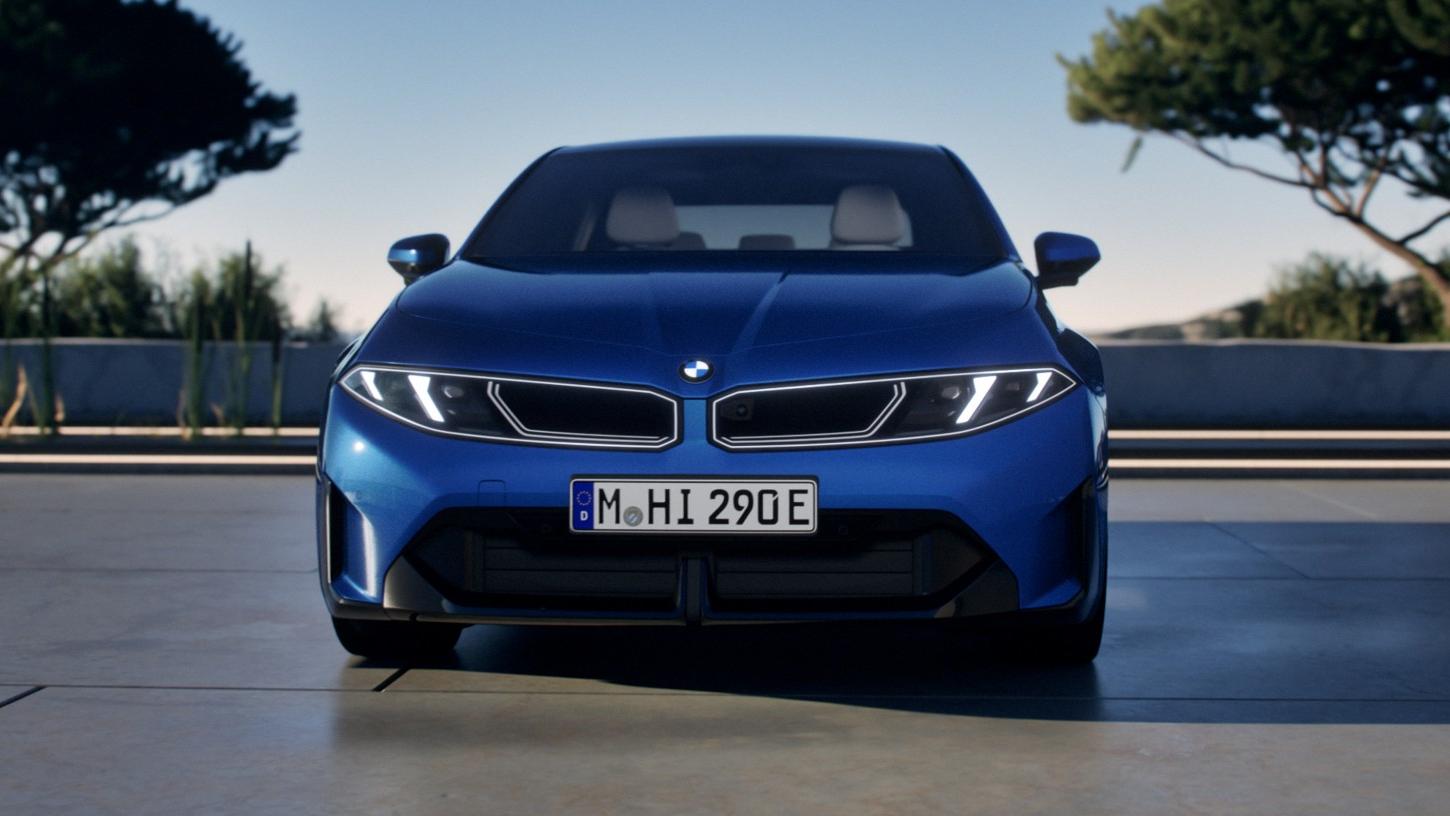
The sedan is Mercedes’ direct answer to the incoming BMW i3. It rides on the MB.EA platform already under the GLC with EQ Technology, with an 800-volt electrical architecture. Based on the GLC’s confirmed powertrain, the top C-Class EQ variant is expected to produce 483 hp from a dual-motor setup drawing from a 94-kWh battery, with a WLTP range of 418 miles in the SUV sibling. Sedan-body efficiency should push that figure higher, though not to the 497-mile range CEO Ola Källenius floated as a ceiling at Munich in September.
U.S. deliveries are not expected until early 2027. Production starts at Mercedes’ Kecskemét plant in Hungary during the second quarter of 2026.

One Giant Screen Replaces Most Of The Dashboard
The centerpiece is the 39.1-inch MBUX Hyperscreen, the same pillar-to-pillar display Mercedes introduced on the GLC with EQ Technology at the 2025 Munich Motor Show. Carscoops reports the C-Class EQ’s Hyperscreen runs roughly 10 million pixels. Lower trims get a Superscreen, a more conventional three-panel layout with a 10.3-inch driver cluster, a 14-inch central infotainment display, and a 14-inch passenger screen. Both setups offer ten ambient lighting styles.
Physical controls survive on the steering wheel and the center console, which is a reversal from Mercedes’ earlier direction on the combustion C-Class and the CLA, where haptic sliders replaced buttons and were widely criticized by reviewers. That steering wheel appears lifted directly from the GLC EV.
The Heat Pump Claim Is The Real News For Cold-Weather Buyers
Mercedes says the C-Class EQ’s climate control system uses a multi-source heat pump that heats the cabin twice as fast as a combustion vehicle while consuming 50 percent less energy than the PTC resistance heaters in prior-generation EQ models. The multi-source architecture recovers waste heat from the drive unit, the high-voltage battery, and ambient air, which is the same design already shipping on the updated EQS, EQE SUV, and CLA.
Cabin heating energy has always been an underrated winter-range killer for EVs. A car rated for 400 miles in moderate temperatures can lose 25 to 35 percent of that range in sub-freezing conditions, and most of the loss traces directly to resistance-heater consumption. If Mercedes’ claim holds up in third-party testing, it means the smaller C-Class battery pack loses less of its rated range on a January commute than the EQE’s larger pack did in 2023.

Comfort Is The Pitch, Not Peak Performance
Mercedes is leaning into cabin refinement as the C-Class EQ’s differentiator. Front seats get electro-pneumatic four-way lumbar support, ventilation, massage, and 4D sound. An optional star-studded panoramic roof, extensive sound insulation, and the “Energizing Comfort” programs Mercedes has been iterating on since the original EQS round out the long-distance pitch.
WardsAuto’s Greg Kable, riding in a pre-production prototype at Mercedes’ Immendingen test track, reported that road noise was “very subdued” and the car isolated occupants from harsh impacts in a way that suggests the electric C-Class will be among the most refined offerings in its class. That matters in an EV segment where the quiet cabin arms race is increasingly where buyers actually feel the premium. Without engine noise to mask it, motor whine, wind buffet, and HVAC hiss become the cabin soundtrack.
Range, Charging, And The Number Mercedes Isn’t Quoting Yet
Mercedes has not published official range or charging figures for the C-Class EQ. Based on the GLC with EQ Technology’s confirmed specs, the top-spec C-Class EQ should run a 94-kWh battery, an 800-volt architecture, and peak DC charging around 320 kW. The GLC’s WLTP range is 418 miles, which translates to an EPA-equivalent figure in the 340 to 370-mile range based on the cycle-conversion ratios that held up for the EQE and EQS.
For U.S. buyers, EPA numbers are the only ones that matter, and they will be well short of the WLTP figures Mercedes and its dealers will promote in Europe. Expect the base C 200 EQ to pair a 64-kWh LFP battery with a single rear motor, with 85-kWh and 94-kWh options climbing the range.
Pricing is not confirmed. Expectations cluster around $55,000 base MSRP in the U.S. market, which would put the C-Class EQ in a direct fight with the BMW i3, the Tesla Model 3 Long Range, and whatever Audi eventually lands on for the A4 e-tron. The $7,500 federal consumer credit expired September 30, 2025 under the One Big Beautiful Bill Act, so no subsidy math enters the U.S. buying decision.
EVXL’s Take
Mercedes’ electric strategy has been a mess for five years. The EQS and EQE landed as amorphous, slow-selling oddities, U.S. production was suspended ahead of the September 30 tax credit expiration, and CEO Ola Källenius publicly admitted the company had been “too enthusiastic” about its electrification goals. The C-Class EQ, along with the GLC EQ, the upcoming 2027 GLB EV, and the broader product offensive Mercedes announced last summer, is the reset. The design brief is simple: make EVs that look like Mercedes sedans and SUVs instead of jellybean concept cars, and put the money into the parts of the driving experience nobody else is bothering to polish.
The heat-pump claim is the line that got my attention. When I spent a week in an EQE 350+ during a cold snap a couple of winters back, the single most annoying detail on longer trips was the compromise between cabin warmth and remaining range. The indicated range would tumble on the freeway whenever I asked the HVAC for real heat. If Mercedes has actually cut heating-energy draw by half on the new platform, that is a bigger practical range improvement than adding another 50 miles to the EPA sticker, because it shows up in January driving, not lab tests.
The bigger question is commercial. The C-Class EQ lands in the U.S. in early 2027 against a BMW i3 with 440 miles of WLTP range and 400-kW charging, a Tesla Model 3 with another software cycle and likely another price cut, and a Chinese competitor set that Mercedes does not sell here but that sets the global benchmark. Here is my prediction: the C-Class EQ arrives in U.S. showrooms with a top-trim EPA range between 320 and 360 miles and a starting price within $2,000 of the BMW i3, and Mercedes will sell fewer than 8,000 units in its first full U.S. calendar year. The refinement story will earn good reviews. The volume story will not.
FAQ
When is the Mercedes C-Class EQ being revealed?
Mercedes will unveil the all-electric C-Class with EQ Technology on April 20 in South Korea, alongside a facelifted combustion C-Class expected later in 2026.
When does the C-Class EQ go on sale in the U.S.?
North American deliveries are planned for early 2027. European production starts in Q2 2026 at Mercedes’ Kecskemét plant in Hungary.
What platform does the C-Class EQ use?
The MB.EA dedicated EV platform with 800-volt architecture, shared with the GLC with EQ Technology. It is not related to the combustion C-Class, which stays on its own chassis.
How does the C-Class EQ compare to the BMW i3?
The BMW i3 50 xDrive has a confirmed WLTP range of 440 miles and peak charging of 400 kW. The C-Class EQ is expected to match those figures closely. The BMW is positioned as sportier and more driver-focused; Mercedes is pitching the C-Class EQ on refinement and comfort.
EVXL uses automated tools to support research and source retrieval. All reporting and editorial perspectives are by Haye Kesteloo.