
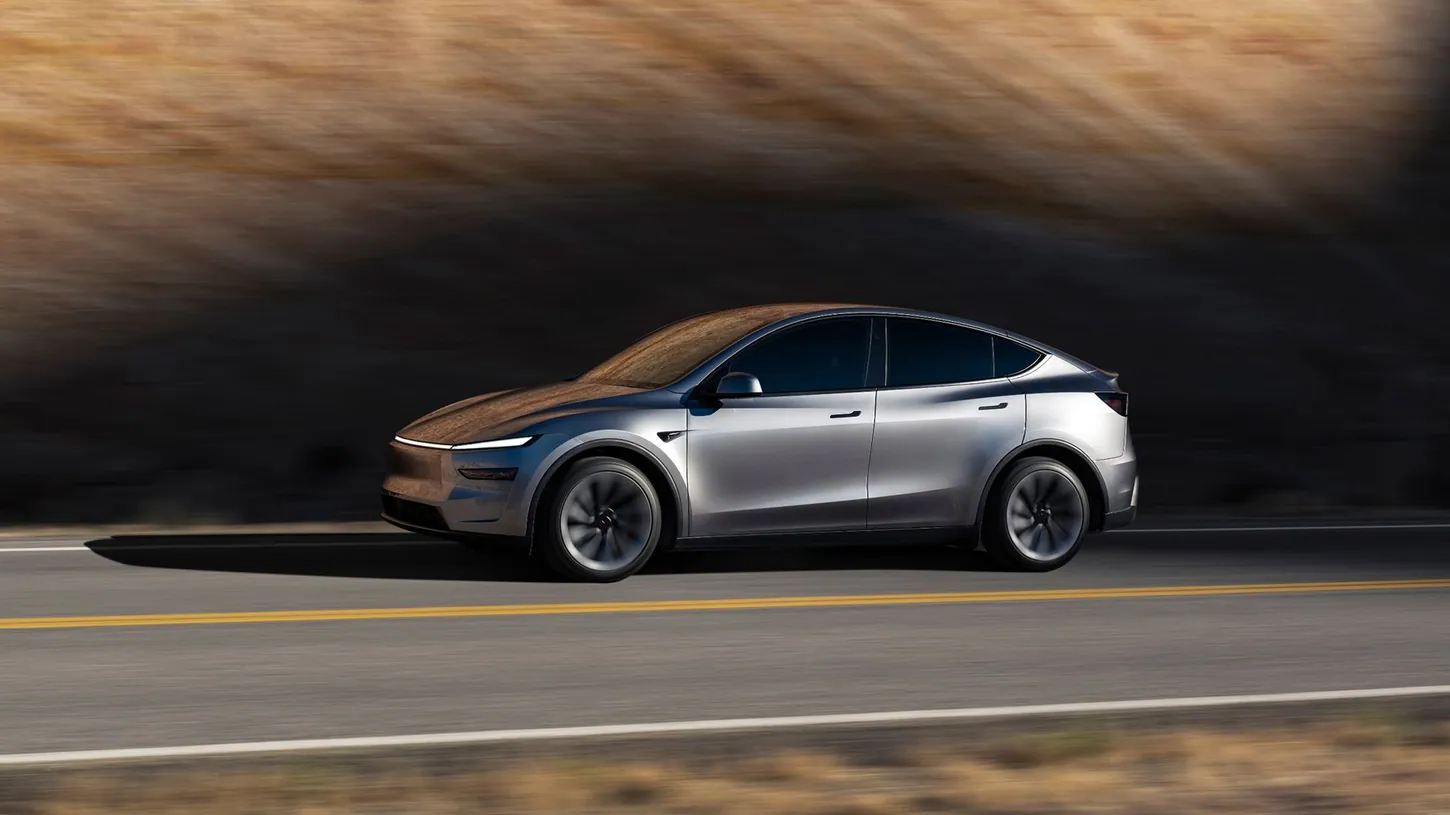
Lucid · Rebates
California Hands Out 12,000 EV Rebates. Tesla's Share Lasted 5 Days
California's MyFirstEV rebate reached nearly 12,000 first-time buyers in ten weeks. Tesla's allocation ran dry after five days of orders in August.
Lucid, tracked without fandom: delivery numbers against guidance, the layoffs pattern at Newark and Arizona, the Cosmos and its cheaper Atlas drive unit, and whether the cash lasts long enough to matter.
California's MyFirstEV rebate reached nearly 12,000 first-time buyers in ten weeks. Tesla's allocation ran dry after five days of orders in August.
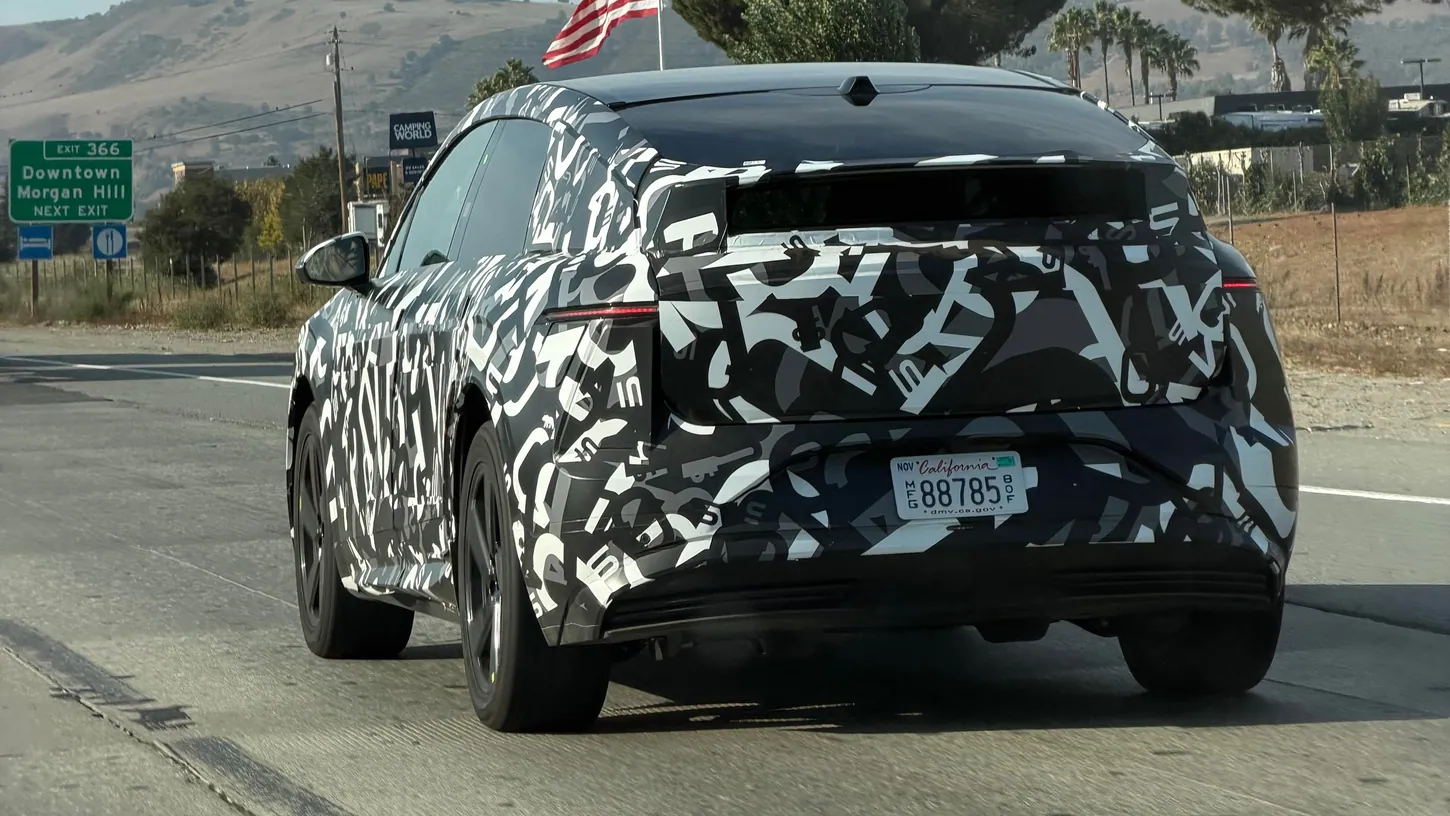
A camouflaged Lucid Cosmos prototype was photographed on US-101 in Morgan Hill, California, two months after Lucid pushed the SUV to the second half of 2027.
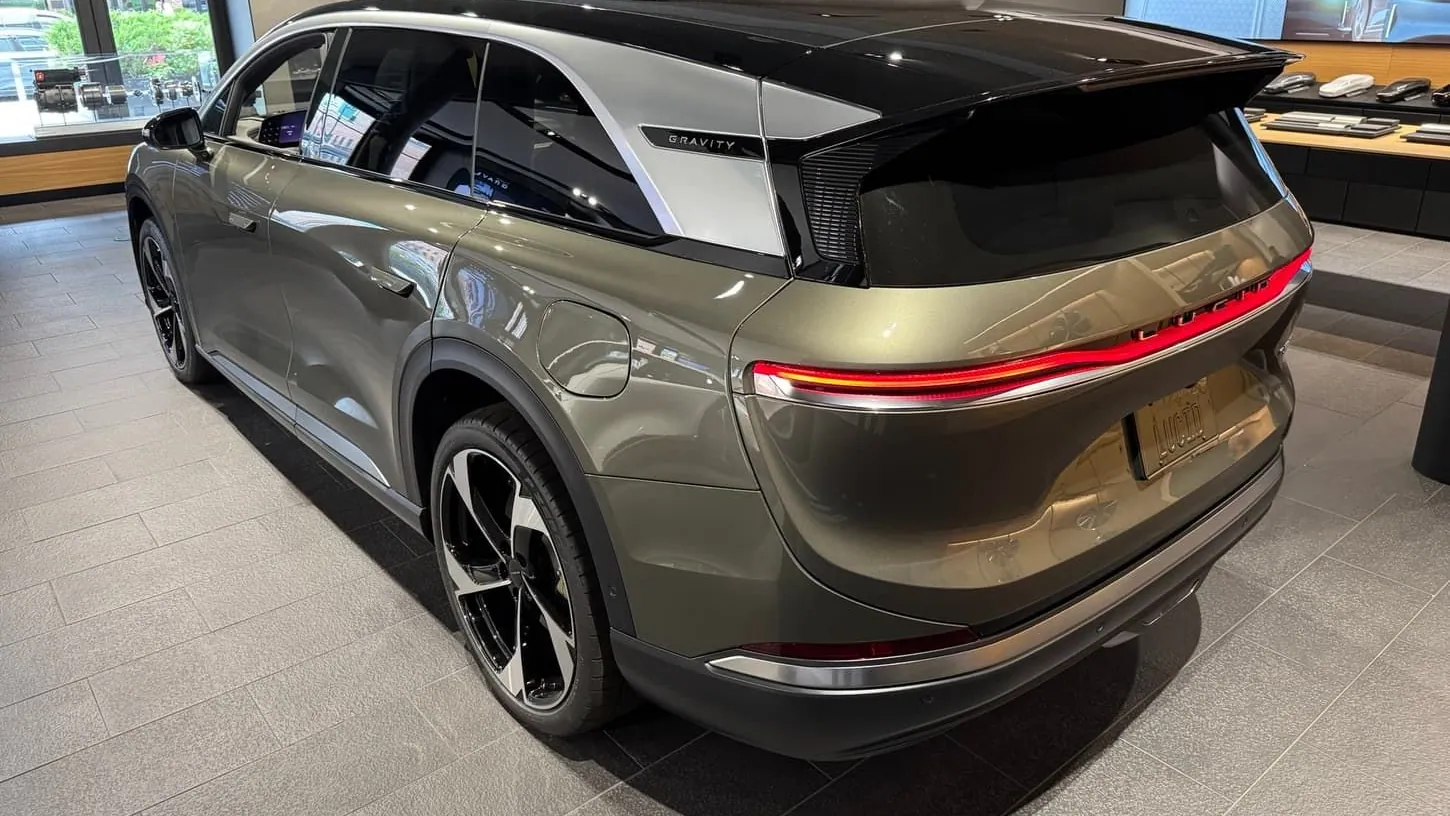
Lucid delivered 3,806 vehicles in Q3 2026, down 7% from a year ago, and built only 2,954. It has still built 2,376 more cars this year than it delivered.

Lucid Group cut roughly 18% of its U.S. workforce on Monday, its second mass layoff in four months, and eliminated the chief operating officer position. The move removes Marc Winterhoff, who ran Lucid as interim chief executive for more than a year. It is the first major operational decision from Silvio Napoli, the former Schindler…

The last Model S and last Model X ever produced at Tesla‘s Fremont factory rolled off the line on Saturday, May 9, 2026. Tesla announced the milestone on X just after 9 PM Pacific, posting photos of the final cars surrounded by the workers who built them. The flagship sedan ran for 14 years. The…

BMW peeled the covers off the facelifted 7 Series and i7 today, April 22, 2026, at Auto China 2026 in Beijing, and the headline is buried underneath the usual grille-and-screen noise. The electric i7 now runs a jointly developed battery pack from Rimac Technology, using BMW’s Gen6 4695 cylindrical cells inside the outgoing car’s Gen5…

Tesla will hold the Signature Edition delivery event for the final Model S and Model X ever built on Tuesday, May 12, 2026 at its Fremont, California factory, according to the official invitation shared by Sawyer Merritt on X. The invitation has started going out to the 350 buyers who ordered one of the Plaid-only…

The Rivian R2 earned a 335-mile EPA rating, beating Rivian's own estimate. But the 144 MPGe efficiency claim and 210 kW peak charging rate both deserve scrutiny.
Lucid is a company whose engineering keeps outrunning its execution, and we cover the gap rather than the press release. The clearest example: Lucid produced 5,500 vehicles in Q1 2026 but delivered only 3,093 after a supplier defect in the Gravity’s second-row seats froze shipments for 29 of the quarter’s 90 days. That followed Q4 2025 results that beat revenue and production-guidance estimates and still sent the stock down 6.4%, with investors reacting to a cost structure ($3 spent for every $1 earned) that the beats didn’t touch. By the third quarter Lucid was building fewer cars than it sold on purpose: it delivered 3,806 vehicles and cut production 38% to 2,954 to turn inventory into cash, after suspending its 25,000-27,000 guidance for the year.
The layoffs are the other constant. Newark, California has taken a WARN-notice round every year for three years running, and the 319 cuts disclosed in February 2026 were part of a 12% global reduction. Four months later, incoming CEO Silvio Napoli went further: an 18% US workforce cut that eliminated the COO role entirely and removed Marc Winterhoff, the executive who had run the company as interim chief for more than a year. Morgan Stanley had already downgraded Lucid to Sell in December 2025, cutting its price target to $10 from $30 and projecting a 20% drop in US EV volumes for 2026, a call that’s tracked closer to reality than Lucid would like.
Quality and software are the recurring friction points that separate Lucid’s reputation from its spec sheet. Engineering Explained’s Jason Fenske, a self-described believer in Lucid’s engineering, documented 25-plus hardware and software failures in 3,000 miles on his own Air Touring. Lucid’s response was unusually direct: a 2026 software roadmap built partly around Fenske’s own complaint list, including a UX 3.0 overhaul targeted for fall 2026. The Gravity, meanwhile, only gained Apple CarPlay and Android Auto in March 2026, a feature the older Air had at launch, timed a day ahead of Lucid’s investor day.
The company’s actual survival plan is the midsize Cosmos, built on a new Atlas drive unit Lucid says is both cheaper and lighter than the Zeus unit powering the Air and Gravity, targeting a price under $50,000. The timeline has slipped: Lucid’s March 2026 investor day set production for late 2026, and in August CEO Silvio Napoli moved it to the second half of 2027. A camouflaged prototype was photographed on US-101 in California in October. Expansion is proceeding carefully around it: Lucid is entering the UK in 2027 with the right-hand-drive Cosmos only, because converting the Air or Gravity wasn’t worth the investment at current volumes, and its European Gravity deliveries only began in Switzerland in late February 2026, six weeks behind the company’s own target.
Lucid and Rivian keep showing up in the same sentence: Morgan Stanley downgraded both to Sell on the same day, and the two companies are jointly pushing for direct-sales legislation in Washington state as the only EV-only manufacturers without a legacy dealer network to protect. For the rival betting on volume rather than range efficiency, see the Rivian desk. Every Lucid story lands in the feed below.
No. Lucid lost $2.7 billion on $1.35 billion of revenue in 2025 and burned $3.8 billion in free cash flow that year, roughly $3 spent for every $1 earned in Q4 alone. CFO Taoufiq Boussaid said in February 2026 that $4.6 billion in total liquidity funds operations into the first half of 2027, with Saudi Arabia's Public Investment Fund, Lucid's majority owner, as the backstop.
It's a three-year pattern at its Newark HQ alone (123 cuts in 2023, 258 in 2024, 319 in 2026), plus a June 2026 round that eliminated 18% of US staff and the COO role under new CEO Silvio Napoli, Lucid's second mass layoff in four months. The company is trying to size its cost base to actual production of roughly 17,840 vehicles in 2025 against a 25,000-27,000 target for 2026 that it suspended in June and has not replaced.
It's the plan, not a guarantee. The midsize Cosmos targets under $50,000 using the cheaper, lighter Atlas drive unit, with series production planned for Saudi Arabia in the second half of 2027, pushed back from late 2026. But batteries still run 30-40% of an EV's cost regardless of drive-unit savings, and Lucid hasn't yet shown it can build any vehicle at scale without losing money on it.
One email with the EV news that matters — Tesla, Rivian, BYD, and everything in between, straight from the newsroom. No spam, no fluff.