
SEC · Lucid
Lucid Q3 Deliveries Fall To 3,806 After A 38% Production Cut
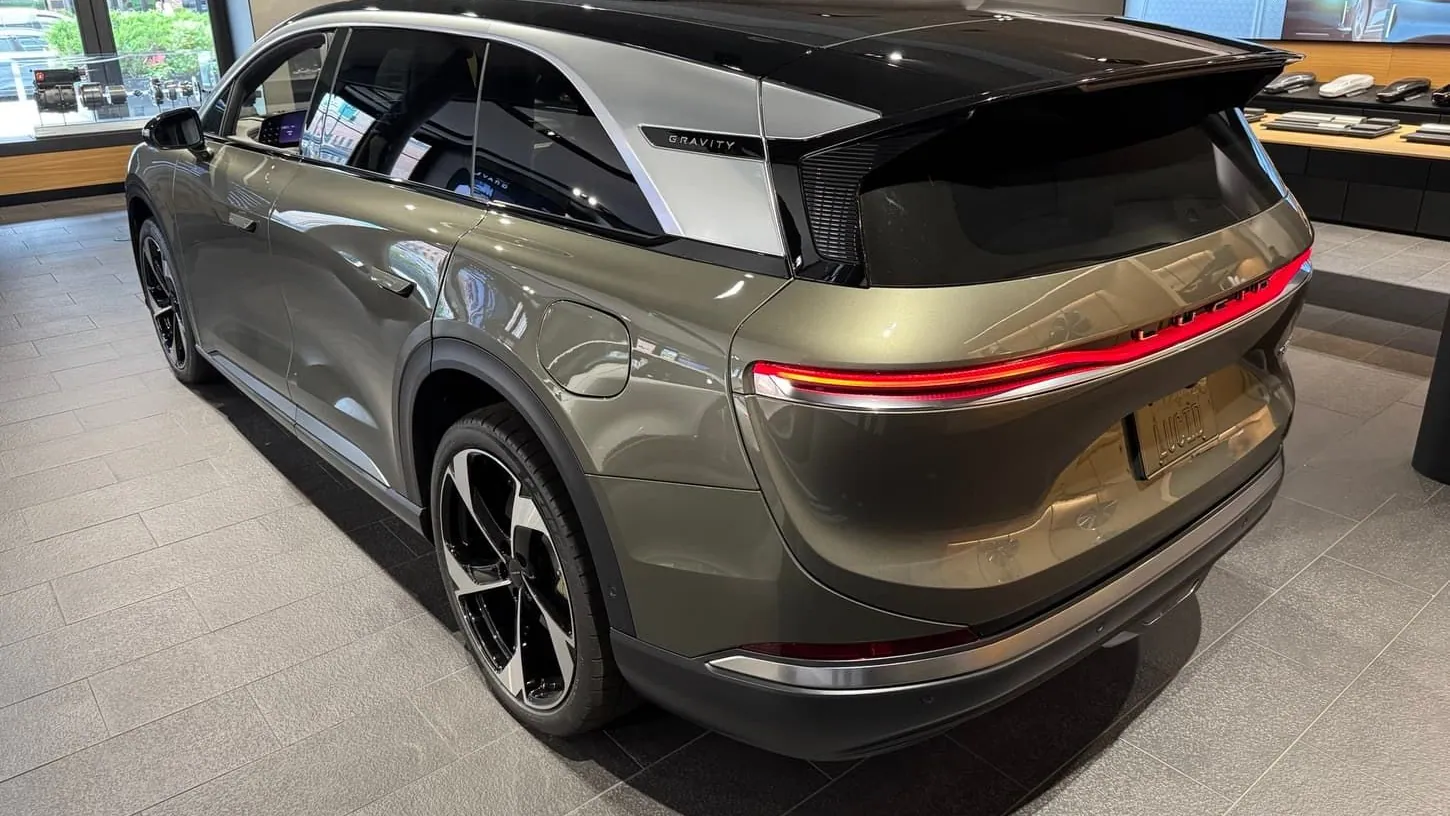
Lucid delivered 3,806 vehicles in Q3 2026, down 7% from a year ago, and built only 2,954. It has still built 2,376 more cars this year than it delivered.
The EV industry read through its SEC filings: share sales and dilution, loan conditions, the disclosures that confirm or kill the press-release story — filings first, narratives second.
Lucid delivered 3,806 vehicles in Q3 2026, down 7% from a year ago, and built only 2,954. It has still built 2,376 more cars this year than it delivered.

Rivian filed to sell 75 million new Class A shares after Monday’s market close, a deal worth roughly $1.5 billion at the day’s $20.14 closing price. The company says the proceeds will fund general corporate purposes, including the equity contribution requirements tied to its Department of Energy (DOE) loan for the Georgia factory. The timing…

General Motors delivered 56,679 electric vehicles in the United States through the first six months of 2026, a 27.5 percent drop from the 78,167 units the same eleven nameplates recorded a year earlier. The company still holds the number two spot among US EV sellers, behind Tesla. The rest of GM’s business barely flinched. Total…

Tesla registered 12,173 new cars in the United Kingdom in June, the brand’s best June on record there and a 58% jump over the 7,719 it managed a year earlier, according to Society of Motor Manufacturers and Traders (SMMT) data published Monday, July 6, 2026. That volume handed Tesla 5.7% of the entire British new…

Bentley will call its first electric car the Torcal, the company announced from Crewe on July 6, 2026, ahead of a full reveal set for London on September 23. The name draws on El Torcal de Antequera, a limestone formation in Andalusia, Spain, and on the Latin torquere, to twist, the root of the modern…

Tesla launched the Model Y Long Wheelbase in the US and Puerto Rico today, a stretched, three-row, six-seat version of its best-seller with 325 miles of range and a 4.4-second 0-60 time. Tesla’s configurator lists it as the Model Y L Premium at $61,990, in Launch Series trim with all-wheel drive, sitting above the $57,990…

McMurtry Automotive unveiled the production version of the Speirling Pure, its all-electric track-only fan car, with US customer deliveries beginning in late 2026 and a starting price of $1.3 million. The headline numbers read like a physics dare: 1,000 bhp (745 kW) per McMurtry’s spec sheet, 0-60 mph in 1.55 seconds with a one-foot rollout,…

Rivian delivered 12,194 vehicles in the second quarter of 2026, up about 14% from the 10,661 it delivered a year ago and comfortably ahead of the 10,518 analysts expected, according to estimates compiled by Visible Alpha. And Rivian paired the beat with a bigger statement: it raised its full-year 2026 delivery forecast from 62,000-67,000 to…
The filings desk reads the EV industry the way its lawyers write it: through SEC disclosures, where hope is a liability and the numbers carry penalties. When a press release and a filing disagree, the filing is the story.
The recent case study: Rivian filed to sell 75 million shares into its R2 rally — the dilution we called when the DOE loan’s conditions were disclosed. Nothing about it was secret; all of it was in the documents before it was in the headlines, which is the entire argument for this desk. The same quarter produced the beat-and-raise delivery numbers that made the rally worth selling into.
What we read for, in order: cash and runway, covenants and loan conditions, risk-factor changes — new risk language being the closest thing to a confession the format allows — and the quiet numbers that contradict the launch-event ones. The GM and Ford desks carry the legacy makers’ versions of the same story, and Tesla’s disclosures get the same reading everyone else’s do.
Every filings story lands in the feed below.
Because the filings are where EV companies tell the truth under penalty. A launch event says what a company hopes; a 424B says what it needs. Rivian's 75-million-share sale into its own rally is the recent example — visible in the filings before it was a headline.
New shares sold into the market cut every existing holder's slice — and for EV startups it is the price of staying alive between launches. It matters to buyers because a maker's balance sheet decides whether the company backing your warranty exists in five years.
Cash, covenants and risk-factor changes. New risk language is the closest thing to a confession the format allows, and loan conditions — like the DOE terms attached to Rivian's — shape behavior long before they make news.
One email with the EV news that matters — Tesla, Rivian, BYD, and everything in between, straight from the newsroom. No spam, no fluff.