
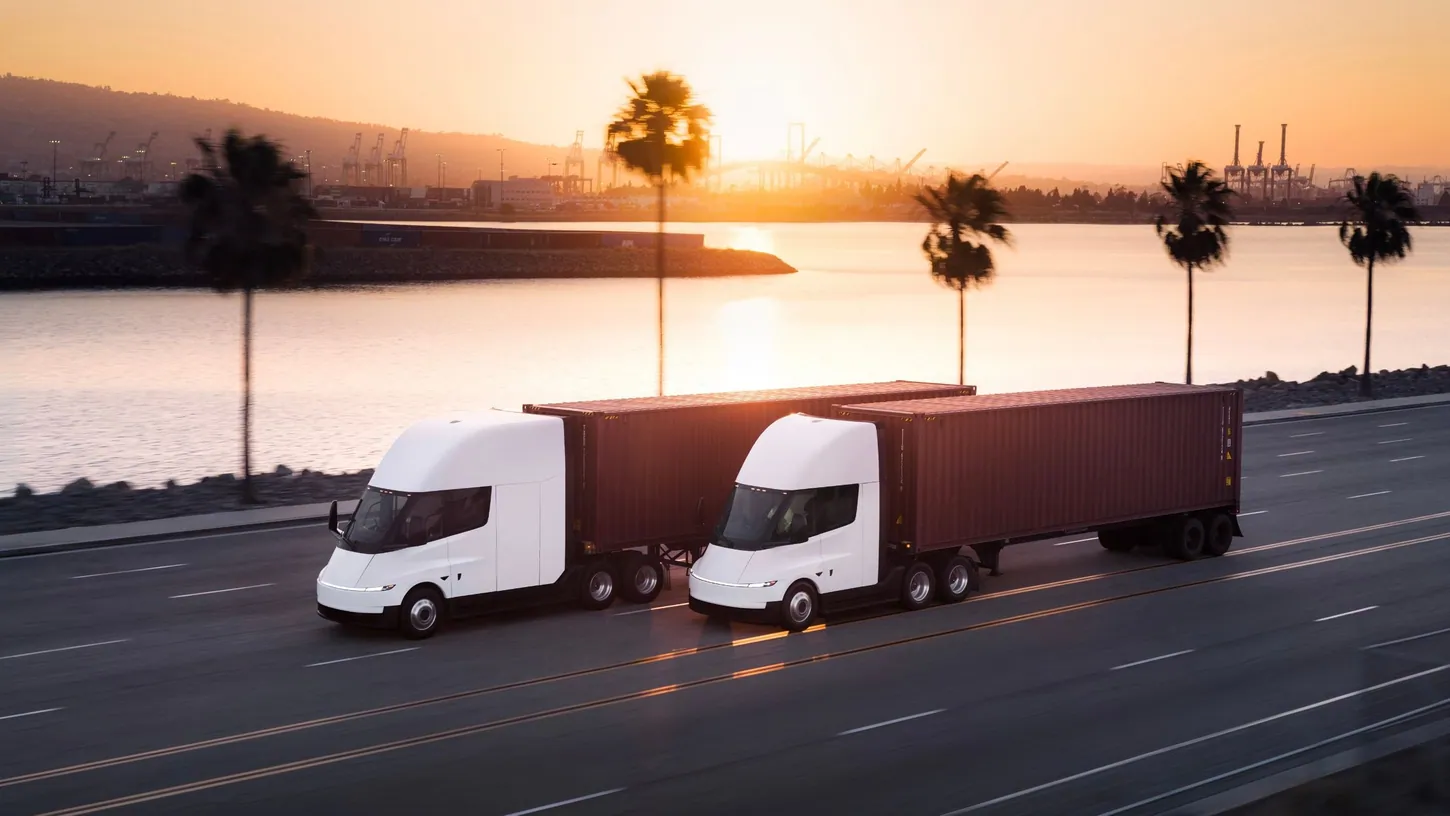
Adam Wingfield spent three years calling the Tesla Semi overhyped. The FreightWaves editorial director, 30 years in trucking and well over a million miles in Class 8 rigs, drove a production Semi at Tesla’s Nevada launch last month, first without a trailer and then hauling a load of about 37,000 pounds (16,800 kilograms). On MotorTrend’s InEVitable podcast, posted to YouTube on October 5, he says he was wrong about it.
He had never driven any Tesla before the Semi. The truck won him over in the cab and on the fleet math. The doubts he still holds are about everything around the truck.
Wingfield Called the Semi a Glorified Day Cab Until He Drove One Loaded
Wingfield got his CDL at 21, hauled glass on flatbeds for Schneider and then bought his own truck. In May 2023 he called the Semi a “glorified day cab.” He called it overhyped in February 2026, and in April he dismissed a viral Frito-Lay Semi video as rage bait.
He laid out that record himself in a FreightWaves column published September 28, after the drive. MotorTrend’s Edward Loh, who has no commercial license, asked Tesla which trucking outlets were coming to the September 24 “Rollout” event and called FreightWaves. Loh says on the episode he had no idea how skeptical his guest was, and Wingfield says Tesla doesn’t pay him. Both men were Tesla’s invited guests, according to MotorTrend’s episode notes.
Touring the factory, Wingfield says, “this doesn’t feel like trucking.” He left thinking, “This industry is going to be changed,” the passage Sawyer Merritt posted on X late Monday. Tesla says the plant can build up to 50,000 trucks a year and aims for 1,000 a week, the capacity target Semi program chief Dan Priestley reaffirmed at ACT Expo in 2025.
The Semi Lost 1 MPH on a Loaded Climb After He Refused a Running Start
The Tesla engineer told Wingfield to build momentum before a hill he puts at 7 to 8%, but he waited until the base, rolling at 35 mph (56 km/h), to floor it. He held 34 mph through a pull of 40 to 50 seconds.
FreightWaves put the rig at more than 70,000 pounds (31,750 kilograms) gross. In a diesel he would have carried speed into the grade, knowing he’d have to gear down on the way up. When he first hooked up the trailer, he asked the engineer whether it was even loaded, and the engineer pointed him to the onboard scale on the screen.
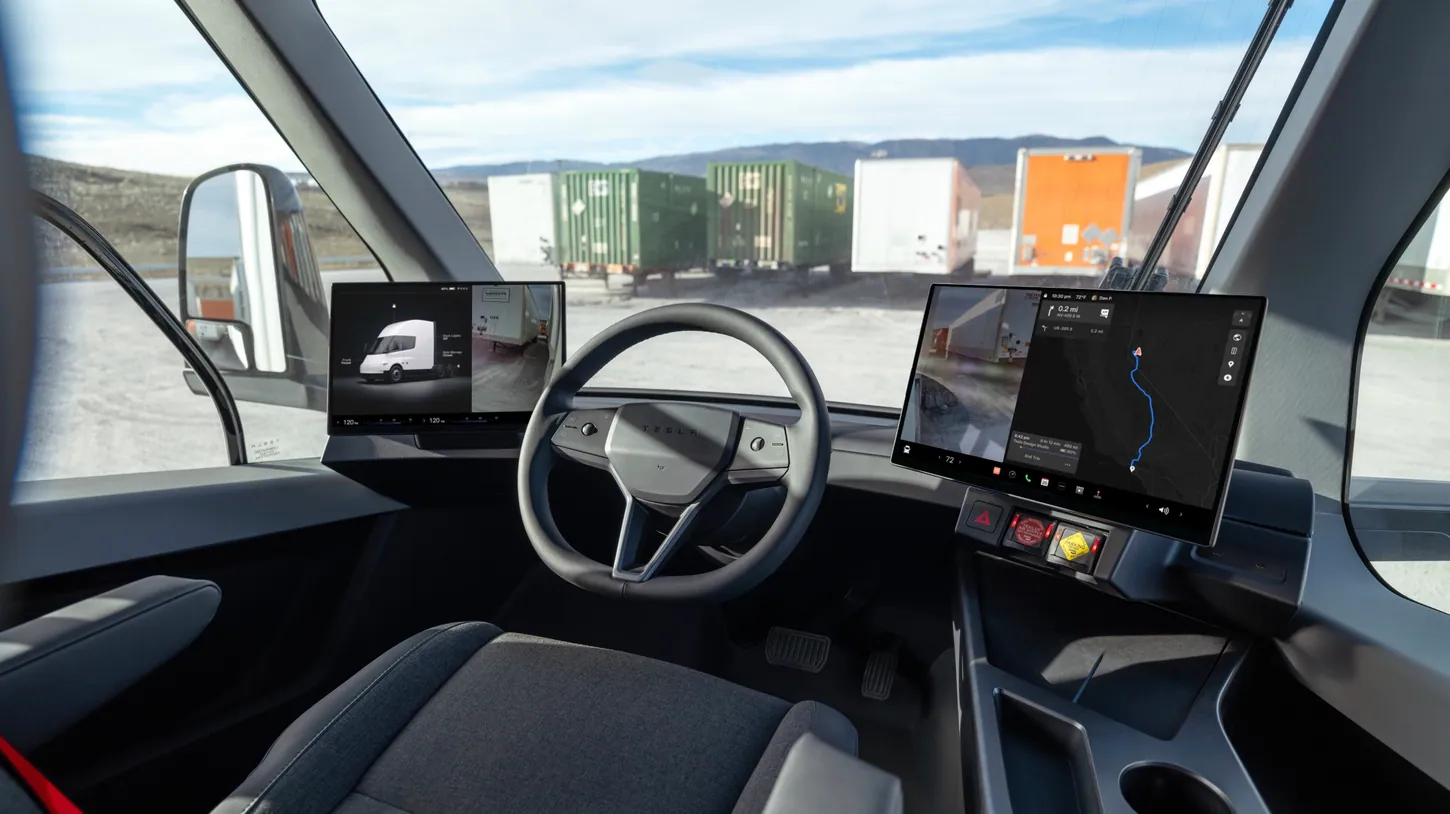
He calls the center seat the idea he was most critical of. It took him a mile or two to get used to, FreightWaves reported, and his column now says it gives better forward visibility than anything he has driven. Regenerative braking did so much of the slowing that he used the service brake only at the very end of a stop, though his column notes he never ran a mountain descent. He still calls acceleration the most oversold attribute of every EV and a big part of why he called the truck overhyped.
Tesla’s 98% Uptime Claim Made His Case for Regional Fleets
Tesla claimed 98% uptime at the launch keynote. Wingfield says a good diesel operator is happy to keep trucks running 60 to 70% of the year, with most of the loss spent waiting on shops, and that each diesel truck burns $40,000 to $50,000 of fuel a year.
With no diesel exhaust fluid or particulate filter to service, he asks on the podcast why a fleet would buy a diesel truck again, then answers his own question with one word: infrastructure. For fleets running regional and local delivery routes, he says, he can’t see why a manager would order 200 new Freightliners instead.
Payload and Charging Keep Diesel King on Long Haul
Tesla lists the Long Range Semi at 500 miles (805 kilometers) and about 23,000 pounds (10,400 kilograms) curb weight. The Standard Range gets 325 miles (523 kilometers) and under 20,000 pounds, both at an 82,000-pound (37,200-kilogram) gross combination weight. Wingfield says the heavier battery cuts payload on dense freight.
That is why he still stands by his Frito-Lay post. Snack loads fill a trailer long before they get heavy, which flatters a truck like the Semi, and he wants to see one running 46,000 pounds of canned goods all day. Frito-Lay’s parent has a partial answer he doesn’t mention: in 2024 PepsiCo’s beverage division added 50 Semis at its Fresno, California, site. RoadOne reported 1.9 kWh per mile on aluminum loads averaging 38,000 pounds.
Charging is his second doubt. Priestley told Loh the Long Range pack holds roughly 850 kWh and takes back 60% in just under 30 minutes on 1.2 MW Megacharging, which Tesla pitches as fitting inside a break the driver takes anyway. Wingfield fills 200 gallons (757 liters) of diesel with both hoses in about 20 minutes, good for about 1,200 miles (1,930 kilometers) fully loaded. The Megacharge session he watched ran 35 to 40 minutes, and he worries about four or five Semis queued at one charger. Priestley told Transport Topics that Tesla expects 30 Megacharger sites in the US by the end of 2026, with more than 200 charging posts.
He reads the Semi’s missing sleeper as a sign Tesla expects autonomous trucks to take over the long legs while drivers run shorter regional routes. He told FreightWaves that diesel will remain king of long haul and that electric makes more sense for runs of 500 miles or less.
EVXL’s Take
I believe Wingfield on the cab and on the fleet math, partly because he isn’t shopping for a Tesla. Asked on the podcast whether he’d now buy one of its cars, he said he loves the Lucid Air Sapphire and wouldn’t be surprised to have a Lucid in his driveway soon. He also drove Tesla’s route, on Tesla’s invitation, with a Tesla engineer in the cab, so the climb is a demo result until a fleet repeats it.
My concern is the chargers. At ACT Expo in April 2025, Priestley said 46 public sites with more than 300 megawatt-capable posts were under construction. At launch the goal was 30 sites and more than 200 posts open by the end of 2026, fewer than Tesla said were already being built 18 months earlier. Tesla unveiled the Semi in 2017 with production promised for 2019, and Electrek counted it seven years late when volume production started last month. The payload limit is physics and won’t change, so the Semi’s reach beyond 500-mile regional work depends on the charger count. A fleet weighing an order should get Tesla’s list of open Megacharger sites for its own lanes before it signs.
Sources: MotorTrend on YouTube, MotorTrend, Adam Wingfield, FreightWaves, FreightWaves, Transport Topics, Sawyer Merritt on X
EVXL uses automated tools to support research and source retrieval. All reporting and editorial perspectives are by Haye Kesteloo.


