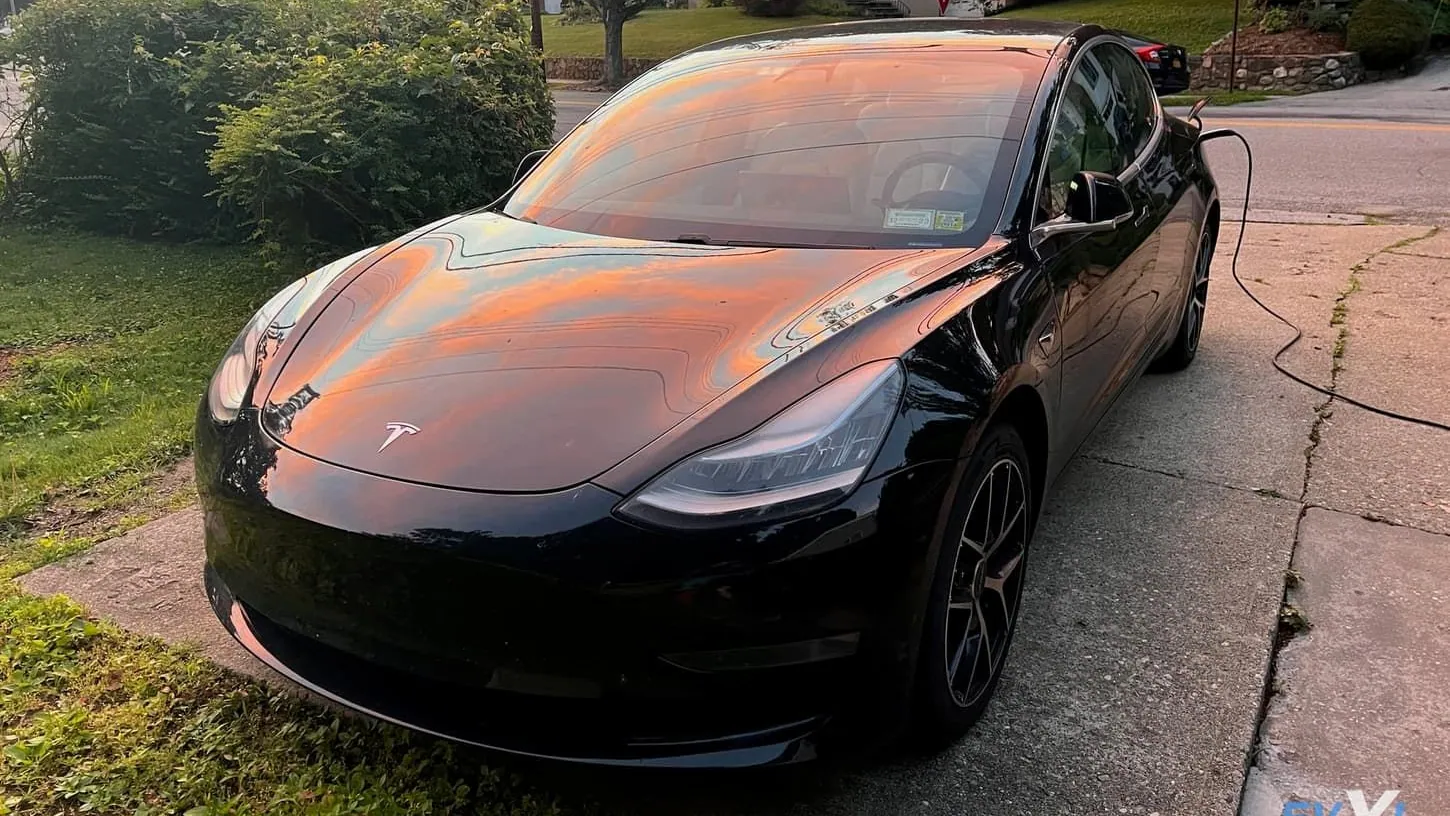
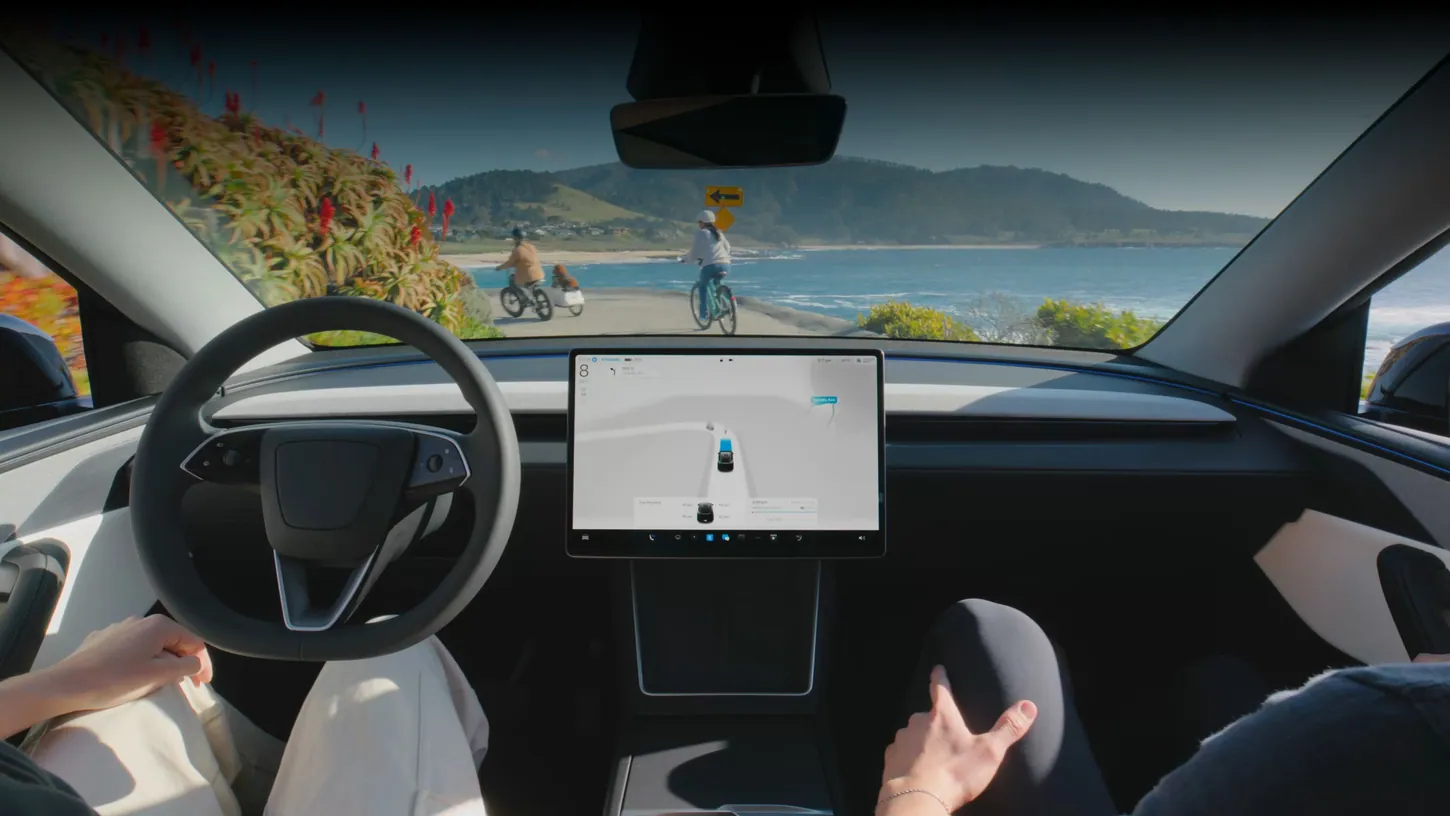
Tesla has put its “7x safer than a human when engaged” claim for Full Self-Driving (FSD) on a Times Square billboard. It is Tesla’s first Times Square ad for FSD, was up by November 14 and will run through November, according to Sawyer Merritt, who covers Tesla on X.
It also says “15+ billion miles driven globally.” That is a cumulative mileage of all Tesla’s miles driven with FSD active. Even though the car drives itself the drivers must still supervise it.
Tesla’s 7x Claim Comes From Its Collision Data
Merritt posted the ad on X. Tesla’s safety report uses a rolling 12 months of North American collision data, updated quarterly.
Tesla has launched a Times Square billboard ad for FSD for the first time. It will play the rest of this month.
Sawyer Merritt (@SawyerMerritt) November 14, 2026
“7x safer than a human when engaged. 15+ billion miles driven globally.”
On November 15, Tesla’s report showed an average of 1,760,823 miles between minor collisions with FSD engaged, versus an estimated U.S. average of 225,322 miles, almost 8 times as far. For major collisions involving deployed airbags or other restraints, Tesla reported 6,006,200 miles versus 660,164, roughly 9 times as far.
The billboard’s 7x matches the “7x fewer minor collisions” figure in Tesla’s report, although “safer” is broader than just a measure of who crashes more often.
Tesla includes crashes if FSD was active within five seconds before impact, even if a driver took control over the car and the FSD. Tesla estimates the U.S. average using federal crash and mileage data, and scales the minor-collision figure from its own manually driven fleet. The 7x comparison doesn’t account for differences in vehicle age or driving conditions, although Tesla separately publishes an off-highway figure (6x).
Researchers Have Challenged Tesla’s Safety Comparisons
In May, Reuters asked 11 traffic-safety researchers to examine Tesla’s safety claims; 10 criticized the comparisons as misleading. University of Michigan researcher and former federal statistician Marco Benedetti compared crashes involving airbag deployments in Teslas using FSD or Autopilot with the same type of crashes across the U.S. vehicle fleet. That reduced Tesla’s claimed advantage from roughly tenfold to threefold, Reuters reported. Tesla did not respond to Reuters’ detailed questions for that report. Tesla’s report still benchmarks its airbag-deployment crashes against federal data on crashes where a vehicle was towed.
Reuters also pointed to a major difference in vehicle age: Teslas averaged 4.1 years, according to S&P Global Mobility data, compared with 12.8 years for U.S. vehicles overall.
Reuters later found Tesla had submitted similar figures to Dutch and Swedish regulators, as EVXL reported. Senators Ed Markey and Richard Blumenthal then asked the National Highway Traffic Safety Administration (NHTSA) to review Tesla’s claims as Reuters reported.
Tesla also compares FSD with Teslas driven manually with active safety features. According to Tesla’s data, vehicles using FSD averaged 6,006,200 miles between major collisions, compared with 2,031,221 miles for manually driven Teslas. That means FSD had roughly a third the major collision rate, although driving conditions may differ.
The billboard appears as Tesla expands Robotaxi operations, including a November 9th launch in San Antonio, as I reported. FSD still requires a driver ready to intervene so it is different to the robotaxis but I think this is probably so that people feel more comfortable with the idea of Tesla’s technology driving them around instead of a human.
EVXL’s Take
The billboard turns one crash-rate comparison into a safety claim. The company’s estimated national benchmark and differences between the fleets limit how much the statement “7x safer” is valued. Drivers should not treat an advertising figure as independent proof of how safely FSD can drive.
Sources: Sawyer Merritt on X, Tesla, Reuters via Carrier Management, Reuters via Claims Journal
EVXL uses automated tools to support research and source retrieval. All reporting is by Damien Kesteloo, edited by Haye Kesteloo.