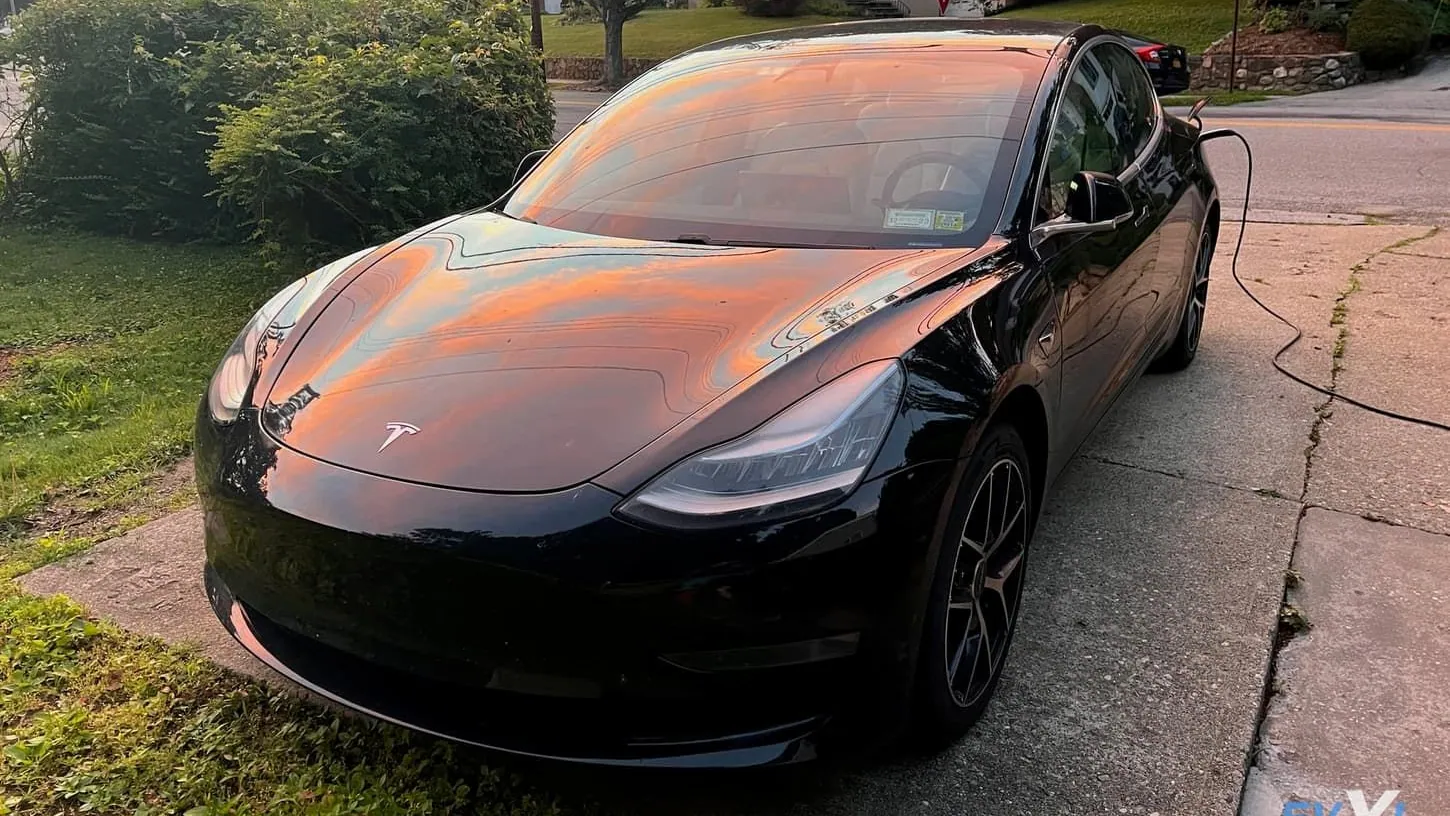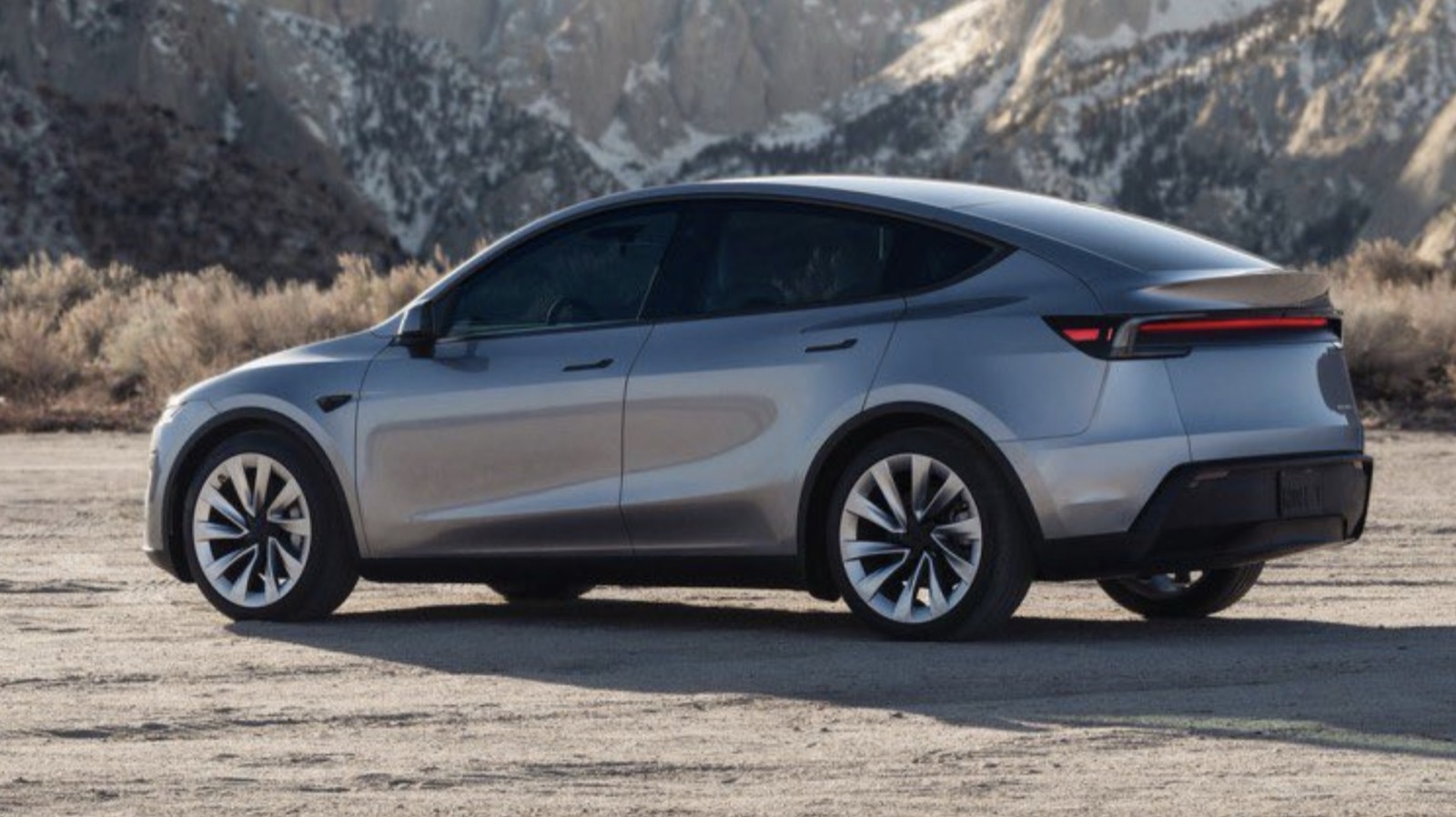
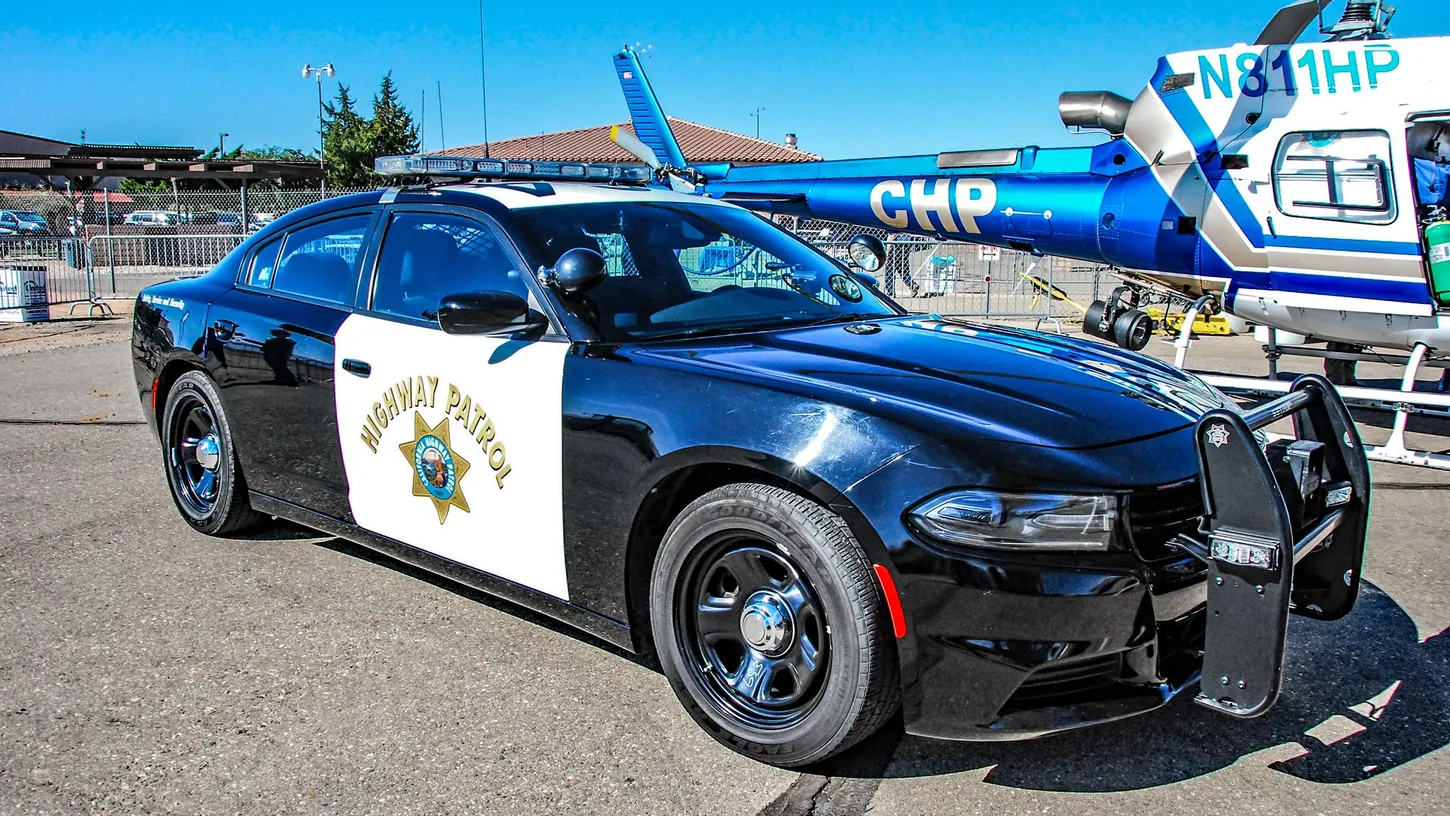
A Tesla drove into a four-lane closure on eastbound Interstate 80 near Fairfield, California, just before midnight on Tuesday, October 13, and hit a California Highway Patrol cruiser with two officers inside. The 22-year-old Sacramento man at the wheel told CHP at the scene that the car was in Full Self-Driving (Supervised) and that he was asleep. Both officers were seriously hurt and spent the night in a Fairfield hospital. The driver had minor injuries.
Tesla’s owner’s manual says the cabin camera monitors the driver whenever Full Self-Driving (Supervised) is engaged, and that ignored attention warnings end with the car disabling the feature, chiming, flashing its hazards and pulling over. The driver’s account has him asleep through a lit, coned-off closure at freeway speed. CHP plans to download the car’s data, and Tesla had not responded to KQED’s request for comment as of its October 16 story.
CHP Says the Tesla Ran a Four-Lane Closure at Freeway Speed
The officers were on I-80 because of an earlier crash. About an hour before the Tesla arrived, a 19-year-old San Pablo man lost control of a Honda Civic and a Chevrolet Tahoe hit the Civic, CHP told CBS Sacramento. He died. Officers closed four lanes with flares and cones.
The Tesla entered that closure at freeway speed and hit the back of a Dodge Charger patrol car parked inside it, west of Air Base Parkway. CHP spokesperson Sgt. Andrew Barclay told KQED that four officers were on scene. The two standing behind the cruiser ran clear, and the two sitting inside it were hurt. Investigators said he was not inebriated, and both injured officers were released from the hospital the next day.
CHP posted the footage on Thursday, October 15, on its Instagram account: a 36-second clip from two dashcams, one on the struck patrol car and one on another vehicle at the scene. CHP said the Tesla did not react to the flares, the cones or the emergency lights. The outside cameras can’t show what the Tesla’s screen displayed or whether the car asked its driver to take over, and NBC Bay Area reported it is unknown whether Full Self-Driving was active at impact.
The Tesla’s Own Logs Should Say Whether It Ever Warned Him
The answer sits in the car’s own logs. Barclay told KQED that investigators plan to download the Tesla’s vehicle data and onboard camera footage, which should show whether the system was engaged and what it did in the seconds before the impact.
So far the claim that FSD was on comes from the driver. Tesla’s Model 3 owner’s manual describes what the chain looks like when a driver stops watching the road: a touchscreen warning, then escalating warnings, then the system disabling itself for the rest of the drive, and, if the driver does not take the wheel, a continuous chime, hazard flashers and a pull-over. The manual says the camera cannot be disabled and does not need to see the driver’s eyes to work. Five of those disengagements, which Tesla calls strikeouts, suspend the feature for a week, a rule EVXL noted when Elon Musk said in December that FSD lets drivers text.
NHTSA Studied Teslas Hitting Flare-Lit Crash Scenes Five Years Ago
A parked emergency vehicle behind flares is the scenario federal investigators have already examined. On August 13, 2021, the National Highway Traffic Safety Administration (NHTSA) opened a preliminary evaluation of eleven crashes since January 2018 in which Teslas on Autopilot or Traffic-Aware Cruise Control hit vehicles at first-responder scenes.
Most happened after dark, and the scenes included “first responder vehicle lights, flares, an illuminated arrow board, and road cones.” NHTSA upgraded that probe to an engineering analysis in June 2022, and it led to the December 2023 recall of 2,031,220 Teslas over Autosteer, which Tesla administered while saying it did not concur with the agency’s analysis. The recall filing says Autosteer’s controls may not be sufficient to prevent “driver misuse of the SAE Level 2 advanced driver-assistance feature,” and names drivers who are unprepared to intervene as the safety risk. The fix was an over-the-air update with more alerts and controls. Six months later a Tesla in self-drive mode hit a Fullerton police car parked at a fatal crash scene while its driver was on the phone.
The 2021 investigation covered Autopilot, not Full Self-Driving, and CHP has not tied the I-80 crash to a defect.
CHP Spent Its Caption on a Name California’s DMV Called Misleading
CHP’s post doubled as a consumer notice. “Despite its name, Full Self-Driving is not fully autonomous,” the agency wrote, as quoted by KMPH, calling it an SAE Level 2 driver assistance system that requires continuous driver supervision. The post adds that technology does not relieve drivers of their responsibility.
California’s own regulator reached the same conclusion in paperwork. On December 16, 2025, the Department of Motor Vehicles adopted a judge’s finding that Tesla’s use of “Autopilot” and “Full Self-Driving Capability” was “misleading and violates state law,” because the cars could not operate autonomously when the ads ran and, the judge found, could not at the time of the decision. Tesla had by then renamed the package “Full Self-Driving (Supervised),” the DMV noted. Tesla sued to reverse that ruling on February 13. Four days later the DMV said Tesla had dropped “Autopilot” from its California marketing and so avoided a 30-day suspension of its dealer license. The DMV had already stayed the manufacturer-license suspension in December.
Europe got a bigger change. This month Tesla renamed the feature “Tesla Assisted Driving” on its websites in Germany, the Netherlands, Spain and Slovakia, TNW reported, citing Reuters. Germany’s transport ministry said on October 6 that the old name was misleading because the system does not take over the driving task, and that Tesla had offered the new name in September talks with Transport Minister Steffen Bilger, Electrek reported. Tesla’s U.S. page sells Full Self-Driving (Supervised) for $99 a month and says the car will “drive you almost anywhere with your active supervision, requiring minimal intervention.”
CHP Is Weighing Charges for Conduct No Statute Names
KQED reported that CHP is holding the driver accountable, not Tesla. Under the Level 2 label CHP cited, the human at the wheel must watch the road and take over. But Barclay told KQED that no law names sleeping while a self-driving system operates as a crime.
So investigators are matching the crash to existing vehicle code violations, and CHP’s local area office will decide which apply. “Everything is on the table at the moment, nothing has been ruled out,” Barclay said. CHP can also ask the DMV to revoke the driver’s license, and the DMV can act on its own without a referral. EVXL found no reported arrest or charges as of Tuesday, October 20, and both crashes remain under investigation.
EVXL’s Take
The driver owns this crash, and I’d expect the DMV to take his license whatever the area office charges. By his own account he was asleep behind a feature that can’t be switched on without tapping Yes to a warning, and whose manual tells him to stay attentive at all times. Four officers working a fatality nearly paid for his nap, and CHP is right to put it on him.
Tesla doesn’t walk away clean, though. A man asleep at freeway speed is the plainest inattention its cabin camera exists to catch, and the manual says that camera can’t be switched off. If the logs show FSD engaged with no warning before the Charger, then the supervision in the product’s name was a word, not a system. If they show the warning chain ran and he slept through it, then I want to know where in that chain the car was at impact, because the manual’s version ends with the car pulled over on its hazards. In both cases a $99-a-month feature was driving with its only backup unconscious, sold on a page that says it needs “minimal intervention” and, in a footnote, that it does not make the car autonomous.
Germany got the name changed after September talks with its transport minister. California had to threaten Tesla’s dealer license to get “Autopilot” off its ads, and the word “Full” remains on the U.S. site. My bet is that the vehicle log from this crash does more for that argument than any DMV filing has, because it will say in Tesla’s own data what the car did while nobody was watching.
Sources: CBS Sacramento, KQED, ABC7 San Francisco, NBC Bay Area, KMPH, CHP on Instagram, Tesla Model 3 Owner’s Manual, Tesla FSD page, California DMV, December 2025, California DMV, February 2026, NHTSA PE21-020, NHTSA Recall 23V-838, TNW citing Reuters, Electrek, via The Auto Wire
EVXL uses automated tools to support research and source retrieval. All reporting and editorial perspectives are by Haye Kesteloo.