BMW unveiled the iX3 M60 xDrive on October 7, adding a 603-horsepower M Performance model to its new electric SUV lineup. Orders open at the end of January 2027, and production starts in spring 2027 at BMW’s Debrecen plant in Hungary. BMW has not announced a U.S. price or an EPA range estimate.
Beyond the extra power, the M60 gets adaptive suspension, variable sport steering and an electronically controlled rear differential as standard. Those parts separate it from the iX3 50 xDrive, which already uses BMW’s Heart of Joy computer to run its driving systems and handled its 5,154 pounds better than I expected on my first drive.
BMW’s U.S. release puts the M60’s usable battery at 112.2 kWh. Its global release, published the same night, puts it at 108.7 kWh.
The iX3 M60 Makes 603 HP and Reaches 62 MPH in 3.9 Seconds
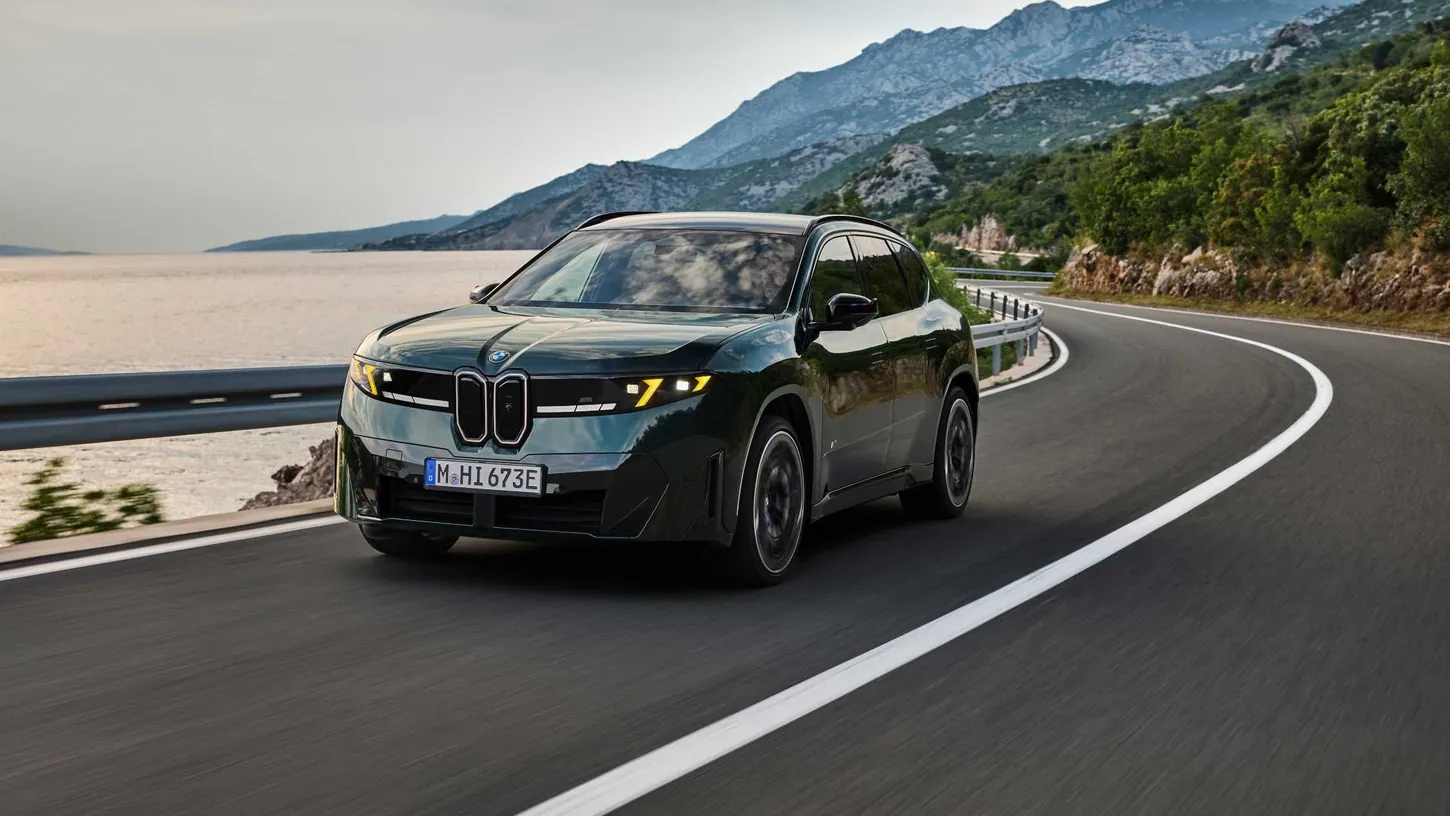
The dual-motor iX3 M60 xDrive produces 603 horsepower and 645 lb-ft of torque, according to BMW’s U.S. announcement. It reaches 62 mph (100 km/h) in 3.9 seconds and tops out at 149 mph (240 km/h). BMW’s global release quotes the same motors at 450 kW, or 612 metric horsepower.
The extra output comes from a new rear motor with a redesigned stator and an inverter rated at 420 amps instead of 300. A longer gear ratio and a higher rotor speed raise the top speed. Despite the M hardware, this is an M Performance model, not a full BMW M car. All of BMW’s figures are provisional.
Adaptive Suspension Gives the M60 More Control Over Its Weight
The M60’s standard Adaptive M Suspension uses electronically controlled dampers that adjust individually within milliseconds. The driver picks the base setting through My Modes, and two new modes, M Sport and M Sport Plus, change how the drivetrain and chassis respond. Each step up makes the car stiffer and quicker.
BMW also retuned the springs and dampers and braced the front end. New anti-roll bar links at the front axle sharpen the steering and reduce body roll.
The Heart of Joy computer works with BMW M Dynamic Performance Control to coordinate acceleration, braking, regenerative braking and steering. BMW says it processes those inputs up to ten times faster than its previous control units, and that the car slows almost entirely through regen in everyday driving. The electronically controlled M Sport differential manages traction at the rear axle, and the variable sport steering changes how far the wheels turn for a given input. BMW promises sharper handling without losing comfort.
BMW’s U.S. and Global Battery Specifications Do Not Match
BMW’s U.S. release lists a 112.2 kWh usable battery, DC fast charging at up to 400 kW and AC charging at up to 15.4 kW. The global release lists 108.7 kWh of usable capacity, 22 kW AC charging and up to 468 miles (754 km) of provisional WLTP range.
Neither release explains the 3.5 kWh gap, and both call their number usable capacity. The global release also says a compatible 800-volt fast charger can add up to 211 miles (340 km) of WLTP range in ten minutes, measured under ISO 12906 and assuming the charger delivers the full 400 kW. Neither the WLTP range nor that charging claim is a U.S. EPA figure. For comparison, the iX3 50 xDrive is rated at up to 434 miles EPA on its optional 20-inch summer tires.
The equipment lists differ too. The global release makes M Sport seats and M Sport brakes standard, while the U.S. release lists the seats as available. On the brakes the U.S. release contradicts itself: its summary counts M Sport brakes as standard M chassis technology, and its body calls them optional.
M-Specific Controls Join BMW’s Panoramic Interior
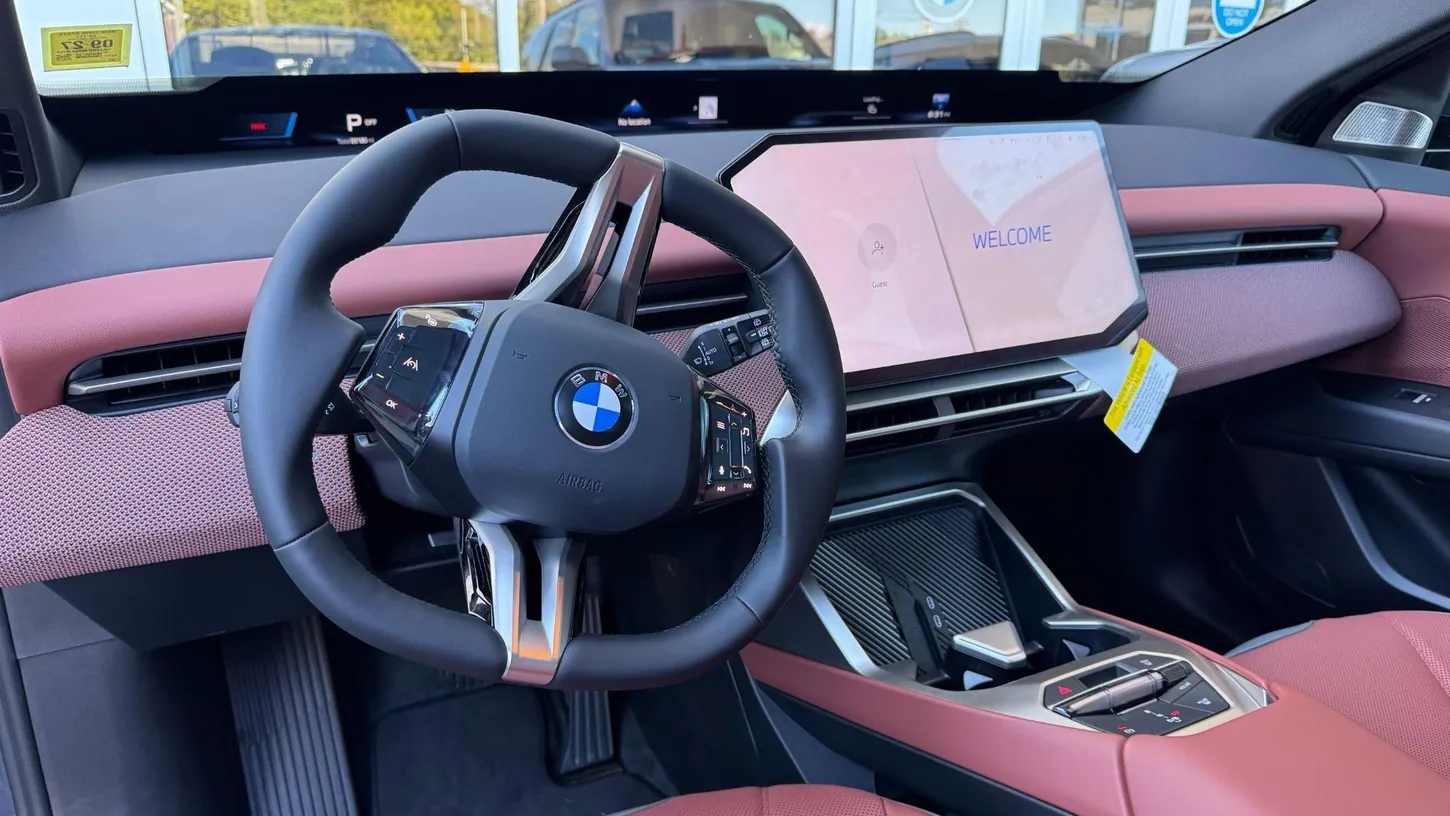
The M60 keeps BMW’s Panoramic Vision display along the base of the windshield and the 17.9-inch touchscreen I tested in the iX3 50 xDrive’s cabin. The M Sport steering wheel adds a red marker at the top, like other M cars, plus dedicated Boost and M Mode buttons.
The optional M Sport seats offer ten-way power adjustment, a massage function and an illuminated M logo in each head restraint. A 13-speaker, 430-watt Harman Kardon sound system with Dolby Atmos is standard, and the M-specific display adds a power meter that shows how much output is in use and how much regen is coming back.
Yellow Headlights and Larger Wheels Set the M60 Apart
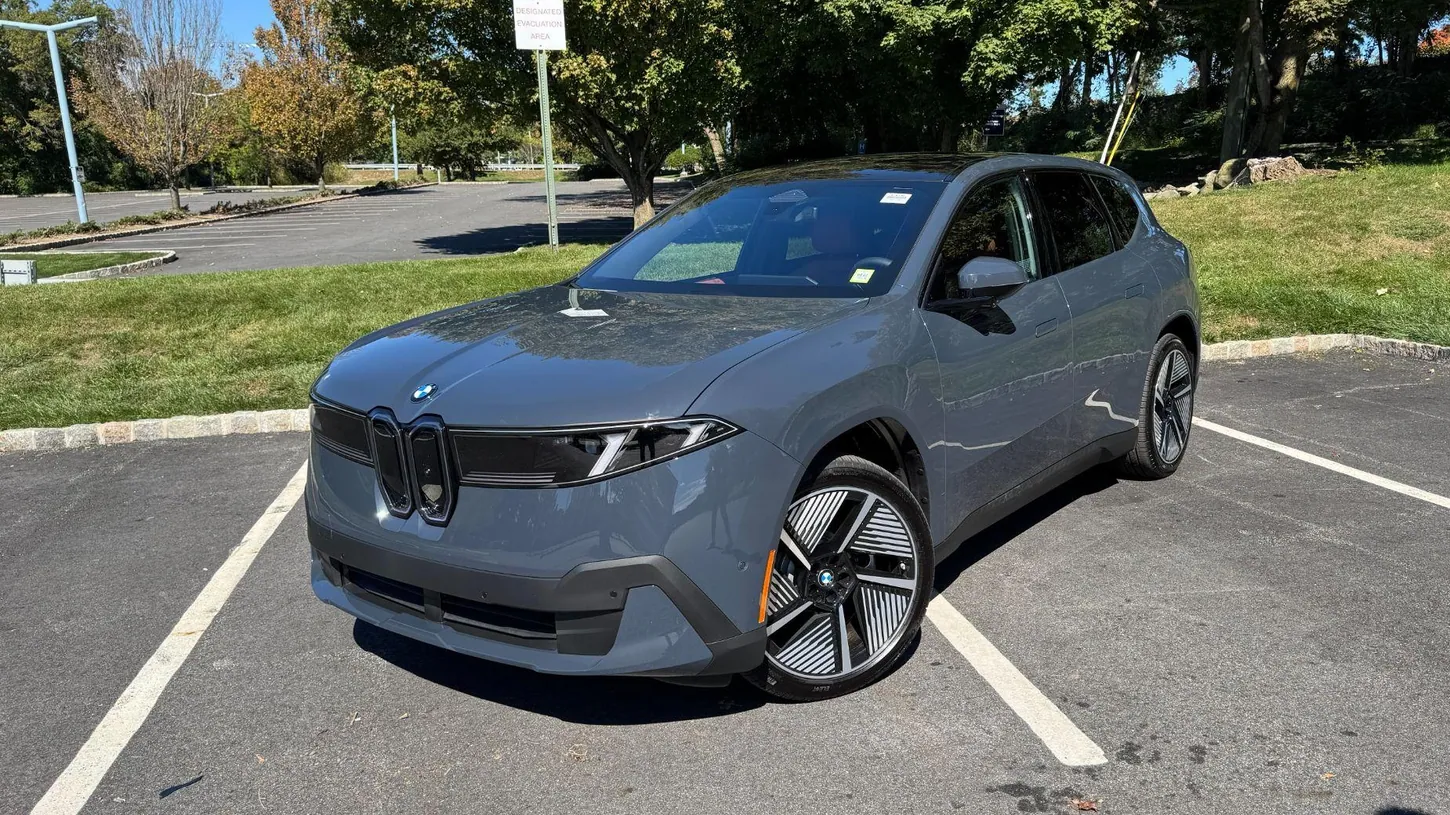
The M60 rides on 21-inch M wheels as standard, with 22-inch M aerodynamic wheels on the options list for this model only. BMW’s illuminated Iconic Glow grille is standard, and so is an M-specific roof spoiler with two aero blades for extra rear downforce.
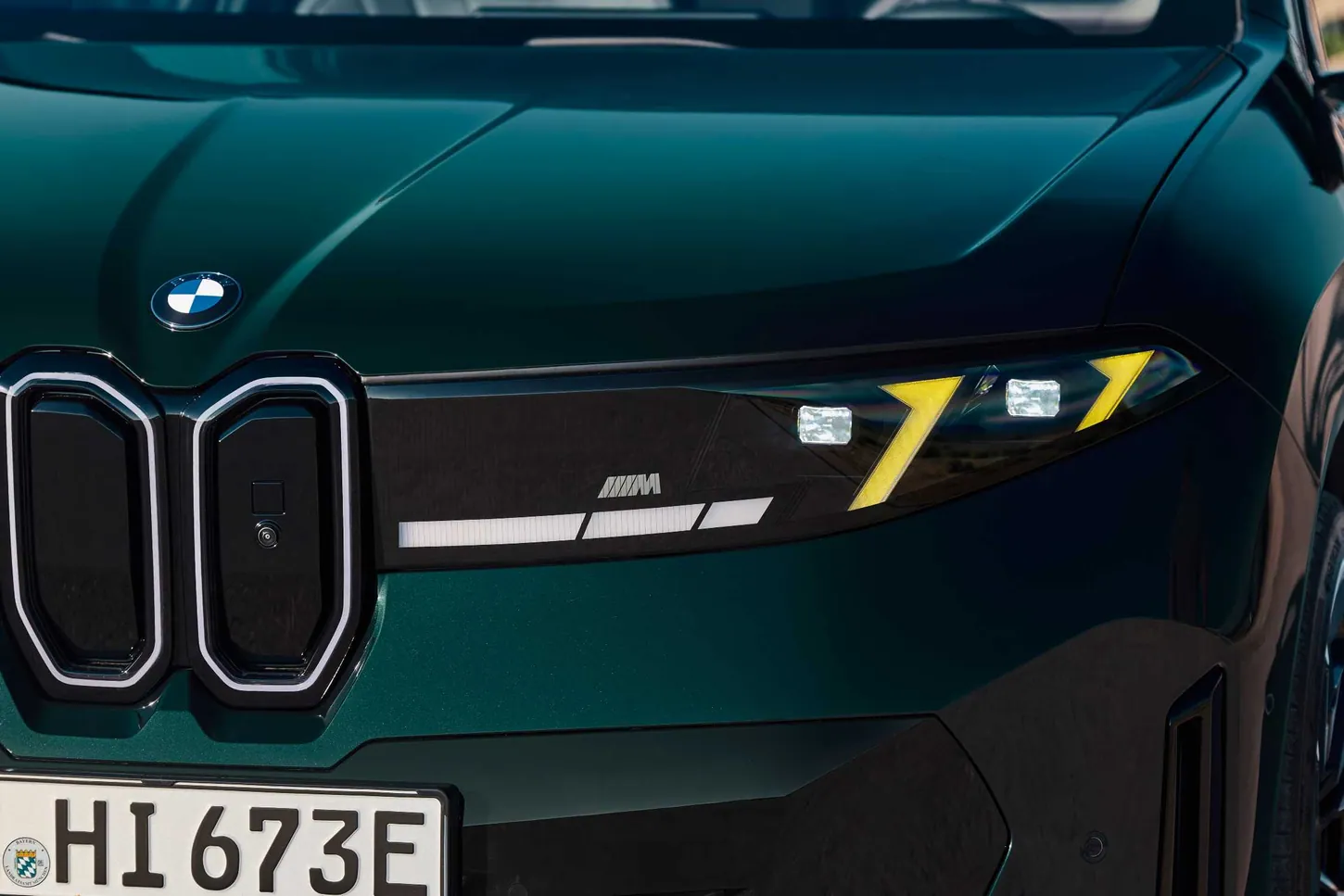
The optional M Yellow Lights, inspired by BMW’s M Hybrid V8 race car, are the quickest way to tell an M60 from a regular iX3. The global release says they only work together with the low beams, a restriction that depends on the market.
BMW also offers Highway Assistant as an option, which allows hands-free driving on suitable highways at speeds up to 85 mph. It is an SAE Level 2 system, so the driver stays attentive and responsible for the car.
EVXL’s Take
The biggest unanswered question is price. The iX3 50 xDrive starts at $61,500 plus $1,350 destination, and BMW has not said how much more the M60 will cost.
The adaptive suspension is the upgrade I want to test most. My first drive showed that the regular iX3 already handles its weight surprisingly well, so the M60’s chassis hardware interests me more than its extra horsepower. The hard part is sharper handling without giving up everyday comfort, and I’d want to feel the M Sport Plus mode on a bad road before I believe BMW has pulled that off.
BMW has confirmed the performance figures and the mechanical upgrades. Until it publishes a U.S. price and an EPA range, nobody can say whether the M60 is worth the extra money over the 50.
Sources: BMW Group PressClub USA, BMW Group PressClub Global
EVXL uses automated tools to support research and source retrieval. All reporting is by Damien Kesteloo, edited by Haye Kesteloo.