On March 12, 2026, the same day Lucid held its investor day in New York, Kyle Conner of Out of Spec Reviews became the first independent automotive journalist to see and sit inside the Lucid Cosmos. He can’t publish exterior photos yet, but his detailed account is specific enough to tell you whether this car is real or still just slides and optimism.
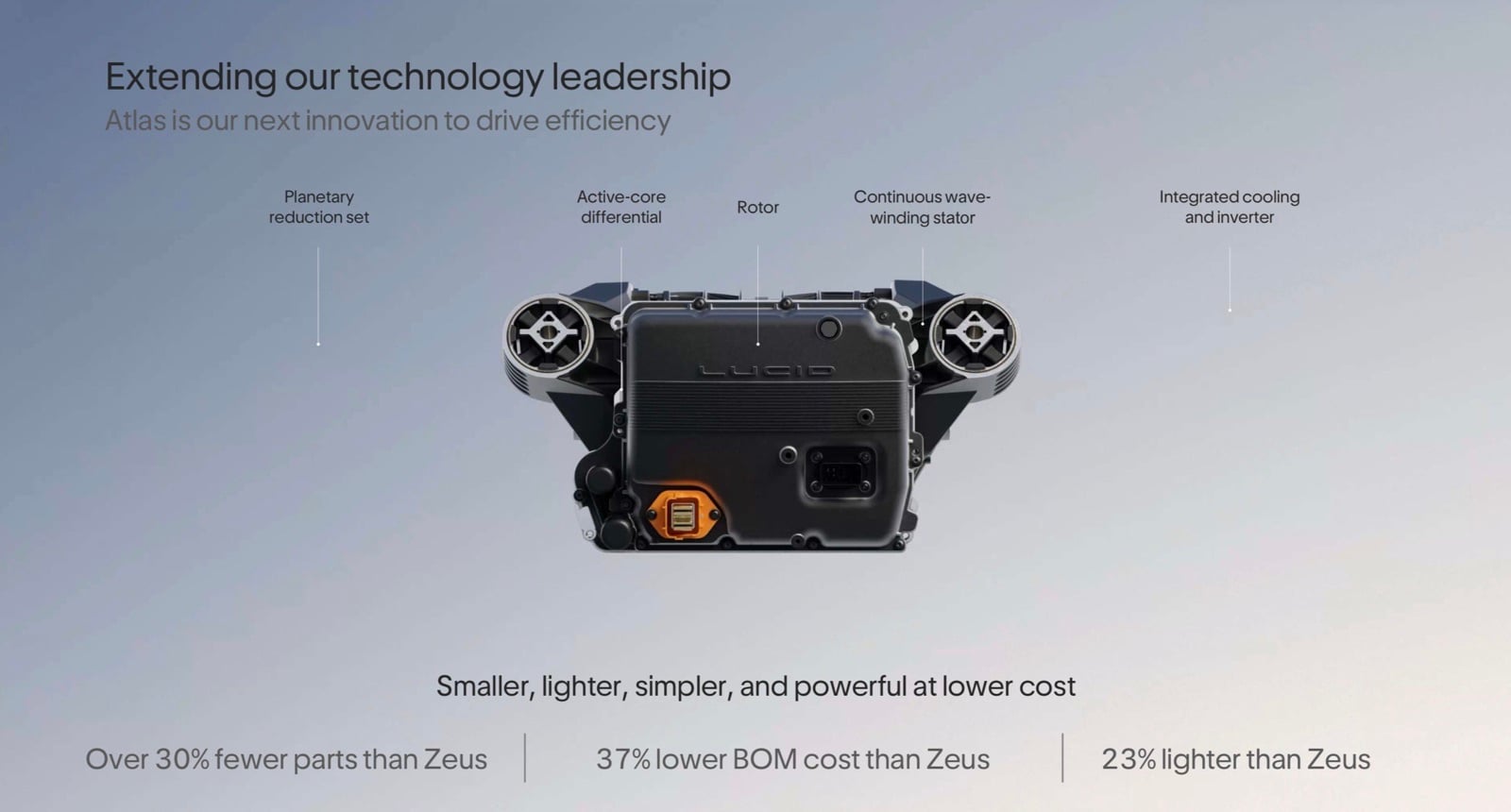
- The Fact: The Lucid Cosmos is a midsize electric SUV targeting a starting price under $50,000, built on a new platform using the Atlas drive unit. Lucid says the Atlas unit costs 37% less to build and weighs 23% less than its current Zeus unit.
- The Delta: Conner, who is 6’1″, sat in the rear seat and his head didn’t touch the glass roof. The frunk and underfloor cargo space are both described as dramatically large, made possible by the smaller Atlas drive unit packaging.
- The Buyer Impact: If Lucid holds that sub-$50,000 price with a claimed 0-60 time of 3.5 seconds and 800V charging, this becomes a genuine competitor to the Tesla Model Y at a performance and interior quality level the Model Y doesn’t match.
- The Context: This reveal dropped the same day as Lucid’s investor day and the Gravity CarPlay update, a coordinated message that Lucid has product beyond its current lineup. The official press release also introduced the Lucid Lunar, a purpose-built two-seat robotaxi concept on the same Midsize platform, and confirmed advanced discussions with Uber to deploy Midsize vehicles at scale.
Lucid Cosmos Design Bets on Cab-Forward Aero
The Lucid Cosmos uses a cab-forward design that pushes the greenhouse forward to maximize a long tail. Lucid says the approach reduces aerodynamic drag while preserving a rear cargo floor high enough to accommodate larger dogs, per Conner’s account of the investor day presentation. Conner described the exterior as “sharp, super cool, totally unique especially in the rear end” and compared it to a younger, more modern take on the Lucid Gravity. The metallic red paint shown with a white interior reads as striking on paper, and Lucid’s lighting signatures are strong, bright, and distinct.
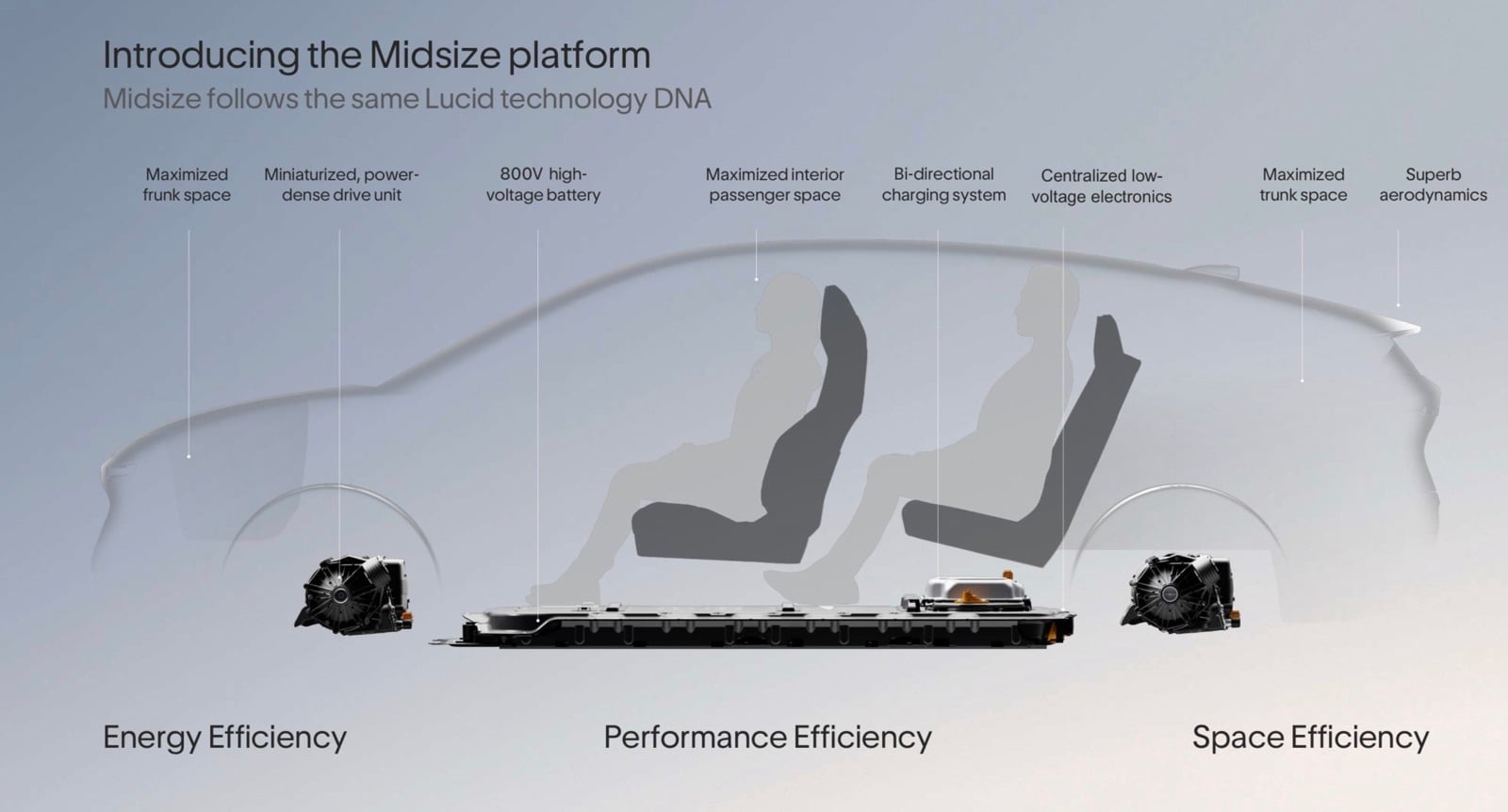
The A-pillar glass extends extremely far forward, giving the driver an unusual view of front blind spots. That’s a practical gain, not just a styling choice. Physical turn signal stalks and a physical gear selector are present, a notable decision at a time when Tesla and others have moved those functions to screens. The steering wheel is the same or similar to the Gravity’s, and the accelerator pedal is bottom-hinged.
One manufacturing detail worth flagging from the press release: Lucid has eliminated traditional beltline moldings on the doors, reducing part count and assembly time while producing a cleaner exterior profile. Small on a spec sheet, meaningful on a production cost line.
Interior Space Enabled by Atlas Drive Unit Packaging
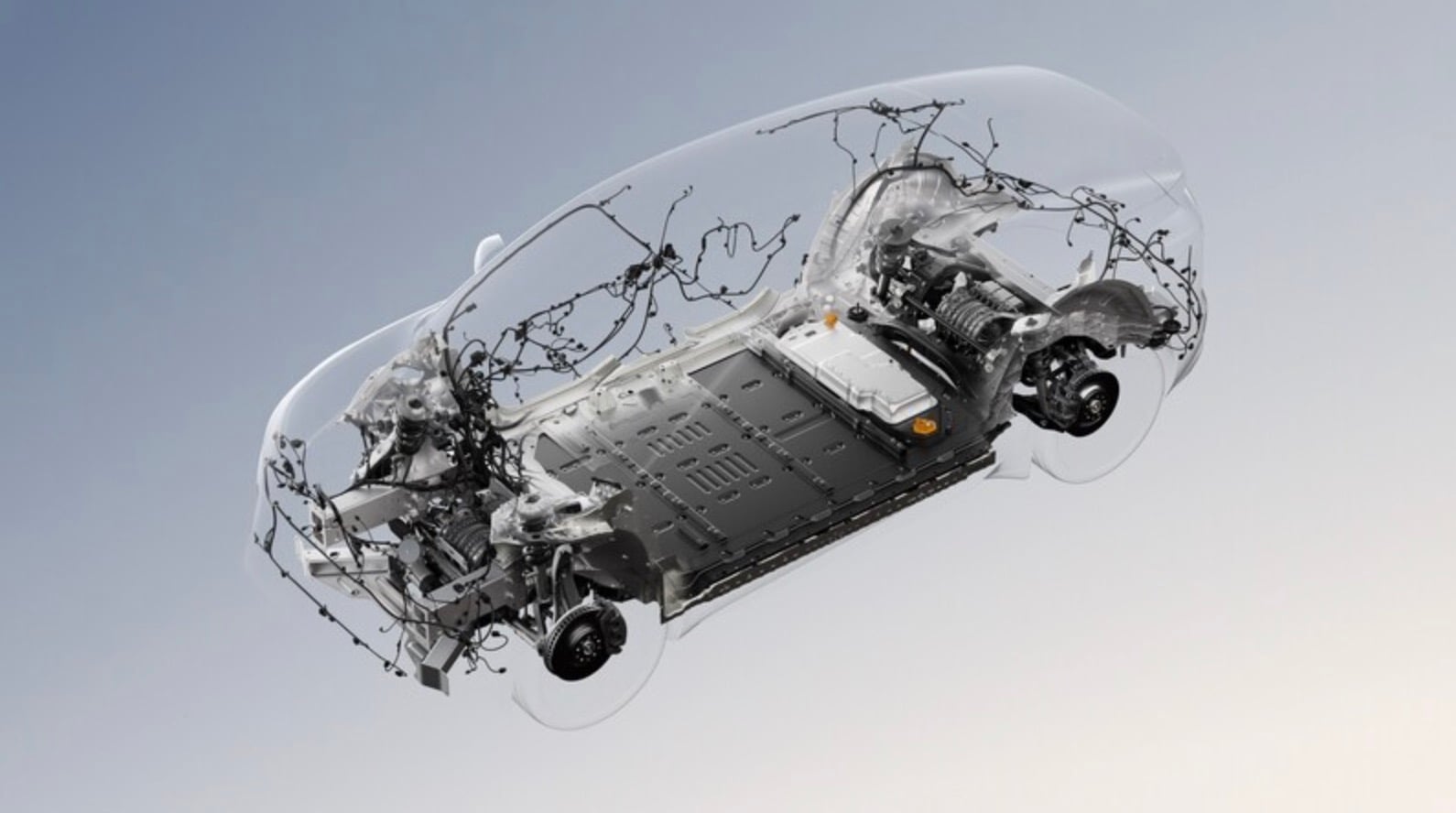
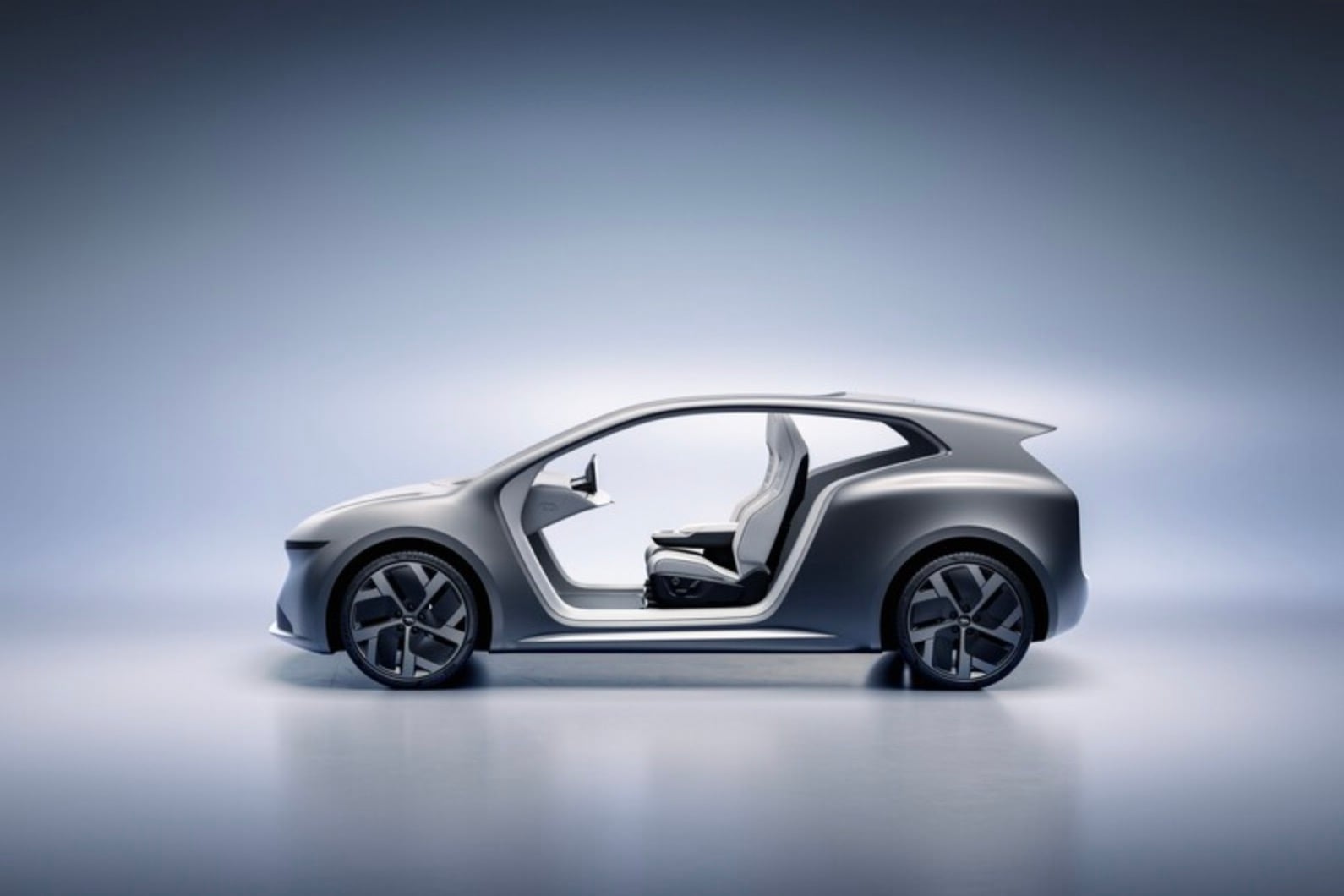
The Atlas drive unit is what makes the Cosmos’s interior dimensions work. Lucid says it reduced parts count by over 30% compared to the Zeus unit, and the freed-up underfloor space now houses massive cargo storage behind the rear seats, a large frunk, and a rear passenger floor low enough for real legroom. Conner flagged that the rear floor felt “slightly high,” a minor trade-off worth watching in a full test.
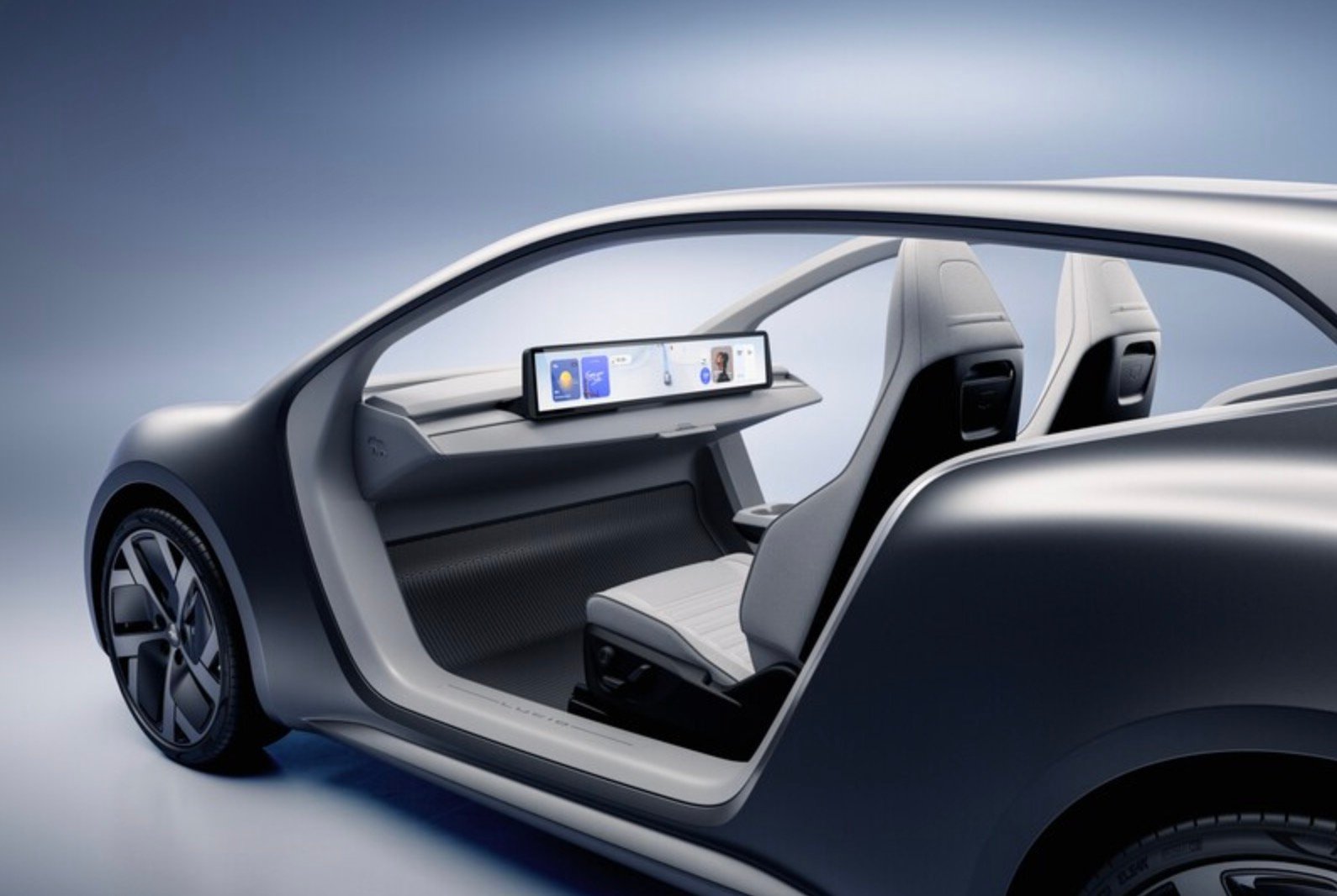
The door opening is large, entry height is low, and foot room is generous. Interior materials include recycled fiber that Conner described as feeling “almost like wool,” with stitching throughout, a glass center console cover, and a dark headliner. This is not budget-material execution. At under $50,000, that level of tactile quality would be a meaningful difference from what competitors offer at this price point.
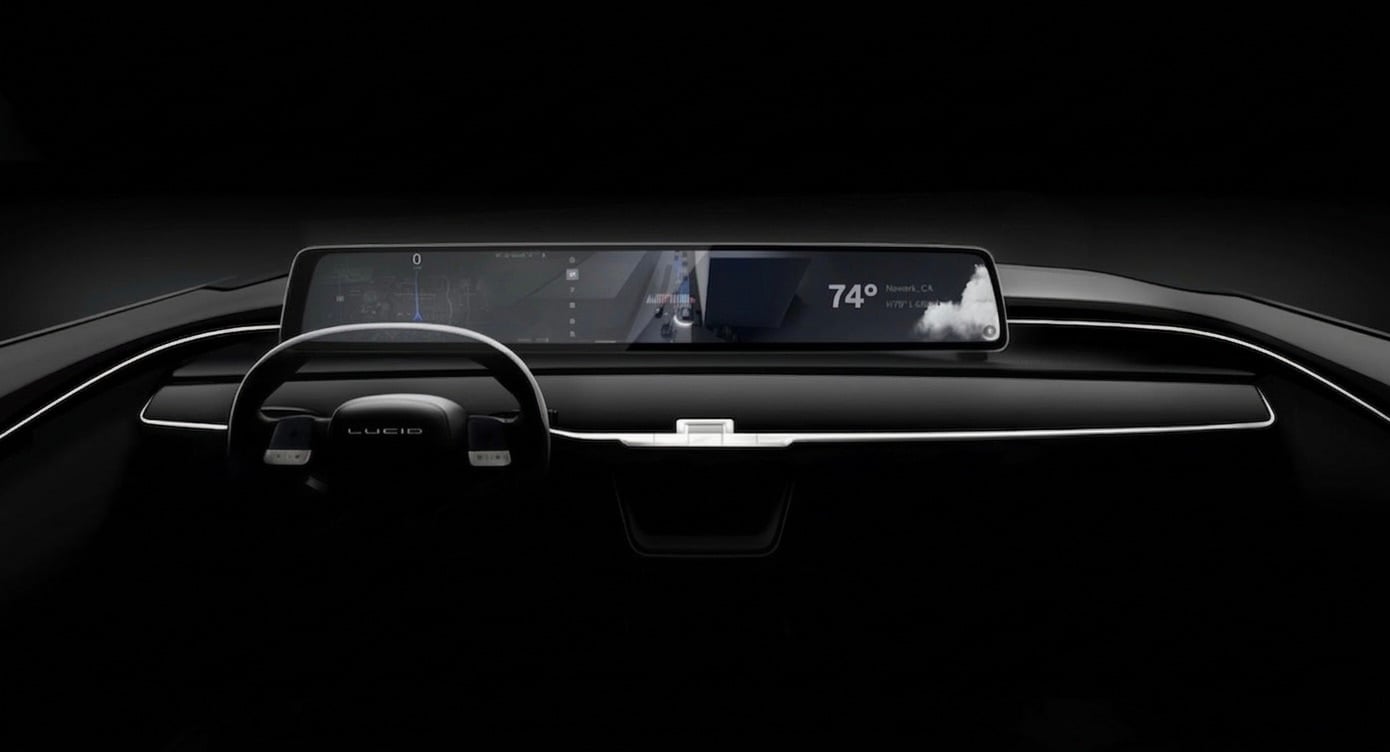
The infotainment setup is a single wide-panel screen floating above the dash and spanning the full width of the cabin. Conner noted it’s unlike anything else currently on sale in the western market. The UI is described as simple, similar to the Gravity’s. No secondary screen. Everything routes through that one panel.
Lucid Cosmos Tech Spec: 800V, NACS, NVIDIA ADAS
The Cosmos runs an 800V electrical architecture with a NACS charge port in the rear driver corner. The electrical architecture is nearly completely new and uses centralized compute, with a central gateway mounted on the firewall designed to reduce wiring length, connection count, and cost. Charging is described by Conner simply as “very fast,” with no specific kilowatt figure yet confirmed.
Atlas uses identical front and rear housings and mounts, a deliberate manufacturing decision that simplifies production and reduces tooling costs. That kind of design decision shows up in long-term reliability and serviceability, not just in a spec sheet. For ADAS, Lucid is likely using a NVIDIA system targeting point-to-point Level 2 capability, consistent with EVXL’s prior reporting on the Gravity’s DRIVE Thor platform. The Atlas drive unit family supplies both motors: a permanent magnet unit at the rear and an induction motor at the front. Suspension uses adaptive dampers with a virtual ball axis on the lower control arm and a fixed upper, a setup that should deliver better steering feel than a conventional MacPherson strut.
The body structure is worth noting too. Crash structure is designed to be replaced in stages, which Lucid says will lower insurance costs. It uses mixed material compounds rather than relying on single giant castings at front and rear. That’s a cost-conscious engineering choice that doesn’t sacrifice repairability.
Three Midsize Models Confirmed: Cosmos, Earth, and One More
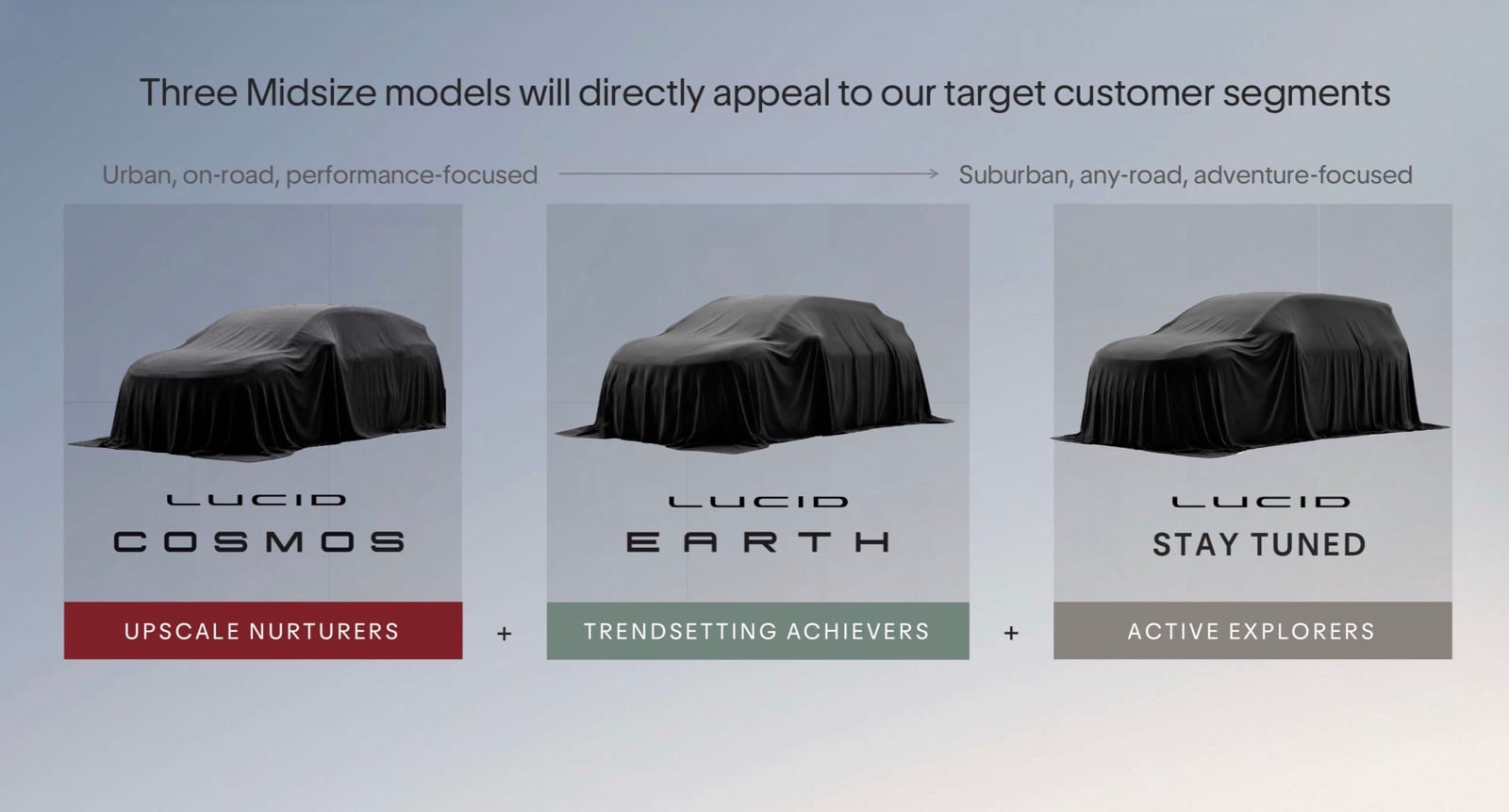
The Cosmos is the first of three confirmed models on Lucid’s midsize platform, which EVXL first covered in September 2024 when Lucid used “Earth” as the name for the platform itself. Investor day recast that name: Earth is now a specific model within the family, targeting what Lucid calls “trendsetting achievers,” while the Cosmos targets “upscale nurturers.” A third model for “active explorers” is still to be announced.
All three share the same technology foundation: Atlas drive unit, 800V battery, bi-directional charging, centralized low-voltage electronics, and the wide-screen interior layout. Bi-directional charging as a platform-level feature would be a genuine competitive differentiator at this price tier, not a premium add-on. Lucid’s investor day press release also confirmed the Midsize platform underpins the Lunar robotaxi concept and the Uber partnership discussions, giving the architecture a commercial revenue angle beyond direct consumer sales.
EVXL’s Take
The timing of this reveal wasn’t accidental. Lucid chose investor day to show the Cosmos to one external observer and let the details spread organically. It generates coverage without a formal press event, and it ties the midsize story directly to the financial narrative Lucid needs investors to believe: that the company can build and sell a profitable car at under $50,000.
I’ve been watching Lucid’s cost structure closely. The Atlas drive unit figures Lucid presented (37% lower BOM cost, 23% lighter, 30% fewer parts than Zeus) are significant if they hold in production. The Zeus unit in the Air and Gravity Touring is expensive to build, which is part of why Lucid has never been close to gross margin positive. A meaningful reduction in drivetrain cost changes that math. But there’s a number from the press release that cuts both ways: Lucid noted that batteries represent approximately 30–40% of the cost of an electric vehicle. Atlas savings don’t touch that line. “Lower cost to build” and “profitable at $50,000” are not the same thing.
What Conner described inside that car doesn’t sound like a cost-cutting exercise. Recycled fiber that feels like wool, glass center console covers, stitching throughout: that’s not the interior of a margin-positive $49,000 vehicle by default. Lucid will need to show production cost discipline it hasn’t yet demonstrated at scale, even as it continues to cut workforce and burn through its Saudi-backed cash runway.
Lucid’s investor day materials point to a production start in Saudi Arabia in late 2026 or early 2027. Given the company’s history with timeline slippage, I’d expect that to move. My actual prediction: the Cosmos reaches meaningful production volumes in late 2027, launches closer to $52,000-$55,000 with a lightly optioned base trim priced just under $50,000, and Lucid uses it to target the Model Y Performance buyer who wants a more premium interior. The Uber partnership and Lunar robotaxi concept add a fleet revenue thread that could matter more than consumer sales in year one. Whether any of that is enough to stabilize a balance sheet that already spooked markets after a Q4 beat is a harder question. The car is real. The business model still isn’t.
Editorial Note: AI tools were used to assist with research and archive retrieval for this article. All reporting, analysis, and editorial perspectives are by Haye Kesteloo.
Discover more from EVXL.co
Subscribe to get the latest posts sent to your email.