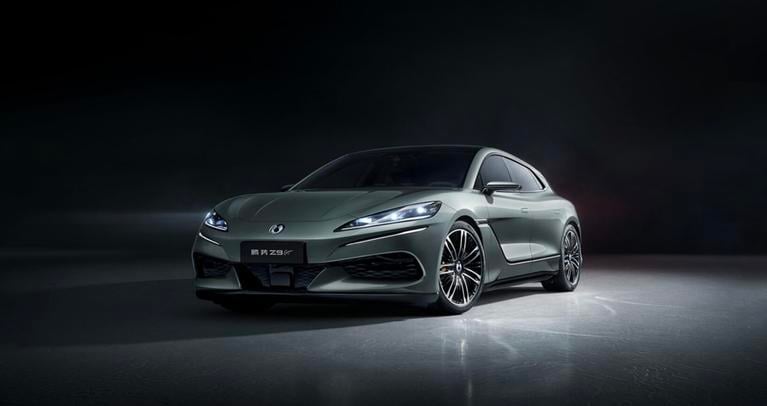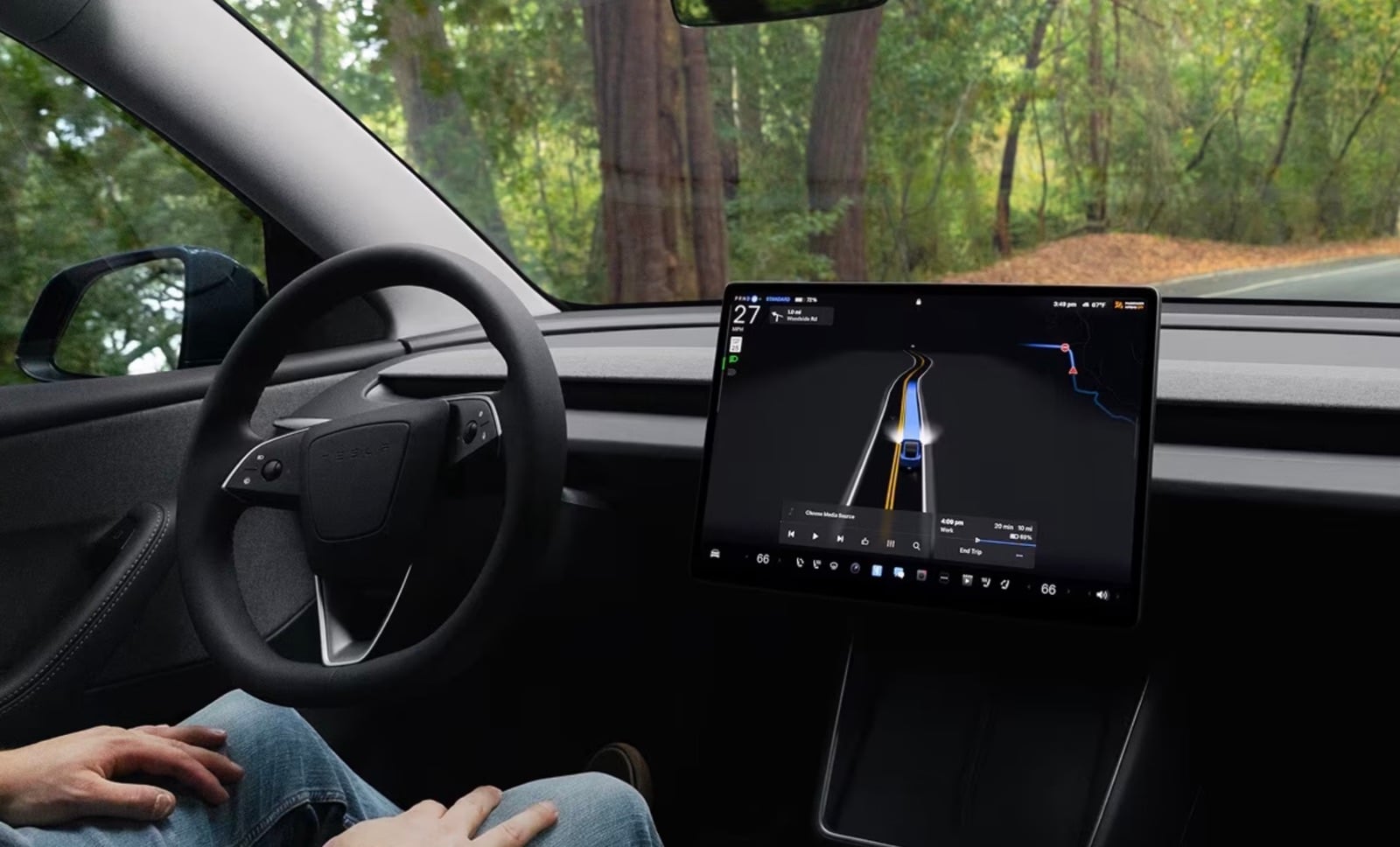
Tesla is developing an all-new compact electric SUV priced below its current entry-level Model 3 sedan, according to a Reuters report citing four people familiar with the matter. The vehicle would measure 4.28 meters (about 14 feet) in length, roughly 20 inches shorter than the current Model Y, and three sources say it would be produced at Tesla’s Shanghai factory. Tesla did not respond to Reuters’ questions about a new vehicle.
The new SUV is a separate model, not a trim variant of the Model 3 or Model Y. Tesla has contacted suppliers in recent weeks to discuss manufacturing processes and component specifications. Two sources say the target price would come in substantially below the Model 3’s current starting price of $37,000 in the U.S. and $34,000 in China. To hit that number, Tesla plans to use a single electric motor and a smaller battery, targeting roughly 1.5 metric tons in curb weight. The current Model Y weighs about 2 metric tons. Shorter range is the acknowledged trade-off.
The project is at an early development stage, and Reuters could not confirm whether Tesla has approved the car for production. None of the sources expect production to start in 2026.
Tesla Scrapped an Affordable EV Once Already
This is not the first time Tesla has chased a cheaper car. The effort follows a well-documented start-and-stop history with mass-market EVs that makes the announcement worth reading carefully before getting too excited.
For years, Elon Musk promised a $25,000 EV — widely called the “Model 2” — as the vehicle that would finally deliver on Tesla’s stated mission of accelerating EV adoption at scale. In 2024, Tesla scrapped those plans. Musk said building a conventional $25,000 car made no sense when driverless vehicles were supposedly imminent, and the company pivoted hard toward robotaxis and humanoid robots. When “more affordable” Teslas did arrive last fall, they were stripped-down Model 3 and Model Y variants in new Standard trim levels — the Model 3 Standard at $36,990 and the Model Y Standard at $39,990 — prices that failed to attract the new buyer segment Tesla needed.
Tesla’s entire car lineup was designed between 2017 and 2020. While the company was pivoting to robotaxis, Chinese competitors were launching genuinely cheaper EVs on much faster product cycles. BYD outsold Tesla by 620,000 battery-electric vehicles in 2025, and the gap grew every quarter. An all-new compact SUV priced below the Model 3 would be a direct answer to that pressure — if it actually gets built.
The New SUV Would Need to Work With or Without a Driver
Tesla’s internal product philosophy, according to a Tesla employee Reuters spoke with, now calls for building cars that can operate driverlessly but still offer a human-driven option. The company recognizes that meaningful autonomous vehicle adoption — and the regulatory approvals that enable it — is years away in most global markets. A platform that can be sold either way keeps factories running and sales flowing while Tesla waits for autonomy regulations to catch up.
That dual-purpose logic also explains why a cheap compact SUV and a robotaxi strategy are not necessarily in conflict. The same vehicle architecture could potentially serve both roles. But “potentially” is doing a lot of work in that sentence. Tesla unveiled the Roadster and Semi concepts in 2017. The Roadster has never entered production. The Semi reached limited customer deliveries in December 2022 but has not reached volume production. The Cybercab, which Tesla says it will begin producing this month, has six units in crash testing at Giga Texas — but Tesla has not yet applied to the National Highway Traffic Safety Administration (NHTSA) for the federal exemption required to sell a vehicle with no steering wheel or pedals. And as a California regulator confirmed in March, Tesla’s current “Robotaxi” service in that state operates on a limo permit, not an autonomous vehicle authorization.
What the Numbers Would Have to Look Like
Tesla has not disclosed a target price, but two Reuters sources say it would be “substantially lower” than $37,000 in the U.S. A single motor, smaller battery, and 1.5-metric-ton weight target are the cost levers cited. The Model Y currently earns an EPA-estimated range of 294 to 357 miles depending on configuration. The new compact SUV would come in below that, though no specific EPA estimate or even a manufacturer target has been stated. Any range figure circulating right now is speculation.
On price, the math matters too. The U.S. federal EV tax credit of up to $7,500 under the Inflation Reduction Act bars vehicles with battery components or critical minerals sourced from Foreign Entities of Concern — a category that includes China. A Tesla built in Shanghai would almost certainly not qualify under current law. A car that stickers at $30,000 before incentives but doesn’t qualify for the credit is functionally more expensive than a domestic competitor that does. That math alone could undercut the entire affordability argument before a single unit ships.
EVXL’s Take
The timing of this report is hard to separate from the pressure Tesla is under. Yesterday we covered a $43.9 billion collapse in Tesla’s projected free cash flow — analysts who in 2022 expected Tesla to generate $38.8 billion in free cash flow by 2026 now forecast negative $5.1 billion for the same year. The stock still trades at a market cap above $1 trillion. That valuation has always depended on the robotaxi story. This new compact SUV report complicates the narrative without replacing it.
I haven’t driven anything that resembles this vehicle, because it doesn’t exist yet. What I can say from covering Tesla’s product pipeline is that supplier conversations are real signals — companies don’t invite suppliers to discuss component specs for fun — but they’re also the earliest possible stage of a process that Tesla has aborted before, at exactly this phase. The Model 2 got further than supplier calls before it was canceled.
The dual-platform logic — build a car that works autonomously or with a driver — is genuinely smart if Tesla can execute it. It’s also the kind of thinking that sounds clean in a product meeting and gets complicated fast at the engineering level. Full autonomy hardware means redundant sensors, compute, and actuators. Adding all of that to a vehicle designed to compete below $30,000 with competitive range is not a straightforward cost-reduction exercise. Something gives.
Tesla will not have this vehicle in production before 2028. The company typically needs 18 to 24 months from first supplier contact to start of production on a new model, and that assumes no program cancellations. This project has no confirmed production date, no publicly stated SOP target, and a CEO who canceled the last cheap-car program at a more advanced stage than this one. If it does reach production, it will face a Chinese EV market that will be two full product cycles further ahead than it is today. The real test is not whether Tesla can announce a cheap SUV — it’s whether it can build and price one that competes with what BYD and Geely will be selling by then. I’d want to see a confirmed start-of-production date before treating this as a strategy shift.
EVXL uses automated tools to support research and source retrieval. All reporting and editorial perspectives are by Haye Kesteloo.
Discover more from EVXL.co
Subscribe to get the latest posts sent to your email.