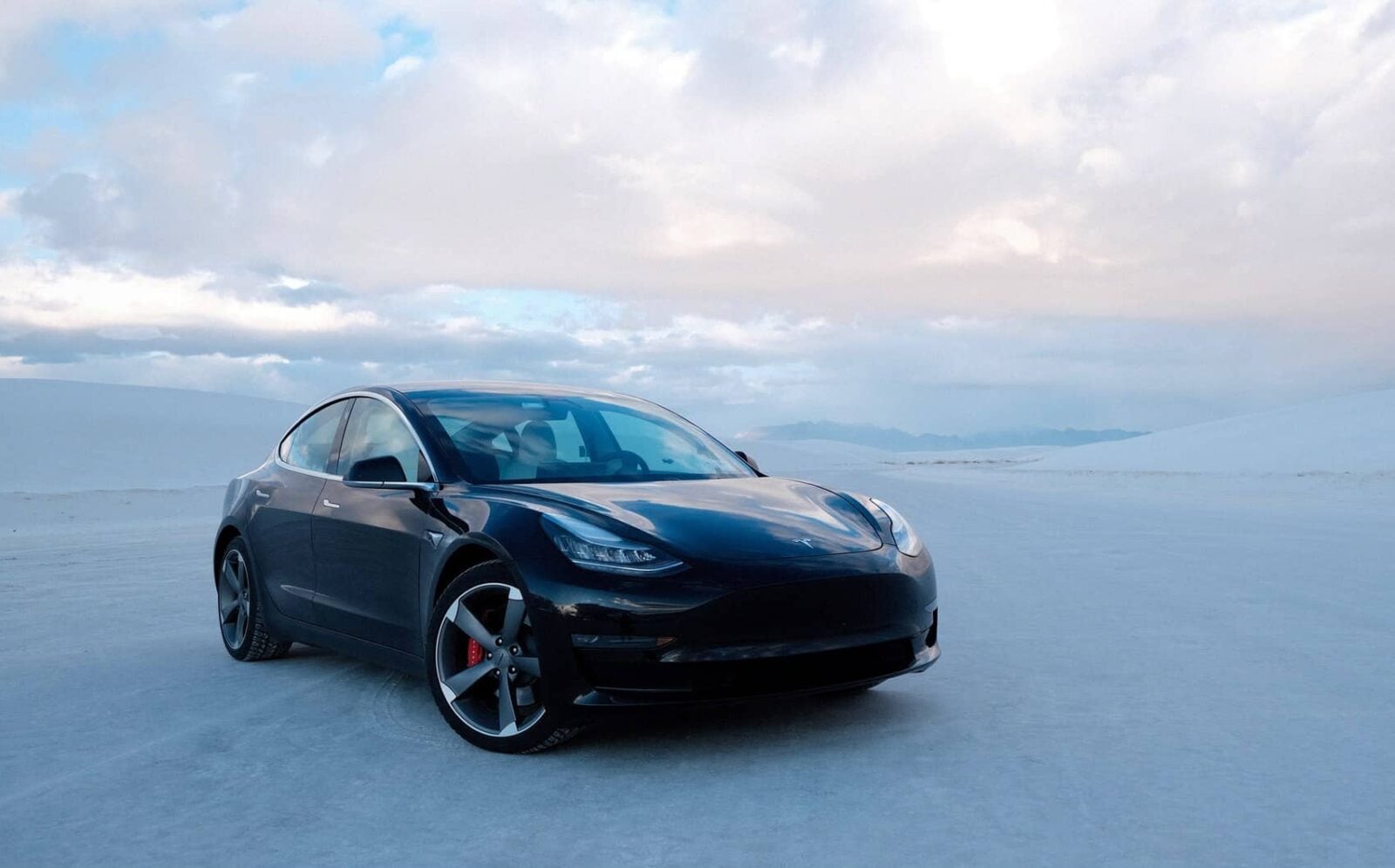
Tesla registrations in Germany more than quadrupled in March 2026 compared to a year earlier, according to data published Tuesday by Germany’s federal road traffic authority, the KBA (Kraftfahrt-Bundesamt). Reuters reported (paywalled; KBA monthly registration data available at kba.de) that newly registered Tesla vehicles jumped 315.1% year-on-year to 9,252 units in March. For context: that implies Tesla registered approximately 2,229 units in Germany in March 2025 — one of its worst monthly figures in years. First-quarter 2026 registrations rose 160% to 12,829 vehicles. The broader German battery-electric vehicle market also had a strong month, with total new BEV registrations climbing 66.2% to 70,663 units.
Those numbers look spectacular in isolation. They are less spectacular once you remember what they’re being measured against: early 2025, when Tesla’s European sales were collapsing under the weight of Elon Musk’s political visibility, an aging lineup, and intensifying competition. A 315% year-on-year gain off a base of roughly 2,200 units is a recovery story, not a triumphant one.
The March Numbers in Full
Tesla’s 9,252 German registrations in March represent its strongest monthly performance in over a year, and the Q1 total of 12,829 vehicles shows the momentum is not just a single-month spike. The KBA data also showed Chinese manufacturer BYD posting 327.1% year-on-year growth to 3,438 units in March, bringing its Q1 total to 9,120 vehicles. BYD is now 3,709 units behind Tesla’s quarterly German volume — a gap that looked much larger twelve months ago.
The overall BEV market gain of 66.2% is worth separating out. That is a market-level tailwind. Tesla’s 315% outpaces it by a wide margin, which does suggest the brand is recapturing buyers who had switched or delayed, not just riding a rising tide. But BYD’s 327.1% gain comes off an equally depressed 2025 baseline, so that number carries the same asterisk. Both companies are bouncing. The question is which bounce reflects real demand and which reflects deferred purchases finally clearing.
As we covered in March, Tesla’s February Europe rebound looked strong until you examined the January baseline it was being measured against. March is a continuation of that same comparison dynamic.
What Drove the Slide Tesla Is Now Recovering From
Reuters attributes Tesla’s regional market share loss in 2025 to three factors: intensifying competition, a lack of new models, and consumer backlash tied to Musk’s political stance. All three had measurable weight in Germany specifically. The country’s car-buying culture is brand-conscious and politically aware in ways that amplified exactly the kind of reputational drag Tesla carried through most of 2025.
A Yale University study published in October 2025 put numbers on the Musk effect: economists estimated his political activities cost Tesla between one million and 1.26 million additional U.S. sales. The European picture was directionally similar. In early March, Tesla’s Danish registrations were still down 18% in February — a reminder that the recovery was uneven across markets even as the aggregate headline numbers improved.
Tesla also spent much of 2025 in organizational churn. Joe Ward became Tesla’s fourth global sales chief in 18 months in February 2026, promoted from the company’s worst-performing region. Stable commercial leadership is a prerequisite for any durable sales recovery, and Tesla is still building it.
Giga Berlin Sits at the Center of This Recovery
Germany is not a random market for Tesla. Giga Berlin produces the Model Y for the European market, which means German registration volumes are partly a function of what comes off that factory’s line. The plant had its own turbulence in early 2026. Tesla and IG Metall reached a truce at a Frankfurt (Oder) labor court shortly before the works council vote, defusing a standoff over union recognition that had threatened to freeze expansion plans. Whether the dispute left lasting production friction, or whether March’s volume reflects pent-up delivery timing from earlier in the quarter, is not yet clear from the KBA data alone.
BYD’s parallel growth in Germany is a separate story worth watching closely. At 9,120 Q1 registrations versus Tesla’s 12,829, BYD is no longer a rounding error in the German market. BYD outsold Tesla globally by 620,000 EVs in full-year 2025, and its European push is deliberate and funded. The German numbers confirm that push is working at retail level — even accounting for the base effect.
EVXL’s Take
March’s numbers are real and they’re good for Tesla. But I’d be cautious about reading them as a structural recovery signal rather than a base-effect bounce. When I looked at the February European data a month ago, the same pattern appeared: big percentage gains, weak prior-year comparisons, and a market that was still working out whether it actually wanted Tesla back or was just clearing delayed purchases.
The comparison that matters is not March 2026 versus March 2025. It’s Q1 2026 versus Q1 2024, before the Musk-effect erosion set in. That data isn’t fully assembled yet for Europe as a whole, but Germany’s 12,829 Q1 units will tell a cleaner story once placed against that baseline. If Tesla is approaching or exceeding its Q1 2024 German volume, that’s a genuine recovery. If it’s still below, the “quadruple” headline is noise built on a collapsed floor.
BYD closing to within 3,709 units of Tesla’s quarterly German volume is the number that will define the next two years of European EV competition. Tesla has Giga Berlin, local production cost advantages, and a Supercharger network that no Chinese brand can match today. Those are real advantages. They are also narrowing ones: IONITY continues expanding fast-charging coverage across Germany, CCS adapter adoption is widening, and Tesla’s own decision to open its network to other brands has reduced the exclusivity that once made Supercharger access a purchase driver. If BYD reaches parity in German quarterly volumes by Q3 2026, Tesla’s European manufacturing advantage will be under genuine pressure for the first time.
EVXL uses automated tools to support research and source retrieval. All reporting and editorial perspectives are by Haye Kesteloo.
Discover more from EVXL.co
Subscribe to get the latest posts sent to your email.