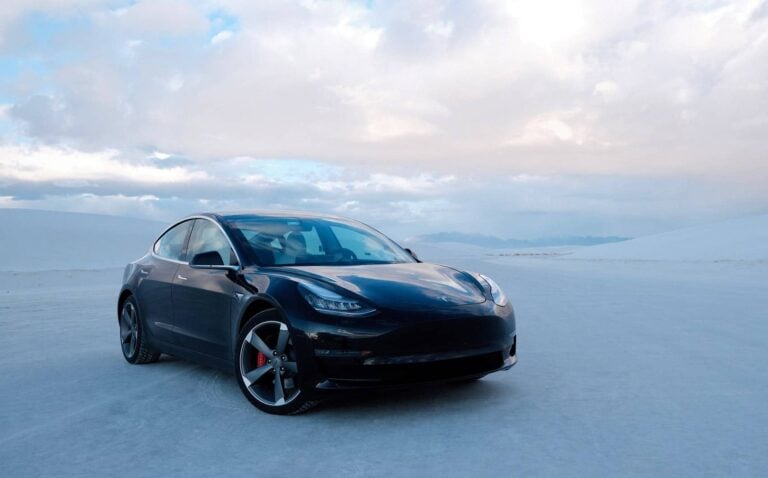
The National Highway Traffic Safety Administration (NHTSA) has denied a 2023 petition that demanded a recall of every Tesla built since 2013, concluding there is no evidence of a safety defect tied to the company’s use of regenerative braking and one-pedal driving. The agency’s Office of Defects Investigation (ODI) reviewed more than 2.2 million Tesla vehicles and found that in the small number of incidents linked to the petition’s claims, vehicle data showed the cars responded correctly to driver inputs. The full denial was reported by Drive Tesla Canada, which obtained and published the ODI denial document. This is the second time in four years NHTSA has rejected a mass-recall petition built on sudden unintended acceleration (SUA) allegations against Tesla — the first came in 2021, after a petition filed by Brian Sparks, a well-known Tesla short-seller.
The Petition’s Core Argument: One-Pedal Driving as a Hazard
Greece-based accident investigator Costas Lakafossis filed the petition in March 2023, arguing that Tesla’s reliance on regenerative braking fundamentally changes how drivers interact with the vehicle compared to a traditional internal combustion engine (ICE) car. His central claim: because Tesla’s regenerative braking slows the vehicle when the driver lifts off the accelerator, drivers can bring the car nearly to a stop without ever touching the brake pedal. Lakafossis argued this trains a habit that could trigger “pedal misapplication” — pressing the wrong pedal in a moment of stress — and cause SUA events.
To fix this, he proposed that Tesla require drivers to periodically lift their foot from the pedals entirely, and that the car mandate a brake pedal press before completing a stop or shifting into reverse. He pointed to the Brake Transmission Shift Interlock (BTSI) found in automatic-transmission cars dating to the 1980s as a proven model: “It has been proven beyond any doubt that the BTSI feature of automatic gearboxes of the ’80s has successfully mitigated the risk of SUA during start-up,” he wrote.
His criticism of the reverse-gear workflow was direct: “There is absolutely no need and no reason behind the decision to allow the driver to select reverse gear and wait for the car to stop by itself, and then reverse without ever pressing the brake pedal.”
NHTSA Found the Vehicles Behaved as Designed
After reviewing the petition, technical documentation, and Tesla’s formal response, ODI found no basis for opening a safety defect investigation. “ODI is denying this Petition. ODI has not found evidence that warrants the opening of a safety defect investigation into the Tesla vehicles as described in the Petition,” the agency stated. Investigators identified only a small number of incidents that could plausibly be connected to the petition’s claims, and in each case the vehicle data showed the car did exactly what the driver’s inputs told it to do.
NHTSA also rejected the proposed BTSI-style fix on its merits, noting there was no evidence the interlock mechanism would have prevented any of the reported events. The agency added that one-pedal driving is not a Tesla-specific design choice — regenerative braking controlled through the accelerator pedal is standard across a wide range of electric vehicles from multiple manufacturers.
This is worth keeping in context. The Cybertruck accelerator pedal recall in April 2024 involved a real, documented hardware defect — a pedal pad that could detach and jam against the interior trim, causing unintended acceleration. That recall covered 3,878 vehicles and was grounded in a physical failure mode. This petition was built on a behavioral theory about driver habits, not a hardware or software fault NHTSA could identify and isolate.
A Pattern of SUA Allegations Against Tesla
SUA claims against Tesla have a long paper trail. The 2021 Sparks petition covered the same vehicles under the same theory and was denied on similar grounds. A November 2025 wrongful death lawsuit alleged a 2018 Tesla Model 3 “suddenly and rapidly accelerated out of control” before crashing into a utility pole. Civil litigation and regulatory petitions are different processes, and NHTSA’s denial here does not resolve those court cases. But the agency’s consistent position — that vehicle data in reported SUA events shows driver inputs, not a vehicle malfunction — has held across multiple reviews over several years.
One important distinction: NHTSA’s denial of the Lakafossis petition is specific to its behavioral-conditioning theory. A separate SUA investigation, opened in July 2023 and based on researcher Dr. Ronald Belt’s technical claim that inverter voltage spikes could generate false accelerator inputs, is a distinct proceeding. That investigation is not resolved by this denial. The two cases share a label — SUA — but argue different failure modes.
NHTSA has meanwhile opened and pursued investigations into Tesla on other grounds. The agency launched a probe into Tesla’s “Mad Max” Full Self-Driving mode in October 2025 after drivers reported routine speeding by the system. The Model 3 door handle probe and the broader door handle safety crisis that reached Congress in early 2026 show the regulator moves when data supports it. The Lakafossis petition didn’t clear that bar.
EVXL’s Take
NHTSA got this one right. The behavioral argument at the center of the Lakafossis petition — that one-pedal driving rewires driver habits in a dangerous way — is a legitimate area for human factors research, but it is not the same thing as a vehicle defect. Defect investigations require a failure mode: something the vehicle does that it should not do, or fails to do that it should. When data consistently shows the car responding correctly to driver inputs, there is no defect to recall.
I’ve spent time in Teslas using one-pedal driving in stop-and-go traffic, and the adjustment period is real. The first hour or two, you catch yourself reaching for the brake pedal more than you need to. That’s driver adaptation, not a design flaw. Every vehicle with a different braking profile asks the same adjustment of new drivers. Nissan Leaf owners have been navigating regenerative braking since 2011, with full one-pedal-to-stop capability arriving on the second-generation model in 2018. The adjustment curve is not new, and it has not produced a documentable defect pattern in over a decade of widespread EV use.
The broader pattern here matters. This is the second time in four years the same behavioral recall theory has been filed and denied. The SUA allegation built on pedal-conditioning arguments has become a recurring regulatory tactic, and the evidence base for that specific theory has not grown to match the claims. That is distinct from the Belt inverter-voltage investigation, which rests on a different technical premise and deserves to be evaluated on its own data.
If SUA from one-pedal driving were a real systemic problem across 2.2 million vehicles, the incident rate would show it by now. It hasn’t. Expect this behavioral theory to surface again in civil litigation, where the evidentiary standard is different from what NHTSA requires to open a defect investigation — and where plaintiff attorneys don’t need NHTSA’s blessing to argue it to a jury.
EVXL uses automated tools to support research and source retrieval. All reporting and editorial perspectives are by Haye Kesteloo.
Discover more from EVXL.co
Subscribe to get the latest posts sent to your email.