That 17.9-inch interior display is the first thing that hits you in the cabin shots. It spans nearly the full width of the dashboard, flanked by a panoramic display header that looks closer to a living room screen than a car instrument cluster. BMW has officially revealed the new i3 sedan, the flagship Neue Klasse electric car built on an 800V architecture, and the numbers are harder to dismiss than anything BMW has put forward since the original i8.
- The Fact: The BMW i3 50 xDrive is the production version of the Neue Klasse sedan, with up to 560 miles (900 km WLTP, preliminary) or 440 miles for the U.S. EPA cycle of range, 400 kW peak charging, and 463 hp.
- The Delta: The i3 adds vehicle-to-load (V2L) bidirectional charging at 3.7 kW and Amazon Alexa+ AI integration, two features BMW has not offered on any previous EV.
- The Buyer Impact: European deliveries begin late 2026; U.S. buyers wait until early 2027, with no pricing confirmed for either market.


BMW i3 Specs: What the i3 50 xDrive Actually Delivers
The BMW i3 50 xDrive is a four-door electric sedan built on the Neue Klasse platform with an 800V electrical architecture, 463 horsepower from a dual-motor all-wheel-drive system, and a preliminary WLTP range of up to 900 km (approximately 560 miles or 440 miles on the EPA cycle). BMW has confirmed no binding WLTP values yet, so the 900 km figure is subject to change before series production begins.
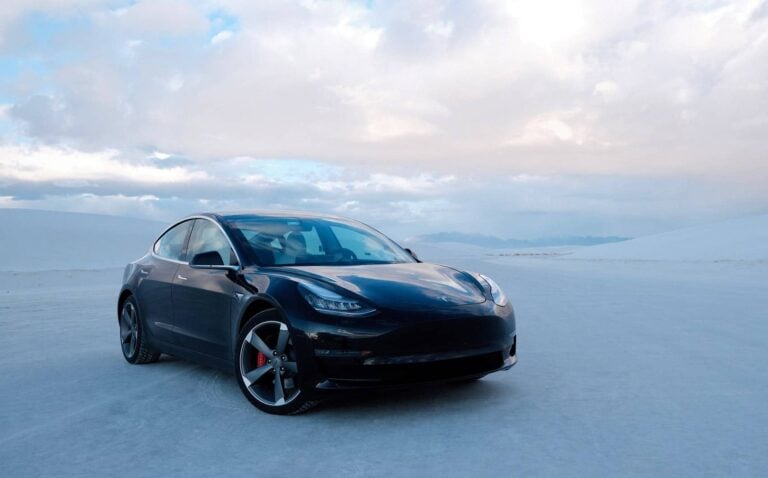
Peak DC fast charging hits 400 kW, matching the BMW iX3‘s spec on the same 800V architecture we first covered when BMW revealed the iX3 prototype. That rate is well above the Tesla Model 3 Long Range, which peaks at 250 kW.
The full spec sheet from the reveal:
- Range: up to 560 miles / 900 km (WLTP, preliminary), or 440 EPA cycle.
- Peak charging: 400 kW DC
- Output: 463 hp (i3 50 xDrive)
- Architecture: 800V (shared with iX3)
- Bidirectional charging: V2L at 3.7 kW
- Display: 17.9-inch interior screen with panoramic display header
- AI integration: Amazon Alexa+
The Neue Klasse Platform: Hardware Behind the i3
The BMW Neue Klasse platform is a ground-up EV architecture combining sixth-generation cylindrical battery cells, an 800-volt electrical system, and BMW’s Gen6 eDrive motors, all developed specifically for electric vehicles rather than adapted from combustion underpinnings. The i3 is the second production vehicle on this platform, following the iX3.
The Gen6 battery cells deliver roughly 20% higher energy density than the Gen5 pouch cells currently in the i4 and i5. The i4 gets its final update before this platform replaces it, and the efficiency gap between the two generations is measurable. The cylindrical cell format also runs cooler under fast charging loads, which is part of why BMW can sustain 400 kW without the thermal management overhead that limited earlier models.
The i3 adds one capability the iX3 does not have at launch: V2L. At 3.7 kW, the bidirectional output covers camping loads and job-site tools. It is a practical addition, and one that Hyundai and Ford have been using as a selling point for two years.


Design and Interior: Production Reality vs. Concept Promises
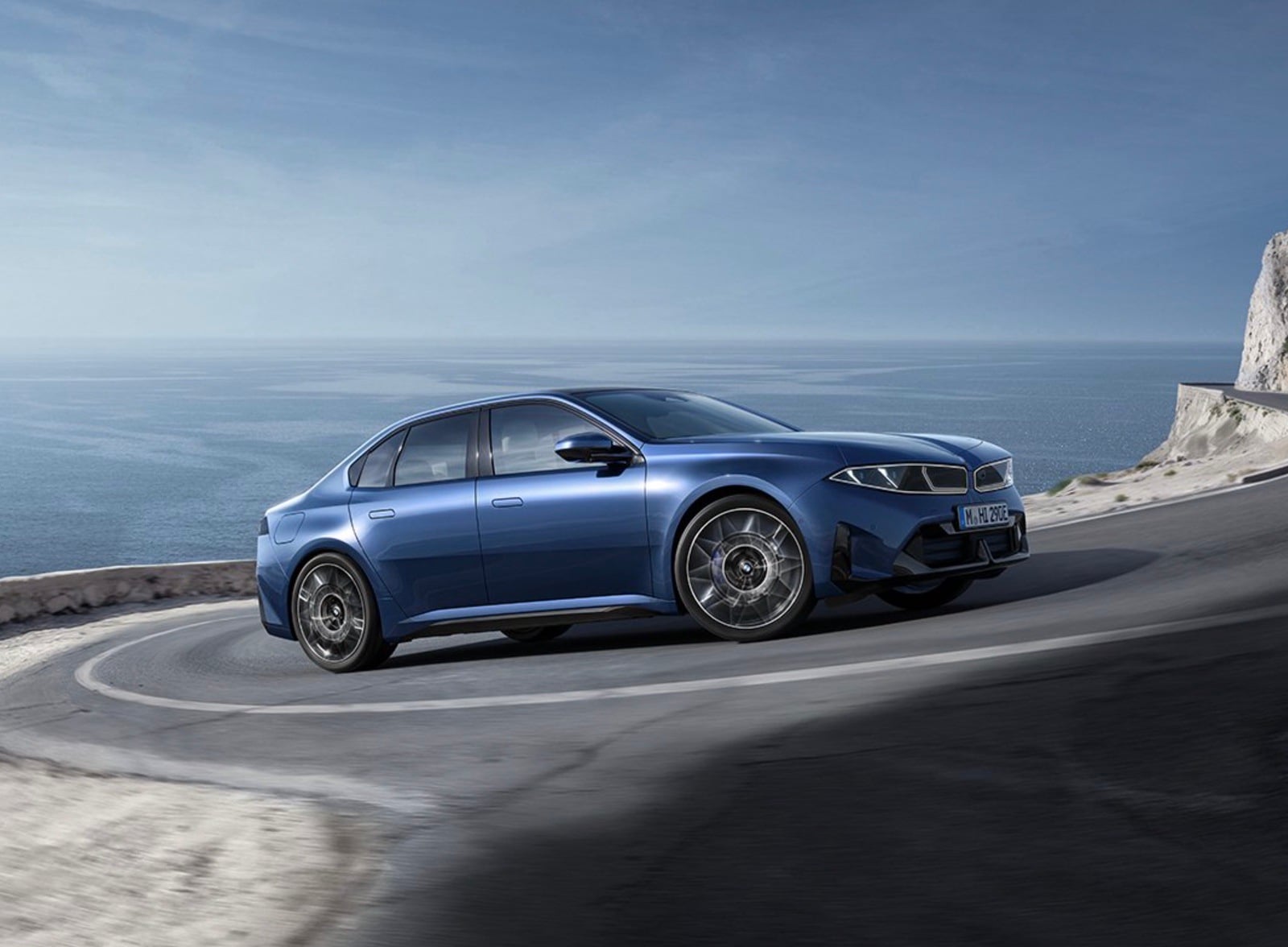
The exterior photos show a low-slung fastback sedan with a closed-off front fascia and flush door handles. It reads as a BMW, the kidney grille shape is retained though blanked off for aerodynamics, but the proportions differ clearly from the current 3 Series. The spy shot analysis we published in December 2025 identified the taller rear roofline, kinked rear window divider, and rearward charging port location, all of which are visible in these official images.
Inside, the 17.9-inch display dominates. BMW pairs it with a panoramic header display that wraps across the dash, a dual-screen setup similar in ambition to the Mercedes MBUX Hyperscreen but with a different layout. Amazon Alexa+ handles voice AI duties, an unusual partnership for a German premium brand. Whether that AI layer proves useful or amounts to a marketing checkbox depends entirely on how deeply it integrates with navigation and vehicle functions rather than just answering general queries.
Deliveries, Pricing, and the U.S. Wait
European deliveries start in late 2026. U.S. deliveries move to early 2027, and BMW has released no pricing for either region. That is a deliberate choice: announcing a price today for a car arriving in 18 months, in a tariff environment this volatile, creates problems BMW does not need.
When we covered pre-production starting at BMW’s Munich plant in February, the estimated U.S. entry price was around $50,000. At that level, the i3 sits roughly $13,000 above a base Tesla Model 3. There is no federal EV tax credit currently in play to close that gap, and BMW’s 2025 financials, the worst since the pandemic, show what an uphill climb premium EVs face in the U.S. right now.
Series production at Munich is targeted for the second half of 2026, running alongside the combustion 3 Series and 4 Series. BMW’s Munich plant was rebuilt around the i3 while keeping 1,000 combustion cars a day flowing through the same facility. That is the hedge BMW is running: full EV capability, but no forced exit from ICE volume.
EVXL’s Take
The specs are real. The 440-mile range, 400 kW charging, and 800V architecture are not paper numbers from a concept car. This is production hardware already running in the iX3. We outlined this platform’s potential back in June 2025, and the final production spec matches or exceeds nearly every projection we made. BMW didn’t overpromise on Neue Klasse. That matters.
What’s harder to get excited about is the timeline. Late 2026 in Europe, early 2027 in the U.S., no pricing confirmed. That’s a long runway in a fast-moving market. By the time the i3 lands in American showrooms, the refreshed Model 3 will have been on sale for three years, and Chinese competitors will be knocking with comparable specs at lower prices.
The V2L addition is smart and overdue. BMW watched Hyundai use bidirectional charging as a differentiator for two years. At 3.7 kW, the i3’s V2L won’t power a household, but it’s useful at a campsite or job site and is now table stakes for any serious EV in this price range.
The Amazon Alexa+ partnership is the one to watch. If it’s a shallow voice assistant layered on top of BMW’s iDrive, it won’t move the needle. If it’s actually wired into route planning, charging stops, and vehicle functions, it could be the most practical AI feature in any production EV. That distinction won’t be clear until the car is in customer hands in late 2026.
Expect European deliveries to go well. The hardware is competitive, the range story is strong, and BMW’s brand holds pricing power in Germany and the UK far better than it does in the U.S. right now. American volume will stay soft through at least the first half of 2027 without a price cut or a return of federal EV incentives. BMW won’t do the former voluntarily, and the latter isn’t in their control.
Editorial Note: AI tools were used to assist with research and archive retrieval for this article. All reporting, analysis, and editorial perspectives are by Haye Kesteloo.
Discover more from EVXL.co
Subscribe to get the latest posts sent to your email.