

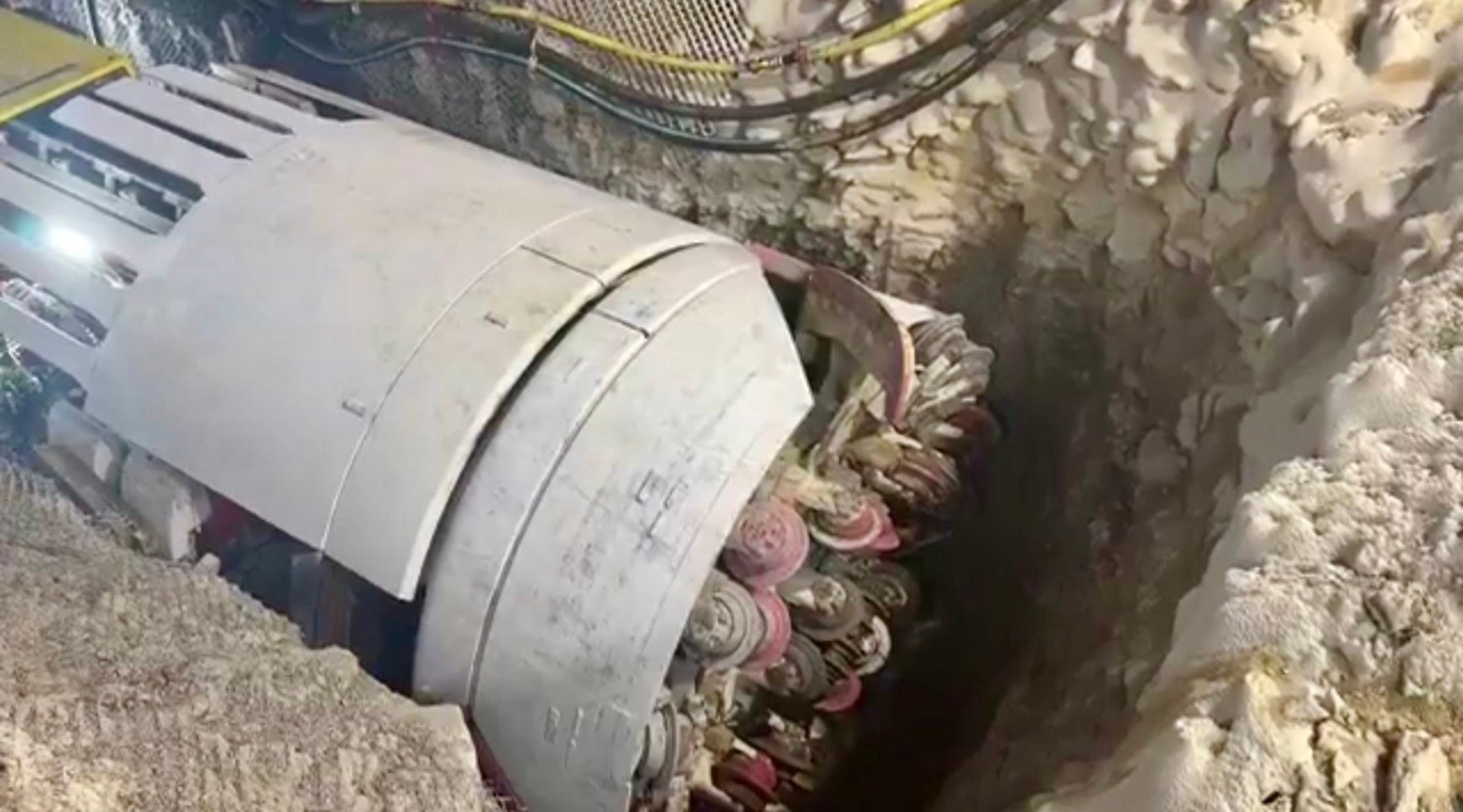
The vote Tuesday night wasn’t close enough to stop anything, and everyone in the chamber knew it. Nashville’s Metro Council passed a resolution expressing concerns about The Boring Company‘s Music City Loop tunnel project 20 to 15, with 2 abstaining. The resolution has no legal force. It cannot delay tunneling or alter the route. It has no power to call a single public meeting. What it does is put Nashville’s elected officials on record: they feel cut out of a major infrastructure decision made above their heads.
- The Fact: Nashville’s Metro Council passed a symbolic protest resolution 20-15 against The Boring Company’s Music City Loop, a tunnel system running Tesla vehicles between the airport, downtown, and a second western leg.
- The Delta: The project bypassed city authority entirely. Tennessee Gov. Bill Lee’s administration approved the deal directly with The Boring Company, granting free use of state land near the Capitol.
- Our Read: This is the third distinct jurisdiction in roughly 12 months where local or state-level backlash has directly targeted a Musk-affiliated company over perceived disregard for public process. The individual episodes differ in mechanism. The throughline does not.
- The Buyer Impact: For Tesla owners and prospective buyers, this accumulating political friction is a brand-risk story, not just a transit story.
Nashville Council’s Protest Resolution Changes Nothing — and That’s the Point
The Metro Council’s resolution is purely symbolic under Tennessee law. The Boring Company and Gov. Lee’s administration structured the deal specifically at the state level to prevent city officials from having veto power over the project. That was deliberate. As I reported when tunneling began on February 25, TDOT and the Federal Highway Administration jointly approved The Boring Company’s lease and grading permit, with the Metropolitan Nashville Airport Authority separately approving a 40-year licensing agreement. Nashville city government was not a party to any of those approvals.
Council member Delishia Porterfield, who sponsored the resolution, framed it plainly: “Public land needs to be for public good and public infrastructure decisions must prioritize the welfare, safety and express needs of Nashville residents.” Council member John Rutherford voted against it, warning that passing the resolution could close the door to any ongoing dialogue with The Boring Company. That tension — protest vs. pragmatism — split the chamber nearly down the middle.
The Boring Company CEO Steve Davis, speaking before the vote, was characteristically breezy about local sentiment: “Nashville has been fantastic. Moved at an incredible speed, so welcoming, so kind, so friendly.” The company did not respond to media requests for comment after the resolution passed.
The Specific Concerns Nashville Raised Are Not Trivial
Council members cited geological risks from Nashville’s porous limestone geology, which creates real sinkhole exposure that doesn’t exist in the Las Vegas desert where The Boring Company’s only operational tunnel runs. Nashville also has a documented history of flooding. Add in unresolved ADA compliance questions, no completed environmental impact study before construction started, and a near-total absence of public consultation, and the grievance list is substantive.
The project’s optics at launch didn’t help. Democratic state Rep. Justin Jones was blocked from entering The Boring Company’s announcement event in July 2025. That detail circulated widely and shaped every local government interaction since.
The Music City Loop, as currently designed, runs across two legs: the original 13-mile airport-to-downtown segment plus a second western route. The Boring Company’s project materials put the total at roughly 25 miles across more than 30 planned stations. Passengers ride in human-driven Tesla Model Y and Model X vehicles through tunnels 30 feet below street level. Autonomous operation is described as a future possibility, not a current specification. Fares are expected to be lower than existing transit alternatives, and the project carries no direct taxpayer cost, though The Boring Company receives state land near the Capitol at no charge.
The first operational segment is targeted for Q1 2027. As I wrote last week, that timeline is aggressive. Station buildout and systems integration will be the real pacing constraints, not Prufrock tunnel speeds. A late 2027 opening for the first segment is more realistic.
The Musk Playbook: Ally With State Government, Outflank Local Opposition
Nashville is not an isolated incident. The same structural approach — find a politically aligned state government, lock in approvals above the local level, then proceed — has become a recognizable pattern across Musk’s companies.
When Tesla reincorporated in Texas in June 2024, the move gave Musk more than legal shelter from Delaware courts. It put Tesla’s headquarters in a state where the governor’s office, legislature, and regulatory environment are structurally aligned with the company’s interests. The Nashville tunnel deal mirrors that logic. Tennessee’s Republican administration granted land and secured permits before local opposition could form into anything legally meaningful.
The political cost is accumulating elsewhere. New York lawmakers moved to revoke Tesla’s direct-sales license over Musk’s White House role. An Australian city rejected a Tesla battery factory proposal with 95% community opposition. National protests hit Tesla showrooms over DOGE. Each episode is distinct. The throughline is the same: communities are treating Tesla as a proxy for Musk’s broader political behavior.
EVXL’s Take
The Nashville resolution is symbolic, but symbols accumulate. I’ve been tracking the way Musk’s political positioning bleeds into brand perception since the DOGE protests started, and the pattern is now consistent enough to call it a structural risk, not a PR cycle.
When Musk pledged to refocus on Tesla last April, the stock jumped more than 5%. The market read it as a signal that the political exposure was being contained. It wasn’t. European sales are still slipping, and Nashville adds another data point to what’s becoming a global perception problem.
The Boring Company’s strategy of working through allied state governments is rational from a project-execution standpoint — it gets shovels in the ground before opposition can congeal. But it generates exactly the kind of “democracy bypass” narrative that critics can sustain across multiple news cycles. Nashville’s council didn’t stop the tunnel. They created a story. And that story connects to New York’s Tesla crackdown, to Australian community votes, to DOGE protests outside showrooms. The individual episodes are small. The aggregate is not.
The Music City Loop will probably get built. The technology works — Las Vegas proved that, even at small scale, and the Prufrock machines are already in the ground. But every symbolic council vote, every blocked lawmaker at an announcement event, every unanswered request for comment adds friction that eventually shows up somewhere Tesla’s finance team has to explain. My read: if the first segment doesn’t open by late 2027, the political cost of this project will start to materially outweigh its demonstration value for The Boring Company’s pipeline. Watch Q1 2027 closely.
Source: The Associated Press
Editorial Note: AI tools were used to assist with research and archive retrieval for this article. All reporting, analysis, and editorial perspectives are by Haye Kesteloo.
Discover more from EVXL.co
Subscribe to get the latest posts sent to your email.










Isn’t the potential benefit of the tunnel to the people of Nashville more important than petty (and desperately boring (NPI)) politics?