The most revealing thing about the Rivian Adventure Department (RAD) is not what it builds. It is that Rivian felt the need to formalize it at all.
- The Fact: Rivian has officially launched RAD, a small internal skunkworks team of designers and engineers tasked with pushing its electric trucks and SUVs to their physical limits, including 14,000-foot mountain passes, California desert crossings, and Montana ice driving.
- The Delta: RAD is not a marketing exercise. Its findings feed directly into product planning, potentially generating new features or entirely new vehicles.
- The Buyer Impact: If you own an R1T or R1S, future over-the-air updates or hardware options may trace their origins back to this team’s extreme-condition testing.
Rivian announced RAD on March 1, 2026, as first reported by Gizmodo. The company described it as a skunkworks operation, a small team doing lower-profile work that has now been given an official name and a higher profile. Chief Design Officer Jeff Hammoud described RAD as the practical expression of Rivian’s identity as an adventure-first brand.
RAD Sends Rivian EVs to Pikes Peak, the Mojave, and Montana Ice
RAD is a small group of Rivian designers and engineers running extreme-condition tests to identify capability limits and develop features that product planners can incorporate into production vehicles or future models. The team has already driven Rivian vehicles to 14,000-foot elevations at Pikes Peak, across desert terrain in California and Nevada, and onto frozen lakes in Montana this winter.
The goal is not certification testing. It is discovery. RAD asks what the vehicles can do that nobody has tried yet, then figures out whether those findings can translate into actual product improvements. Some will. Some will not. That is the point of a skunkworks setup.
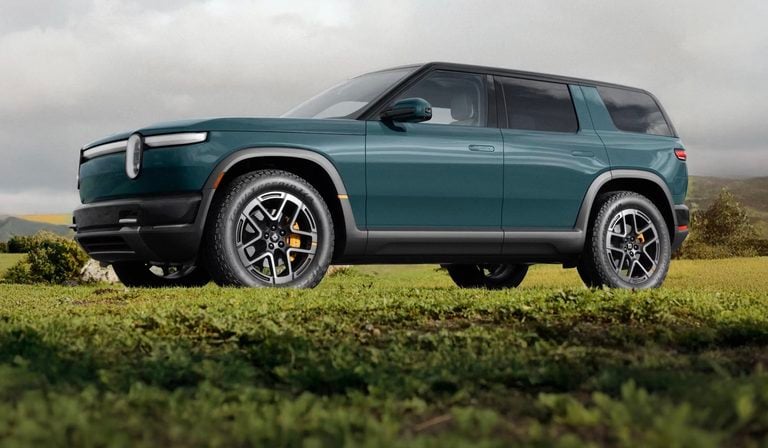
Rivian has always marketed the R1T and R1S as adventure-capable EVs first, electric trucks second. Features like the Tank Turn, which returned on the second-generation quad-motor models in 2025 after a six-year absence, show the company still bets on off-road capability as a brand differentiator. RAD is where that philosophy lives in practice.
Most R1T and R1S owners will never attempt a Pikes Peak summit or a desert crossing. Rivian knows this. The value is not in the utilization rate of those features. It is in the confidence that the capability exists.
The Competition Closing In on Rivian’s Off-Road Position
Rivian had the electric off-road segment almost entirely to itself when R1T deliveries started in 2021. That window is narrowing fast, and RAD’s formalization looks less like a passion project and more like a strategic response to what is coming.
Mercedes-Benz already sells an electric G-Wagen, drawing on a nameplate with off-road heritage dating back to 1979. Land Rover is preparing an electric Range Rover, reportedly targeting a 2027 on-sale date. These are not badge-engineered crossovers with a trail-rated sticker. They are serious hardware from brands with decades of terrain-specific engineering.
Then there is Scout Motors. Backed by Volkswagen Group and reviving a name last used in 1980, Scout is targeting production start in 2027 for what will launch as a 2028 model, with a vehicle roughly the same size as the R1 lineup and a similar adventure-focused identity. The irony here is not subtle: Rivian and VW have a $5.8 billion technology partnership, meaning the same software architecture Rivian helped develop could eventually power a direct competitor. VW has even floated the idea of using Rivian-derived tech in non-EV vehicles, which adds another layer of complexity to that relationship.
Jeep has the Wagoneer S on sale now and the electric Recon in development, though Stellantis has pulled back on full-EV investment under its current leadership. That pullback may give Rivian time. It will not give them forever.
Beyond the purpose-built off-roaders, a longer list of mainstream automakers is adding off-road trim packages to standard SUVs, names like Woodland, TrailSport, and Rock Creek. These vehicles will rarely see the terrain their names suggest, but they compete for the same buyer who might have considered an R1S.
Rivian’s Broader Context: Cash, Cuts, and the R2 Bet
RAD’s announcement lands at a complicated moment for Rivian. On October 23, 2025, the company cut over 600 jobs and settled a $250 million IPO fraud lawsuit on the same day. Meanwhile, CEO RJ Scaringe has been making aggressive public statements about Rivian’s growth plans, including the upcoming $45,000 R2 that the company is positioning as its volume product.
Rivian also filed plans for a new service center in Round Rock, Texas in January 2026, with construction scheduled to begin in March and the facility expected to open in early 2027. The company is simultaneously contracting in headcount and expanding in physical footprint. A high-visibility, low-cost initiative like RAD fits that balance well from a brand-positioning standpoint.
EVXL’s Take
RAD is one of the more honest things Rivian has done in a while. Instead of a product announcement or a sales event, this is Rivian saying: here’s a small team doing real things in real terrain, and we’re telling you about it because that’s who we are. That’s a brand statement, not a press release.
But let’s be direct about what’s driving this. Rivian had a clear field from 2021 through roughly 2024. That’s gone. Scout targets production in 2027. The electric Range Rover reportedly arrives the same year. The electric G-Wagen is already on dealer lots. Every one of those competitors can point to off-road heritage that Rivian, as a startup, simply doesn’t have.
What Rivian does have is a head start on electric-specific off-road engineering. The software, the torque vectoring logic built from actual customer miles in difficult conditions. RAD is the organizational structure that turns that raw experience into future features before a competitor can claim the same ground.
The VW-Scout situation is the wildcard I keep coming back to. VW and Rivian are already exploring licensing their jointly developed platform to other automakers. That could mean Rivian technology ends up in a Scout. Rivian’s leadership knows this. RAD, in part, is Rivian’s answer: when the tech can be licensed, the brand differentiation has to come from somewhere else. It comes from doing things nobody else has done yet.
My prediction: by the end of 2027, at least two RAD-originated features will appear in production Rivian vehicles as either OTA updates or hardware options on the R1 lineup. The ice driving work in Montana this winter points directly at cold-weather traction and thermal management research. Every R1S owner in the northern US would notice those improvements immediately.
Editorial Note: AI tools were used to assist with research and archive retrieval for this article. All reporting, analysis, and editorial perspectives are by Haye Kesteloo.
Discover more from EVXL.co
Subscribe to get the latest posts sent to your email.