Washington state’s Senate Transportation Committee has scheduled an executive session on SB 6354 for February 27 — a bill that would open the state’s auto market to direct sales by Rivian, Lucid, and other battery electric vehicle manufacturers that have never operated through a franchised dealer network. If it clears committee, passes the full Senate, moves through the House, and is signed before the legislative session closes on March 12, both companies would have a legal path to sell directly to Washington consumers for the first time.
That is a lot of steps in a short window. But Rivian is treating this fight as worth real money.
- The Bill: Washington SB 6354 would create a direct-sales exemption for new BEV manufacturers that operate independently in the state and have never established a franchised dealer network there.
- The Money: Rivian has committed $4.7 million to a ballot initiative campaign backing this legislation and has already reported $270,000 in spending to Washington’s Public Disclosure Commission — unusual public investment for a state-level retail policy fight.
- The Context: Washington currently allows only Tesla to sell EVs directly to consumers. Oregon, California, and Arizona already permit direct sales for all qualifying EV makers.
- The Clock: The legislative session ends March 12. The bill still needs to clear Senate committee, pass a Senate floor vote, move through House committees, and pass a House floor vote.
Washington’s Dealer Franchise Laws Were Written for a Different Market
Washington state’s auto franchise laws, like those in most U.S. states, were written decades ago to protect independent dealerships from being undercut by the manufacturers whose vehicles they sell. The core logic: a car company shouldn’t compete directly against the dealers it relies on for distribution. That made sense in 1970. It fits the EV era less cleanly, because Rivian and Lucid never established a franchised dealer network in the first place — there are no existing Washington dealers for this legislation to harm.
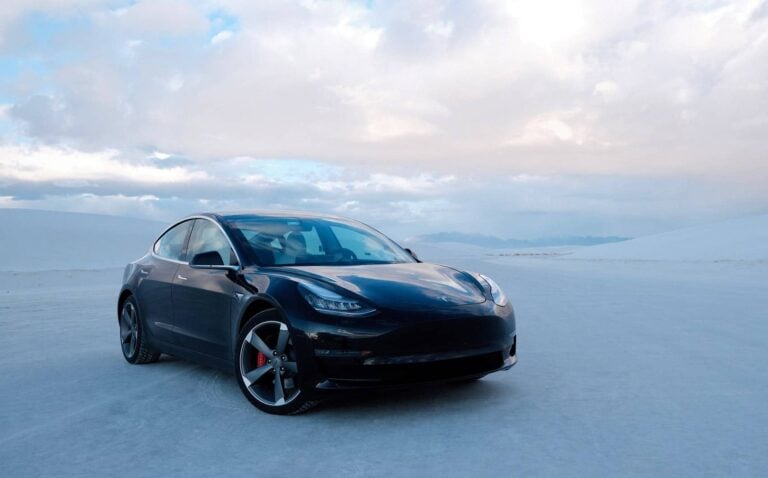
Washington already makes one exception: Tesla. The company secured that carve-out years ago and has since operated direct-sales stores and service centers in the state. SB 6354 would extend similar treatment to other BEV-only manufacturers that independently operate in Washington, without altering the broader franchise rules that govern Ford, GM, Toyota, and others selling through traditional dealer networks.
The direct-sales fight has played out differently across the country. Florida passed a law exempting any manufacturer that never held a franchise agreement in the state — a category that includes Tesla, Rivian, and Lucid — while keeping the broader dealer protections intact. Louisiana fought the direct-sales model all the way to a federal challenge backed by the Justice Department. And in 2025, New York lawmakers moved to strip Tesla’s direct-sales rights entirely, in a move widely read as politically motivated. Washington is taking a more methodical route.
Rivian’s $4.7 Million Commitment to Washington Access
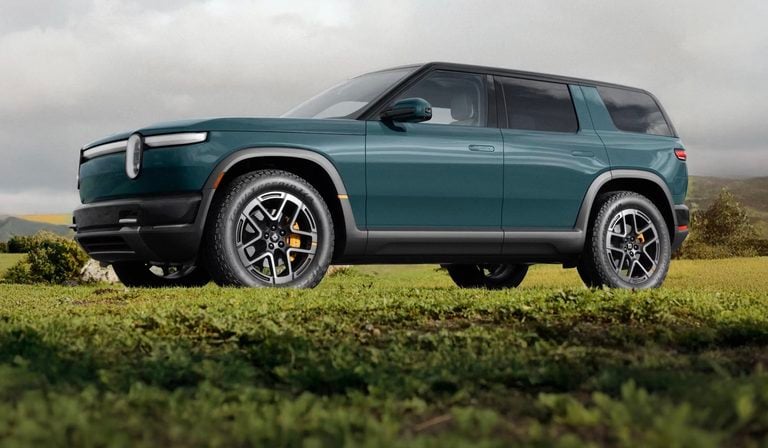
Rivian hasn’t been passive here. The company committed $4.7 million to a ballot initiative campaign supporting direct sales legislation in Washington and has already reported $270,000 in spending with the state’s Public Disclosure Commission. That level of spending on retail access — before a single store lease is signed — reflects how seriously the company views the Pacific Northwest as a market.
It fits a longer pattern. Rivian explored direct sales as far back as 2023, running a one-day factory-lot sale for surplus R1T inventory in Normal, Illinois, to buyers in states where it was legally possible. The company controls its own online sales process where state law allows it, and a physical retail presence in Washington would fill a gap on the West Coast.
Rivian CEO RJ Scaringe has pointed to Tesla’s dominant market share as evidence of an underserved EV buyer base — consumers who want something other than a Tesla but aren’t finding it through traditional dealers who stock and prioritize internal combustion vehicles. Direct sales is how Rivian plans to close that gap. Washington, with its above-average EV adoption rates and proximity to Rivian’s supply chain, is a natural target.
The Fee Increase and Dealer Opposition Complicate the Path
SB 6354 isn’t only about who gets to sell what. It also raises the vehicle dealer documentary service fee from $200 to $150 — wait, let me be precise here: the bill raises the fee from $150 to $200, with the additional revenue directed toward EV rebates and public transportation funding. That provision helped build support among legislators who wanted something concrete attached to the bill. It also gave dealer groups more to argue about.
Local dealership owners are not unified on the issue. Some support the change on practical grounds: Rivian and Lucid were never going to sell through their lots anyway. These are brands built around direct contact with the buyer. Blocking direct sales doesn’t win dealers any Rivian or Lucid business; it just makes those vehicles harder to buy in Washington. Other dealers see the bill as a crack in the franchise model that could widen.
That concern isn’t entirely without basis. Washington’s legislature has shown it’s willing to use EV policy as a lever, and the definition of “independent BEV manufacturer” in SB 6354 could matter more in the future if established automakers launch EV-only sub-brands without existing dealer agreements.
Lucid Needs Every Market It Can Get
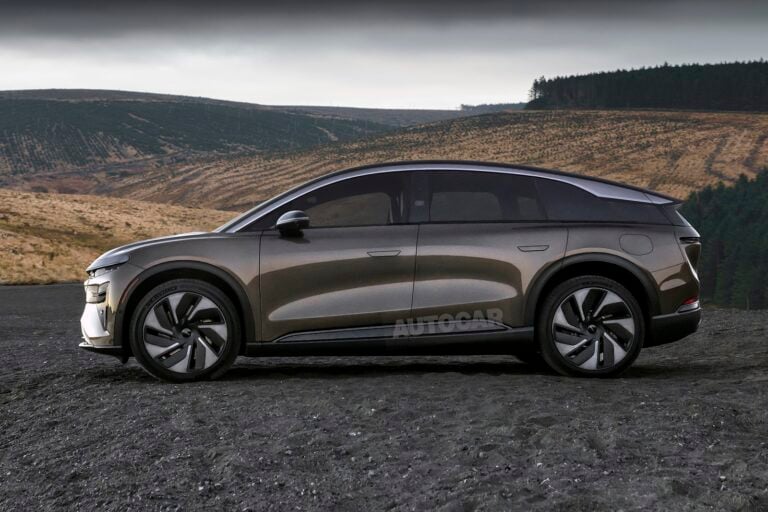
For Lucid, the stakes are higher than the company typically lets on publicly. The Air is legitimately impressive on range — the Grand Touring’s 512-mile EPA rating is a real number, not a press-release estimate, and it remains the highest EPA range figure for any production EV sold in the United States. But Lucid is also working against a financial clock. As of late 2025, the company had roughly 18 months of cash runway, with its Saudi sovereign wealth fund backer providing support that won’t last indefinitely.
Expanding retail access in a high-income, EV-friendly market like greater Seattle is the kind of move that can shift unit sales numbers in a meaningful way. Lucid sells through its own showrooms in states that allow it. Washington hasn’t been one of them — yet.
EVXL’s Take
The state-by-state patchwork of direct-sales laws is one of the stranger features of the U.S. auto market. The same vehicle, built in the same factory to the same specs, can be purchased directly from the manufacturer in Oregon and requires a dealer in Washington. That’s not consumer protection. It’s regulatory friction that exists primarily because dealers have lobbied hard to keep it.
What’s worth noting about SB 6354 is that it’s not a political gesture. Rivian is spending real money to move it. The bill is also carefully scoped — it doesn’t touch the franchise system for established brands. It just acknowledges that BEV-only startups with no dealer history don’t fit the model these laws were designed to protect. That’s a defensible position, and the fact that Oregon, California, and Arizona already operate this way makes Washington look like the outlier, not the responsible holdout.
The timeline is genuinely tight. Senate committee approval on February 27, a full Senate vote, House committee review, a House floor vote, and a governor’s signature — all before March 12. That’s not impossible, but it’s close. If the bill stalls, Rivian’s $4.7 million ballot initiative commitment suggests the company is prepared to take this directly to voters in November. That route is slower and more expensive, but Washington ballot initiatives on consumer-facing issues have a reasonable track record.
If SB 6354 does pass, I’d watch Montana next. It’s the most logical gap in the West Coast direct-sales picture, and a Washington win would give advocates a working template. Expect a serious legislative push there within 12 months of Washington passing this. For Rivian specifically, landing Washington before the R2 launch would be well-timed. The R2 is the vehicle that actually has mass-market volume potential, and Washington is exactly the kind of state where it will sell.
Editorial Note: AI tools were used to assist with research and archive retrieval for this article. All reporting, analysis, and editorial perspectives are by Haye Kesteloo.
Discover more from EVXL.co
Subscribe to get the latest posts sent to your email.