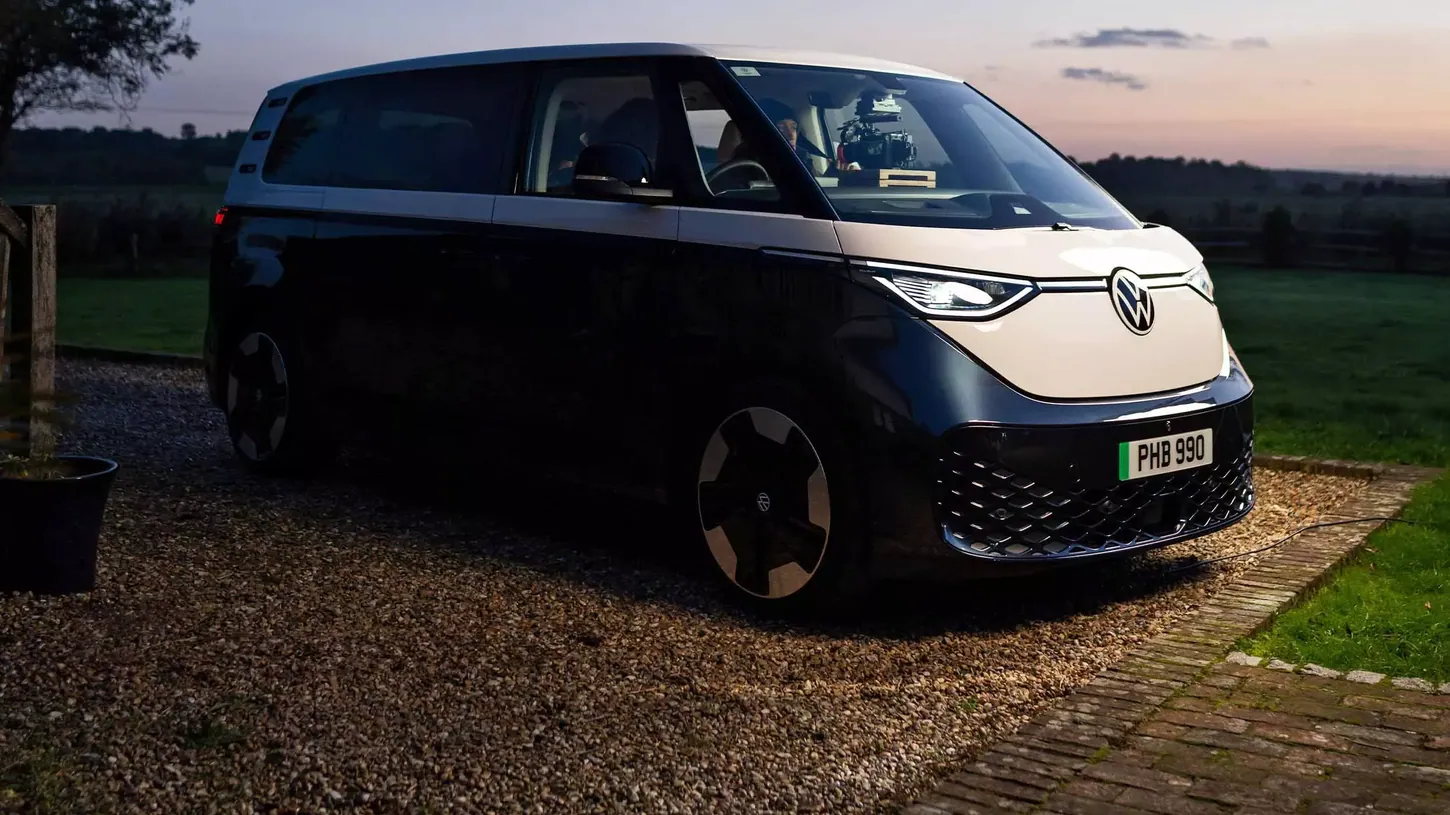
Volkswagen has begun to limit charging to 80% on certain ID. Buzz vans in the United Kingdom because charging above that level may overheat their batteries and create a fire risk. The factory-applied restriction process started during the week of October 12, according to Volkswagen Commercial Vehicles.
The development follows EVXL’s October 16 report on Volkswagen’s ID.4 battery recalls. That report cited Handelsblatt listing the ID. Buzz among the models in VW’s European battery action and Euronews saying UK recalls were already under way. Unlike an instruction or public safety advisory that depends entirely on a driver changing a setting, this UK campaign includes a manufacturer-applied limit. Volkswagen has not said that every affected van has already been capped.
The UK Notice Covers Specific ID. Buzz Batteries
In the notice, Volkswagen identifies the campaign as 93MF. It covers certain ID. Buzz passenger vans and ID. Buzz Cargo vehicles with high-voltage batteries manufactured by a particular supplier between 2022 and 2025. Those are battery production dates, not the model years of every ID. Buzz being recalled.
Volkswagen warns that charging beyond 80% can lead to overheating and potentially fire. It says battery components must be checked against its quality standards, but the van notice does not name the supplier or specify how many vehicles are involved.
Owners Should Use Battery Care Mode While Waiting for a Letter
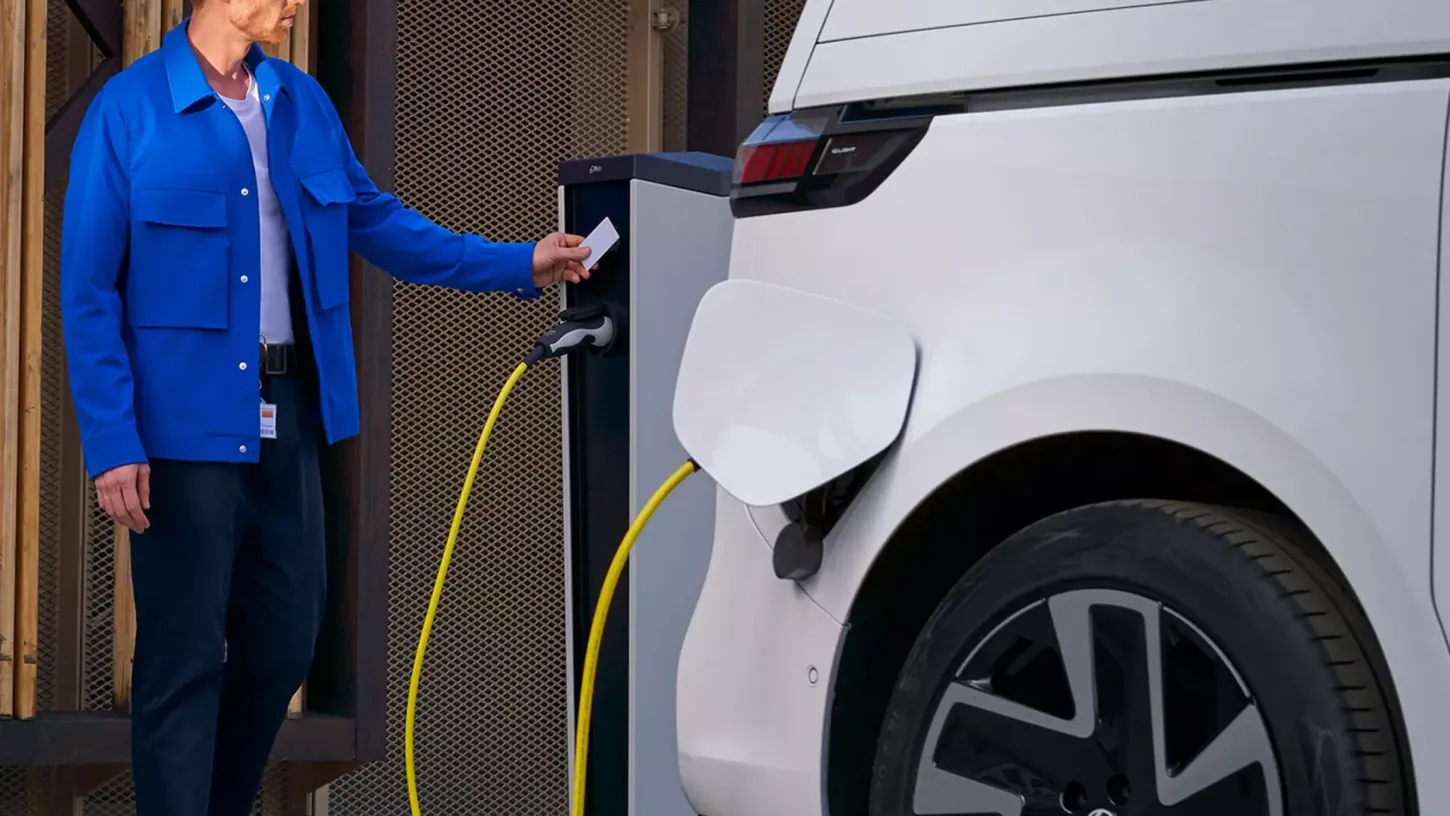
Volkswagen separately recommends that owners activate Battery Care Mode through the vehicle’s infotainment screen or Volkswagen app, which sets an 80% charging ceiling. The notice calls this good practice in all cases.
Affected owners will receive letters with further instructions. Some may need to visit a Volkswagen Van Centre for an inspection. The notice does not say every battery needs replacement or provide a date when the charging restriction will end.
An 80% ceiling is a temporary safety measure, not a permanent fix. ID. Buzz owners should follow Volkswagen’s charging instructions rather than assume the restriction is already active.
The U.S. ID.4 Recall Uses Different Interim Measures
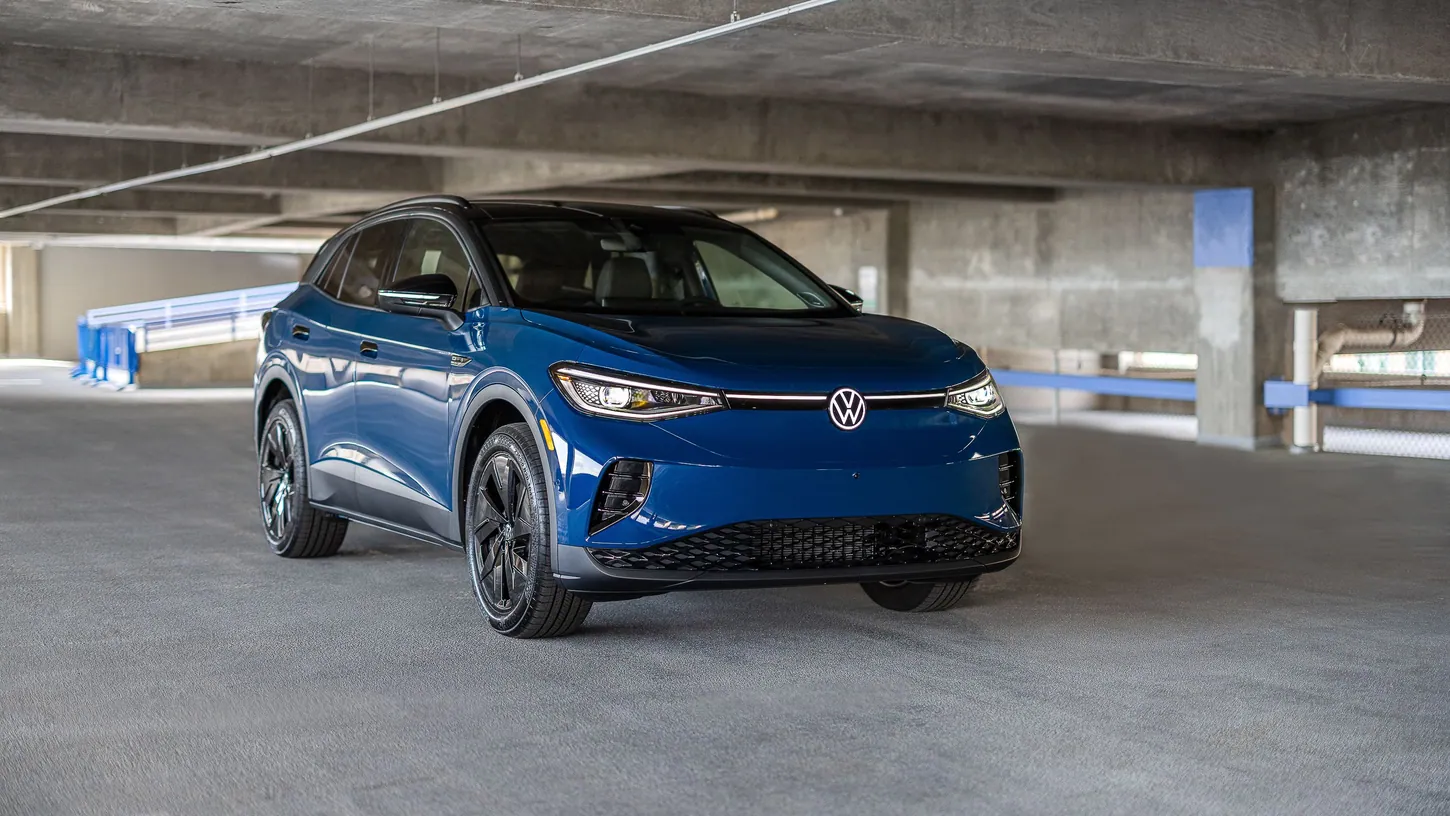
EVXL’s earlier report examined Volkswagen’s separate U.S. recall of 22,524 ID.4 SUVs.
According to the NHTSA filing, campaign 26V630, internally called 93EX, covers selected 2023 to 2026 ID.4s. Volkswagen plans warning stickers reminding owners not to exceed 80% charge. Some vehicles may also receive an enforced limit, depending on configuration and connectivity.
That conditional wording differs from the UK van notice, which states that its factory-limiting process has begun.
The U.S. filing says the root cause remains unknown and a permanent repair is still being developed. Those findings should not automatically be applied to the UK vans, which are covered by their own notice.
EVXL previously reported that Volkswagen skipped the 2026 model year for the U.S. ID. Buzz, although that decision is unrelated to the current UK battery recall. NHTSA’s recall database showed no battery recall for the 2025 ID. Buzz sold in the U.S. when EVXL checked on October 16.
EVXL’s Take
Volkswagen’s UK approach gives the manufacturer a way to reduce risk without depending entirely on owners remembering to change their charging settings. But affected drivers deserve more information about when their vehicles will receive the restriction and how long it will remain in place. Volkswagen has put a starting date on its temporary action. The next step should be a clear inspection and repair timetable so owners know when they can safely use their batteries’ full capacity again.
Sources: Volkswagen Commercial Vehicles UK, NHTSA
EVXL uses automated tools to support research and source retrieval. All reporting is by Damien Kesteloo, edited by Haye Kesteloo.