
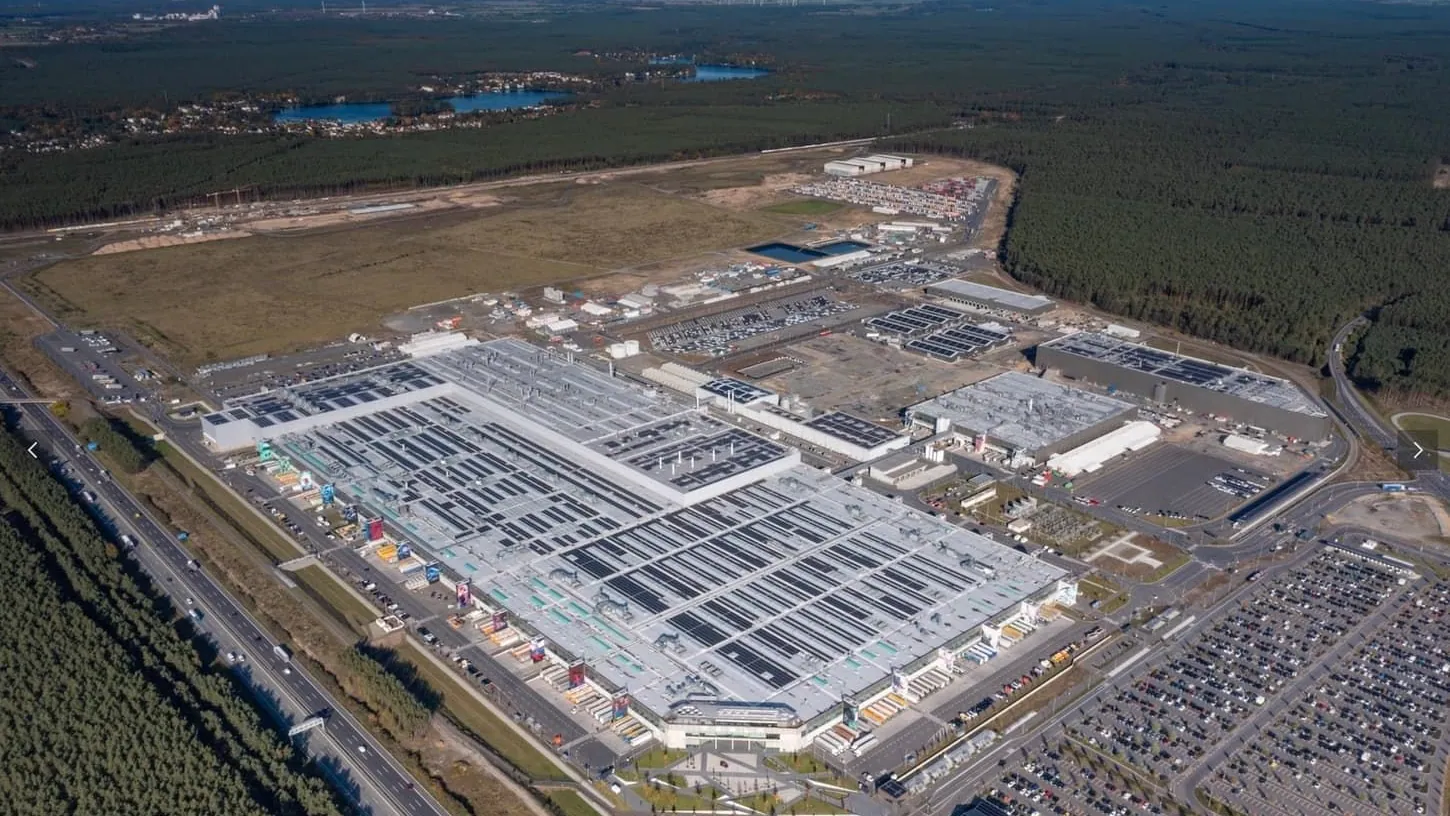
Tesla plans to hand the Brandenburg permit authorities its paperwork for a second production hall at Giga Berlin in December, with construction targeted for 2027. The hall would cover about 536,000 square meters (5.8 million square feet) north of the existing plant, more than twice the 219,000 square meters (2.4 million square feet) Tesla builds the Model Y in today. The regional broadcaster rbb reported the plan on October 14, and Tesla confirmed the application without confirming any dates.
The filing is the second of three partial permits that take the Grünheide site from its current capacity of 375,000 vehicles a year to the one million a year Tesla has had on paper since 2023. Tesla says the hall and the extra staff can run inside the water volumes it already has under contract. The utility that supplies those volumes, the Wasserverband Strausberg-Erkner, told the planning authorities in 2023 and again in 2024 that its permitted groundwater withdrawal is already used up.
Tesla Says the 2024 Permit Already Settled the Hall in Principle
Tesla’s statement to rbb points to the October 15, 2024 decision of Brandenburg’s environment office (LfU) as having established that the staged expansion is permissible, and says the new application for the northern building builds on it. The 2023 application already set out the staged plan, Tesla says.
The three stages were all applied for in March 2023. The first permit, granted in October 2024, covered modernizing the existing hall and adding storage and logistics space without clearing more forest. The second is the hall itself. The third sketches a freight rail yard on the site. For stages two and three Tesla still has to file further documents, which is what December’s submission is. According to the 2023 application the new hall gets a production floor about the size of the existing one and uses the rest of its footprint for storage and logistics at first. A dedicated substation is part of the package.
Tesla has not said how many people the hall would add. Earlier planning documents spoke of up to 42,000 jobs on the site in the long term. About 12,000 people work there now, up from the 11,083 the plant reported for the end of 2025. Production has been climbing through 2026: plant chief André Thierig announced a step from 5,000 to 6,200 vehicles a week in June and a second step to 7,500 from October, each with 1,000 new hires, and the plant posted a 7,000-vehicle week on October 23. Observers cited by the Märkische Oderzeitung, via electrive, expect a second model alongside the Model Y in the new hall. Tesla has not named one.
A Second Water Loop Is How Tesla Plans to Stay Inside Its Contract
Tesla plans an additional water circuit with its own new treatment plant that would also process sanitary wastewater, rbb reports. The hall would use more water, but no additional sewage would leave the site, so the volumes in the existing contract with the Wasserverband Strausberg-Erkner would cover the expansion.
Tesla briefed the mayors in the utility’s service area and the utility’s own representatives at the plant on October 12, and environmental groups the next day, which Steffen Schorcht of the Grüne Liga confirmed to rbb.
The contract is the one Tesla renegotiated down. The 2020 agreement allowed up to 1.8 million cubic meters (476 million gallons) of drinking water a year. The replacement cut that by 400,000 cubic meters (106 million gallons) to 1.4 million cubic meters, on the basis that the plant recycles up to 100% of its process wastewater, and raised the permitted nitrogen and biological oxygen demand limits in what Tesla discharges, according to dpa reporting on the draft. Tesla signed the amended contract in June 2025, dpa reported, with Thierig saying it let the plant hand back nearly 400,000 cubic meters of its contracted allocation.
The utility’s position on more building at the site has not moved since the first expansion plan. In August 2023 and again in April 2024 it wrote to the authorities that it could not approve Tesla’s development plan for the land beside the factory, because the site sits in a drinking water protection zone and the withdrawal quantities the state of Brandenburg allows it are already fully used, per dpa. Grünheide residents rejected the expansion in a February 2024 survey by about two to one; the municipal council then approved a scaled-down plan. The utility has not published a position on the December filing. Its assembly next meets on December 2.
The 4680 Cell Plant Starts in 2027 and Does Not Pay on Cost
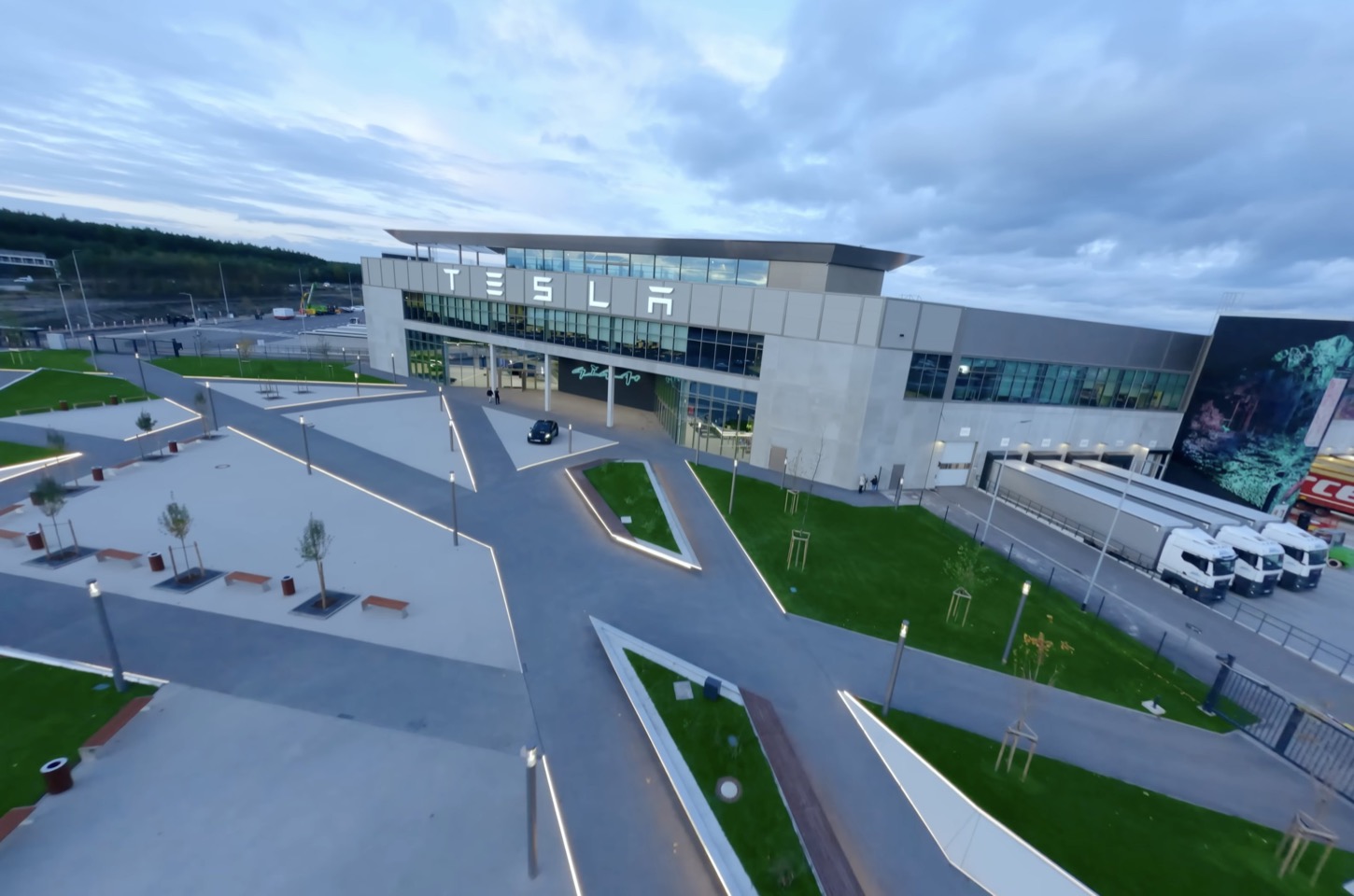
Tesla plans to begin making its own 4680 cells at Grünheide in 2027 and grow the line to 18 GWh a year with more than 1,500 additional staff, according to Battery-News, which interviewed cell factory lead Robert Meyer ahead of this month’s Future Battery Forum in Berlin.
Meyer did not dress the economics up. “Purely on cost, the step barely pays off. It is a strategic decision,” he said. He added that it is hardly possible to produce cells economically in Europe today against international competition, and that the supplier base Asia has does not exist here. The line will use Tesla’s dry electrode process, which removes the drying ovens and solvent recovery of a conventional coating line, and it leans on the Texas cell plant having solved the same ramp first.
The 2027 date and the 18 GWh figure match what Thierig gave in June and what the plant’s audited 2025 annual report set as the target, with cumulative cell investment approaching EUR 1 billion. Cell production at Grünheide has been promised since the plant opened in March 2022. The same report recorded the vehicle side running at 54% of capacity last year.
EVXL’s Take
Tesla has had the one-million-car number in its paperwork since 2023 and a decision in principle since October 2024, so I don’t expect the permit to be the obstacle. The obstacle is a utility that has said in writing, twice, that it has no more groundwater to give, and Tesla’s answer is that it won’t need any.
Recycling everything and processing the sewage on site is the right answer, and in Brandenburg it is the only one that works. It also moves the risk onto the utility, which has to decide whether to trust a treatment plant that does not exist yet, while its legal duty is to supply 170,000 residents first.
My read is that the demand case for the hall finally exists, which was not true in February. When Elon Musk told the workforce that Tesla wouldn’t expand if IG Metall gained influence, I called the threat hollow because a plant at 54% utilization had nothing to expand for. IG Metall lost that vote, the plant has since added two production steps and 2,000 jobs, and a 7,500-a-week run rate is roughly the 375,000-a-year capacity the current hall was built for. So the second hall is now a real question rather than a bargaining chip.
I’d hold the cell plant to the calendar. Meyer’s own words are that it does not pay on cost, and Tesla has a documented habit of missing self-set dates. Watch what he says in Berlin on November 24 and 25, and watch whether the December filing lands in December. Tesla would not confirm that date to rbb.
Sources: rbb24, electrive, Battery-News, dpa via ZfK, dpa via Auto Bild, Not a Tesla App.
EVXL uses automated tools to support research and source retrieval. All reporting and editorial perspectives are by Haye Kesteloo.


