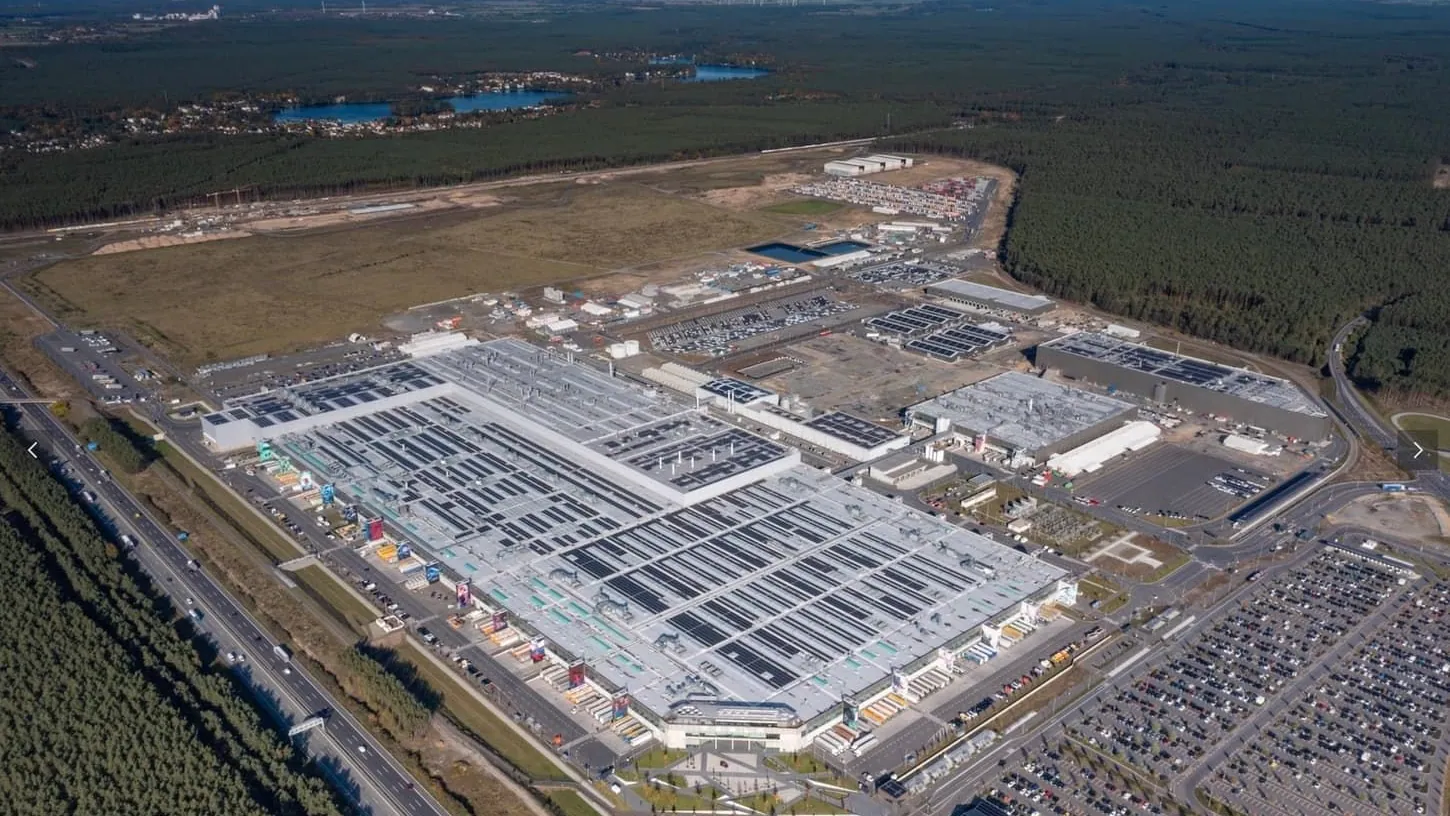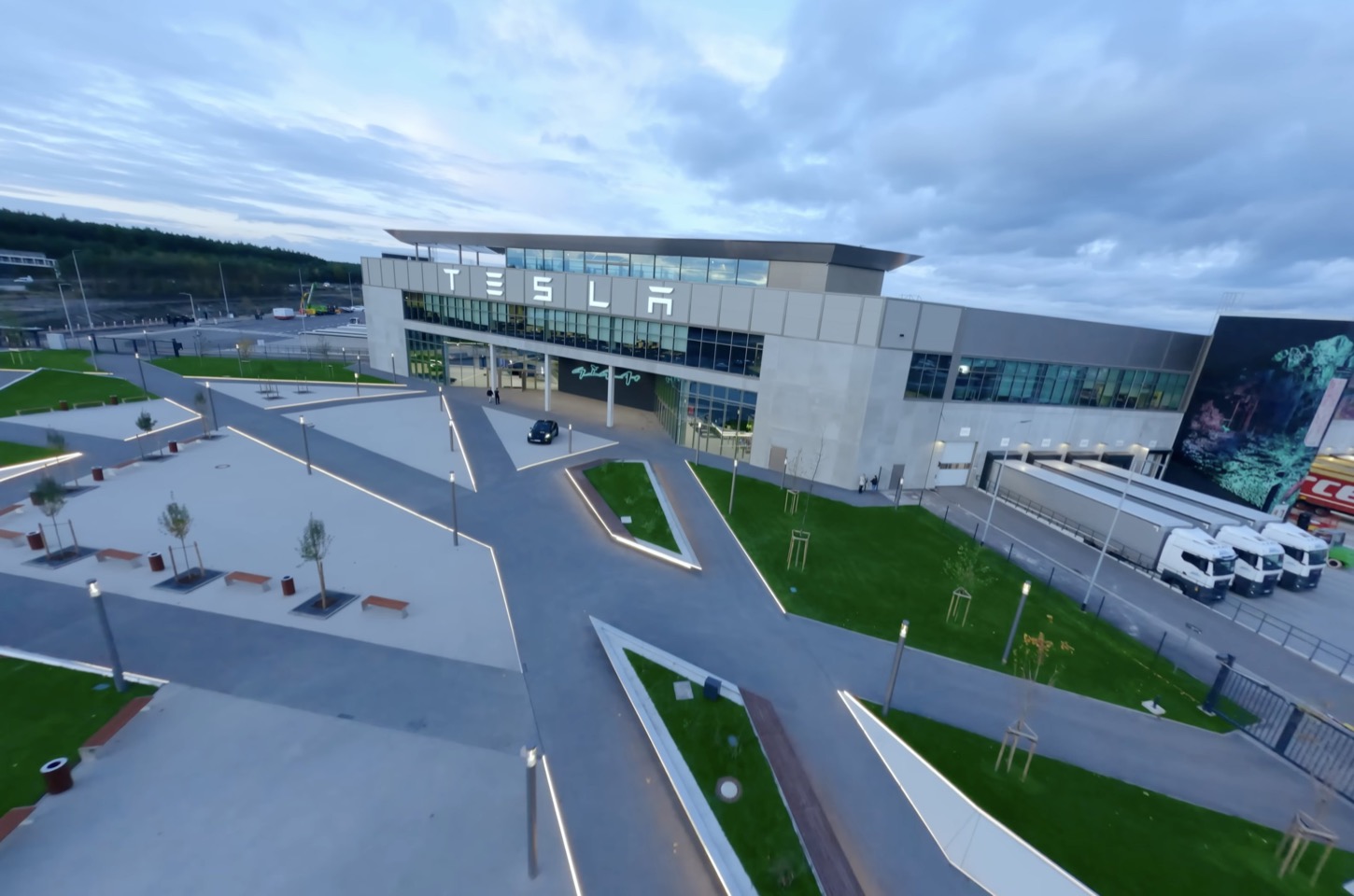
Tesla will spend about €3 billion ($3.3 billion) on a new production building at Giga Berlin and start building the Cybercab there in 2029, plant manager André Thierig announced on Monday, November 16. Construction is planned to start in the first half of 2027, and Thierig says the building can grow to as many as one million vehicles a year.
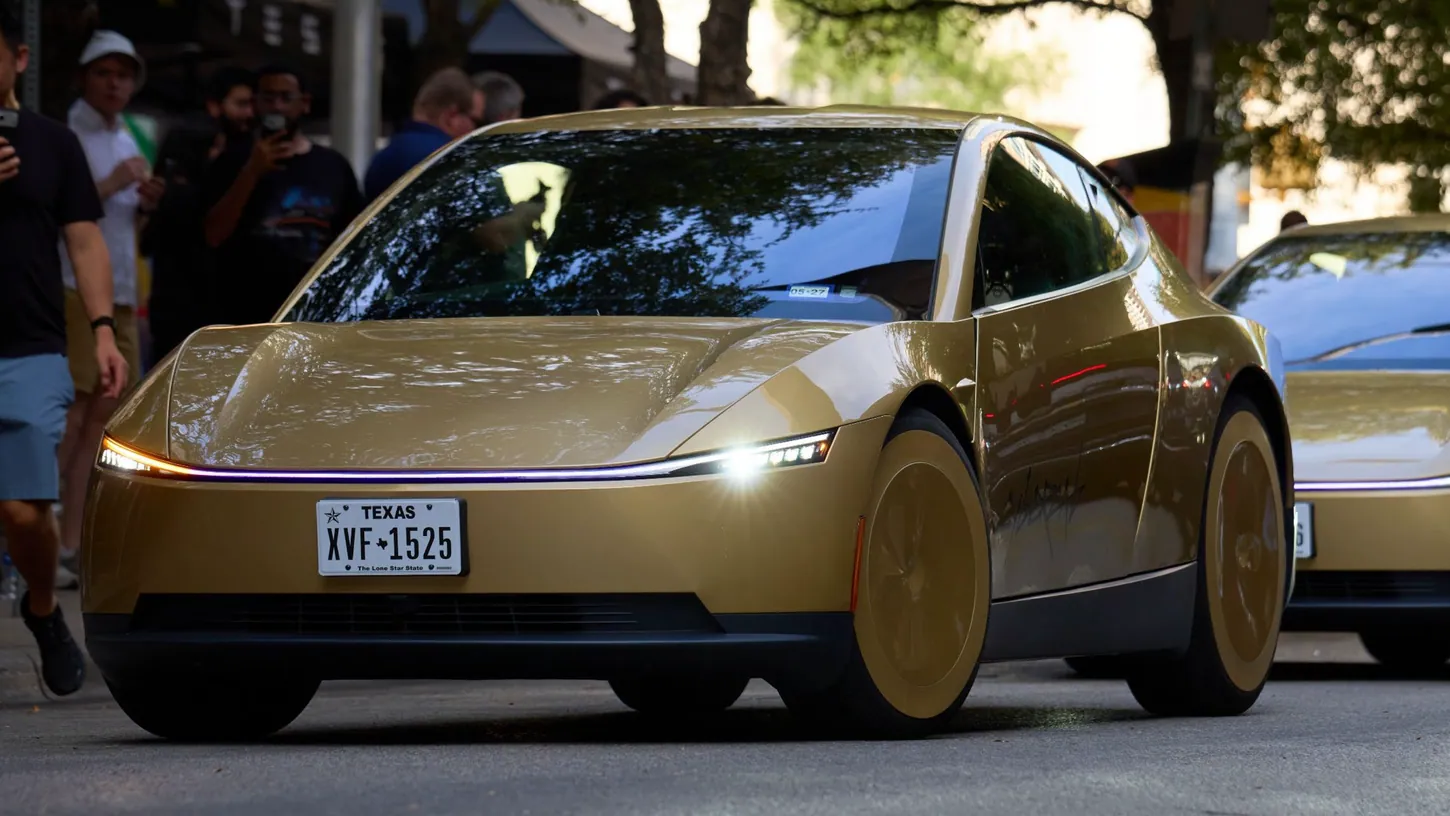
This is the hall I wrote about on November 4, when Tesla was preparing a December permit filing and had not named the car it would build there. The car is a two-seater with no steering wheel and no pedals.
European Union type-approval law currently lets a carmaker register 1,500 driverless vehicles of one type a year across the whole Union. Tesla has not said where the Cybercabs built in Grünheide will go.
Tesla Budgets €3 Billion for a Hall Twice the Size of the Model Y Plant
The new building goes up north of the existing plant with a footprint of about 500,000 square meters (5.4 million square feet), twice the size of the main hall where Tesla builds the Model Y, the Tagesspiegel reports. Tesla plans to file the permit application before the end of 2026.
Thierig called the €3 billion a first step in his LinkedIn post, which he wrote in German. He said Grünheide would get “the most technologically advanced factory of all Tesla Gigafactories worldwide” and that hiring starts now. The Cybercab will be built alongside the Model Y, which stays. Tesla is also adding ancillary buildings and an additional wastewater treatment plant, and Thierig told the Tagesspiegel that water use will stay inside the existing supply contract.
Thierig also told the paper that the environmental permit to build one million vehicles is already in place. The million has been in Tesla’s application for the whole site since 2023. Brandenburg’s environment office granted the first of three partial permits in October 2024, and the hall itself is the second, which is the application Tesla files next. The plant builds about 7,000 Model Ys a week today and reaches its current limit at 7,500. On Monday Thierig said the new building is where up to one million Cybercabs can be produced over time.
Tesla’s total investment at the site now stands at $10 billion, Thierig confirmed to the Tagesspiegel. About 13,000 people work there. Tesla is looking for several hundred more in construction and production planning right away and gave no total for the new hall.
Brandenburg’s Minister-President Dietmar Woidke and economy minister Martina Klement came to the plant for the announcement. IG Metall welcomed the announcement too, which the Tagesspiegel says is a first for the union. District leader Jan Otto added that a plant needing this many people gives its workers more room to push for better conditions. Tesla says it pays above the collective rate. In February Elon Musk told the workforce Tesla would not expand in Grünheide if “outside organizations” made things difficult, days before a works council election that IG Metall lost.
The Cybercab Comes From One Plant and Is Under NHTSA Audit
Tesla builds the Cybercab only at Gigafactory Texas today, and paid rides began in Austin on September 3. The National Highway Traffic Safety Administration (NHTSA) opened an audit of how Tesla certified the car that same day. Texas listed 573 Cybercabs in its driverless registry on November 10.
That count comes from the state records behind Tesla passing Waymo in the Texas registry last week. The audit asks how a car with no steering wheel, pedals or mirrors meets federal safety standards written for a human driver. NHTSA has not found the Cybercab out of compliance with any of them, and Tesla has asked the agency to keep its sworn answers confidential, as EVXL reported on November 8.
Musk is clearing the Cybertruck out of the Texas plant to make room for more Cybercabs. He last moved that shutdown to the end of summer 2027.
EU Law Holds a Driverless Model to 1,500 Registrations a Year
The EU has allowed driverless vehicles onto its market since 2022 through a small series scheme. The scheme applies on the condition that registrations of a vehicle type in the Union do not exceed 1,500 a year, according to the European Commission’s own March 2026 amendment to the rules.
That amendment, Implementing Regulation (EU) 2026/481, covers one use: automated valet parking, where the car drives itself through a parking facility at very low speed. The Commission wrote that it had become possible to lift the small series limitation “starting with” parking. The use a Cybercab falls under is carrying passengers in a predefined area. It is one of three uses in the 2022 regulation, and the cap still applies to it.
The 2022 text said the Commission would work to adopt requirements for fully automated vehicles produced in unlimited series by July 2024. For cars that carry passengers, those requirements are not in force.
A line running at one million cars a year would fill the EU’s annual allowance for one model in less than a day. The cap counts registrations inside the Union, so it does not limit cars built in Grünheide for export. Thierig’s LinkedIn post names no market for the cars and says nothing about approval. The Tagesspiegel calls the missing EU approval for the robotaxi Tesla’s next hurdle.
EVXL’s Take
I think the hall gets built, and I’m much less sure a million Cybercabs come out of it. Tesla needs a second building in Grünheide whatever happens, because the Model Y line is about to hit its ceiling. Once that hall is permitted, staffed and connected to water, it can build whichever car Tesla has buyers for in 2029.
The Cybercab part is decided in Brussels. The Commission set itself a July 2024 target for unlimited-series rules, and more than two years later it has started with parking only. Three years is enough time to fix that, and a company with 13,000 jobs in Brandenburg and the state’s premier at its announcement has reason to expect it will be fixed.
I’d still treat 2029 as a plan. The battery cell plant at this same site was promised when the factory opened in 2022 and is now due in 2027. Watch the permit application Tesla says it will file before the end of the year, and whether it names the Cybercab.
Sources: André Thierig on LinkedIn, Tagesspiegel, Implementing Regulation (EU) 2026/481, Implementing Regulation (EU) 2022/1426, TechCrunch, Electrek.
EVXL uses automated tools to support research and source retrieval. All reporting and editorial perspectives are by Haye Kesteloo.