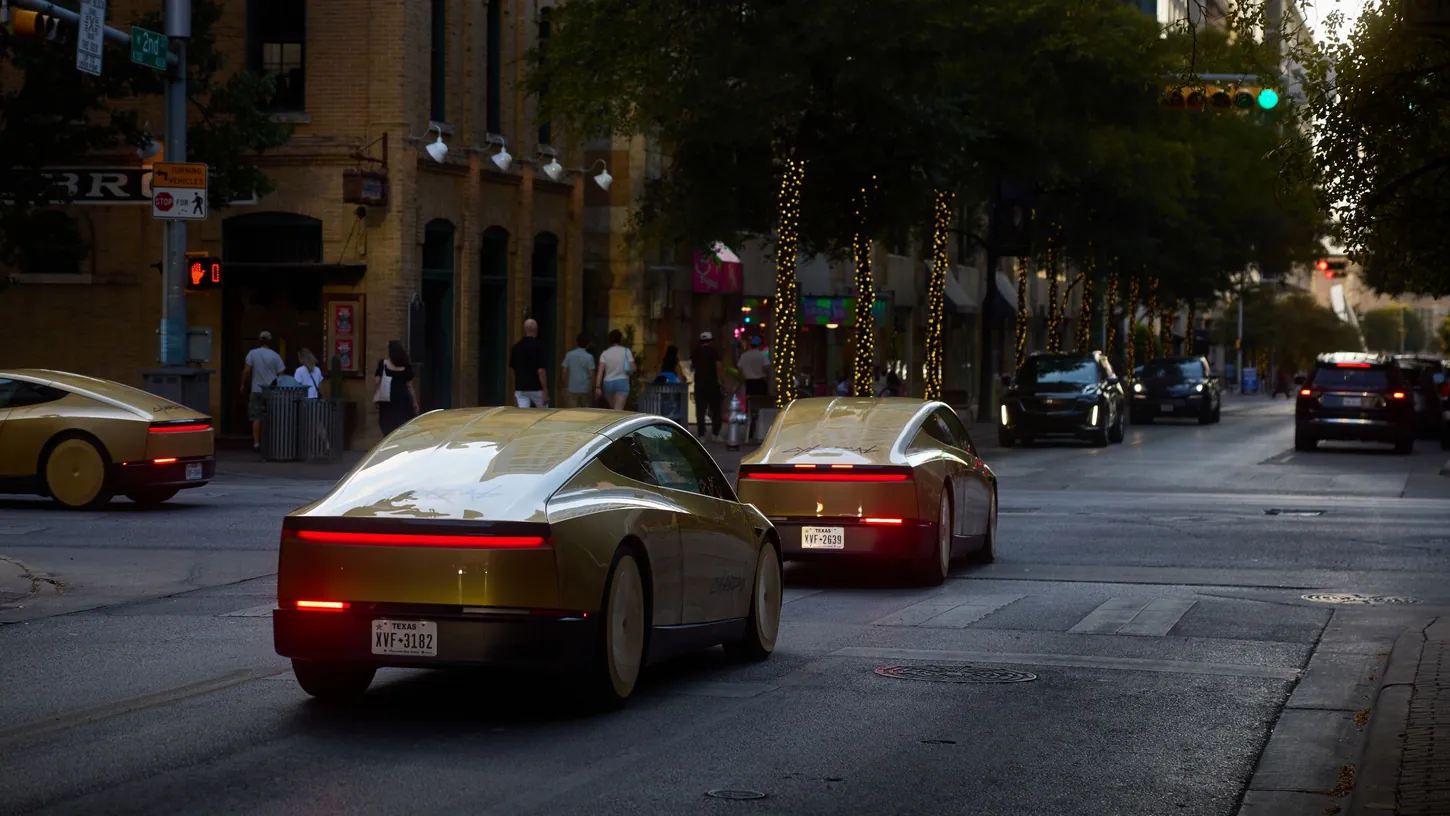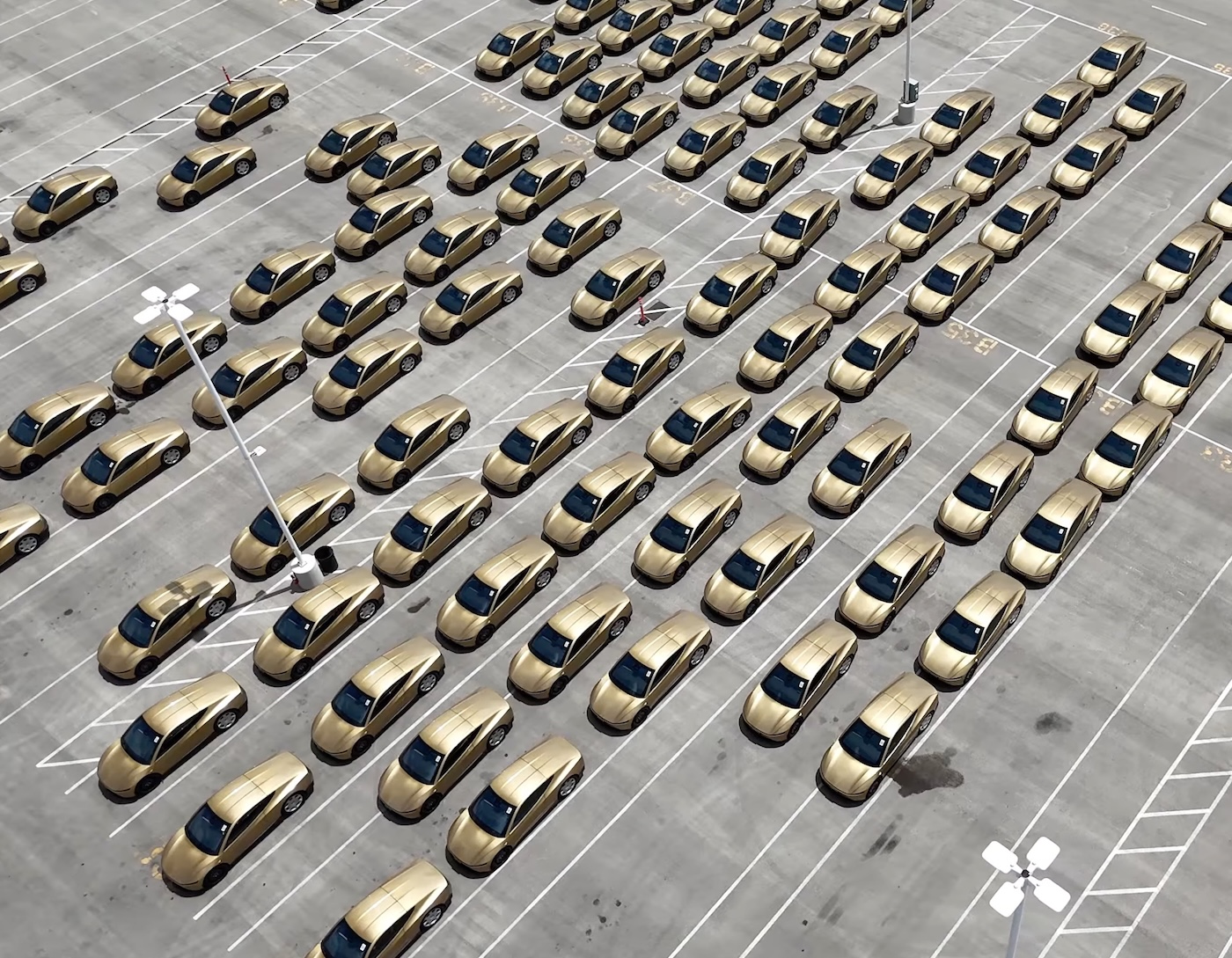
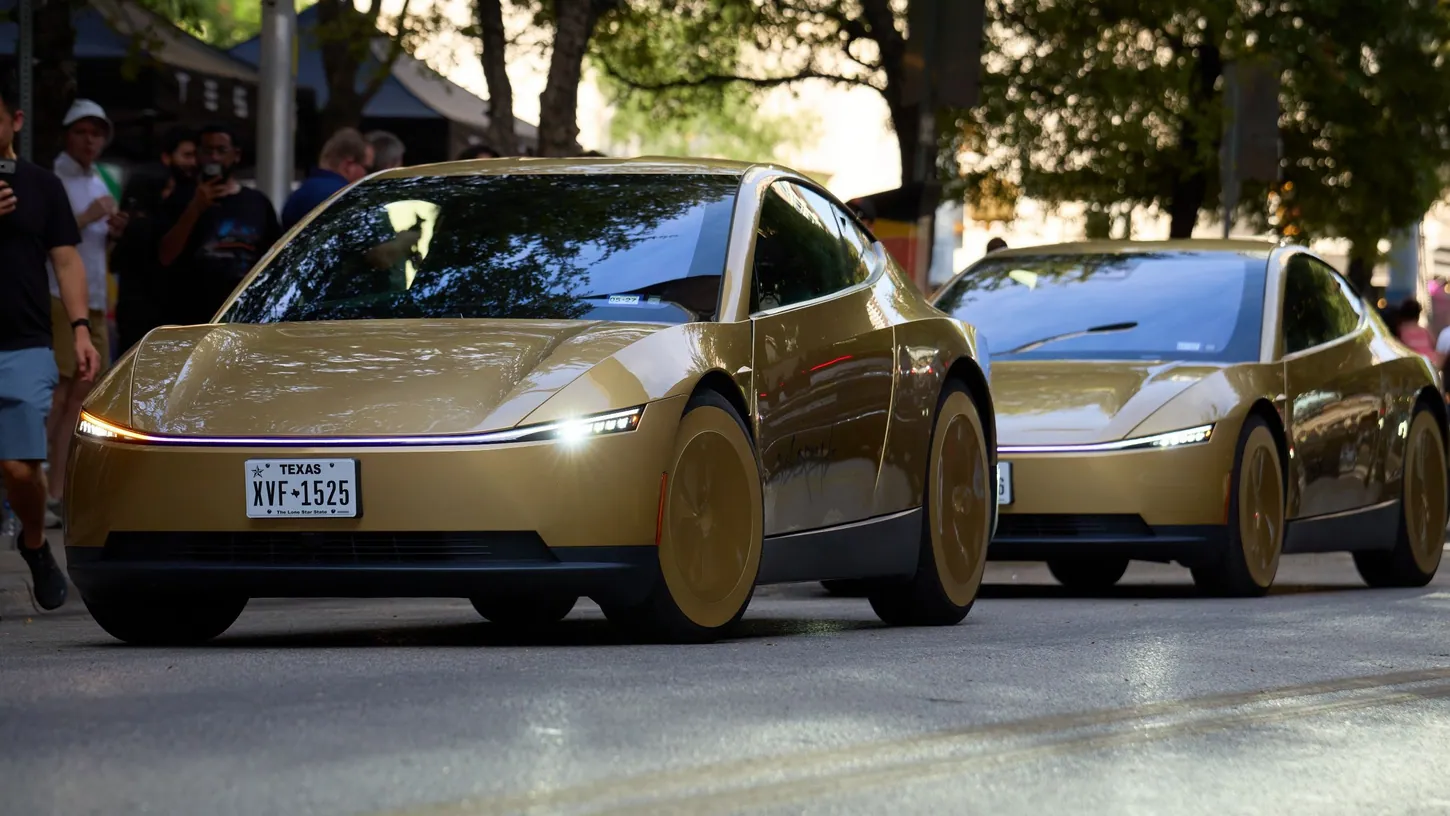
Tesla is clearing the Cybertruck out of Gigafactory Texas around the middle of 2027 so the plant can build more Cybercabs, Elon Musk said on November 6, and a day later he said coming efficiency gains will allow a 40 kWh battery and a liquid silver finish. The car he is reorganizing the factory around has been under a National Highway Traffic Safety Administration (NHTSA) audit since September 3, the day paid rides began in Austin, over how Tesla certified a vehicle with no steering wheel, pedals or mirrors as meeting federal safety standards. NHTSA has not found the car out of compliance with any of them.
Tesla’s sworn answers to the agency’s 21 questions were due October 30. Tesla’s response letter on NHTSA’s public docket is one page long, and it contains one sentence: “The entirety of this file is confidential business information.”
NHTSA Put Tesla Under Oath Over a Brake Pedal the Cybercab Does Not Have
NHTSA Chief Counsel Peter Simshauser signed a Special Order on September 10 requiring Tesla to explain, under oath, how the Cybercab complies with every federal safety standard it certified to. The order lists 21 requests and carries civil penalties of up to $27,874 a day, capped at $139,356,994.
The order names the rules written for a human driver that the car has no permanent hardware for. Request 19 quotes the brake standard, FMVSS 135, back at Tesla: “The service brakes shall be activated by means of a foot control.” Other requests cover turn signals that self-cancel when a steering wheel turns, inside and outside mirrors, the shift-position display, and warning telltales. Request 7 asks how removing any temporarily installed human-driver controls squares with the Safety Act’s ban on making required equipment inoperative. The temporary steering wheels EVXL saw on the Cybercabs testing around Detroit last week are such controls.
Request 21 asks the broadest question. NHTSA’s own 2022 occupant-protection rule said other standards would likely have to change before a car with no human driver could be built for sale without an exemption under 49 CFR Part 555. The order asks Tesla to explain how the Cybercab complies without one.
Tesla’s answer to that question has been public since April. Asked on X whether NHTSA’s 2,500-vehicle cap for exempted automated vehicles applied to the Cybercab, vehicle engineering chief Lars Moravy answered “No.” Tesla told NHTSA it certified the car as compliant with all applicable standards, the Special Order says. The audit’s opening document says NHTSA will examine how far that certification rests on Tesla deciding certain standards do not apply to it. It puts the affected population at an estimated 1,000 vehicles.
Tesla Asked for Eight Weeks, Got Four, and Then Asked to Seal the Whole Answer
Tesla asked NHTSA on September 18 for an eight-week extension to November 20, citing the volume of the request and the need to review records for privilege. The agency gave it 30 days, to October 30. On that date Tesla filed a one-page letter claiming the entire file as confidential business information.
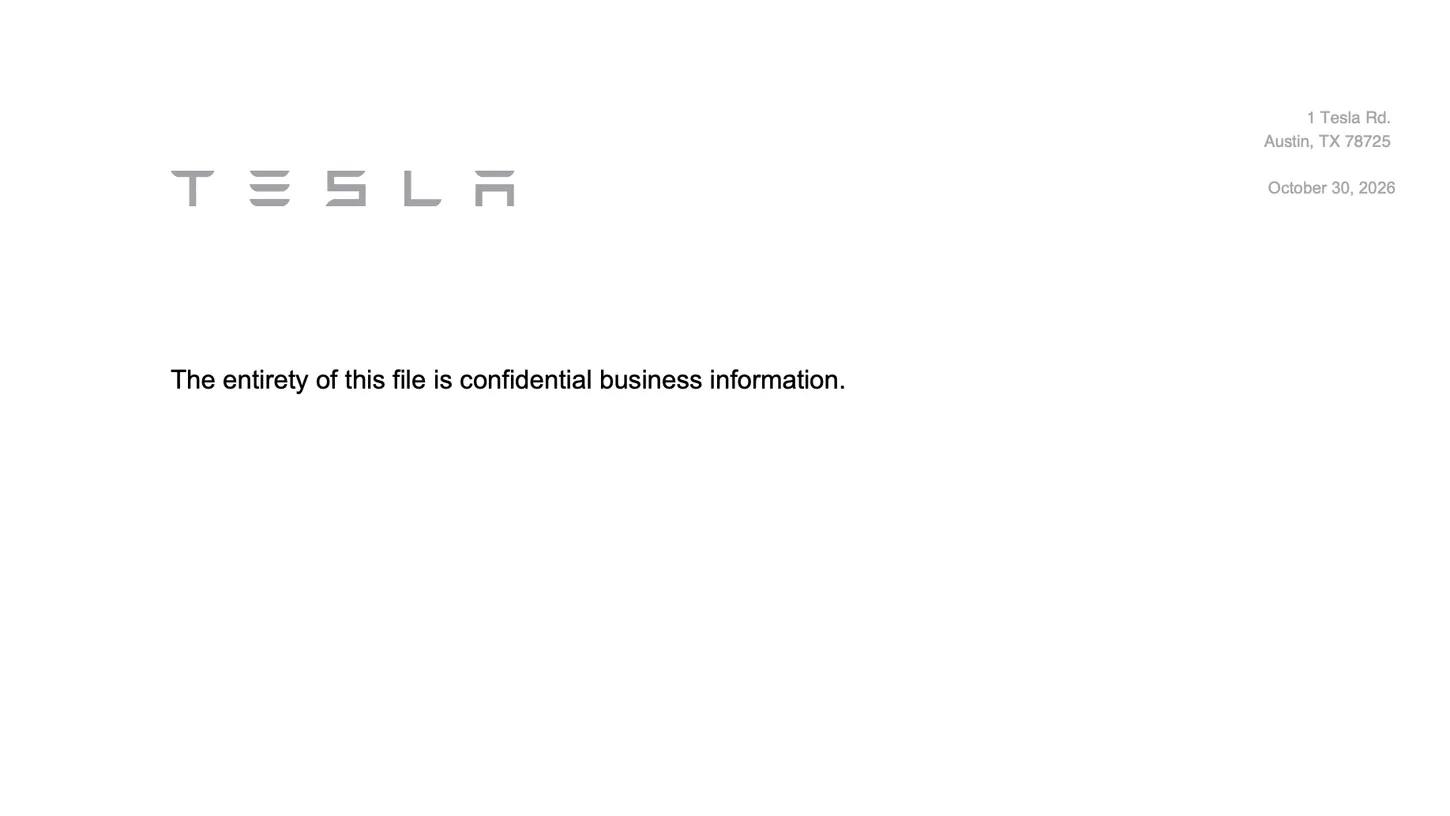
A docket note created the same day says every remaining document responsive to Request 8 carries a confidentiality request covering the whole of each document. Request 8 is the one that asks Tesla to say, standard by standard, which subpart it certified to and whether it used physical tests, simulations or engineering analysis to get there. Electrek first reported the sealed filing on November 5.
Confidentiality requests go to NHTSA’s Office of the Chief Counsel under Part 512, the same office that issued the order, and it can require a public version if it finds the claim does not hold. Manufacturers claim confidential treatment for engineering data as a matter of course, and Tesla asked for the same on its Austin Robotaxi answers in 2025. As of November 8 the docket shows no ruling on the request.
Zoox Took the Exemption Route and Accepted a 2,500-Car Cap
NHTSA granted Amazon’s Zoox a temporary exemption from parts of eight safety standards on July 31, 2026, the route Tesla did not take. The Federal Register notice lets Zoox put no more than 2,500 exempted robotaxis into commerce in any 12-month period for two years, through July 31, 2028.
The difference between the two routes is the number. Tesla’s Q3 update lists Cybercab installed capacity at Giga Texas as more than 125,000 a year, the same figure it gives the Cybertruck, and when an analyst put that number to Moravy on the earnings call he said the line’s real capacity is well above it. A Part 555 exemption would have capped Tesla at 2,500 cars a year, with every standard it skipped and every reason NHTSA accepted printed in the Federal Register. Self-certification has no cap and, on the docket as of November 8, no public reasoning either. EVXL covered the Zoox grant in July, and NHTSA’s administrator said the same month that he would “absolutely” consider dropping the steering wheel rule. NHTSA has since proposed rewriting the brake-pedal standard and the turn-signal standard for driverless cars, on June 26 and October 26. Neither is final, the Special Order holds Tesla to the current text of both, and no proposed rule touching the steering wheel has appeared in the Federal Register.
Tesla Is Scaling the Fleet While the Question Sits Unanswered
Musk told investors on October 21 that the Austin Cybercab fleet had grown by a factor of 10 in about a month, and Ashok Elluswamy said the service launches in Dallas in November. Moravy added: “We’re trying to get Cybercabs to customers by the end of this year.”
The one question on the call that named NHTSA’s review got an answer that never mentioned NHTSA. A shareholder question read out by Tesla’s investor relations head asked for the regulatory path outside Texas “given NHTSA’s Open Safety Review.” Elluswamy answered that there was no fundamental reason the service was limited to Austin, and pointed to the Dallas launch.
The Cybertruck is paying for the expansion. Cox Automotive estimates 11,586 US sales through September, down 28% on the year, as I reported on November 6. Musk said Tesla will add a shift to fill outstanding truck orders before dismantling the line around June or July 2027, Reuters reported. Defending the decision on X, he wrote that Tesla has a limited number of capable engineers and that “we can’t use those people or factory space and machinery for scaling Cybercab.” The 40 kWh pack he floated in the same thread has no date, no range figure and no confirmed baseline, as EVXL reported on November 8, for a 219 hp, front-wheel-drive two-seater whose EPA certification EVXL covered in June.
EVXL’s Take
A company asking the public to ride in a car with no brake pedal, on its own say-so that the rule does not apply, should publish its legal theory. Tesla instead claimed its sworn answer as a trade secret, leaving public only a first-responder guide it posted in July.
Part 512 gives Tesla the right to ask, and engineering test data on a new platform is the kind of thing the rule exists to protect. The theory of which federal standards bind a driverless car is not. Zoox published its reasoning and took a 2,500-car cap for it. My read is that NHTSA’s Chief Counsel should order a public version of the answers to Requests 10 and 21 at a minimum. Those two ask which standards Tesla contends do not apply to the Cybercab, why, and how the car complies without an exemption, and the answers are law, not engineering.
The Safety Act’s remedy for a vehicle found not to meet an applicable standard is notification and a recall, with civil penalties on top for having sold it, and every Cybercab built on the Cybertruck’s old floor space would carry the same certificate. Watch the Chief Counsel’s Part 512 decision, which has no deadline, and the Dallas launch Tesla has promised for this month. If Dallas opens before NHTSA says a word, Tesla will have doubled its exposure on a question it has so far refused to answer in public.
Sources: NHTSA Special Order AQ26002, NHTSA audit opening resume, Tesla response letter, Federal Register, Zoox grant, Tesla Q3 2026 Update, Electrek, Reuters, Elon Musk on X.
EVXL uses automated tools to support research and source retrieval. All reporting and editorial perspectives are by Haye Kesteloo.