Mercedes-Benz is developing a Power Converter designed to supply a steady voltage of up to 800 volts even as battery cells lose or gain charge or age. Mercedes unveiled the research technology on November 3 alongside two experimental display systems, but its announcement names no production vehicle or launch date.
The current converter delivers up to 3 kW, Mercedes says. That is the prototype’s power output, not a claimed fast-charging rate for an electric car.
Micro-Converters Would Control Voltage at the Battery Cells
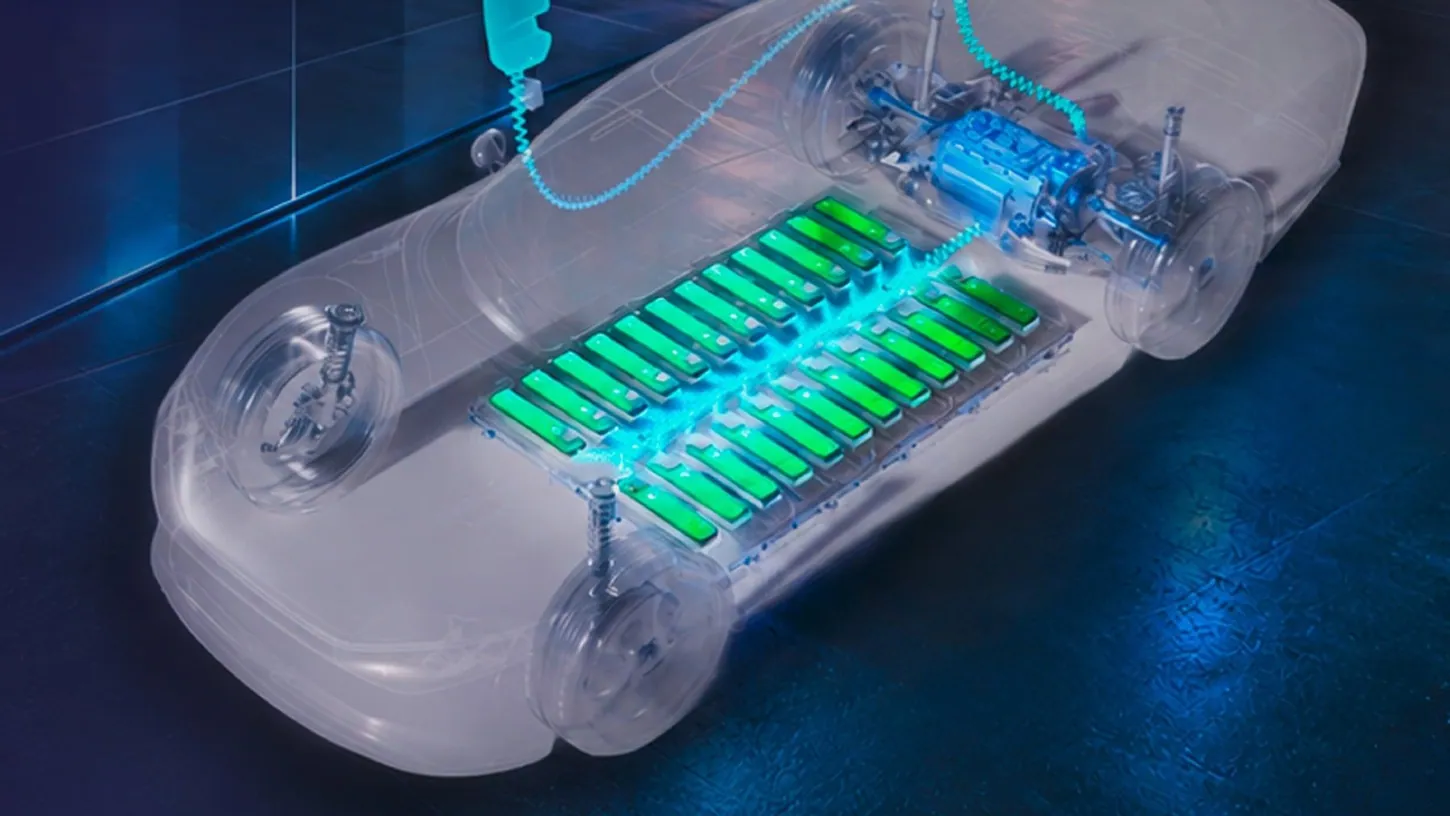
In conventional EVs, battery cells are connected in series, which helps determine the system voltage. That voltage also drops as the battery discharges. Mercedes’ design puts small programmable converters on individual cells or cell groups. Working in parallel, they regulate energy flow and provide a steady high-voltage output, as electrive explained.
Mercedes says the software-controlled approach could make battery layouts more flexible. The converters also handle alternating current (AC) and direct current (DC), potentially allowing an EV to send electricity back to a home or the grid.
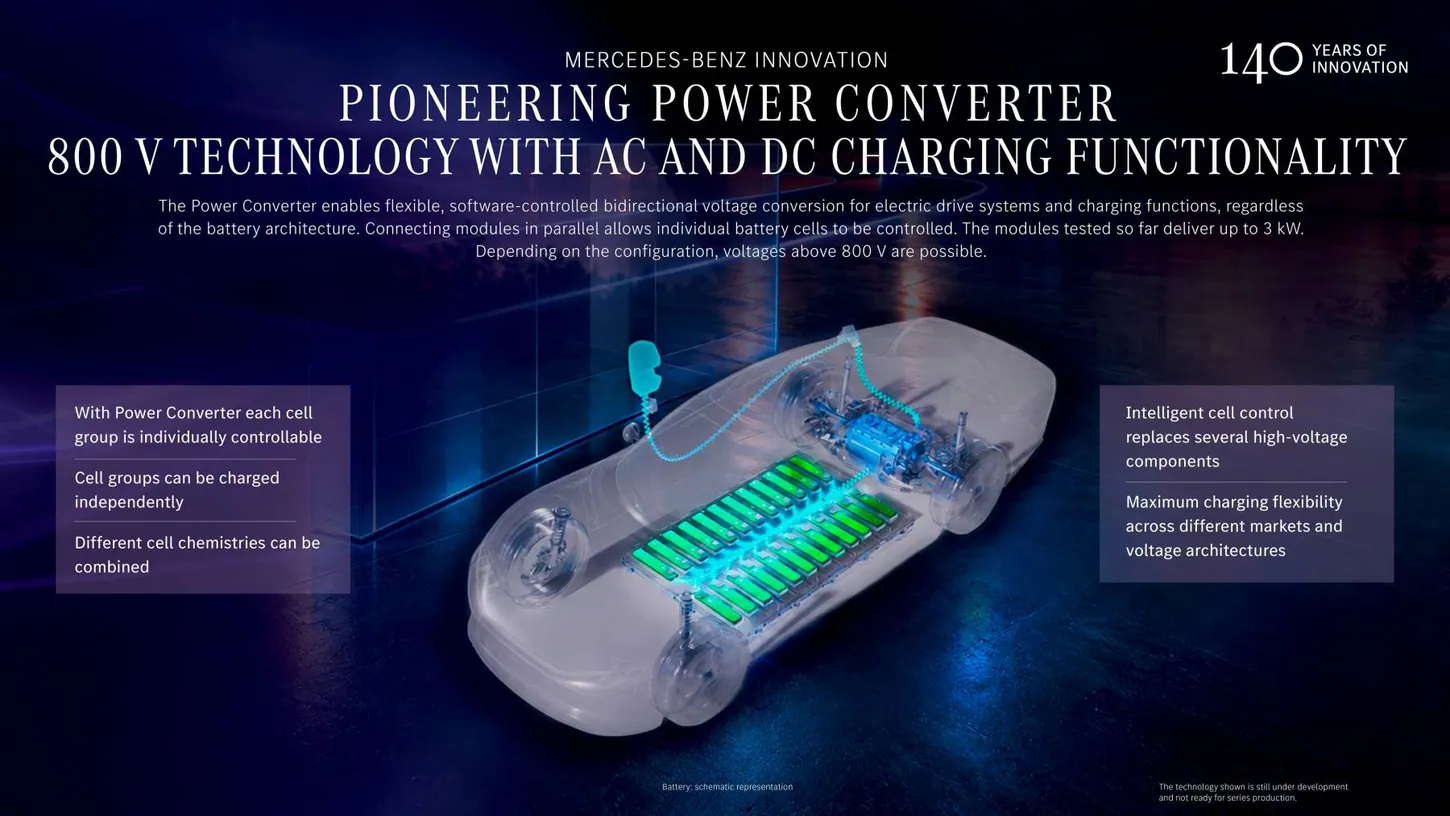
The infographic in Mercedes’ press release adds three details the text leaves out: each cell group can be charged independently, different cell chemistries can be combined in one pack, and voltages above 800 volts are possible depending on the configuration.
The Design Could Eliminate a Separate On-Board Charger
An EV’s on-board charger normally is used to convert household AC power to DC for its battery. Mercedes’ converter could absorb that function, which would save weight, space and production costs, according to electrive.
Mercedes also suggests that this technology could improve range and efficiency but didn’t say by how much. A steady voltage could simplify the inverter that supplies the drive motor and make it easier to share powertrain components between EVs and plug-in hybrids.
Mercedes Has Not Announced a Production Vehicle
Mercedes has not announced vehicle testing or a launch schedule where this converter would be used. Its own infographic says the technology is still under development and not ready for series production. Electrive also raised the question of whether electronics distributed across battery cells would complicate repairs.
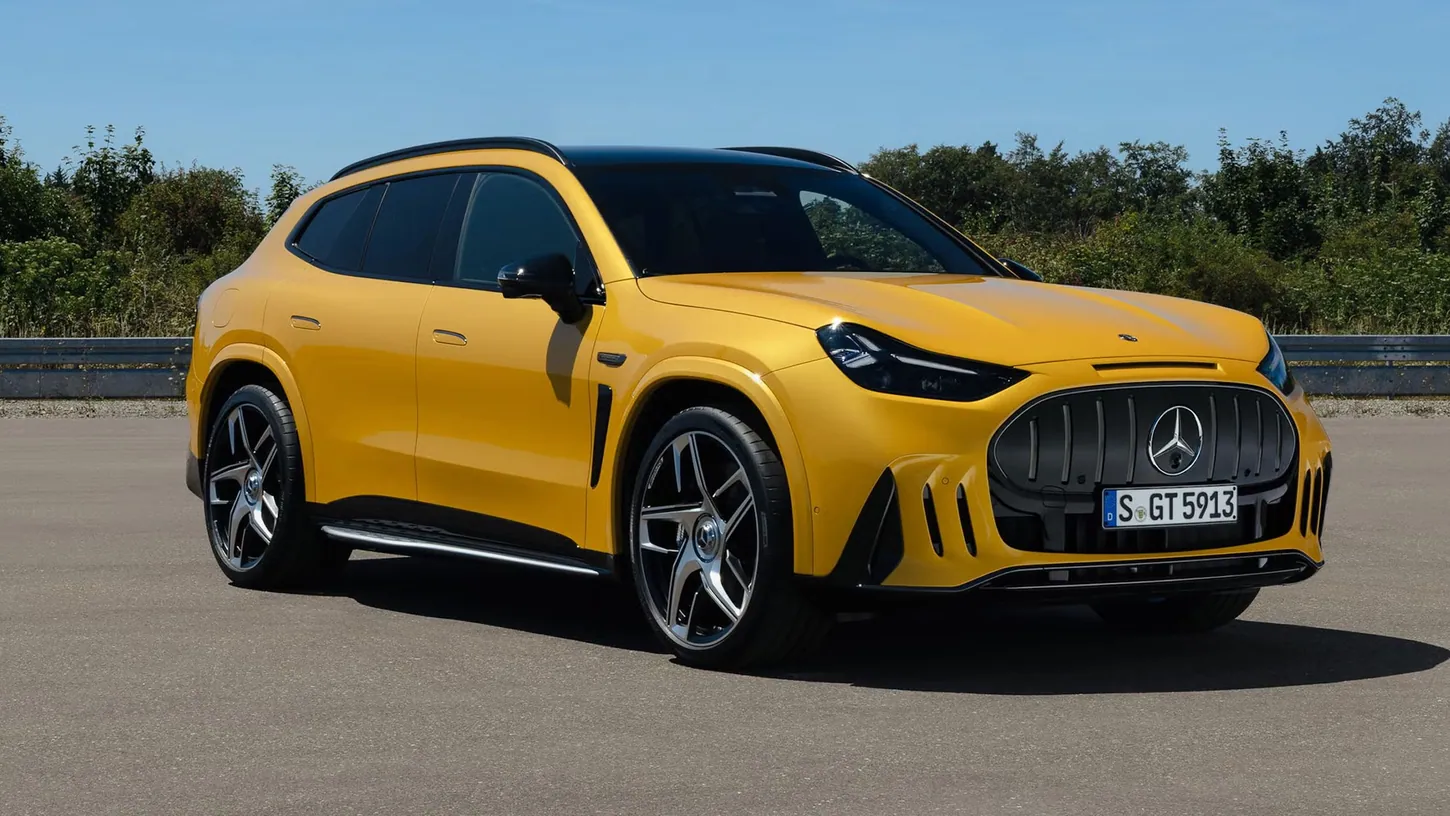
This is different from the 800-volt systems already found in Mercedes vehicles. EVXL covered the AMG GT SUV’s charging hardware in October and previously reported on the 2027 electric GLB. Neither establishes when this new experimental converter might be ready for production.
EVXL’s Take
Separating high-voltage output from battery charge could let Mercedes simplify hardware rather than just raise charging figures. But the disclosed 3-kW version is an early step, not proof the system can power an entire production car efficiently or cheaply.
This new converter could change the charging game for the better while also allowing for more functions such as powering a home or the grid. The meaningful achievement will be when a vehicle test shows whether the promised savings outweigh the extra electronics and cost.
Sources: Mercedes-Benz, electrive, Electric Cars Report
EVXL uses automated tools to support research and source retrieval. All reporting is by Damien Kesteloo, edited by Haye Kesteloo.