
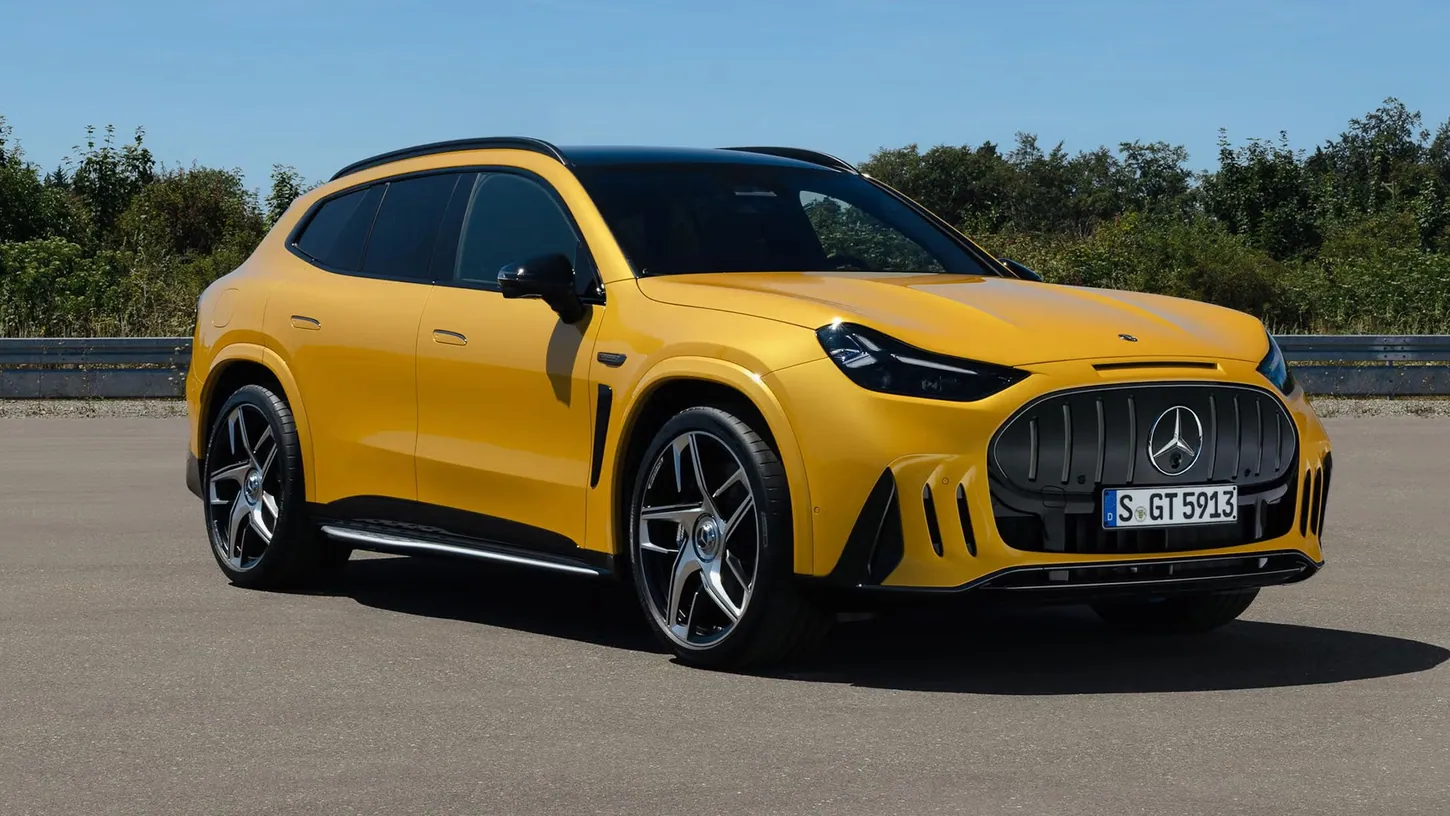
Mercedes-AMG unveiled the all-electric Mercedes-AMG GT SUV on Saturday, October 17, 2026, the first full-size SUV the Affalterbach division has developed entirely in-house. The flagship GT 63 SUV uses three axial flux motors for a peak 1,153 horsepower and reaches 60 mph in an estimated 2.4 seconds.
The 2028 model arrives at US dealerships in summer 2027 as a GT 63, GT 55 and GT 53. Mercedes has not announced US pricing. It is the production version of the electric performance SUV EVXL first covered as a winter-testing prototype in December 2024.
The AMG GT 4-Door Coupe that launched the same platform in May peaks at 600 kW on a DC fast charger. The GT 63 and GT 55 SUV peak at 710 kW.
The GT 63 SUV’s 128 kWh Battery Pushes DC Charging to 710 kW
The SUV out-charges the 4-Door because the GT 63 and GT 55 get a larger pack: 128 kWh usable across 22 modules, against 106 kWh and 18 modules in the GT 53 SUV and the 4-Door. Mercedes rates the bigger pack at 710 kW, the smaller at 600 kW.
Mercedes quotes 10 to 80 percent in 12 minutes at the 710 kW peak, and 282 miles (454 kilometers) of WLTP range added in as little as 10 minutes. On a 400 kW station, the same session takes 16 minutes. Mercedes-Benz USA’s launch release labels its charging rates and times preliminary, with no certified values yet.
The 800-volt pack uses tall, narrow cylindrical cells bathed directly in non-conductive oil, the cooling approach Mercedes credits for both the charging rate and repeatable power. It switches to 400-volt mode at older stations, and Mercedes lists NACS among the five DC plug standards it supports.
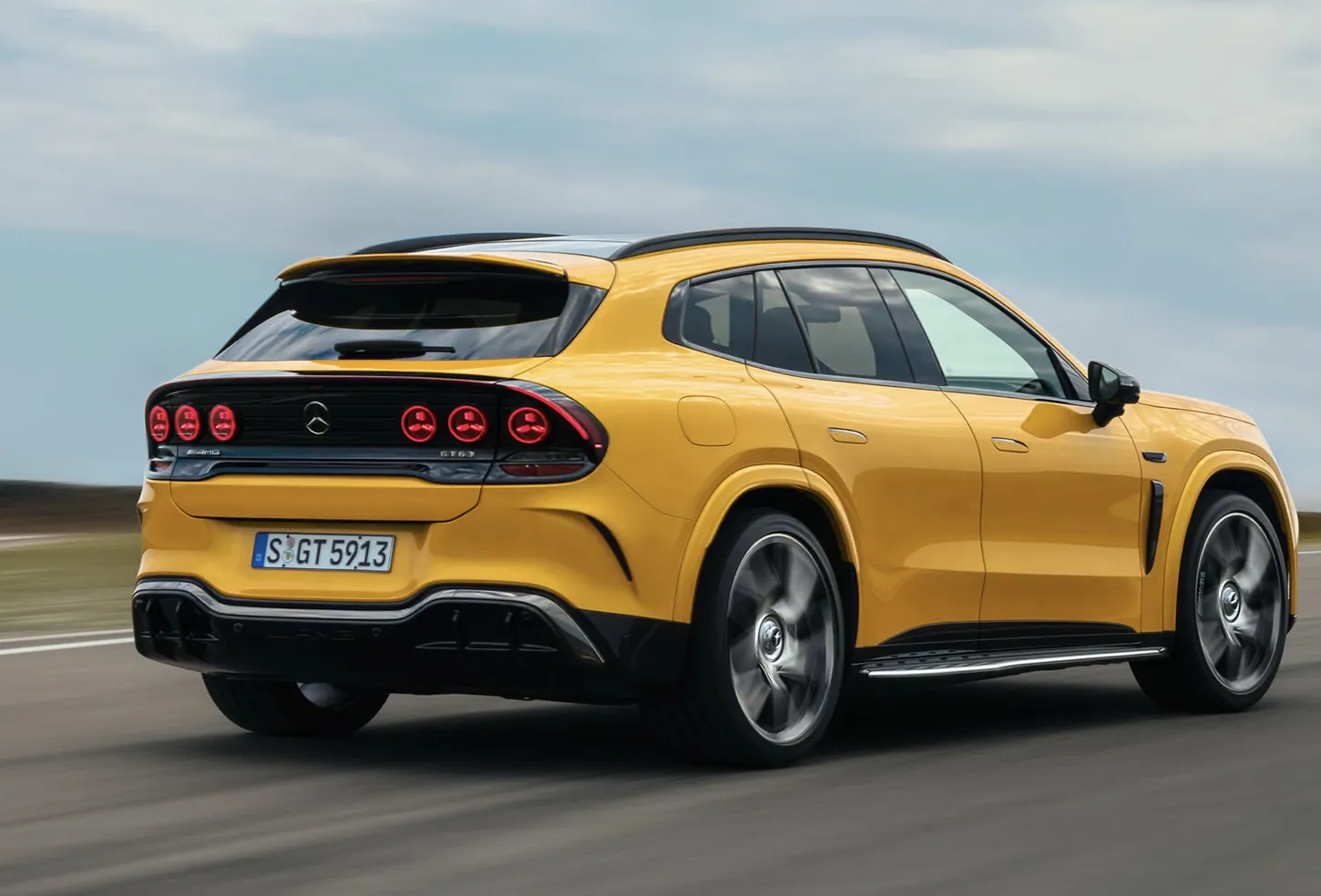
The 1,153-HP GT 63 SUV Weighs 5,941 Pounds and Has No EPA Rating
Peak output for the GT 63 SUV is 1,153 hp and 1,475 lb-ft, with 711 hp available continuously and a 63-second boost window. The 2.4-second 0 to 60 mph time uses a 1-foot rollout; without it, Mercedes estimates 2.6 seconds. Top speed is limited to 168 mph.
That output puts the GT 63 SUV just ahead of the Porsche Cayenne Turbo Electric, which makes 1,139 hp on launch control and charges at up to 400 kW.
The DIN curb weight is 2,695 kilograms, or 5,941 pounds. Mercedes quotes 385 to 435 miles (620 to 700 kilometers) of WLTP range. The US release carries no EPA estimate.
The GT 55 SUV uses the same three motors and pack at 805 hp. The GT 53 SUV swaps in two synchronous motors and the 106 kWh pack for 536 hp. Storage runs to 21.4 cubic feet (606 liters) in the trunk and 2.8 cubic feet (79 liters) in the frunk.
AMGFORCE Sport+ Plays a Recorded V8 and Shakes the Seat
The AMGFORCE Sport+ drive program plays a recorded V8 in the GT 63 and GT 55 SUV, or a six-cylinder in the GT 53, and pairs it with simulated gear changes, paddle shifting and seat vibration. Mercedes says it built the sound from over 100 measurements taken with 16 microphones.
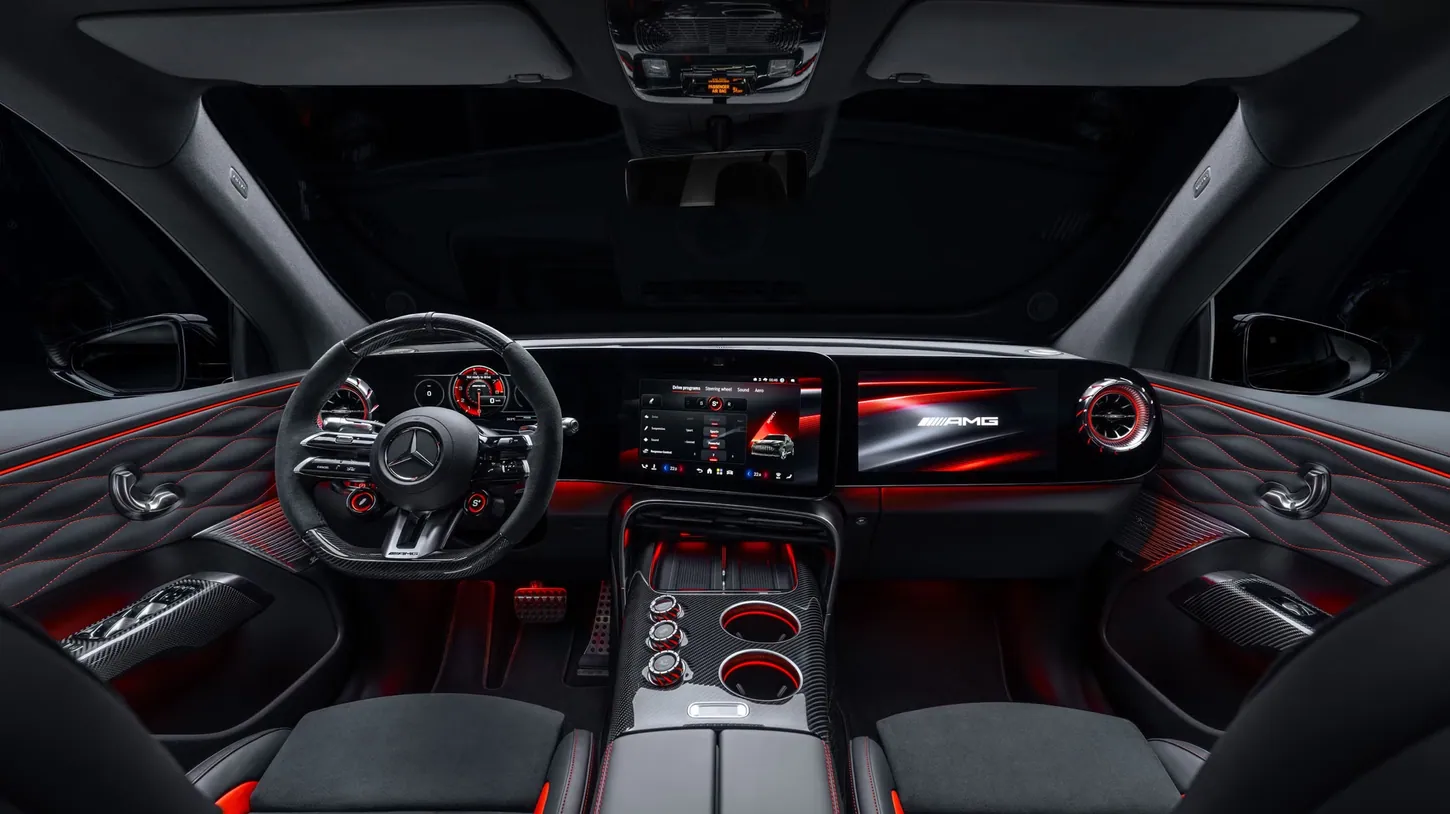
Inside, the 10.2-inch driver display and 14-inch center screen form one unit, and a second 14-inch screen is optional for the passenger. Rotary dials on the center console adjust throttle response, handling balance and traction control on the GT 63, and are optional on the GT 55.
The reference cars for the sound included the AMG GT R, and a slider lets the driver turn the effect down to “Silent.” Porsche added simulated gears to the 2027 Taycan in June, a feature its own development driver had publicly dismissed. Stefan Weckbach, who runs Mercedes-AMG, summed up the SUV’s pitch as “SUV by shape. GT by nature.”
EVXL’s Take
The 710 kW peak makes the headline, but I’d pay for the bigger pack behind it. Mercedes says a 400 kW charger takes the GT 63 SUV from 10 to 80 percent in 16 minutes. Porsche quotes a little under 16 minutes for the Cayenne Electric’s 113 kWh pack, so on the same charger the Mercedes refills 128 kWh of usable capacity in about the time the Porsche needs for a smaller battery. That gap holds whether or not a 710 kW station ever shows up on your route. The release doesn’t say what the SUV pulls from a Tesla Supercharger, where the Cayenne tops out at 200 kW. I’d want that number from Mercedes before calling this the faster road-trip SUV.
Source: Mercedes-Benz USA
EVXL uses automated tools to support research and source retrieval. All reporting and editorial perspectives are by Haye Kesteloo.


