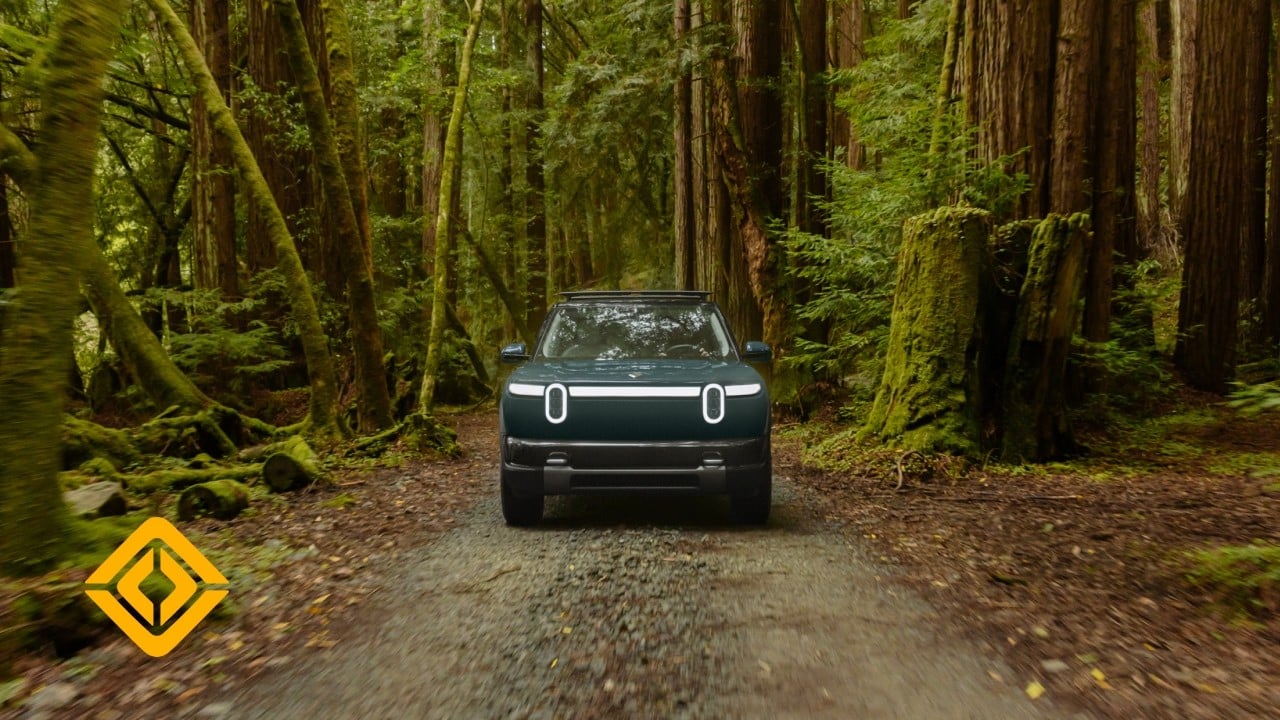
Two years ago, Rivian secured 68,000 reservations in 24 hours on the strength of one number: $45,000. Today at South by Southwest in Austin, the company officially launched the R2 — at $57,990. The affordable Rivian people reserved is coming. Just not until late 2027, and no longer “at” $45,000 but “around” it. That one-word change tells you everything about where this launch actually stands.
- The Fact: Rivian launched the R2 at SXSW today with a Performance Launch Edition starting at $57,990. Deliveries begin this spring from the Normal, Illinois plant.
- The Delta: The $45,000 base model Rivian built its reservation list on has been pushed to late 2027 — and the language quietly shifted from “starting at” to “starting around” $45,000. The lost $7,500 federal tax credit compounds the gap to roughly $20,500 versus what buyers expected when they reserved.
- The Buyer Impact: If you reserved an R2 for the $45,000 price point, you have a decision to make: buy the $57,990 Launch Edition now, wait 18+ months for a cheaper trim that may or may not exist, or walk away. The refundable $100 deposit makes walking away easy.
The R2 Performance Launch Edition: What $57,990 Actually Gets You
The R2 Performance with Launch Package is a dual-motor AWD midsize SUV with an 87.9 kWh battery pack, 330 miles of estimated range, 656 horsepower, 609 lb-ft of torque, and a 0-60 time of 3.6 seconds. On paper, those are strong numbers for the class. Semi-active suspension, matrix LED headlights, a nine-speaker 975W audio system, heated and ventilated front seats, birch interior accents, and the signature rear window that drops into the tailgate are all standard.

The Launch Package adds Autonomy+ for life (otherwise $49.99 per month or a $2,500 one-time fee), a tow package rated to 4,400 lbs, and a Rivian Green anodized key fob. Three new exterior colors debut with the R2: Catalina Cove, Esker Silver, and Half Moon Grey.
One number that stands out for the wrong reasons: 10% to 80% charge takes 29 minutes. That matches a Tesla Model Y, not a class-leading improvement. Early prototype testing flagged lukewarm charging performance, and the production specs confirm it. If fast charging is a priority, the R2 is not the answer — at least not yet.
There is no Apple CarPlay or Android Auto. Rivian is keeping its native infotainment system only, the same choice it made with the R1 lineup. For buyers coming from a traditional car, that will be a genuine friction point.
The Full R2 Lineup and When Each Trim Arrives
Rivian confirmed four trims today, rolling out roughly every six months through late 2027. The Performance Launch Edition at $57,990 ships this spring. The R2 Premium — same 330-mile range, 450 hp, slower at 4.6 seconds to 60 — arrives in late 2026 at $53,990. The Standard Long Range, a rear-wheel-drive model with 345 miles and 350 hp, starts at $48,490 in early 2027. The base Standard with a smaller battery and roughly 275 miles arrives in late 2027 at “around $45,000.” Rivian has not confirmed the smaller battery’s exact capacity.
Every R2 gets the same 87.9 kWh pack except the base Standard. Every trim ships with a native NACS port for access to Tesla Superchargers. Ground clearance is 9.6 inches across the lineup, and all trims share the same midsized platform with in-house motors. The frunk is smaller than on the R1S but Rivian says it’s still more spacious than most competitors. Interior dimensions are generous: 41.4 inches of front legroom, 40.4 in the rear.
The $45,000 Promise Has an Asterisk, and the Asterisk Has an Asterisk
The language shift is worth slowing down on. When Rivian first revealed the R2 in March 2024, the website read “starting at $45,000.” By February 2026, that line quietly disappeared. Today, the official language is “starting around $45,000.” As TechCrunch noted, the word “around” is doing a lot of work there.
This is not a new playbook. Tesla spent years promising a $35,000 Model 3 that briefly existed as an off-menu order before being discontinued. Tesla also debuted the Cybertruck in 2019 at a $40,000 starting price that never materialized in production. The comparison is uncomfortable for Rivian, which just settled a $250 million class action shareholder lawsuit over its 2022 R1 price hike — a case where shareholders alleged the company made misleading pre-IPO disclosures about the cost of building the R1.
The math for reservation holders is stark. When 68,000 people reserved the R2 in 2024, they expected a $45,000 SUV with a $7,500 federal tax credit bringing effective cost to $37,500. The federal EV tax credit expired September 30, 2025, as we documented extensively when October EV sales collapsed 43%. The $45,000 base model is now 18 months away and no longer a firm price. The Launch Edition shipping today costs $57,990 plus $1,495 destination. That is a $20,490 gap from what buyers anticipated at reservation, before options.
EVXL’s Take
The R2 is a genuinely good SUV. The specs are competitive, the design is clean, the NACS port is the right call, and Autonomy+ bundled into the Launch Edition is a real differentiator. I’ve been tracking Rivian’s R2 development for over two years, and the production vehicle looks like the company delivered on the product side of its promise.
The business side is a different story. The R2 launches into the most hostile EV market in three years: no federal tax credit, tariff pressure on components, Q4 2025 deliveries down 31% year-over-year, and Wall Street projecting U.S. EV market share could fall to 6.5% in 2026. Rivian is targeting 20,000 to 25,000 R2 deliveries this year, which TechCrunch noted would make it one of the fastest EV launches in U.S. history. That’s an extraordinary claim from a company that burned through $1 billion per quarter in 2025.
The charging performance is the detail I keep coming back to. A 29-minute 10-80% charge time is not bad — but it is not a reason to choose the R2 over a Model Y in a post-subsidy market where every dollar matters. Rivian needed to win on charging speed. It didn’t.
My prediction: the $45,000 base R2 Standard with the smaller battery arrives in name only. By late 2027, production economics, tariff costs, and commodity pricing will push that “around $45,000” to $47,000 or higher — and Rivian’s lawyers will point to the word “around” as their cover. To be fair: launching with expensive trims first is standard industry practice. Ford did it with the Lightning. GM did it with the Silverado EV. The criticism isn’t the strategy — it’s the gap between what was marketed to reservation holders and what’s actually available now. The Premium trim at $53,990 in late 2026 is the actual sweet spot for most buyers who want a real Rivian without the launch markup. If you’re holding a reservation and can wait, wait for that one. If you can’t wait, the Launch Edition at $57,990 is a solid SUV — just know what you’re actually buying.
Frequently Asked Questions
When do Rivian R2 deliveries start?
Rivian says deliveries of the R2 Performance Launch Edition begin this spring, with June 2026 the most frequently cited target. The R2 Premium follows in late 2026, the Standard Long Range in early 2027, and the base Standard in late 2027.
What is the Rivian R2 starting price?
The first R2 to ship — the Performance with Launch Package — starts at $57,990 plus $1,495 destination, for a total of $59,485. The previously promised $45,000 base model arrives in late 2027 at “around $45,000,” with no confirmed final price and a smaller battery than all other trims.
Does the Rivian R2 qualify for the federal EV tax credit?
No. The $7,500 federal EV tax credit expired September 30, 2025. The R2 does not qualify for any federal purchase incentive at this time.
Does the Rivian R2 have Apple CarPlay or Android Auto?
No. The R2 uses Rivian’s proprietary infotainment system exclusively, with no CarPlay or Android Auto support across any trim level.
What charging speed does the Rivian R2 support?
The R2 charges from 10% to 80% in approximately 29 minutes. It ships with a native NACS port for access to Tesla Superchargers. All trims also support CCS via adapter for other DC fast charging networks.
Editorial Note: AI tools were used to assist with research and archive retrieval for this article. All reporting, analysis, and editorial perspectives are by Haye Kesteloo.
Discover more from EVXL.co
Subscribe to get the latest posts sent to your email.