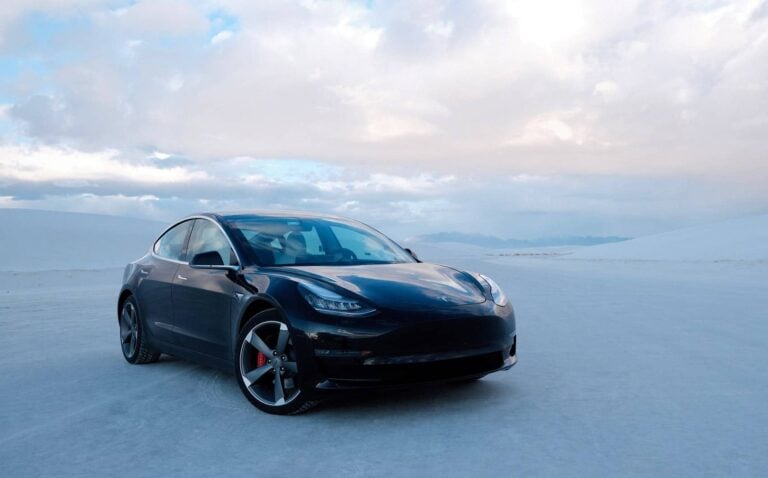
Tesla’s European CO₂ pool just got smaller. Both Toyota and Stellantis are withdrawing from the pooling arrangement for 2026, according to automotive analyst Matthias Schmidt and a newly published EU document listing the pool’s remaining members. That leaves Tesla, Ford, Honda, Mazda, and Suzuki as the active participants. The departures remove what have likely been two of the pool’s most significant financial contributors.
- The Fact: Toyota and Stellantis are both exiting Tesla’s EU CO₂ pool for the 2026 compliance year, confirmed by an official EU filing that no longer lists either automaker as a member.
- The Delta: Toyota is leaving because it expects to meet its 96.3 g/km target independently, while Stellantis is splitting off to form a separate pool with its subsidiary Leapmotor — a move that could be worth more as Leapmotor production scales up in Spain.
- The Buyer Impact: For Tesla, the financial hit is real but not yet calculable. CO₂ pool payments from EU partners have been a meaningful revenue line. Losing two contributors tightens that picture heading into an already difficult year for regulatory credit income.
- The Caveat: EU CO₂ pools must be finalized by December 1, 2026. Both companies can still reverse course if their emissions projections shift.
Tesla’s CO₂ Pool Offers Partners a Cheaper Path Than EU Fines
Under EU fleet emissions rules, automakers can combine their vehicle fleets into a single CO₂ pool for regulatory calculations. A manufacturer with a surplus of zero-emission vehicles can effectively sell that surplus to pool partners who would otherwise miss their targets and face steep EU fines. Tesla, as a pure EV maker, has run a significant credit surplus for years. Automakers that join its pool pay Tesla for access to that surplus, at amounts typically far lower than what the EU would fine them directly. The arrangement benefits both sides: partners avoid penalties, Tesla earns non-vehicle revenue.
That model has worked well. But it only works as long as partners actually need the credits.
Toyota’s Exit Reflects Its Hybrid Dividend
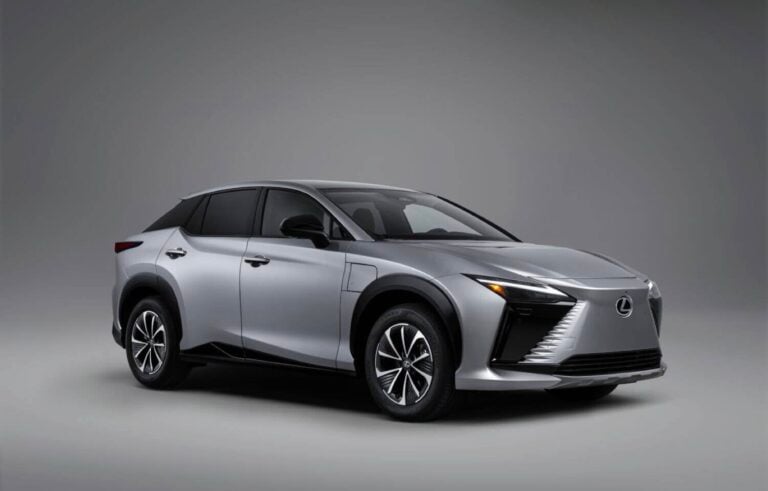
Toyota’s decision to leave appears straightforward: Dataforce forecasts that Toyota will meet its EU target of 96.3 grams of CO₂ per kilometer almost exactly in 2025. A company that meets its own targets has no reason to pay for pool access. Toyota has spent years building one of the highest hybrid penetration rates among any non-EV-first brand in Europe, which has steadily pulled its fleet average down. The newer bZ4X added battery-electric volume. In February 2026, it was the best-selling EV in Denmark. The upcoming Urban Cruiser will push BEV share higher still.
Toyota and BMW were also among the 67 industry signatories urging the European Commission last December to abandon mandatory EV fleet purchase targets. Exiting Tesla’s pool while simultaneously arguing against the rules that made those pools necessary is a consistent position. Toyota believes it can manage compliance on its own terms.
Stellantis Is Betting on Leapmotor Instead
Stellantis is a more complicated case. Dataforce forecasts it missed its 2025 CO₂ target by just over six grams per kilometer. Not a catastrophic gap, but enough to require either pool access or internal improvement. The company is now expected to form a separate pool with Leapmotor, the Chinese EV brand in which Stellantis holds a 20% stake.
Leapmotor’s value in this arrangement will grow. Production of the Leapmotor T03 is scheduled to begin at a Stellantis facility in Spain later this year, which sidesteps EU tariffs on Chinese-made EVs. Schmidt notes this “will help avoid existing tariffs and counteract potential further European protectionism.” There are also unconfirmed reports that Stellantis is negotiating to license Leapmotor’s powertrain technology for its own models, which could improve the CO₂ performance of its core brands without requiring entirely new platforms.
This matters in context. Stellantis took a $26 billion write-down in early 2026 as it effectively abandoned its prior EV-first roadmap, and new CEO Antonio Filosa has positioned the company around what he calls “freedom of choice,” including reviving diesel powertrains in some European models. The company posted a €20.1 billion net loss for the second half of 2025. Against that backdrop, building a self-contained compliance structure around Leapmotor rather than paying Tesla makes financial sense, even if Stellantis’ actual emissions trajectory in 2026 remains unclear.
We covered Stellantis’ original factory closure threats in mid-2025, when its Europe chief warned that EU fines could force plant shutdowns. That pressure hasn’t gone away. It’s just being managed differently now.
Tesla’s Regulatory Credit Revenue Faces Pressure From Multiple Directions
Tesla has flagged for several quarters that CO₂ and emissions credit revenue is becoming less reliable globally. In Q4 2025, Tesla’s net income dropped 61% year-over-year, with the company leaning on cost cuts and energy storage growth to offset vehicle margin compression. Regulatory credits, both in the US and Europe, have historically padded earnings during lean quarters.
In the US, the rollback of federal EV incentives and the uncertain future of emissions trading programs under the current administration adds another layer of risk. In Europe, losing Toyota and Stellantis from the pool shrinks the payment base. The remaining members, Ford, Honda, Mazda, and Suzuki, still fall short of EU targets according to Dataforce estimates, so there is still a pool to operate. But it’s smaller, and the revenue it generates for Tesla will be accordingly reduced.
Ford’s own PHEV-heavy European strategy has drawn scrutiny too: a Fraunhofer Institute study found plug-in hybrids burn nearly four times more fuel in real-world use than official figures suggest, which may affect how regulators treat PHEV credits going forward.
Source: electrive.com / Matthias Schmidt
EVXL’s Take
This is the third time in about 18 months that I’ve watched a piece of Tesla’s non-vehicle revenue picture erode. First it was US federal emissions credits looking uncertain. Then Q4 2025 earnings showed the company already flagging the trend. Now two of the biggest EU pool contributors are gone, or at least stepping back until December.
Toyota’s exit is the cleaner story. The company built its compliance cushion through years of disciplined hybrid deployment, not government mandates or last-minute pool purchases. That’s a legitimate market outcome. A company that earns its own compliance doesn’t need to pay a competitor for cover.
Stellantis is messier. It’s reviving diesels, reporting historic losses, and simultaneously betting that a Chinese EV startup it part-owns can become its emissions lifeline. That’s an unusual strategy, but it may actually work if Leapmotor’s Spain-built T03 volumes ramp quickly and the technology licensing talks close. France was already lobbying Brussels for emissions flexibility on Stellantis’ behalf back in October 2025. The political pressure to give Stellantis room to maneuver hasn’t disappeared.
For Tesla, I’d expect EU CO₂ pool revenue to drop by at least 30 to 40% in 2026 compared to 2025, assuming neither Toyota nor Stellantis rejoins before the December 1 deadline. Tesla doesn’t break out EU pool revenue separately in its earnings reports, so there’s no public baseline to anchor that estimate precisely. But Toyota and Stellantis together represent the two largest non-compliant fleet operators that were in the pool, and their absence meaningfully shrinks what’s left. That’s not a company-threatening number, but it’s real money at a time when Tesla can’t afford many more margin headwinds. Watch the Q2 2026 earnings call for how the company characterizes European regulatory credit income. If they stop referencing it, that’s your answer.
Editorial Note: AI tools were used to assist with research and archive retrieval for this article. All reporting, analysis, and editorial perspectives are by Haye Kesteloo.
Discover more from EVXL.co
Subscribe to get the latest posts sent to your email.