A lithium-ion battery fire doesn’t wait for management to approve additional headcount. That’s the core of a lawsuit now sitting in San Francisco federal court — after Tesla moved it there from California state court — filed by Nina Mirani, a former regional manager at Tesla Energy‘s Hayward, California distribution hub.
According to court filings reviewed by The Independent, Mirani spent months warning supervisors that the Hayward facility — Tesla’s primary intake location for residential Powerwall batteries — was dangerously overcrowded with high-voltage lithium-ion cells. She was fired in late February 2025. Two colleagues who had also raised safety concerns were terminated the same day. The one team member who never complained about anything safety-related kept his job.
- The Case: Ex-Tesla Energy regional manager Nina Mirani filed suit in California state court — Tesla removed it to San Francisco federal court — alleging wrongful termination after she flagged fire hazard conditions at the Hayward, California Powerwall distribution hub.
- The Hazard: High-voltage lithium-ion batteries stacked in aisles and against walls, forcing forklift operators through “dangerously confined pathways,” according to the complaint. Management’s response, the complaint alleges, was to keep sending more batteries to an already-overcapacity floor.
- The Pattern: Three safety-vocal employees were fired the same day. Tesla says the terminations were performance-related. The complaint says no “missing shipments” cited as cause for firing ever appeared in the fulfillment tracking system.
- The Context: Tesla had already recalled approximately 10,500 Powerwall 2 units over fire risks just months before this lawsuit was filed, a figure sourced from the CPSC recall notice. The Independent reported the number as 10,000.
The Hayward Hub: What the Complaint Describes
Tesla Energy’s Hayward facility served as the primary intake point for residential Powerwall batteries — along with solar panels and other energy components — arriving from international and domestic suppliers, which were then staged in warehouses for pickup by local installers. The complaint alleges management consistently pushed more inventory into the hub than it could safely hold, creating aisle-blocking stacks of high-voltage lithium-ion units throughout the warehouse.
Mirani, who joined Tesla in January 2019 on the automotive side and transferred to Tesla Energy in 2023, was specifically responsible for safe storage at the hub. By fall 2024, she had escalated her concerns to a PowerPoint presentation delivered directly to a senior Hayward manager. She walked him through the facility and laid out the specific risks. Nothing changed.
In mid-February 2025, she brought in someone from Tesla’s Systems Development Team to shadow her team for a week. That person documented the same hazards Mirani had been flagging for months. She then asked her direct manager for permission to hire additional staff. He told her to work with the systems department to find better processes instead.
Shortly after, production ramped up and even more batteries arrived at the hub. When Mirani escalated to her boss’s boss, that executive agreed to visit within two weeks. Three days later, Mirani was fired.
Why Overcrowded Lithium-Ion Storage Is a Serious Problem
Lithium-ion battery fires are fundamentally different from conventional warehouse fires. They generate their own oxygen during combustion, burn at extreme temperatures, and can enter thermal runaway — a self-sustaining chemical chain reaction that firefighters generally cannot stop. In most cases, crews can only contain the perimeter and wait for the fire to exhaust itself.
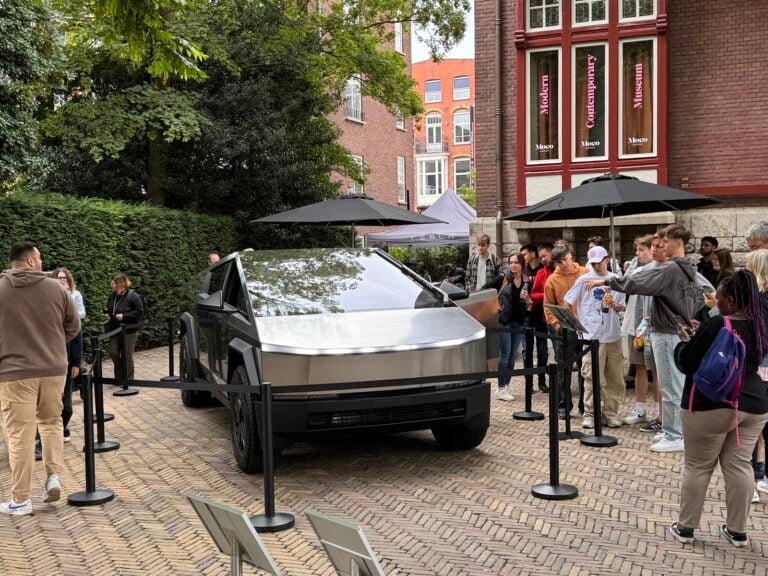
That’s not hypothetical. In August 2024, Michael Sheehan, a 47-year-old Texas man, burned to death after his Tesla Cybertruck veered off the road and struck a culvert, trapping him as the battery went into thermal runaway. According to a wrongful death lawsuit filed by his family, the fire reached approximately 5,000°F — so intense his bones experienced thermal fracture. In September 2025, a Nevada solar facility saw two Tesla Megapack battery storage units catch fire within 30 days at the Townsite Solar Facility in Boulder City. A Tesla lab in Palo Alto experienced two battery fires within a single month in late 2025 and early 2026, with the second shutting the building down for three weeks. A San Marcos charging station battery unit caught fire last month. The Tesla Semi fire that triggered an NTSB investigation added another data point to a pattern that now spans multiple divisions.
Now consider that scenario in a warehouse where Powerwalls are stacked wall-to-wall in aisles, forklift operators are threading through narrow gaps carrying high-voltage material, and additional deliveries are arriving on top of an already-overcapacity floor. No fires at the Hayward hub have been publicly reported. But that’s the point Mirani was making — she was trying to prevent one, not document one.
China recently passed a “no fire” battery mandate specifically because thermal runaway in lithium-ion cells has become a documented and serious problem across the industry. The regulatory logic there was straightforward: if you know batteries can cause catastrophic fires, you build prevention in from the start. The Hayward lawsuit, if the allegations hold up, suggests Tesla’s internal management took the opposite approach.
Tesla’s Defense and the Arbitration Move
Tesla has filed a motion to dismiss, arguing that Mirani’s employment agreement requires all workplace claims go to mandatory arbitration rather than federal court. The company also argues her position was “at will” and that legitimate, non-retaliatory reasons existed for her termination.
On the mental distress claims, Tesla’s filing is direct: it attributes any emotional injury Mirani suffered to “a pre-existing psychological disorder or alternative concurrent cause,” not to anything the company did.
The complaint pushes back hard on the stated reason for firing — alleged lost shipments. According to the complaint, Mirani received glowing performance reviews, regular raises, and three performance awards in 2024 alone. More directly, the complaint says no missing shipments ever appeared in the fulfillment tracking system and were never referenced again after her termination. Two other employees fired the same day had also raised safety concerns. The sole surviving team member had not.
An initial case management conference is scheduled for June 1. Tesla did not respond to requests for comment from The Independent.
The Broader Safety Picture at Tesla
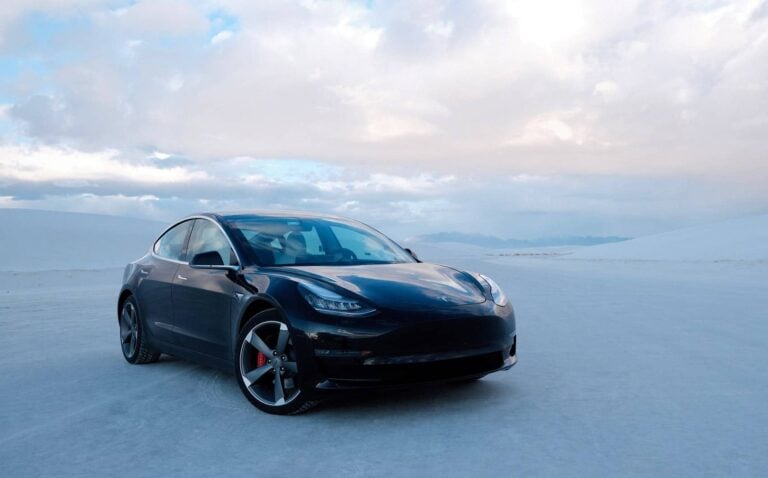
The Mirani lawsuit doesn’t exist in isolation. Tesla is simultaneously dealing with a congressional inquiry into its door handle safety crisis, federal scrutiny of multiple vehicle safety issues, and the aftermath of recalling approximately 10,500 Powerwall 2 units over fire risks — a recall that came two months after Australian regulators flagged the same defect in the same production run. A separate wrongful death lawsuit over a Model 3 fire is also working through federal court. These involve different divisions and different failure modes. What they share is a pattern of safety concerns reaching public attention after internal channels failed.
The energy division has been under particular pressure. Tesla’s Q4 2025 earnings showed energy storage as one of the few growth segments while automotive profits collapsed. That financial dependence on the energy business creates pressure to keep product moving fast — exactly the dynamic Mirani’s complaint describes, according to her filing, with factory production ramping up even as warehouse conditions deteriorated.
EVXL’s Take
The most telling detail in this lawsuit isn’t the fire hazard. It’s the timing. Three days after Mirani escalated to a senior executive who agreed to visit the Hayward hub, she was gone. So were two other employees who’d spoken up. The one team member who stayed quiet kept his job. That’s not a subtle pattern.
I’ve been covering Tesla’s Powerwall fire story since November, when the company recalled roughly 10,500 units over battery cells that could smoke or ignite — units that Australian regulators had already flagged two months earlier. The internal question I kept coming back to was: how does a company with remote diagnostic capability and over-the-air update infrastructure miss or delay this? The Mirani lawsuit offers one possible answer. If safety managers who physically walk warehouse floors and document hazards face termination for being too persistent, it’s not hard to imagine how problems compound before they become public.
Tesla’s arbitration defense will probably succeed in keeping this out of federal court. That’s a legitimate contractual argument. But the underlying facts alleged — overcrowded high-voltage batteries and coordinated firings of safety-vocal employees — will still play out somewhere. If discovery surfaces internal communications about the Hayward hub’s conditions, this gets considerably more uncomfortable for Tesla Energy.
My prediction: by Q3 2026, at least one California workplace safety agency opens a formal inquiry into the Hayward facility. The three simultaneous terminations of safety-reporting employees on the same day is exactly the kind of documented retaliation pattern that draws regulatory attention, regardless of how the lawsuit itself resolves.
Editorial Note: AI tools were used to assist with research and archive retrieval for this article. All reporting, analysis, and editorial perspectives are by Haye Kesteloo.
Discover more from EVXL.co
Subscribe to get the latest posts sent to your email.