Fourteen crashes. An estimated 800,000 miles. One city. Those numbers come directly from Tesla’s own vehicle safety reports filed with federal regulators, as analyzed by Bloomberg’s Kara Carlson using data from NHTSA’s Standing General Order database.
- The Fact: Tesla’s Austin robotaxi fleet has logged an estimated 800,000 miles since launching in late June 2025, with 14 reported crashes — one every 57,000 miles. Five of those crashes occurred across a six-week period spanning December 2025 and January 2026, all in Model Y vehicles operating with autonomous driving engaged.
- The Delta: By Tesla’s own internal benchmark — one minor collision per 229,000 miles for average Tesla drivers — its robotaxi fleet is crashing at roughly four times the human rate. By NHTSA‘s standard of one crash per 500,000 miles, the gap grows to nearly nine times worse. By the most conservative comparison — including unreported minor collisions, which put the human average closer to one per 200,000 miles — Tesla’s fleet still crashes at roughly 3.5 times the rate.
- The Transparency Gap: Tesla is the only autonomous vehicle operator to fully redact crash narratives from NHTSA filings, citing “confidential business information.” Waymo, Zoox, Aurora, and Nuro all publish detailed accounts of their incidents.
- The Buyer Impact: Tesla began removing safety monitors from some Austin vehicles in January 2026. Riders have no way to independently assess which crashes were caused by system failures and which resulted from other road users.
Five Crashes Across Six Weeks Paint a Damaging Picture
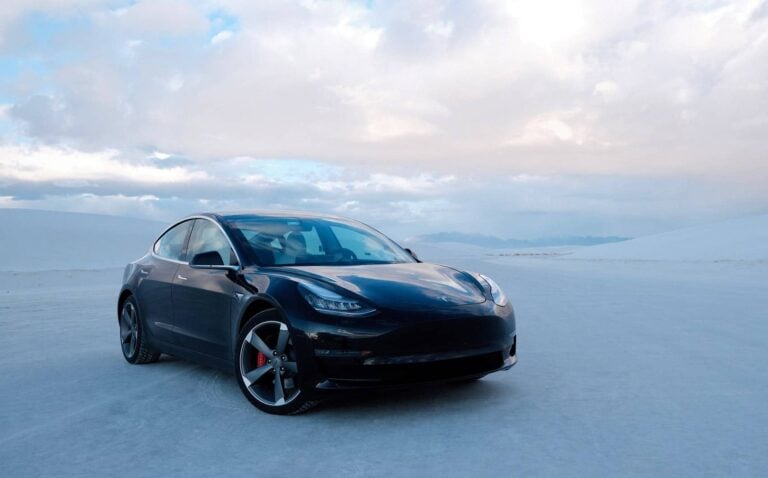
Tesla’s latest vehicle safety report covers five incidents from December 2025 and January 2026, all involving Model Y robotaxis in Austin. The descriptions that did make it into the filings are specific enough to be troubling. One vehicle hit a fixed object at 17 mph while driving straight. Another hit a stationary city bus while the Tesla itself was stationary. Two separate incidents involved the robotaxi backing into fixed objects in parking situations — one at 2 mph, one at 1 mph. A fifth involved a collision with a heavy truck at 4 mph.
Some of these may not be Tesla’s fault. A parked robotaxi getting hit by a bus is a different category of incident than a vehicle running into a fixed object at near-highway speeds. But that’s precisely the problem: because Tesla redacts every narrative detail from its NHTSA filings, there is no public record of what actually happened in any of these crashes. As we reported in February, this redaction practice is unique among autonomous vehicle operators, all of whom provide detailed accounts of their incidents to federal regulators.
Tesla also revised an earlier crash report. A July 2025 incident — a right-turn collision into an SUV at 2 mph — was originally filed as “property damage only.” Tesla updated the report months later to note that a victim was hospitalized. Fortune flagged that revision, citing Electrek. The original filing undercounted the human cost of the incident.
The Crash Rate Math, Broken Down
Tesla’s Austin fleet has accumulated an estimated 800,000 miles since launching paid robotaxi service in late June 2025 — a figure extrapolated by Electrek from Tesla’s Q4 2025 earnings data, not a Tesla-confirmed number. With 14 reported crashes across that distance, the rate is approximately one incident per 57,000 miles. Here is what three different benchmarks say about that number.
Tesla’s own Vehicle Safety Reports put the average Tesla driver’s minor collision rate at one every 229,000 miles. At 800,000 miles, a typical human Tesla driver would have expected roughly four crashes. The fleet had 14. That’s the 4x figure Tesla’s own data produces against its own standard.
NHTSA’s broader estimate puts the average American driver’s police-reported crash rate at one per 500,000 miles — roughly 1.6 crashes in 800,000 miles. Tesla’s fleet at 14 crashes is nearly nine times that rate. Worth noting: these benchmarks are not a perfect comparison. NHTSA’s 500,000-mile figure covers only police-reported crashes. Tesla’s 229,000-mile figure includes minor unreported collisions. Including unreported fender-benders, the human average is closer to one per 200,000 miles — which still puts Tesla’s robotaxi fleet at roughly 3.5 times worse.
For comparison, Waymo has logged over 200 million fully driverless miles nationally as of early 2026. In Austin, Bloomberg reports Waymo operates about 200 vehicles through the Uber app and has reported approximately 50 incidents in the city. As we covered recently, Waymo spent a decade documenting more than 13 million California test miles before earning its commercial driverless permit there. Tesla has logged 562 California miles since 2016.
Tesla’s Broader Safety Record Adds Context
It would be misleading to frame Tesla’s overall autonomous driving record as uniformly bad. The company’s Q3 2025 Vehicle Safety Report showed one crash per 6.36 million miles for vehicles operating with Full Self-Driving engaged on public roads with a human present — genuinely better than the NHTSA human baseline. Q2 2025 was even better, at one crash per 6.69 million miles. Even Teslas driven without any autopilot engaged crash at a lower rate than the NHTSA average, at roughly one per 963,000 miles.
The robotaxi program is a different category. Those vehicles operate without a licensed driver at the wheel who can intervene. The economic and safety assumptions Musk has built around full autonomy are separate from how supervised FSD performs with a human ready to take over. When the safety net is removed, the safety performance advantage goes with it.
Tesla’s Redaction Strategy Blocks Independent Accountability
Dan O’Dowd, founder of The Dawn Project and a longtime Tesla FSD critic who has funded national advertising campaigns against the technology, told Fortune that Tesla was “terrified of the public learning how defective its software is.” Under NHTSA’s confidentiality provisions, companies must report crashes within five days but can withhold narrative details by claiming they constitute proprietary business information. Tesla uses this provision for every single crash report. No other ADS operator in the NHTSA database does this.
Tesla did not respond to Fortune’s requests for comment.
The redaction issue is not new. In April 2025, we covered how the Trump administration’s relaxed crash reporting rules for self-driving cars were structured in ways that specifically benefited Tesla — a development that drew criticism from safety researchers who said the changes reduced public accountability for ADS operators.
Tesla’s Safety Problems Extend Beyond the Robotaxi Fleet
The Austin crash data lands in the middle of an already difficult period for Tesla’s safety reputation. Congress is advancing the SAFE Exit Act — which cleared a House Energy and Commerce subcommittee — in response to Tesla’s door handle design, linked to people being trapped inside vehicles during crashes and fires. NHTSA has opened investigations into door handle failures on both the Model 3 and Model Y. The death toll from door-trap incidents has grown as reports of people unable to escape burning or submerged vehicles have mounted.
A jury also found Tesla partly responsible for a crash involving its Autopilot technology and ordered the company to pay more than $243 million in damages. NHTSA is separately investigating Tesla’s “Mad Max” FSD mode after drivers reported routine speeding, and the agency opened a probe into 2.6 million Teslas after Smart Summon crashes into parked vehicles.
EVXL’s Take
The 4x-versus-9x framing matters less than what those numbers represent. These are crashes that happened with safety monitors present for most of the program’s history. Tesla removed monitors from some vehicles in January 2026. That same month, the fleet filed four new crash reports.
I’ve been tracking the Austin robotaxi numbers since launch. The crash rate hasn’t improved as the fleet logged more miles. That’s the detail that stands out. Early robotaxi programs typically show improvement over time as edge cases are identified and corrected. Tesla’s Austin data doesn’t show that curve. Fourteen crashes across an estimated 800,000 miles, with five of them in a single six-week stretch, is not a learning curve. It’s a plateau at a bad rate.
The redaction issue is what makes this genuinely hard to resolve. If Tesla showed its work — like Waymo does — critics and supporters alike could assess fault. A bus hitting a stationary robotaxi is not the same as a robotaxi hitting a fixed object at 17 mph while driving straight. Those two incidents tell completely different stories about system capability. Tesla’s blanket confidentiality claim makes it impossible to tell them apart, which means the floor assumption has to be the worst-case reading of the data.
My prediction: Tesla will not meaningfully close the performance gap with Waymo by the end of 2026. Waymo’s safety record is the product of 13-plus million documented California test miles and a decade of regulatory engagement. Tesla’s approach — deploy fast, redact everything, let the PR cycle move on — produces a different outcome. Expect the crash rate in Austin to remain between 3x and 5x the human benchmark through mid-2026, with continued full narrative redaction. The data will keep accumulating. Tesla will keep hiding it.
Editorial Note: AI tools were used to assist with research and archive retrieval for this article. All reporting, analysis, and editorial perspectives are by Haye Kesteloo.
Discover more from EVXL.co
Subscribe to get the latest posts sent to your email.