A door that won’t open in a crash isn’t a design quirk. It’s a death trap. China’s government just codified that reality into law, and the ripple effects will hit EV design studios from Munich to Fremont.
China’s Ministry of Industry and Information Technology published rules banning concealed, electrically operated door handles on vehicles sold in the country, according to a February 3 report in the China Daily newspaper. Starting January 1, 2027, every car sold in China must include a mechanical release on both interior and exterior door handles. The regulation was triggered in part by two fatal crashes involving Xiaomi SU7 vehicles in October 2025, where electric power failures reportedly prevented doors from opening while the cars were on fire, according to WardsAuto.
- The Fact: China bans electrically-only door handles effective January 1, 2027, requiring mechanical release mechanisms on all vehicle doors sold in the market.
- The Delta: The rule affects not just Tesla but BMW‘s Neue Klasse lineup and dozens of Chinese EV brands, with analysts warning of redesigns for models already near production.
- The Buyer Impact: Premium EVs with flush or retractable handles face the most exposure. If you own one, locate your manual door releases now — don’t assume a regulatory fix arrives before you need one.
China’s Mechanical Handle Mandate Sets a Hard 2027 Deadline
China’s new rule is straightforward: any vehicle without a mechanical door release function — accessible from both inside and outside — cannot be sold in China after January 1, 2027. Models already on the market get until 2029 to comply. More than 40 domestic automakers participated in drafting the regulation, according to WardsAuto. That broad industry involvement means this didn’t come as a surprise inside China. It’s the rest of the world that now has to scramble.
The regulation is a direct response to real deaths. Two fatal Xiaomi SU7 incidents in October 2025, cited by Chinese safety watchdogs, involved power failures that reportedly prevented occupants from exiting burning vehicles. We’ve been following China’s safety regulation push as scrutiny around both domestic and foreign EV brands intensified. These incidents pushed Chinese regulators past the point of studying the problem and into banning the design outright.
Tesla and BMW Face the Heaviest Design Exposure
Flush and retractable electric door handles have been a signature design element across premium EVs for years, with Tesla making them famous and BMW adopting them as part of its Neue Klasse identity. China’s ban now puts both brands in a difficult position, and the consequences aren’t limited to China.
Chris Liu, senior analyst for automotive at Omdia, told WardsAuto that premium EVs will feel the most pain. BMW’s iX3 was an early adopter of retractable handles, and the brand’s Neue Klasse concept vehicles replaced conventional handles entirely with small grab points near the windows. That direction, Liu said, “now leaves BMW and similar OEMs facing potentially costly redesigns or retrofits, especially as China-hosted global debuts such as long-wheelbase models at the April Beijing Auto Show increasingly dictate global EV design decisions.”
The BMW i3 Neue Klasse is already in pre-production in Munich, and the iX3 — already in series production — just earned headlines for a 626-mile real-world range result. Those achievements now sit alongside a significant open question: how much does a handle redesign cost, and how much does it change the car? Alexandre Parente, head of global analysis and reporting at Jato Dynamics, told WardsAuto the costs are “likely to be offset by the reputational and competitive benefits” of compliance. That’s a more optimistic read than the headline redesign framing suggests.
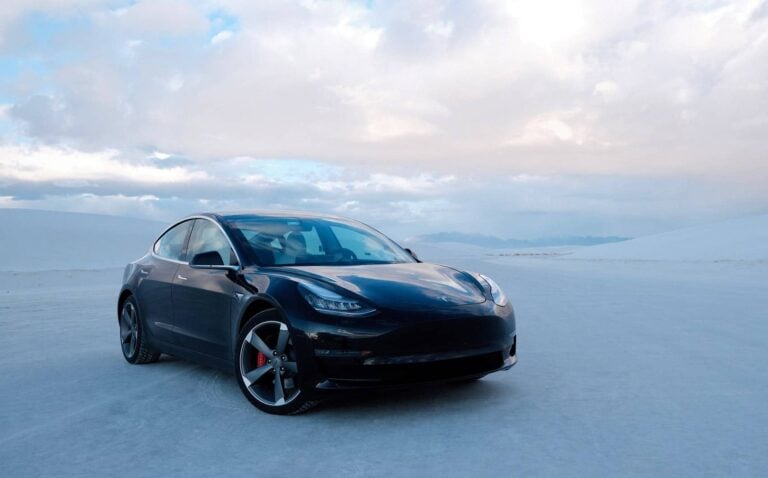
For Tesla, the pressure is compounding fast. The SAFE Exit Act cleared a House subcommittee on February 10, the first federal U.S. legislative action on electric door handles. NHTSA’s open probe into 179,071 Model 3 sedans follows an earlier investigation into 174,290 Model Y SUVs — nine complaints, four of which involved parents breaking windows to reach their children. The September 15, 2025 NHTSA probe into the 2021 Model Y is now part of a pattern we’ve documented since September 2025.
Euro NCAP Updates Safety Protocols, Stopping Short of an Outright Ban
Europe isn’t banning the handles, but it’s making them expensive to keep. Euro NCAP, the continent’s car safety testing body, announced new test protocols in November 2025 that specifically require electrically powered exterior door handles to remain operable after an impact. The agency plans to demonstrate the updated protocols to media March 17-18, according to WardsAuto.
Euro NCAP’s technical director Richard Schram was direct about the stakes, even while distinguishing the protocols from regulation: “While we do not publish specific statistics on this issue, from a safety perspective it is widely recognized that occupants and first responders must always be able to access the vehicle following a collision. Ensuring doors can be opened from both the inside and outside remains a fundamental principle of post-crash safety.”
The protocols aren’t legally binding. But they directly affect a vehicle’s ability to achieve top safety star ratings. For automakers, a lower Euro NCAP score in Europe’s safety-conscious market is its own form of penalty.
Global Design Convergence Is Now the Likely Outcome
Parente put the core pressure plainly: “Anyone relying on electric-only handles will have to revisit their designs pretty quickly to meet the 2027 deadline, and that inevitably adds cost and pressure, especially for cars already on the market or close to launch.”
The more significant observation he offered is about market alignment. Rather than building China-specific variants, automakers may simply converge on a single compliant design across all markets. That would make the mechanical fail-safe requirement a de facto global standard — not because regulators in the U.S. or Europe mandated it, but because designing two door systems for one platform isn’t economical. BMW already builds a long-wheelbase China-specific iX3. Adding a China-specific door handle variant on top of that starts to strain the logic of regional engineering splits.
There’s a supply chain angle here too. Parente noted that companies with “strong mechanical know-how may suddenly find themselves in demand again” as automakers work to integrate mechanical release systems alongside electronic handles. The pattern is familiar from China’s “no fire” battery mandate, which forced rapid supply chain reorientation. China writes a safety rule, and the global supply base reconfigures to meet it.
EVXL’s Take
We’ve been covering Tesla’s door handle problem since September 2025, and what China just did is the clearest signal yet that this story has moved past the “early adopter risk” phase. People have died. Lawsuits are mounting. Congress is moving, slowly. China moved fast.
The design question was always solvable. A flush handle with a mechanical backup isn’t an engineering paradox — it’s a packaging challenge. The resistance was aesthetic and commercial: flush handles look cleaner and signal “premium EV” to buyers. That logic made sense when EVs were status objects for early enthusiasts. It makes less sense when a 20-year-old dies trapped in a burning Tesla and the company’s chief designer is still talking about “working on” a fix five months later.
What I’ll watch: how BMW responds at the April Beijing Auto Show. BMW has more riding on Neue Klasse’s China launch than almost any other non-Chinese brand, and the iX3’s door handle approach was already heading in the wrong direction under the new rules. If BMW announces a mechanical backup integrated into the Neue Klasse design by April, that’s a signal the industry has accepted this as the new baseline. If they don’t, expect a revision by late 2026.
My specific prediction: by Q3 2026, every major EV brand selling in China will announce or implement a mechanical door release retrofit or redesign covering their flush-handle models. The cost will be real but manageable. The reputational cost of not doing it is higher.
Editorial Note: AI tools were used to assist with research and archive retrieval for this article. All reporting, analysis, and editorial perspectives are by Haye Kesteloo.
Discover more from EVXL.co
Subscribe to get the latest posts sent to your email.