I’ve been tracking solid-state battery announcements for years now, and the gap between what manufacturers promise and what they actually deliver keeps getting wider. Top Gear’s latest deep-dive on next-generation EV tech finally puts some honest timelines on the table, and they’re not what most prospective buyers want to hear.
Here’s what you need to know:
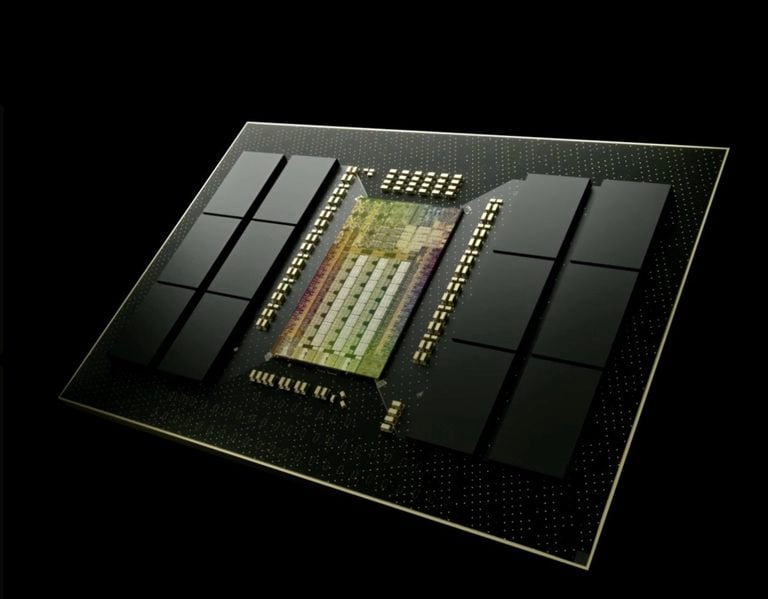
- What: Rimac Technology revealed its solid-state battery prototype at the Munich IAA show, developed with ProLogium and Mitsubishi
- When: Test car by 2028, production car (likely a Bugatti) around 2030, price parity with conventional batteries by 2035
- The specs: 25% more energy density, 10-80% charging in 6-10 minutes, non-flammable, retains 95% capacity at -4°F (-20°C)
- Why it matters: If you’re waiting for solid-state batteries to hit mainstream EVs, you’re looking at a decade-long wait
The Timeline Problem Nobody Wants to Discuss
Rimac COO Nurdin Pitarević was unusually candid in his assessment. “It’ll take until 2028 before there’s a battery in a test car, and around 2030 before it’s in a production car,” he told Top Gear’s Paul Horrell. And that production car? Almost certainly a multi-million dollar Bugatti, not something you or I will be cross-shopping against a Model Y.
The 2035 price parity target is the number that should grab your attention. That’s when Pitarević expects solid-state batteries to cost the same as today’s NMC lithium-ion packs. For context, that’s the same year the EU plans to ban new combustion engine sales.
This tracks with what we’ve seen from every major SSB announcement. Toyota has been promising solid-state batteries since 2020, pushing the target from 2023 to 2026 to now 2027-2028. QuantumScape, backed by Volkswagen, just demonstrated their technology in a Ducati motorcycle at IAA Munich, but actual cars remain years away.
The Semi-Solid Reality Check: Nio Already Tried This
Here’s something the solid-state hype machine doesn’t want you to know: Nio already shipped semi-solid batteries, and they discontinued them.
The Chinese automaker’s 150 kWh semi-solid battery pack, developed with WeLion, promised 650+ miles of range and hit the market in late 2023. It worked. CEO William Li personally live-streamed a 14-hour, 1,044 km (650 mile) drive to prove it.
Then they stopped making it.
“We deployed the battery packs providing our users the option to flexibly upgrade to the 150kWh [and] found that actually they are not using this pack as often as we expected,” Li explained to EV media in November 2025. Translation: when you have good charging infrastructure (Nio operates 2,300+ battery swap stations in China), nobody wants to pay premium prices for extreme range.
The 150 kWh pack’s subscription fee was prohibitive, and only a few hundred units were ever produced. It wasn’t a technology failure, it was a market failure. Customers voted with their wallets, and they chose convenience over capacity.
The Players: Who’s Actually Close to Production?
The solid-state landscape breaks down into three tiers:
Tier 1: Actually demonstrated in vehicles
QuantumScape and VW’s PowerCo debuted their QSE-5 cells in a modified Ducati V21L motorcycle at IAA Munich. The specs are impressive: 844 Wh/L energy density and 12.2 minutes from 10-80% charge. But a motorcycle and a mass-market car are very different animals. PowerCo has a license to produce up to 40 GWh per year when the technology matures, enough for roughly one million vehicles.
Tier 2: Validated cells, no vehicles yet
Factorial Energy has validated 77Ah cells with Stellantis and Mercedes, claiming 375 Wh/kg energy density and 18-minute charging from 15-90%. Mercedes drove a modified EQS 750 miles on a single charge using Factorial’s quasi-solid-state batteries. A demonstration fleet is planned for 2026, but Factorial’s true solid-state “Solstice” technology isn’t expected until the end of the decade.
Tier 3: Big promises, long timelines
Chery claims 600 Wh/kg energy density and 808 miles of range, targeting pilot production in 2026 and mass production in 2027. Toyota continues to promise 621+ miles of range and 40-year battery lifespans, but has yet to put solid-state cells in a production vehicle despite a decade of announcements.
Range Extenders: The Technology That Actually Works Today
While the industry chases solid-state dreams, a simpler solution is quietly taking over.
Range extenders (REX) use a small gasoline engine purely as a generator to charge the battery, never directly powering the wheels. The technology had its moment a decade ago with the BMW i3 REX and Chevrolet Volt, then largely disappeared from Western markets.
Now it’s back, and Chinese automakers are leading the charge. Li Auto built its entire business on extended-range EVs, running on batteries 95% of the time with a small engine for backup. BYD’s DM-i models, Yangwang’s U8, and Mazda’s MX-30 all use the technology.
The Western response is coming. BMW plans to launch the iX5 Rex by 2026 with a targeted 621-mile total range. The company is also considering range extenders for the X5 and 7-Series in China, where its sales have collapsed 30% as local manufacturers dominate with exactly this technology.
Supplier ZF has developed a plug-and-play range extender solution that could be used to retrofit existing battery electric cars, expected from next year. VW’s Scout brand will offer range-extended SUVs in the US, and Ram is preparing a range-extended 1500 REV pickup targeting 690 miles of total range.
Why Range Extenders Make Sense Right Now
The math favors range extenders in the near term:
- Smaller battery, lower cost: A REX vehicle can use a 30-40 kWh battery instead of 80-100 kWh, dramatically reducing the most expensive component.
- No range anxiety: When the battery depletes, the engine kicks in as a generator. You can refuel anywhere, not just at charging stations.
- Peak efficiency: Unlike a traditional hybrid where the engine powers the wheels at varying RPMs, a REX engine runs only at its optimal efficiency point. This makes the “depleted battery” phase more efficient than a standard hybrid.
- Electric driving experience: Because the engine never directly powers the wheels, you still get the smooth, quiet electric driving experience 95%+ of the time.
The downside? When you’re flat out on an autobahn or towing uphill after the battery is depleted, you’re limited to whatever power that small engine can generate. For most driving scenarios, this is never an issue.
EVXL’s Take
I’ve watched solid-state battery promises for nearly a decade now, and I’ve developed a simple rule: take any announced timeline and add five years. Toyota promised production SSBs by 2020. It’s 2025, and they’re now targeting 2027-2028. Rimac is refreshingly honest about 2030 being realistic for hypercars, with mainstream affordability pushed to 2035.
Here’s what I expect: Range extenders will become the dominant “bridge technology” for the next 5-7 years, especially in markets with limited charging infrastructure. We’ll see semi-solid batteries (like Factorial’s FEST technology) hit premium vehicles by 2026-2027. True solid-state won’t reach mainstream affordable EVs until the early 2030s.
For prospective buyers, the practical advice is straightforward: If you’re buying an EV in 2025-2026, don’t wait for solid-state. If range anxiety is your primary concern and you’re considering a pure BEV, take a serious look at extended-range options from Chinese manufacturers or wait for BMW’s iX5 Rex in 2026.
The Nio 150 kWh experiment proved something important: extreme range isn’t what most EV owners actually want when they have convenient charging. What they want is the confidence that they won’t be stranded. Range extenders deliver that confidence today, without waiting for battery chemistry breakthroughs that remain years away.
Are you holding off on an EV purchase waiting for solid-state? Or would a range extender solve your concerns? Let us know in the comments.
Discover more from EVXL.co
Subscribe to get the latest posts sent to your email.