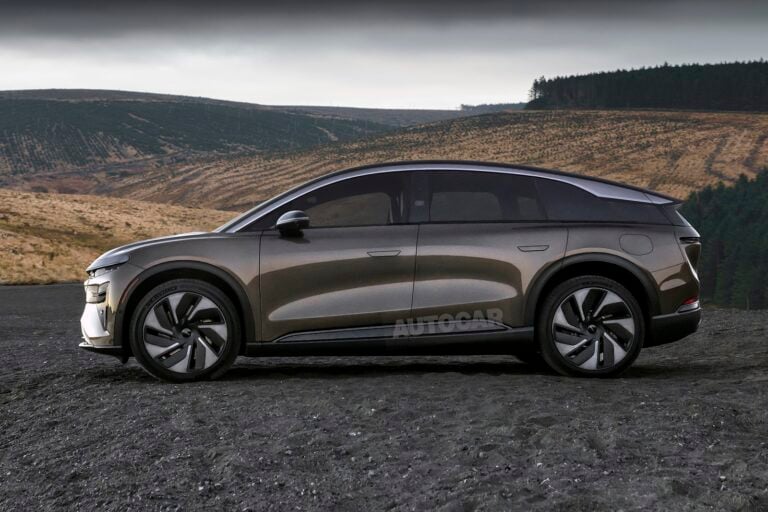
Tech reviewer Marques Brownlee just delivered a verdict that should terrify Detroit. After two weeks driving a Xiaomi SU7 Max on American roads, the influential YouTuber concluded this $42,000 Chinese sedan delivers an experience worth $75,000.
That’s a $33,000 value gap that no tariff wall can explain away forever.

Why MKBHD’s Xiaomi Review Matters
Brownlee isn’t some random influencer chasing clicks. With over 20 million YouTube subscribers and a reputation for measured, technical analysis, his assessment carries weight across the tech and automotive industries.
His conclusion was blunt: “Are we cooked? Not yet, clearly. This car is not available here in the US, but you can see how we could be soon.”
The SU7 Max he tested packs 673 horsepower from dual motors, a 101 kWh battery delivering approximately 320 miles of range, and acceleration that embarrasses cars costing twice as much. Zero to 60 mph takes under three seconds.
Those specs match or beat a $55,000 Tesla Model 3 Performance. Yet Xiaomi sells this car in China for 299,900 yuan, roughly $42,000.
Build Quality That Defies The Price Tag
What shocked Brownlee wasn’t the raw performance. Electric motors make horsepower cheap. It was the refinement.
“This is a nice car,” he emphasized. “Not just in like a nice with an asterisk type of way. Like, oh this is nice for a $45,000 car. Or, oh this is nice for a car I’ve never heard of. No, this is a nice car.”
The interior features heated and ventilated leather seats, a Porsche-style heated steering wheel, Alcantara headliner, and 25 speakers with ambient lighting that pulses to your music. A panoramic glass roof stretches overhead while air suspension soaks up road imperfections.
Brownlee compared the ride quality to Lucid vehicles, among the smoothest EVs on sale at any price.
Xiaomi’s Secret Weapon: Smartphone Software In A Car
Here’s where Xiaomi’s phone-making heritage becomes a competitive moat.
“This feels like a preview of what Apple might’ve done if they’d made an Apple car,” Brownlee observed.
The software responds like a flagship smartphone, fluid and intuitive. Your Xiaomi phone pairs instantly, mirroring your digital life without the pairing headaches that plague most automotive infotainment systems.
Brownlee’s favorite feature? Navigation voice prompts route exclusively through the driver’s headrest speaker while music continues uninterrupted for all passengers. No more bass drops murdered by “turn left in 500 feet.”
Wireless Apple CarPlay displays on a massive 16-inch (40.6 cm) screen, the largest and cleanest implementation Brownlee has seen in any vehicle.
A Modular Interior Unlike Any Other EV
Xiaomi brought something genuinely new to automotive design: modularity.
Hidden throughout the cabin are magnetic mounting points for official accessories. Want an extra speedometer display? Snap it on. Need a USB hub to power rear passenger devices? Click it into place. Xiaomi even offers high-quality microphones for karaoke and long-range walkie-talkies for video shoots.
“What other car does this?” Brownlee asked. “I’ve never seen the ability to customize exactly how much hardware or how little hardware you have in the interior layout like Xiaomi does.”
You can configure minimalist or maximalist depending on your preferences and budget. No other automaker offers this flexibility.
Comfort Mode To Track Mode In One Twist
Electric vehicles excel at split personalities, and the SU7 Max delivers both extremes convincingly.
In Comfort mode, the air suspension transforms the sedan into a serene cruiser. Brownlee described it as among the best bump absorption he’s experienced, filtering out potholes and road imperfections without unsettling the chassis.
Twist the drive mode dial and everything changes. Sport Plus mode sharpens throttle response, firms the suspension, and activates the seat bolsters that hug you through corners, technology borrowed from six-figure Mercedes G-Wagons.
A boost button unleashes maximum power for straight-line heroics. Launch control rockets the car to 60 mph in 2.5 seconds.
“It’s like a wolf in sheep’s clothing type of car,” Brownlee noted. “You see it on the road and it doesn’t necessarily look like something that has Porsche 911 Turbo S horsepower, but it does.”
The Uncomfortable Truth About American Competition
Brownlee struggled to identify significant flaws during his two weeks with the car.
The software works. The build quality impresses. The range satisfies. The performance thrills. The comfort coddles.
“It’s not often you see a car with great software, great features, great build quality, great versatility, great range, and a great drive, all stacked together,” he concluded. “That’s pretty elite.”
His final assessment lands like a punch:
“There’s basically no question in my mind that if a car like this was available in the US for $42,000, that it would crush.”
EVXL’s Take
Brownlee’s review validates what industry insiders have been warning about for over a year.
When Ford CEO Jim Farley admitted he’d been daily-driving a Xiaomi SU7 for six months and “didn’t want to give it up,” skeptics dismissed it as executive hyperbole. When he warned that China could “put us all out of business” with existing manufacturing capacity, critics called it alarmist.
Now America’s most influential tech reviewer independently reached the same conclusion after hands-on testing.
This pattern keeps repeating. Former GM Vice President Terry Woychowski, who spent 12 years engineering America’s best-selling trucks, recently declared that Xiaomi’s YU7 SUV “bested” Tesla’s Model Y “in almost every way” after conducting a professional teardown. That’s not marketing spin from a competitor. That’s a cold analytical assessment from someone whose job is identifying vehicle weaknesses.
The market data tells the same story. As we reported last month, Tesla’s China sales cratered to a three-year low while Xiaomi posted 48,654 units in October alone. The SU7 has outsold Tesla’s Model 3 monthly since December 2024.
Chinese manufacturers aren’t winning on price alone. They’re winning on execution across every dimension that matters to consumers.
Xiaomi plans to expand globally by 2027, starting with Europe. The 100% US tariff provides temporary protection, but tariff walls don’t make American EVs better. They just make Chinese EVs unavailable.
We’re witnessing the same dynamic playing out in the drone industry, where Chinese manufacturers dominate global markets while American policymakers debate restrictions. As DroneXL reported, 1,600 Chinese drones sold in a single Dubai deal while US operators face regulatory uncertainty. China nurtures its technology industries while America strangles them with regulations.
The uncomfortable question Brownlee’s review forces us to confront: What happens when tariff protection inevitably erodes through trade negotiations, Mexican manufacturing workarounds, or political change? American automakers will face competitors who spent the last decade building better, cheaper EVs while Detroit was still trying to figure out how to make electric vehicles profitable.
Brownlee’s $33,000 value gap isn’t a problem tariffs can solve. It’s a capability gap that requires American automakers to actually compete on product merit, not political protection.
Discover more from EVXL.co
Subscribe to get the latest posts sent to your email.