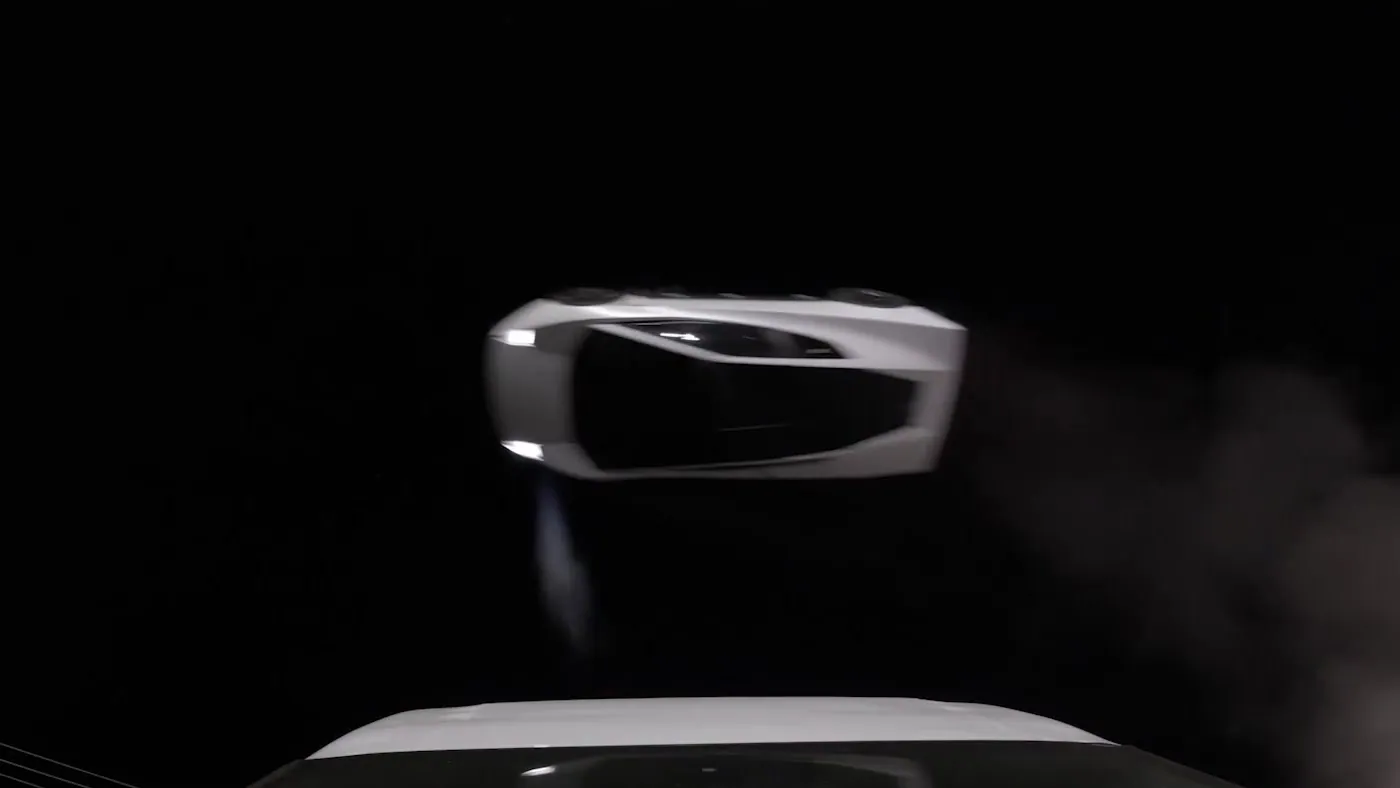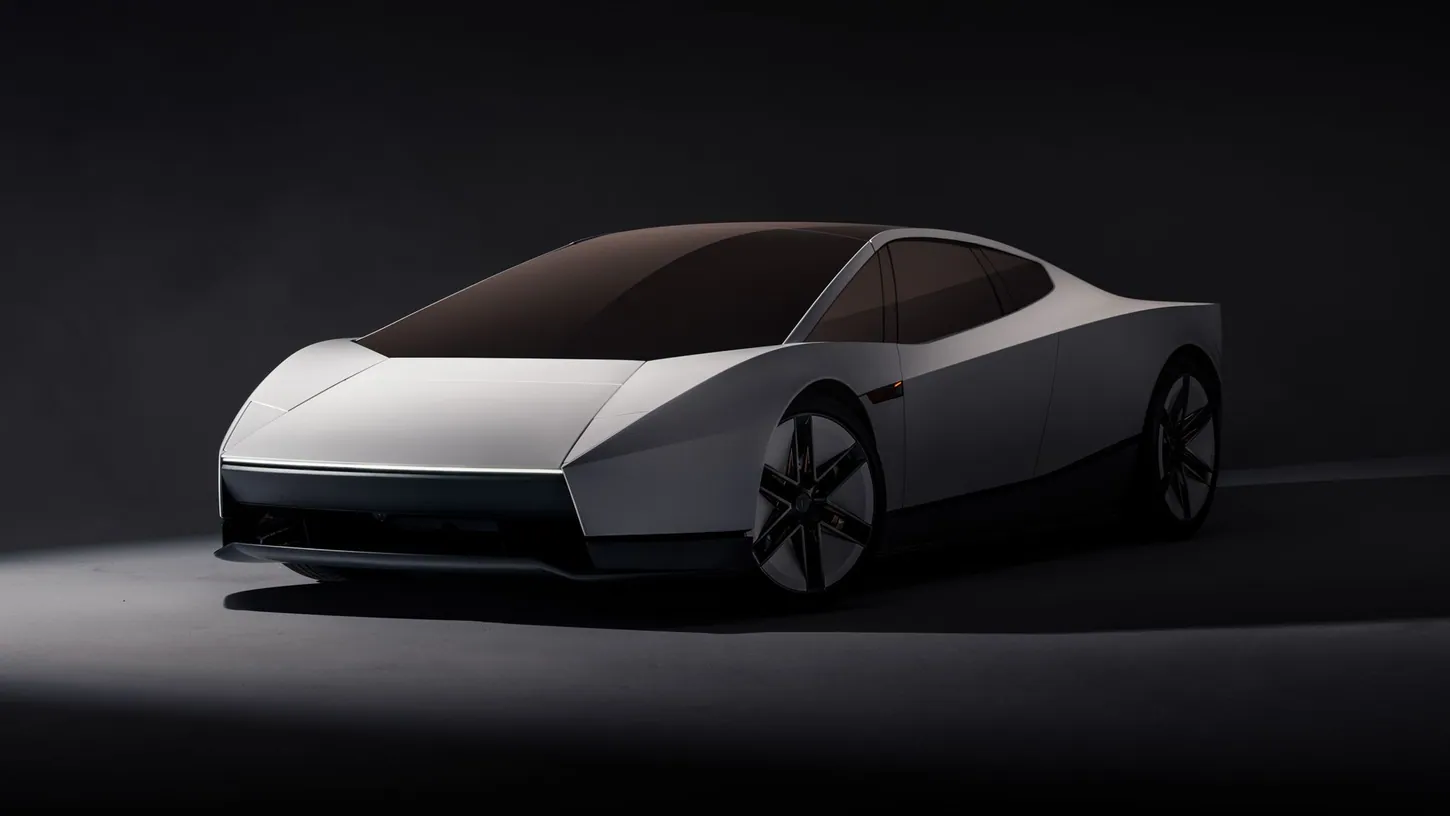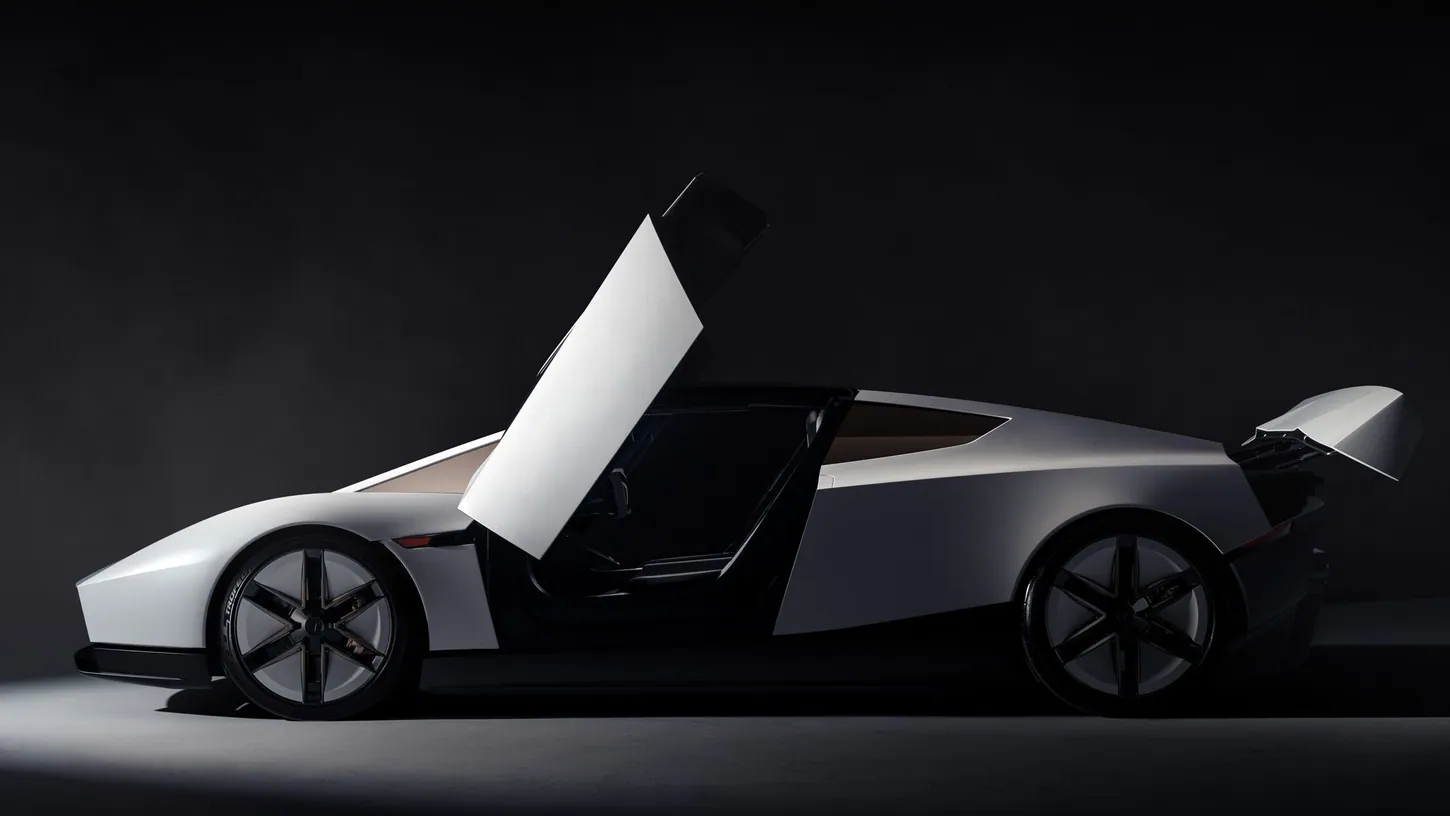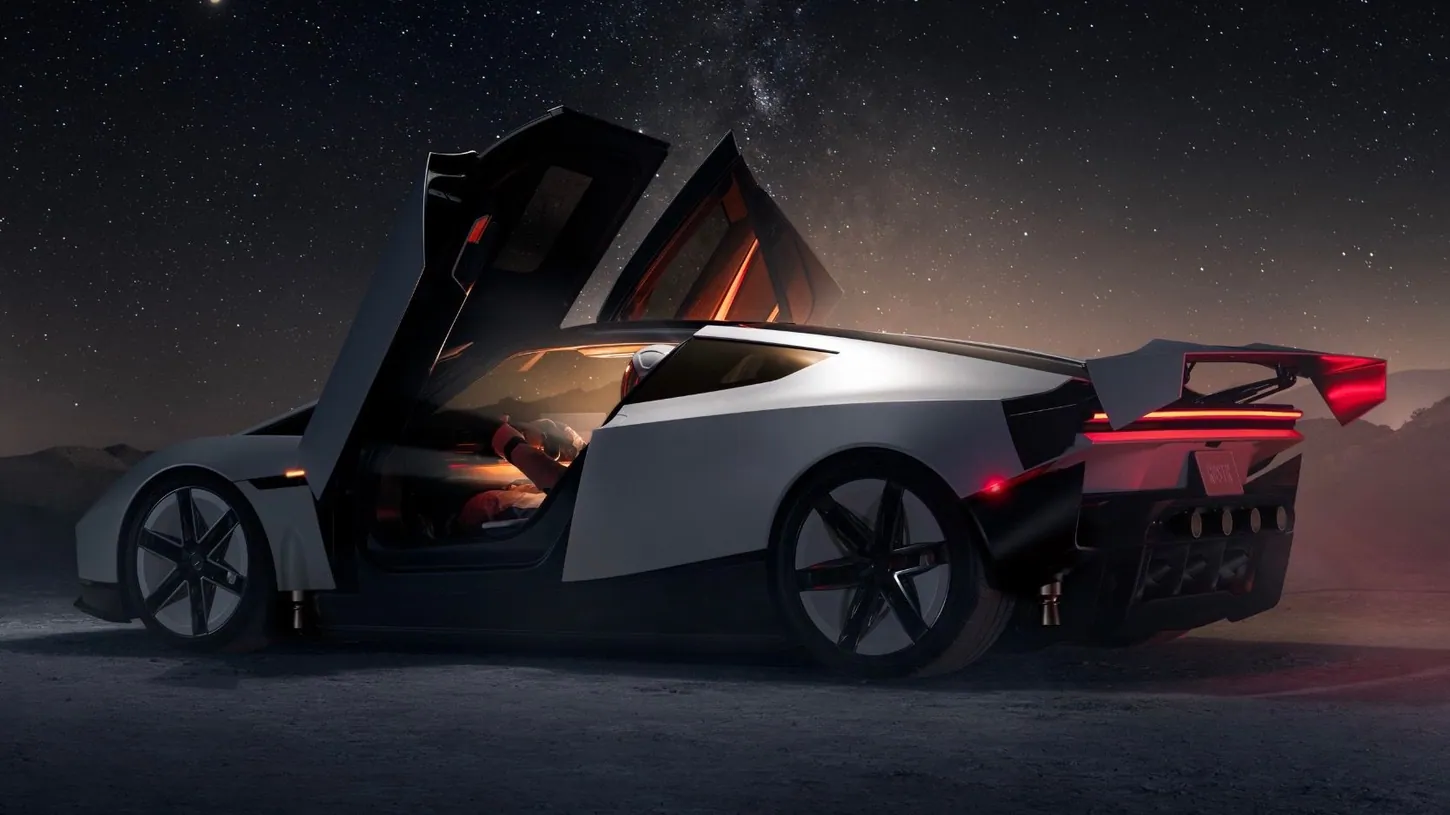
A Tesla patent granted in August 2025 lays out the suction system that held the new Roadster upside down on a curved ramp at the October 15 reveal. It describes four fans pulling air from a floor sealed by drop-down skirts. Investor Sawyer Merritt tied the patent to the car on X on Saturday and posted a 13-second clip of the skirts.
Tesla sells the Performance trim as road ready, and its page lists the suction system on all three trims. Every skirt in the patent has to meet the ground to seal that floor.
Tesla’s 2025 Patent Matches the Roadster’s Four Fans and Skirts
Tesla filed US Patent 12,377,920, “Adaptive Vehicle Aerodynamics for Downforce,” on April 29, 2025. The US Patent and Trademark Office granted it on August 5, 2025, fourteen months before the reveal. Its first drawing shows four fans in a row, pulling air from a floor sealed by skirts.
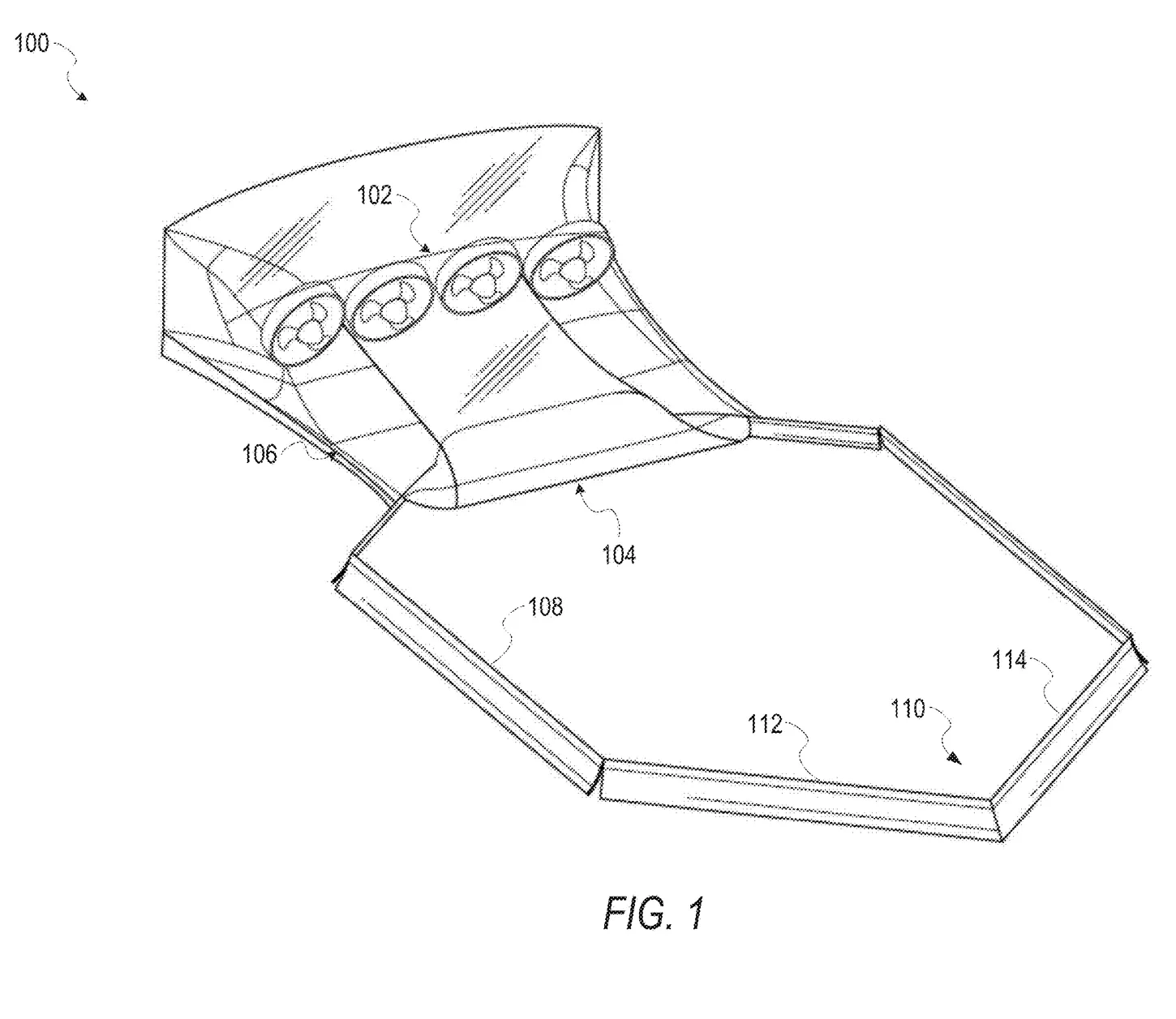
The patent never names a vehicle, but the layout matches the car. Tesla’s photos of the Roadster’s rear show four fans side by side in the diffuser, as EVXL reported on Friday. The patent splits them into two central fans that pull from the sealed area and two outboard fans that work outside it. It gives the fans no power rating. Merritt’s spec list from the reveal puts each one at about 20 kW.
It is the second Tesla filing to line up with Roadster hardware, after the rear wing application EVXL compared with the car on Friday. A third, granted on September 29 and drawn on a Model S, puts four fans in the diffuser and needs no skirts at all, according to Electrek.
The first mode deploys every skirt, sides plus front and rear, so the central fans work on a fully sealed floor. The patent’s examples are 0 to 60 mph sprints and autocross, on smooth surfaces. The second mode is for high speed or uneven ground: only the side skirts stay down and all four fans run. Merritt wrote that the front and rear skirts retract as the car gains speed, and the patent names no speed for the switch.
It has no downforce figure either. Merritt put the pull at about 2 g on Saturday. His spec list gave more than 2 g for cornering between 0 and 50 mph (80 km/h). Tesla’s Roadster page says the fans make “enough suction to hold the vehicle upside down, even when stationary.” That paragraph ends in a footnote limiting it to the Rocket trim, while the trim cards below it list a multi-mode suction system for Performance, Thrust and Rocket. Tesla’s page doesn’t say whether the footnote covers the upside-down claim or only the Track Mode sentence it follows. A second note says the page’s features reflect the Thrust augment only.
The Patent Uses Cameras, Radar and GPS to Move Each Skirt
Tesla’s patent answers road bumps with sensors under the car, from lasers or cameras to mmWave radar and ultrasonic units, measuring ground clearance continuously. When they detect uneven terrain or an obstacle, the control system may move individual skirts, and GPS and map data let it prepare mode changes early.
The skirts are not simply up or down. They sit on hinges or extension mechanisms and can stop at any point between fully deployed and fully retracted, and the patent describes a composite skirt with a structural core and a flexible edge that touches the ground. A state machine with hysteresis manages the switch between modes, so the system doesn’t flick back and forth at a threshold. Filters at the fan inlets carry “mesh features to stop rocks from being pulled into the fans.”
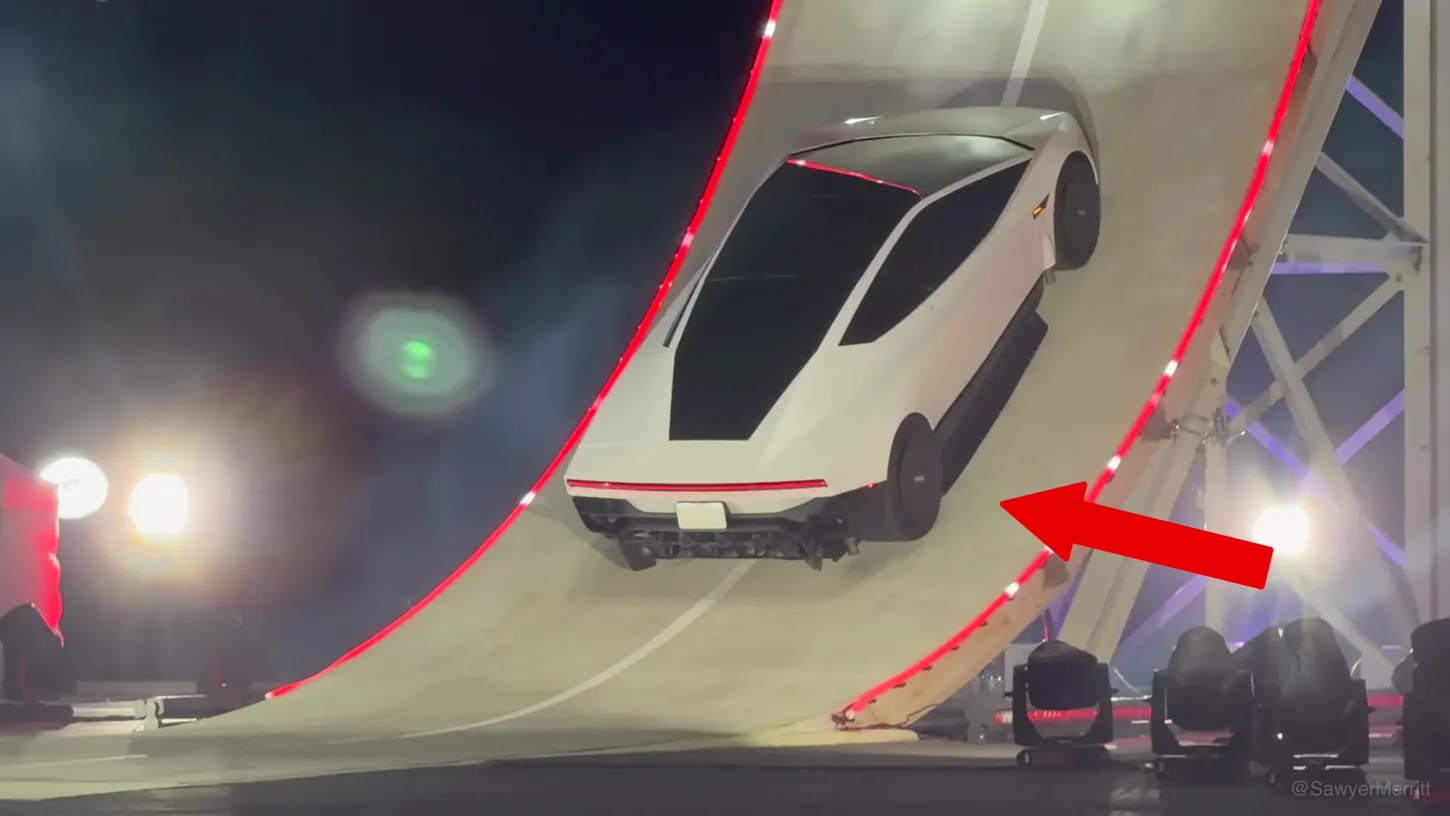
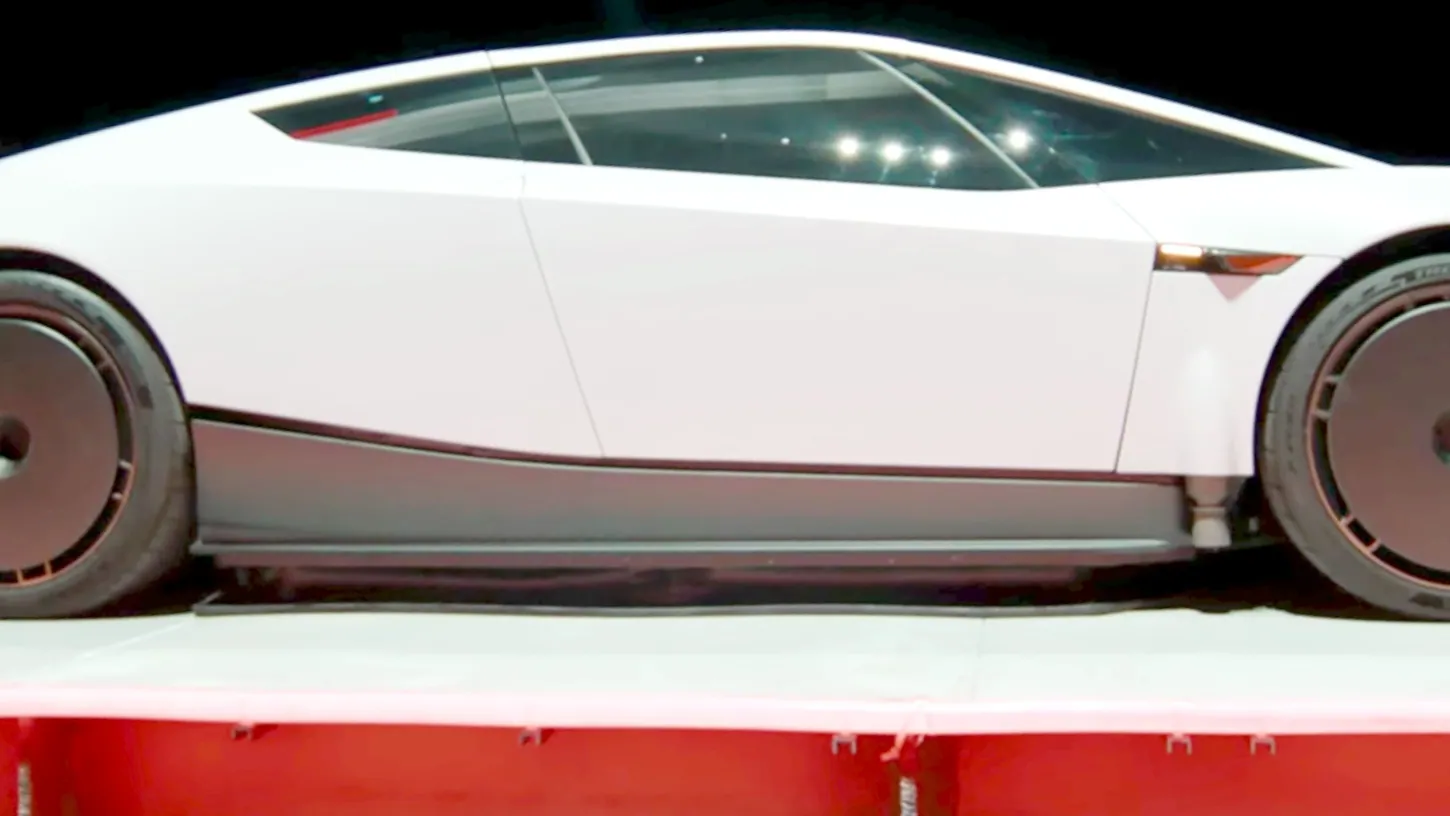
Merritt’s clip shows the hardware those passages describe. The side skirt is a dark panel that drops below the doors to the floor, on the car on the ramp and on a display car. Merritt’s spec list calls them replaceable rubber and nylon-bristle wear parts.
EVXL’s Take
My read is that the upside-down stunt shows the system in the mode a Roadster owner will use least. The patent keeps the fully sealed floor for smooth surfaces and 0 to 60 runs. For high speed or uneven terrain it raises the front and rear skirts, and most public roads are uneven terrain. Tesla’s page sells the sealed-floor trick, a car hanging from a ceiling, and then puts a Rocket-only footnote on that paragraph. The sensor passages convince me Tesla designed the skirts for real roads. I’d like Tesla to publish the downforce a Performance car makes on an ordinary road with its front and rear skirts up, because that’s the figure a buyer actually drives with.
Sources: US Patent 12,377,920 (Google Patents), Sawyer Merritt on X (patent), Sawyer Merritt on X (skirts), Tesla Roadster page, Sawyer Merritt on X (spec list), Electrek
EVXL uses automated tools to support research and source retrieval. All reporting and editorial perspectives are by Haye Kesteloo.