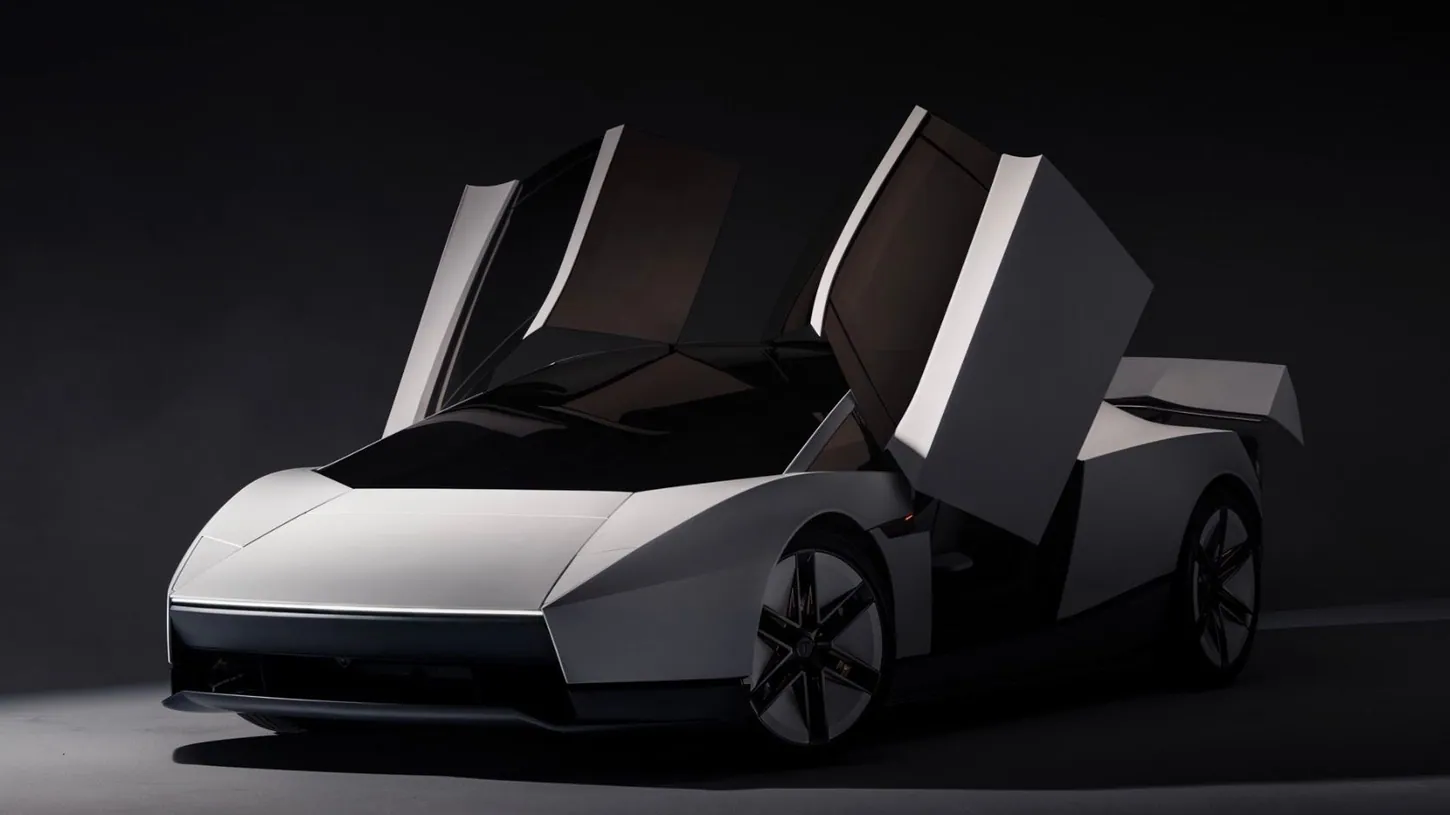
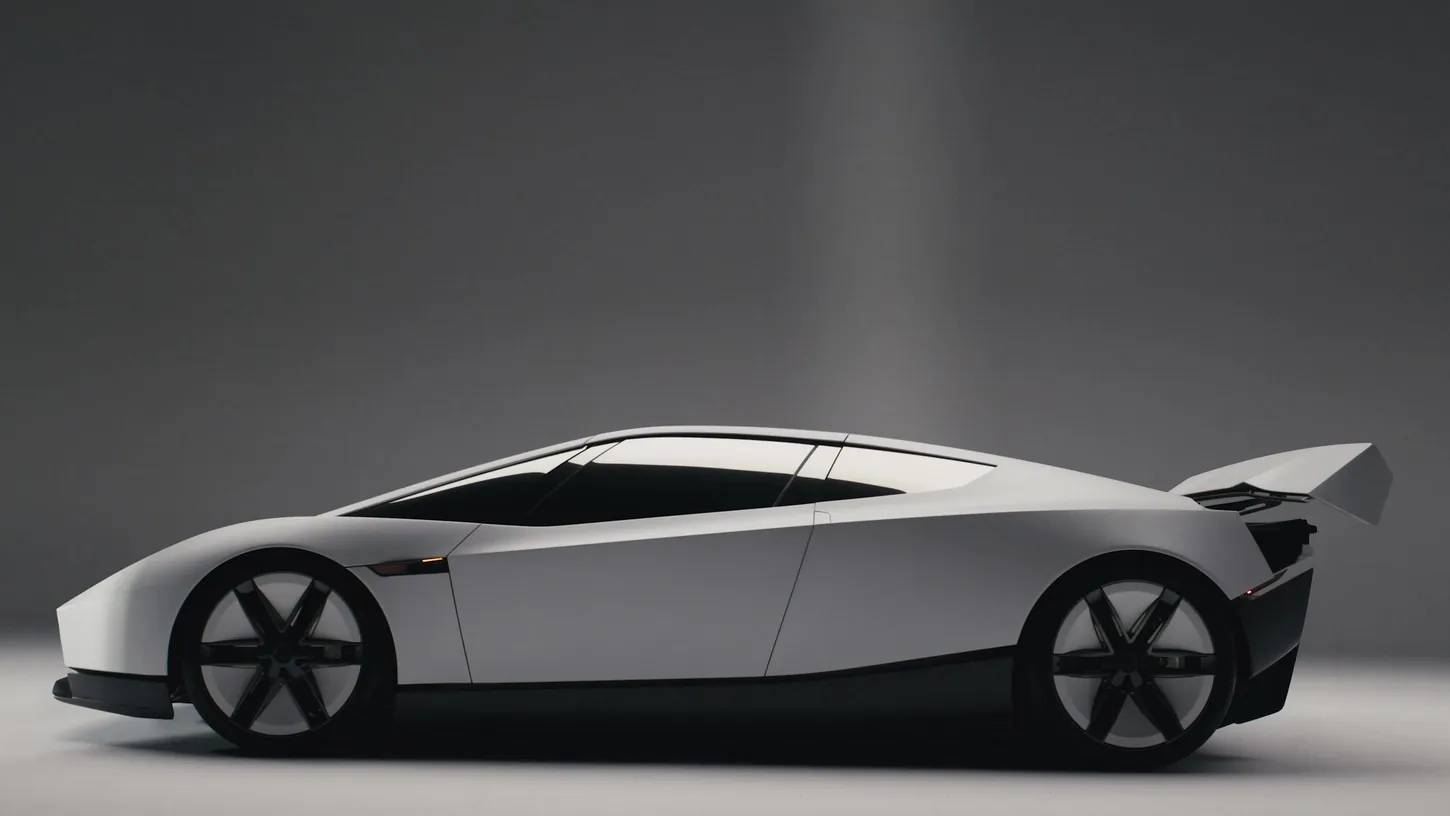
The Tesla Roadster has an active rear wing that rises for cornering grip and lies flat for speed. Tesla showed it in a 34-second Track Mode video on Thursday night, the same night the car kickflipped over a Semi, and said the car’s aero features “provide the best passive downforce package of any road car.” It added that they approach F1 levels.
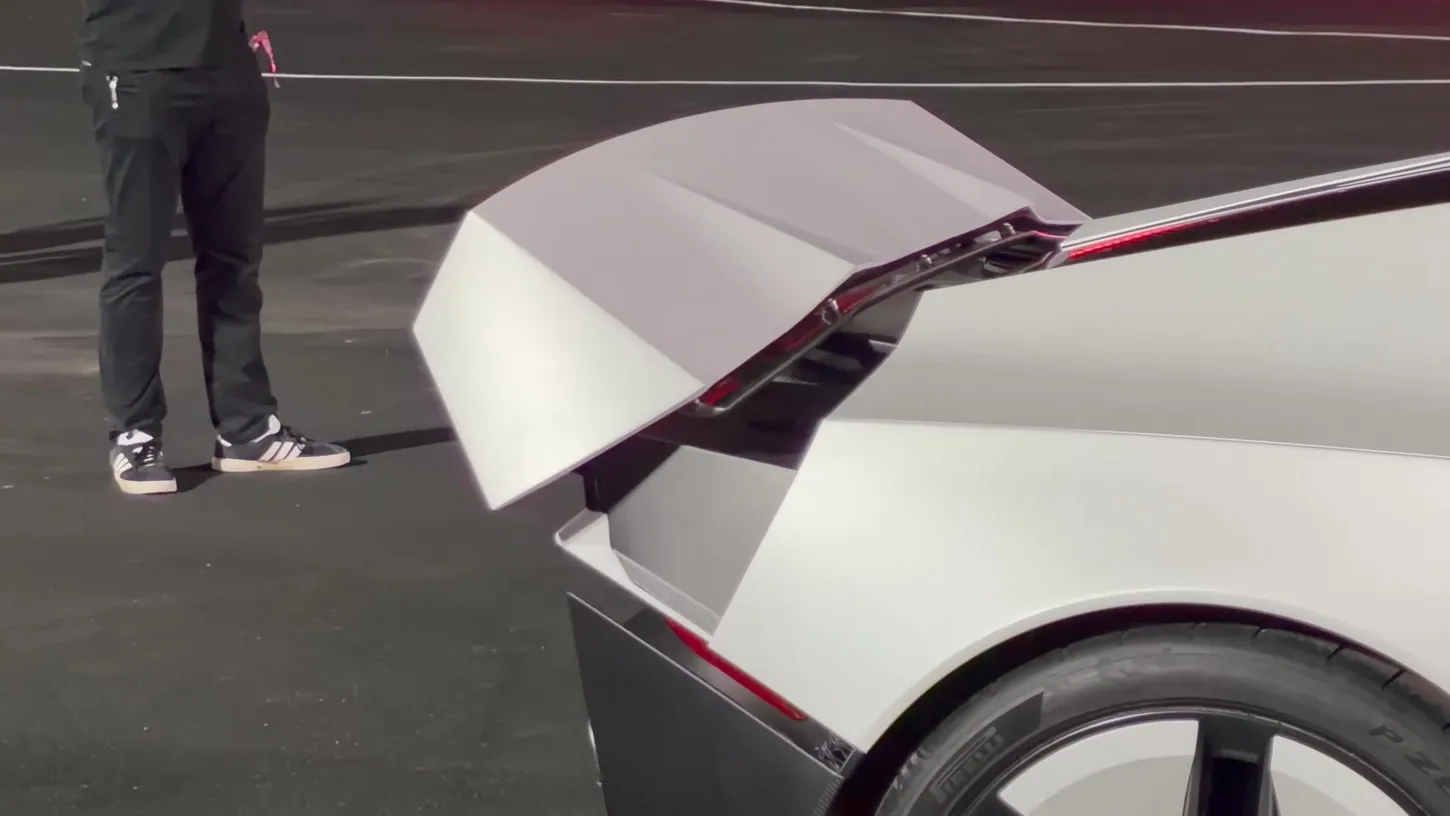
Less than two hours later, Sawyer Merritt posted 53 seconds of the wing cycling on a parked Roadster at the event. The clip passed 276,000 views by Friday morning.
Tesla’s post gives no downforce figure. A Tesla patent published three weeks earlier rates a wing with the same three positions at up to 1,543 pounds (700 kg).
Tesla’s Roadster Wing Has Road, High-Downforce and Low-Drag Modes
Tesla’s video labels three wing positions. In Road Mode the wing sits flush with the rear deck. High-Downforce Mode tilts it up steeply above the tail, and Low-Drag Mode lays it out as a wide, flat blade over the taillight bar. Tesla says Optimus robot actuators move it.
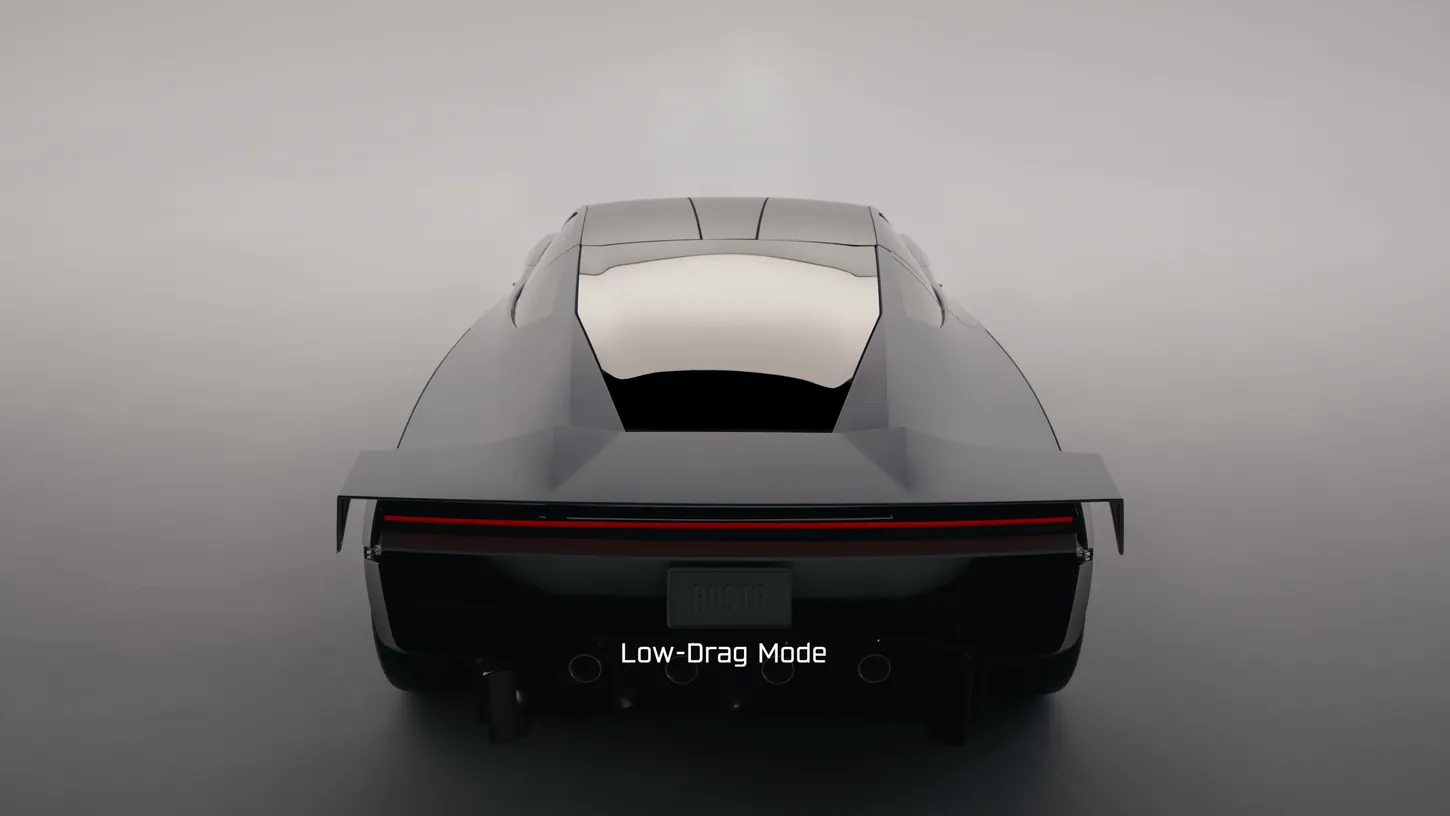
Merritt’s post sums the wing up as “deploys for traction, stows for speed.” He writes that the raised wing works with the diffuser to load the rear axle in fast corners, and that the car moves it to the low-drag setting on its own on straights. His clip shows the wing moving on a stationary display car, not on one being driven.
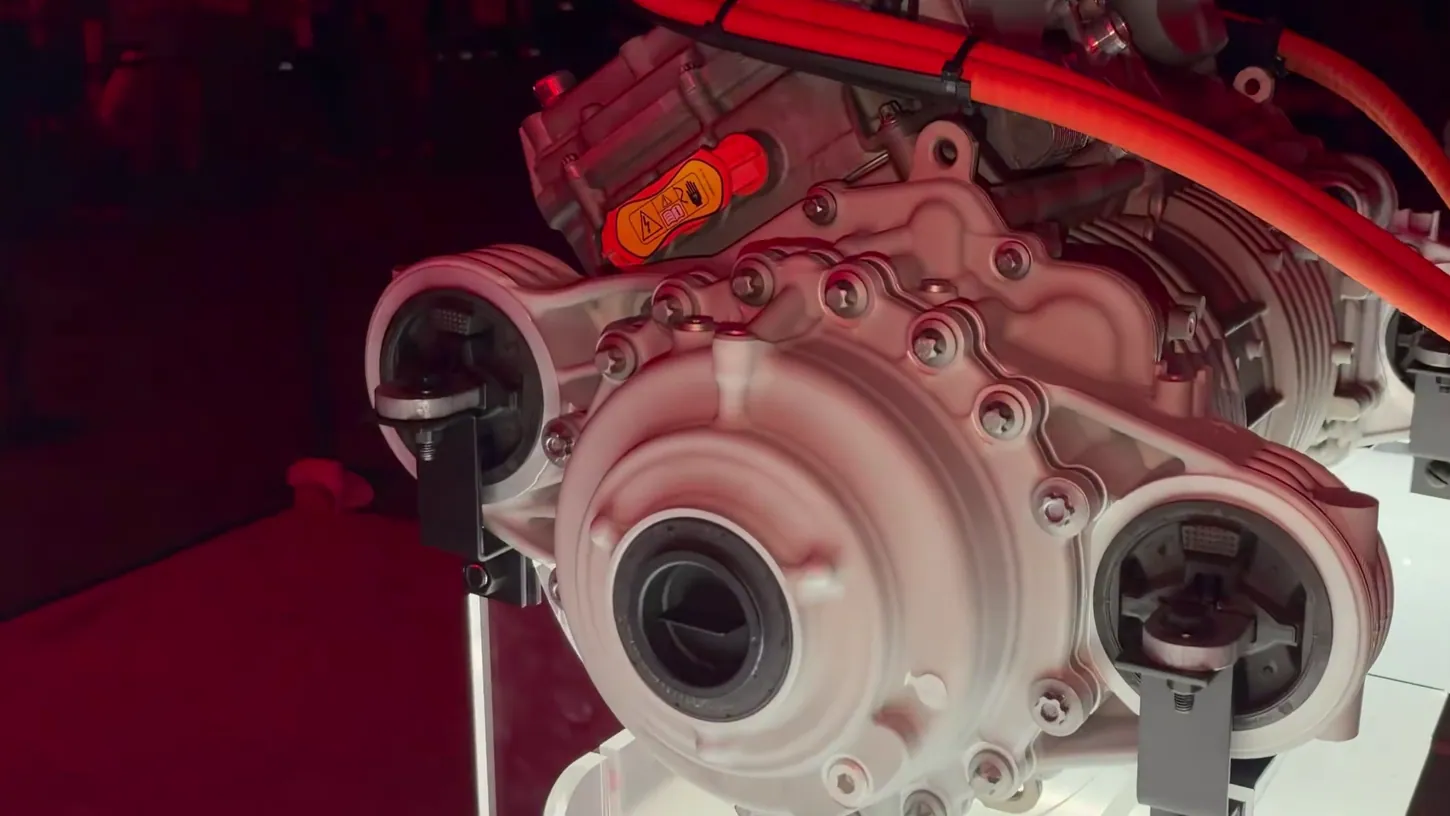
“Passive” normally means aero without powered fans, which leaves out the Roadster’s suction fans that pull air from under the car. Electrek reports that a Tesla display credited the fans with 10,362 pounds (4,700 kg), a number it calls potentially unreal. McMurtry’s track-only Speirling Pure, the fan car EVXL covered in July, claims 4,409 pounds (2,000 kg) from a standstill.
Tesla’s Patent Rates a Matching Wing at Up to 700 kg of Downforce
Tesla’s patent application US 2026/0285418 A1, titled “Deployable and Active Rear Wing Assembly with Safety Features,” was published on September 24. According to Electrek, it rates the wing at up to 700 kg in its high-downforce setting at top speed, and at zero when flat.
The filing doesn’t name the Roadster, but it describes the same flush, raised and flat positions Tesla’s video shows. Raising the wing costs 350 drag counts (0.035 of drag coefficient), per the filing, and flattening it gives back 250 of them. Its controller can switch to a track mode on its own when GPS places the car on a circuit.
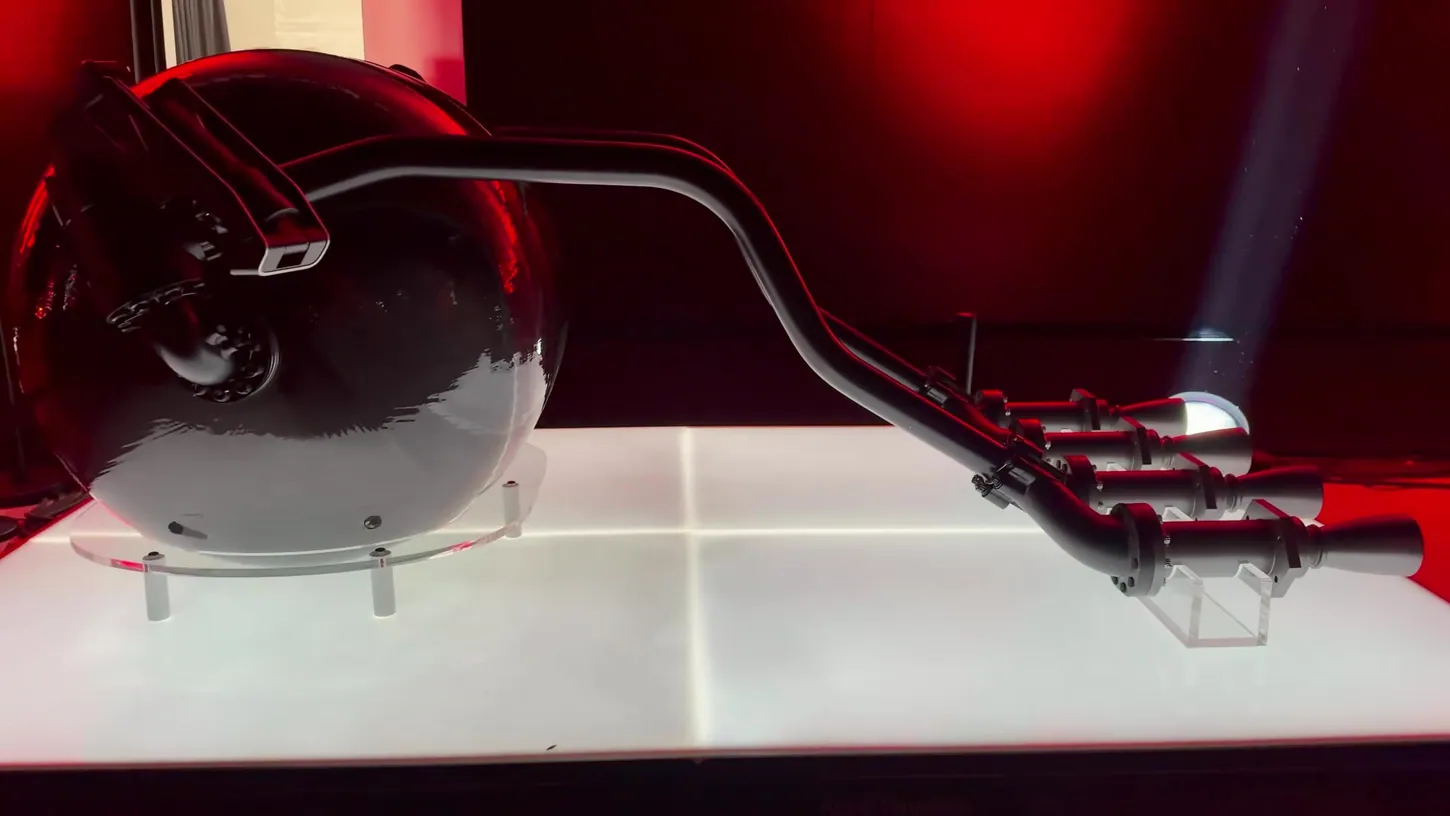
The patent’s wing also folds back on an impact above a set force and retracts ahead of a predicted rear collision. Tesla’s Track Mode post says nothing about crash behavior, the same gap EVXL found this morning in what Tesla has said about the Roadster’s thruster tanks.
McLaren rates the whole Senna, a road-legal track car, at 1,764 pounds (800 kg) of downforce at 155 mph (250 km/h), per its 2018 launch figures. None of the event write-ups from Electrek, Teslarati or Drive Tesla carries a total for the Roadster’s wing, diffuser and body.
EVXL’s Take
The wing is the most believable part of this car. It’s conventional hardware, Merritt’s clip shows it moving on a real Roadster, and a Tesla patent describing the same three positions comes with real numbers. Up to 700 kg is a strong figure for a wing on a road car, so I don’t see why Tesla posted a near-F1 slogan instead of it. Its best-of-any-road-car claim is too vague to test until Tesla publishes one total for the wing, diffuser and body together. Until then, I’d judge this wing by the patent’s 700 kg.
Sources: Tesla on X, Sawyer Merritt on X, Electrek (patent), Electrek (technical look), McLaren Senna launch figures, Drive Tesla, Teslarati
EVXL uses automated tools to support research and source retrieval. All reporting and editorial perspectives are by Haye Kesteloo.