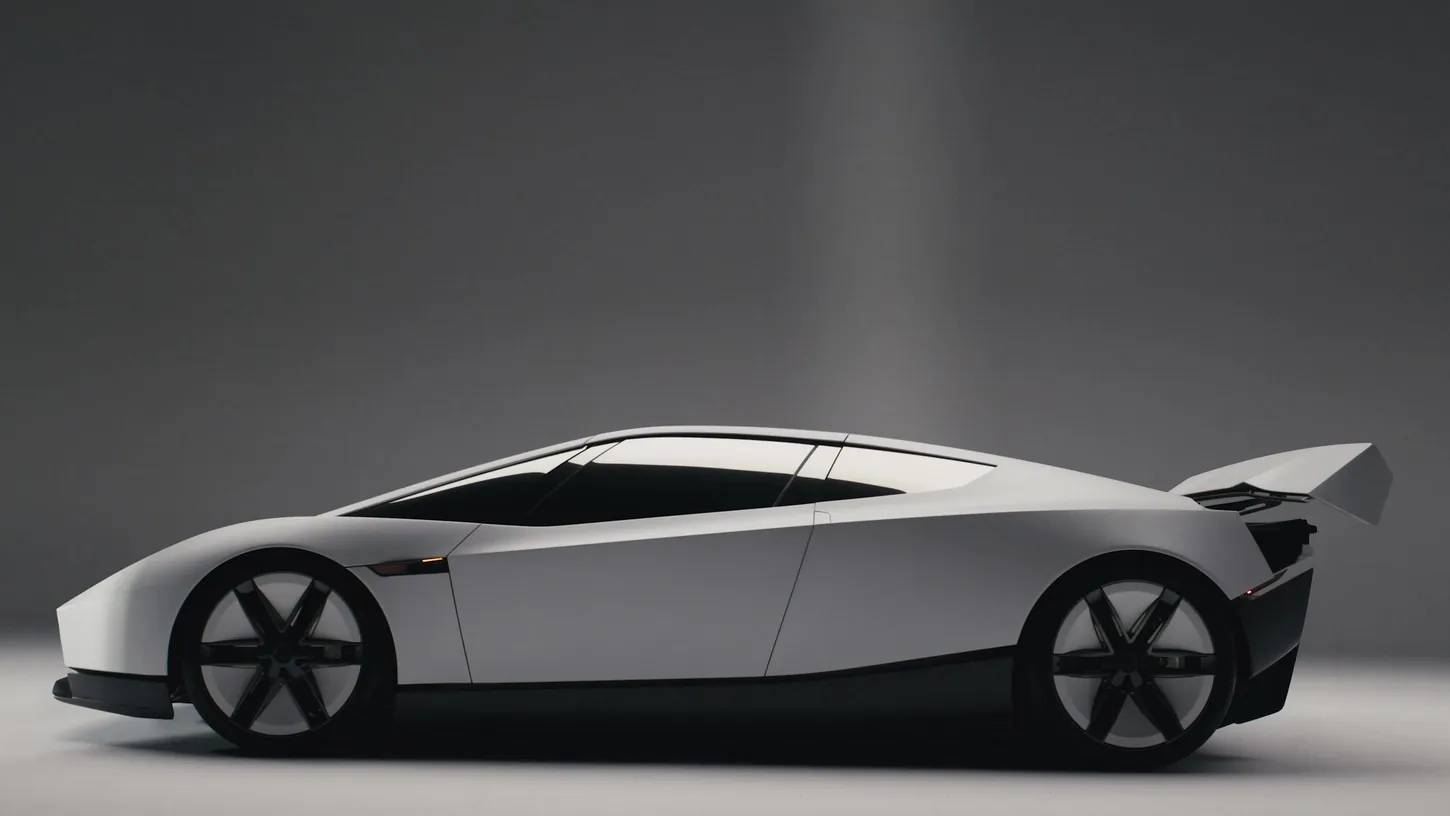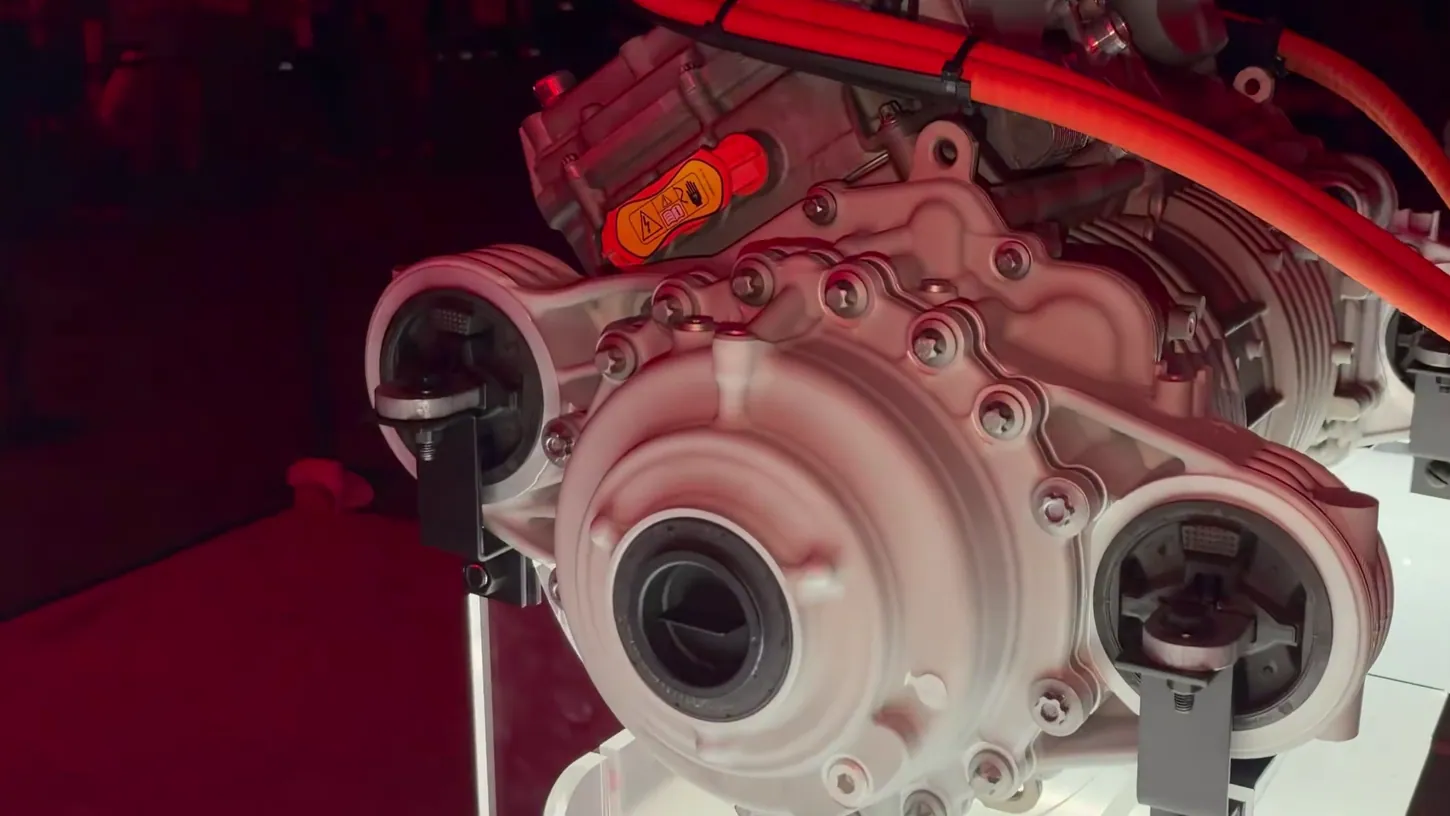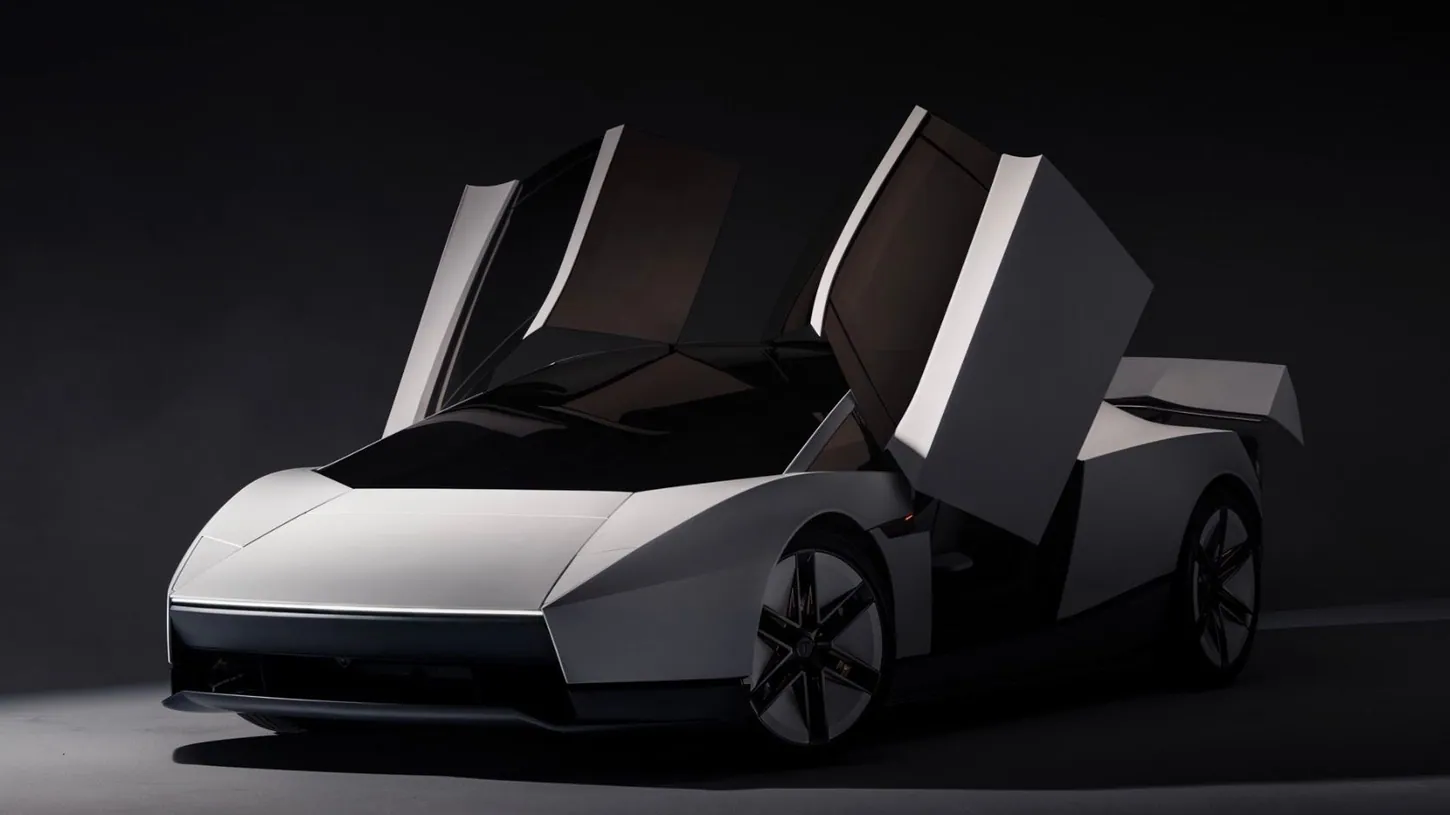
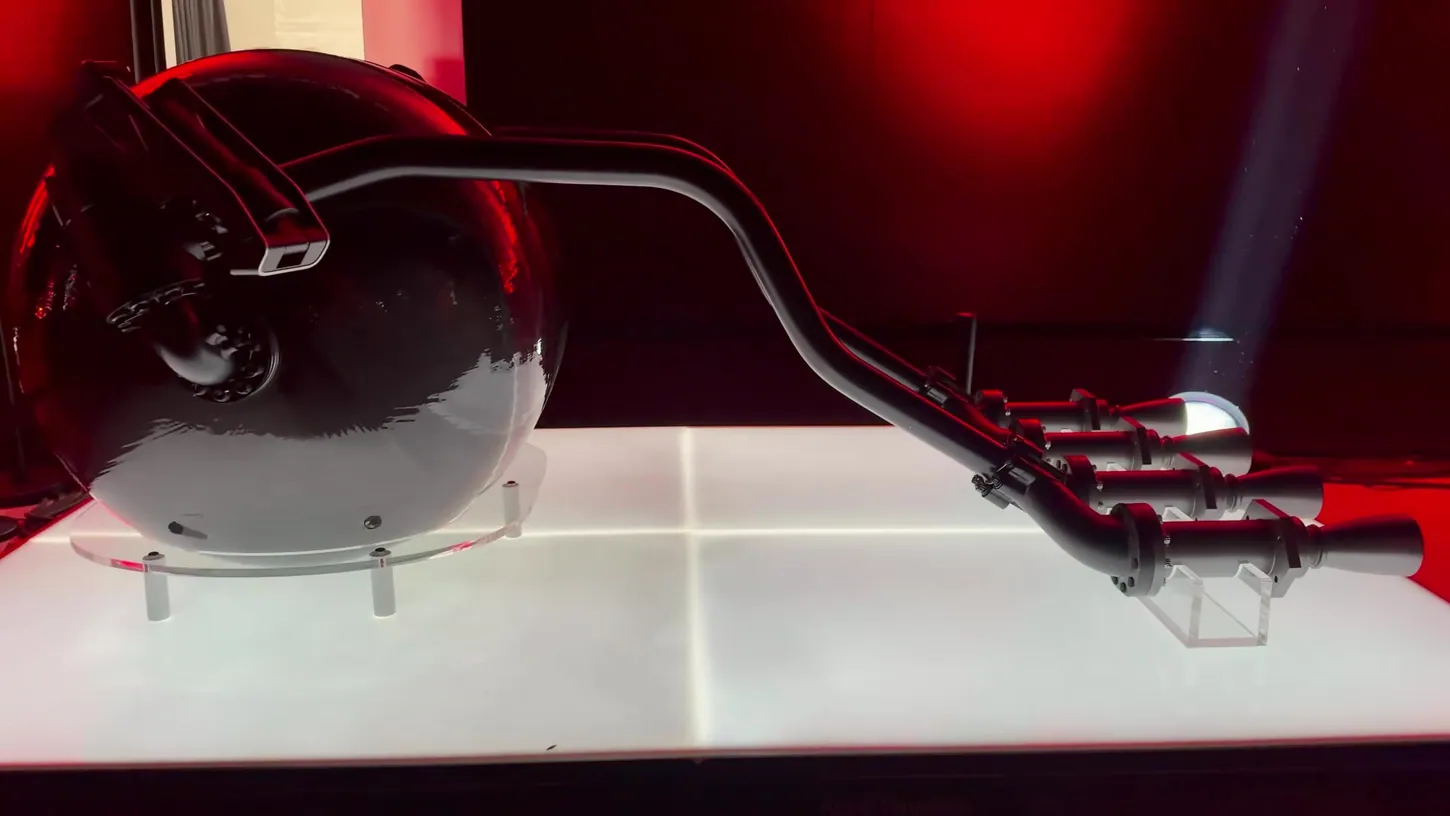
The Tesla Roadster’s thrusters went on display off the car Thursday night, and Sawyer Merritt posted an 11-second video of the hardware 44 minutes after Tesla’s livestreamed reveal began. It shows a large spherical tank feeding one bent pipe, which ends in a manifold with four nozzles. Merritt wrote that it “uses compressed gas,” and the post passed 840,000 views by Friday morning.
Four is the number of rear thrusters on the Roadster’s Thrust version. The Rocket version that kickflipped over a Semi on the livestream carries 10. Tesla hasn’t stated a pressure for the gas inside them.
Tesla Roadster Thrusters Run on Compressed Air in Two Carbon Fiber Tanks
Drive Tesla puts the Roadster’s thruster system at two tanks with a combined 600 liters (159 gallons) of capacity, holding about 250 kilograms (551 pounds) of air for 10 nozzles. Tesla says the air sits in carbon fiber overwrapped pressure vessels (COPVs), the tank type SpaceX flies on its rockets.
Tesla’s post on X about the vessels ties flight time directly to tank volume: more compressed gas on board means more time in the air. It says that is why every usable void in the car is packed with COPVs.
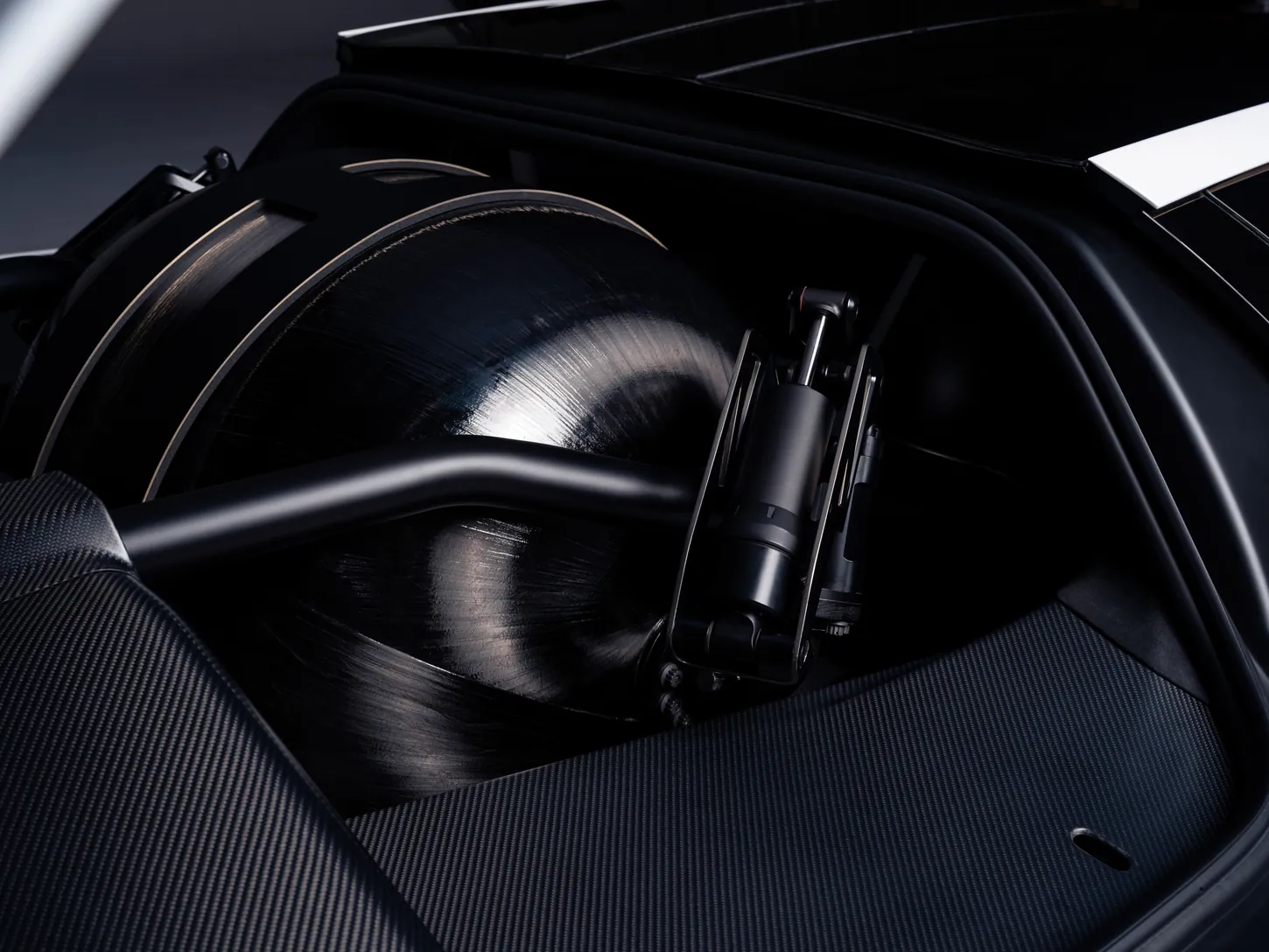
The 600-liter figure came from Lars Moravy, Tesla’s vice president of vehicle engineering, on the livestream. Drive Tesla added the tank count and the weight. Merritt’s video shows only the rear set, the one that gives the Thrust its claimed 0 to 60 mph in under 0.9 seconds.
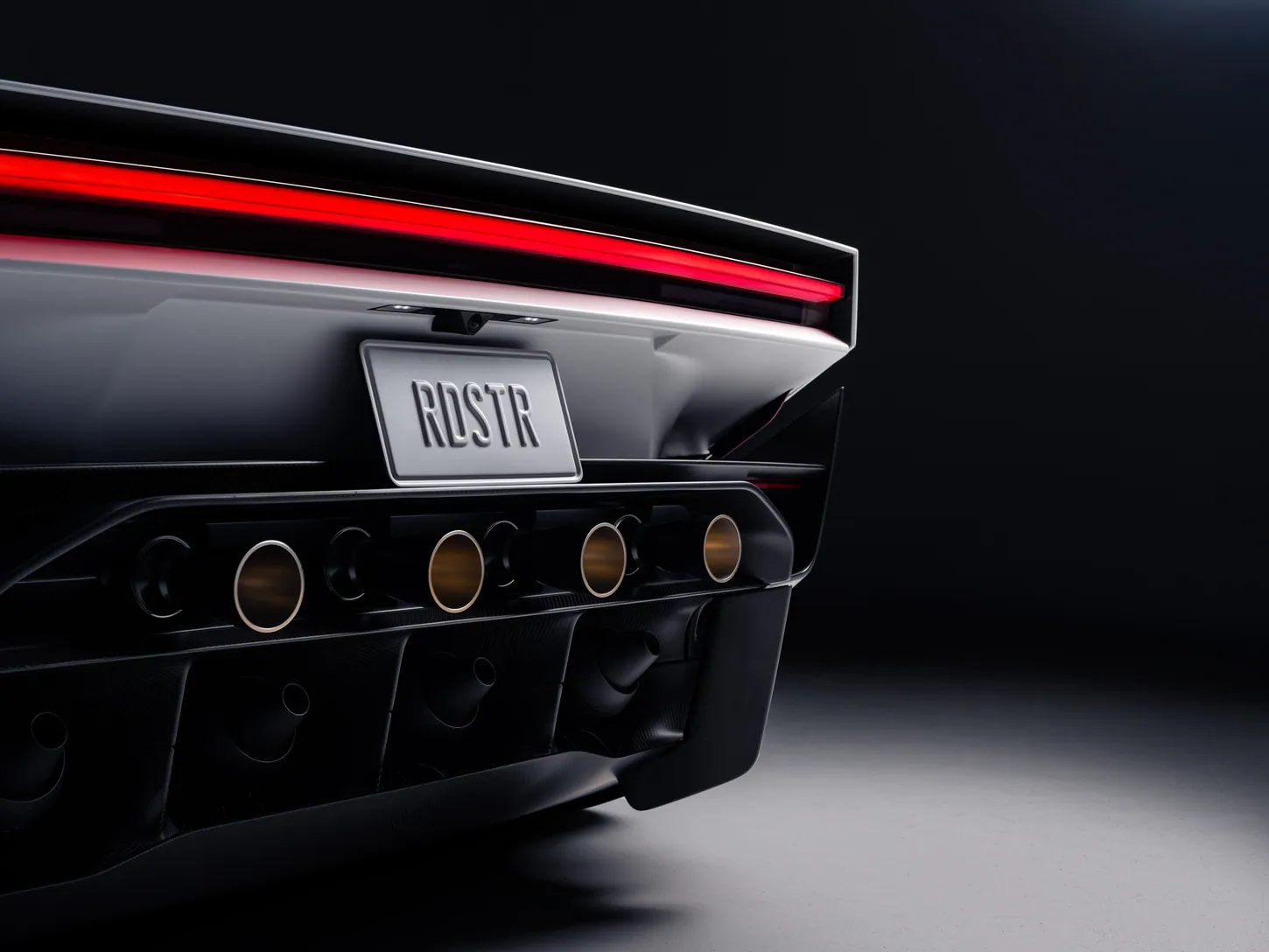
Tesla has been hinting at that layout for a month. Its teaser for the original October 1 reveal date showed four thruster plumes at the rear of the car.
Cold-gas thrusters burn nothing and simply vent stored gas through a nozzle. SpaceX’s Falcon 9 boosters use nitrogen cold-gas thrusters to flip and orient themselves for the trip back. Musk first promised the Roadster version in June 2018, when he posted that a SpaceX option package would add about 10 “small rocket thrusters” around the car.
Tesla’s Own Roadster Photo Shows a 5,500 PSI Thruster Readout
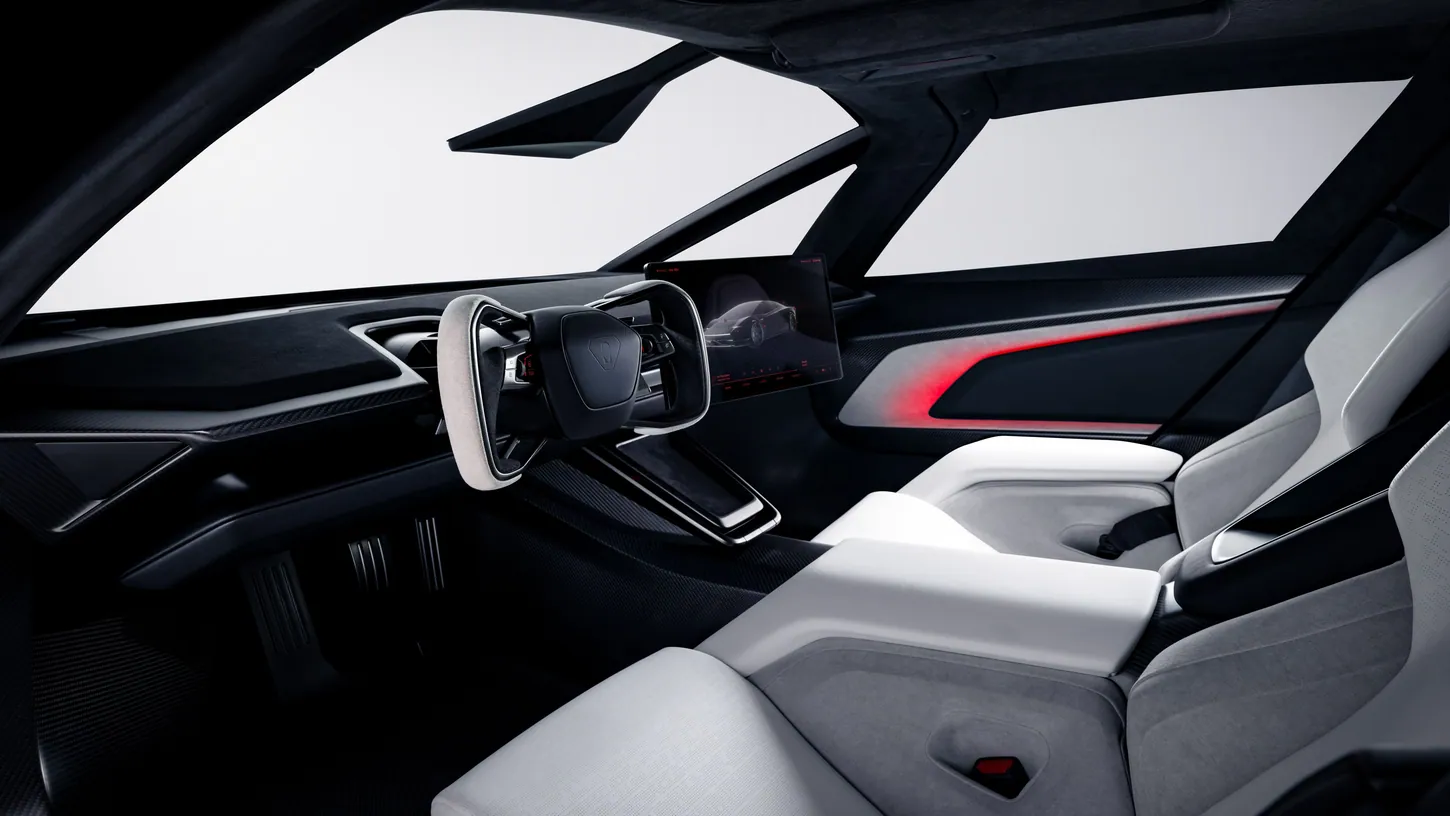
Tesla hasn’t stated a storage pressure, but the track screen in one of its official Roadster interior photos reads “Thruster · 5,500 PSI,” about 380 bar, next to “100% · Boost Ready.” Paul Tan spotted the readout, and it is the only pressure figure with Tesla’s name on it.
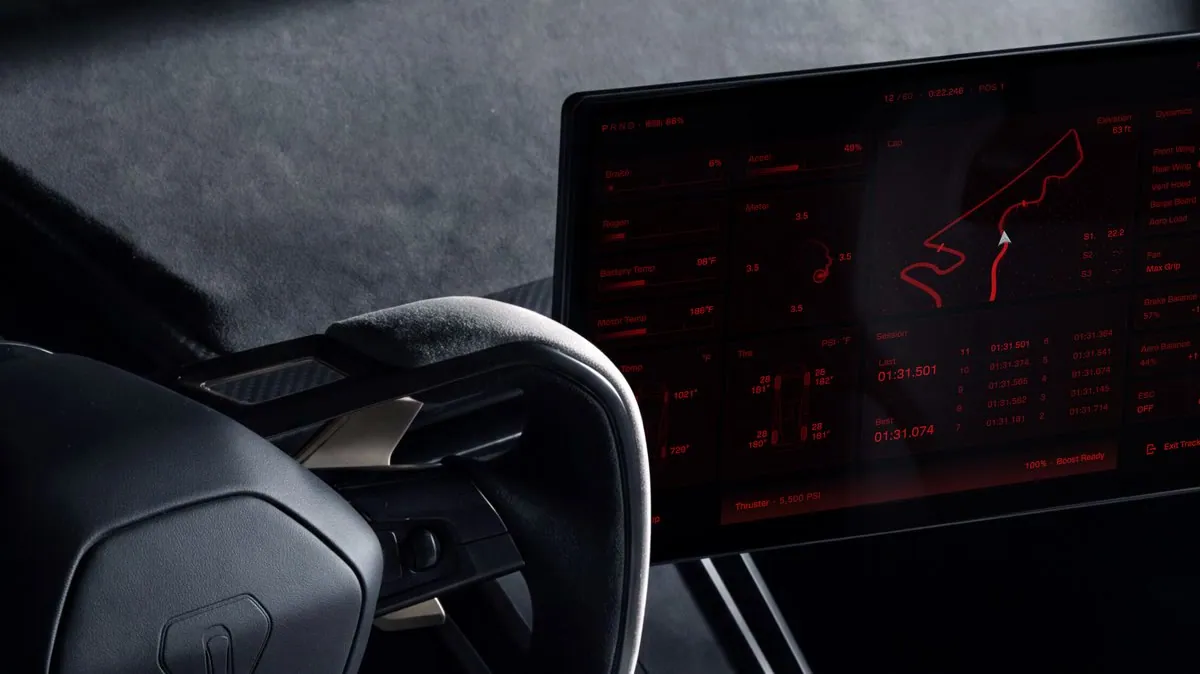
A screen in a studio photo isn’t a spec sheet, and Tesla’s posts from the event say nothing about how the vessels behave in a crash. The readout still undercuts ArenaEV, which wrote that a 7.1-cubic-foot (201-liter) tank stores nitrogen at 10,000 psi without citing a source. Moravy called the gas air.
TechCrunch noted that COPVs have been at the root of multiple SpaceX rocket explosions.
Electrek asked what happens to that compressed air in a crash. It also reports that Tesla’s Roadster page rules the Rocket off public roads and says nothing about road use for the Thrust.
EVXL’s Take
Compressed air is the right call for a car. It doesn’t burn, and Moravy says the tank can be recharged, so a kickflip doesn’t use up anything you have to buy. The 5,500 psi on Tesla’s screen isn’t exotic either, because the Toyota Mirai already carries hydrogen at 10,000 psi (700 bar) in carbon fiber tanks. But Tesla hasn’t said how many vessels fill those voids or how they’re protected in a crash. Its configuration post calls the Thrust “race ready,” which isn’t a road-use ruling, and until Tesla answers the crash question I’d treat the Thrust as a track car.
Sources: Sawyer Merritt on X, Tesla on X, TechCrunch, Drive Tesla, Electrek, ArenaEV, Paul Tan, Elon Musk on X
EVXL uses automated tools to support research and source retrieval. All reporting and editorial perspectives are by Haye Kesteloo.