Tesla‘s Terafab chip manufacturing project went live today, March 21, 2026, according to Tesla reporter Sawyer Merritt. The project is a direct response to a chip supply problem Elon Musk has stated openly: even combining the best-case output of every current supplier, it won’t be enough. “In order to remove the probable constraint in 3–4 years, we’ll have to build a very big fab, domestically. I know fabs are hard, but we do a lot of hard things,” Musk said. Merritt’s announcement came alongside a look at Tesla’s AI5 chip, which Tesla claims delivers 50x total improvement over AI4. Primary sourcing for this article is based on posts on X from Musk and Merritt that were not independently URL-verified at time of publication.
The Terafab name points to Tesla’s ambition to manufacture advanced AI chips at scale inside the United States rather than depend entirely on TSMC in Taiwan or Samsung in Texas. Musk’s March 14 post, “Terafab Project launches in 7 days,” gave the first public timeline. Today is that day.
Tesla’s AI5 Chip Claims 50x Improvement Over AI4
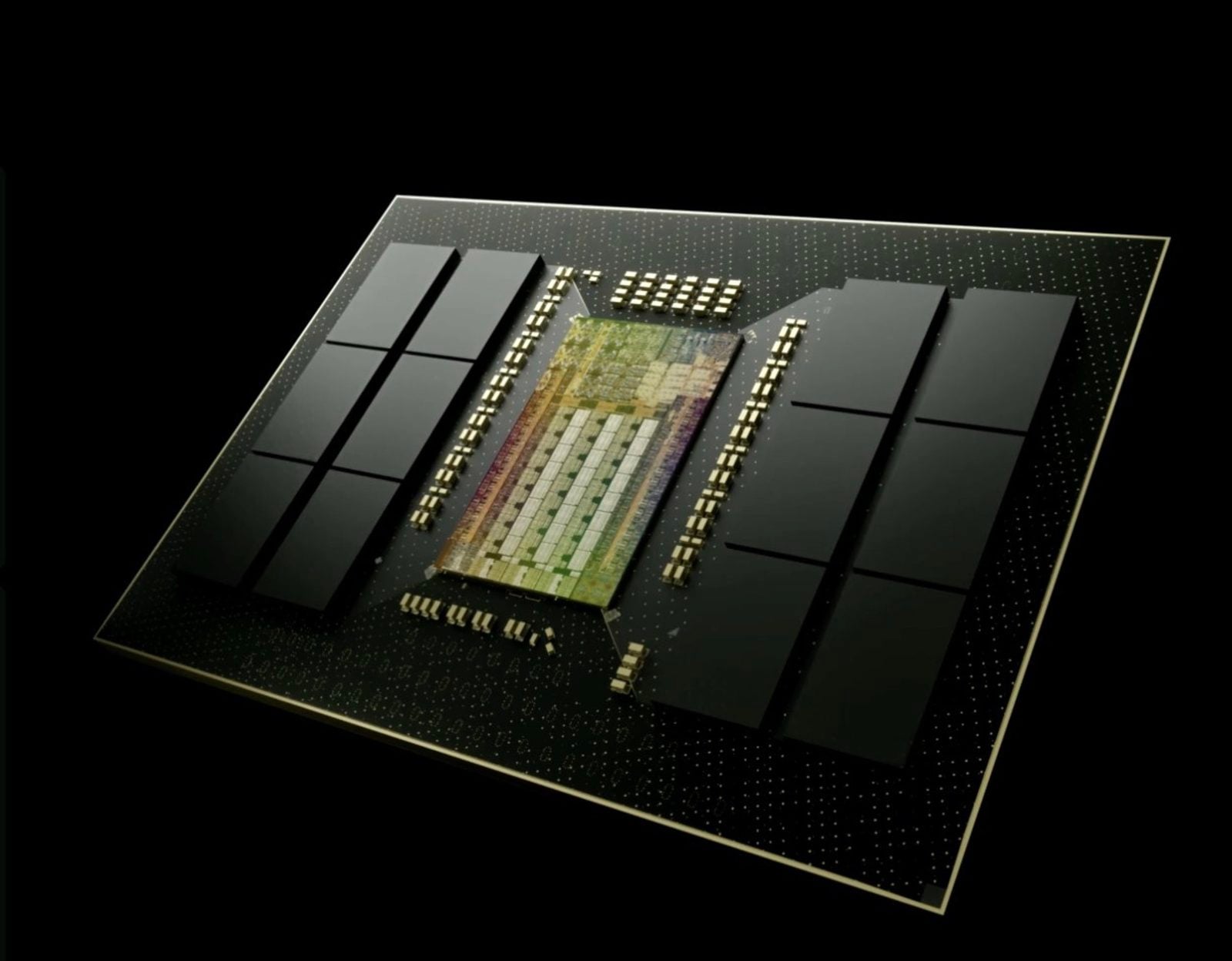
The AI5 chip that Terafab is built around delivers four headline numbers according to a slide shared by Merritt on X: 5x improvement in hardened block quantization and softmax, 9x memory capacity, 10x raw compute increase, and 50x total improvement over AI4. Those figures are manufacturer-claimed, disclosed via a slide on X, and have not been published in a press release or technical document accessible at time of publication.
The “50x total improvement” number needs unpacking. It almost certainly reflects a combined, best-case workload benchmark rather than a uniform 50x across every task. Raw compute is up 10x. Memory capacity is up 9x. The 50x total figure compounds those gains in specific AI inference scenarios, which is how chip marketing math works. Real-world throughput for FSD neural network inference — the metric that matters for Tesla’s cars — will become clearer once independent benchmarks emerge after launch.
As we reported in January, the AI5 is currently manufactured by TSMC, with production initially in Taiwan before transitioning to TSMC’s Arizona facility. Tesla separately signed a $16.5 billion deal with Samsung to build its AI6 chips at Samsung’s new Taylor, Texas fab through 2033. Terafab, if it moves forward, would be a third leg of that supply chain — one Tesla would own outright.
The Supply Constraint Is Real, and Musk Has Said So Publicly
Musk’s supply warning is not new posturing. The core problem is that Tesla’s demand for advanced AI compute — for FSD training, Optimus robotics, and inference at the vehicle level — is growing faster than its current supplier network can fill. That’s not a Tesla-specific complaint; it’s the same constraint Nvidia, Google, Microsoft, and Amazon are all navigating.
What’s different here is Tesla’s proposed solution. Rather than simply buying more TSMC or Samsung capacity, Tesla wants to own a domestic fab. By most industry estimates, building a leading-edge semiconductor facility from scratch costs between $10 billion and $30 billion depending on process node, takes four to six years, and requires a workforce with extremely scarce skills. Musk acknowledged the difficulty plainly.
For context, the 3–4 year constraint window Musk named puts pressure on Tesla’s autonomous vehicle and robotics timeline. Musk claimed in December 2025 that FSD Unsupervised was essentially solved and promised a no-monitor robotaxi launch in Austin within weeks. The Optimus humanoid robot ramp adds further demand. Both require compute at a scale Tesla’s current supply chain is not structured to support indefinitely. A domestic fab resolves that dependency structurally rather than through repeated contract negotiations.
Tesla’s Chip Strategy Has Shifted Repeatedly Since 2023
The Terafab announcement arrives after a turbulent stretch for Tesla’s in-house silicon ambitions. In August 2025, Tesla disbanded its entire Dojo supercomputer team. Musk called the project “an evolutionary dead end” and shifted Tesla’s AI compute focus to a new supercomputer called Cortex, based at Tesla’s Austin headquarters and built on third-party Nvidia chips. New York State officials learned about the Dojo shutdown through Musk’s X post, not from Tesla directly, creating problems for a lease renegotiation tied to a $500 million Dojo investment commitment.
Then in January 2026, Tesla revived Dojo — this time rebranded for space-based AI compute in conjunction with SpaceX’s orbital infrastructure plans. That pivot raised questions about whether Tesla’s chip roadmap was driven by engineering necessity or by Musk’s broader portfolio of companies.
Terafab is the most concrete move yet. Unlike Dojo, which was a training cluster project, Terafab addresses the physical manufacturing question: where do the chips come from? It’s a harder problem and a longer-timeline bet. Tesla renamed its onboard inference chip from “FSD Computer” to “AI Computer” in software update 2026.2.9 — a signal that the company’s chip identity is broadening well beyond autonomous driving into a general AI compute platform. Terafab is the manufacturing answer to that broader ambition.
EVXL’s Take
Tesla’s chip supply problem is legitimate. The 3–4 year constraint Musk describes is consistent with what every major AI compute buyer is saying right now. The strategic logic of owning a domestic fab is sound — TSMC concentration risk is real, Samsung’s Taylor ramp has been slow, and Nvidia’s H100 and B200 allocations go to the highest bidders. Tesla needs guaranteed supply at scale, not negotiated access.
That said, I’d want to see a lot more before treating Terafab as a solved problem. Building a leading-edge fab is genuinely one of the hardest industrial undertakings on the planet. Intel has disclosed tens of billions in fab investment trying to revive its process node competitiveness — by some estimates over $40 billion — and is still not there. TSMC’s Arizona fabs have faced yield and workforce challenges despite years of preparation. Tesla has never manufactured a chip at wafer level. “We do a lot of hard things” is not an engineering plan.
The pattern I keep documenting here — Dojo announced, Dojo killed, Dojo revived for space, now Terafab — reflects a company genuinely grappling with a real constraint but cycling through proposed solutions faster than any single one can mature. This isn’t the first time Musk has flagged the need for a proprietary fab; he raised the same concern publicly in late 2025. Terafab is that concern with a name attached. The parked-fleet-as-distributed-compute idea was floated and quietly forgotten. Buffalo’s $500 million Dojo commitment evaporated overnight. Terafab could be different because it’s a capital commitment rather than a software concept — but we won’t know until ground breaks on a physical facility.
If Terafab breaks ground on a U.S. facility and commits to a specific process node and timeline by the end of 2026, it becomes a genuine story about American semiconductor independence. If it remains a project name and a slide deck, it joins a long list of Tesla infrastructure announcements that peaked at the press release stage.
EVXL uses automated tools to support research and source retrieval. All reporting and editorial perspectives are by Haye Kesteloo.
Discover more from EVXL.co
Subscribe to get the latest posts sent to your email.