The Cybercab gets the stage time. The Optimus robot gets the press releases. But a shipping-container-sized battery called the Tesla Megapack is quietly generating the cash flow that keeps the rest of Musk’s ambitions alive.
That’s the core argument in “Tesla’s Secret Weapon Is a Giant Metal Box,” a new piece by Andrew Moseman published in The Atlantic on March 4, 2026 — and it lines up with what we’ve been tracking here for months.
- The Fact: Tesla’s energy division represented approximately 25% of total company revenue in Q3 2025, with the Megapack — a utility-scale battery system used by grid operators and data centers — at the center of that growth.
- The Delta: Tesla sold $191 million in Megapacks to xAI in 2024, meaning Musk’s own batteries are now powering his own AI company’s Grok requests. That’s an unusual vertical integration story that most coverage skips over.
- The Buyer Impact: If you own Tesla stock, the energy segment is the most defensible part of the business right now — not the cars, not the robots.
Tesla’s Energy Business Has Outgrown Its Supporting Role
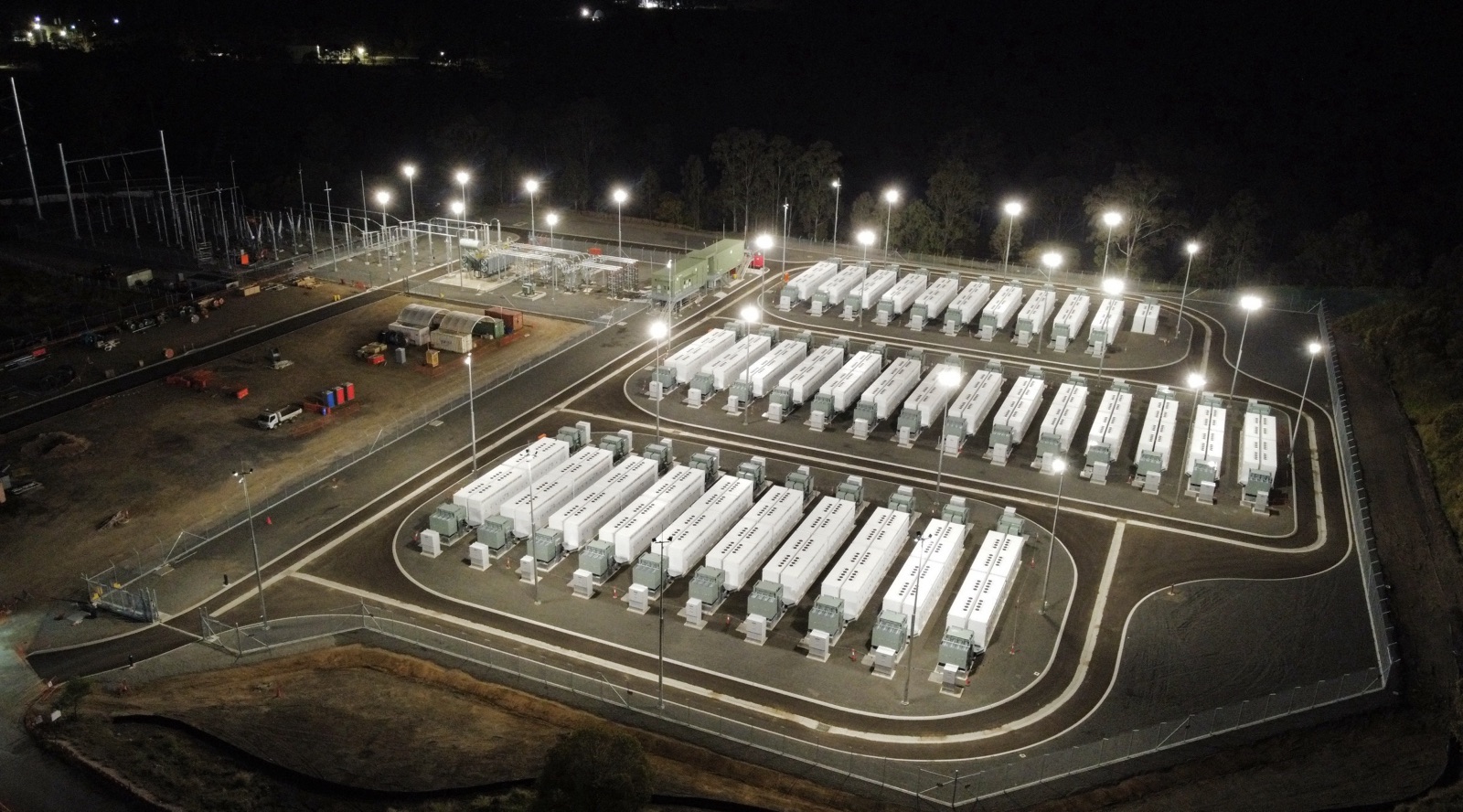
The Tesla Megapack is a utility-scale lithium-ion battery system, roughly the size of a shipping container, designed to store electricity from solar and wind generation and dispatch it to the grid on demand. It launched in 2019 and has since become the anchor product for Tesla’s energy division, with installations across the U.S., Japan, Europe, and Australia. That division now accounts for roughly a quarter of Tesla’s total revenue.
That number deserves more attention than it gets. Tesla’s automotive margins have been squeezed for two years straight. Q4 2025 earnings showed net income down 61%, with annual profit at less than a third of the 2022 peak. Meanwhile, energy deployments keep growing. A new battery storage facility near Houston — which we covered when Tesla broke ground on its $200 million Megapack factory in Brookshire, Texas — is helping Texas manage a grid that has already lived through devastating winter blackouts.
Data centers are part of the same story. AI infrastructure runs 24/7 and can’t tolerate outages, so operators are installing large-scale batteries as backup. Tesla is one of the few American manufacturers that can supply at scale, especially now that Chinese competitors face steep tariffs in the U.S. market. Ben Kallo, a Tesla analyst at Baird quoted in The Atlantic, put it plainly: “We need electrons. We need power. And batteries are going up everywhere.”
Cybercab and Optimus Carry Far More Risk Than the Headlines Suggest
The Cybercab rolled off the Giga Texas line for the first time last month. Six units are currently in crash testing, which is a real production signal. But the legal status of a car with no steering wheel and no pedals remains unresolved. It’s not clear Tesla can sell the Cybercab under current federal rules, and Musk’s promise of a sub-$30,000 price tag still has no regulatory path attached to it.
The Austin robotaxi fleet’s safety record isn’t helping. Tesla’s self-driving vehicles in Austin are crashing at roughly four times the rate of comparable human drivers, based on Tesla’s own reported data and benchmark. That stat has been sitting in public filings, largely ignored by coverage focused on how impressive the rides feel.
Optimus carries similar uncertainty. The program manager who oversaw the first production unit left the day after it rolled off the line. At a December Tesla event, according to The Atlantic, an Optimus robot tasked with handing drinks to guests lost its balance and fell backwards. It’s a reminder of how far away reliable, dexterous robotic manipulation still is. Tesla is already retooling Fremont factory lines to produce Optimus, shutting down Model S and Model X production in the process. That’s a large bet on technology that hasn’t proven itself in public yet.
Tesla’s Solar Ambitions Are Real, But the Numbers Need Scaling Down
In January, Tesla announced plans to scale solar panel manufacturing at its Buffalo, New York factory and hit 100 gigawatts of annual solar production by 2028. That target is more than twice the total solar capacity projected to be added to the entire U.S. grid this year. We flagged how disconnected that number is from any realistic production ramp, and Morgan Stanley has since pegged the cost of hitting that target at $30 billion to $70 billion.
Kallo’s framing in The Atlantic is probably the right one: cut the 100 GW target by 75% and Tesla still has a massive solar business. Even 25 GW would make Tesla one of the largest solar manufacturers in the world.
The Oasis Supercharger station in Lost Hills, California is the clearest proof-of-concept for how these pieces connect. When we covered the opening of the world’s largest Supercharger — 164 stalls, solar panels on the canopy, Megapack batteries underneath — it was easy to read as a novelty. It’s actually a working template: a charging station that runs virtually off-grid, using Tesla’s own solar and storage, with only a small grid connection kept as backup. If that model scales, it changes what a Supercharger network means.
EVXL’s Take
I’ve been tracking Tesla’s energy division as an underreported story since we covered the Brookshire factory groundbreaking last November. The car business was always the headline, and everything else was treated as a side project or a vanity play. That framing is now backwards.
The Megapack business has something that robotaxis and humanoid robots don’t: customers who need to buy right now, for real infrastructure, with real contracts. Data centers can’t wait for Optimus to figure out how to pour a glass of water without falling over. Grid operators can’t wait for the NHTSA to sort out the steering wheel question. They need storage today, and Tesla makes a competitive product manufactured in the U.S., which matters more with every new tariff round.
What Moseman’s piece gets right is the control angle. If Musk ends up as the dominant battery supplier to AI data centers — including his own at xAI — he holds a position that doesn’t depend on the Cybercab working, FSD getting certified, or Optimus learning to fold laundry. That’s a more durable business than anything he’s currently pitching to investors.
One risk worth naming that the article doesn’t: Chinese Megapack competitors have dropped pricing to around $0.15 per watt-hour, against Tesla’s $0.56. Tariffs are the only thing keeping that gap manageable right now. If the trade environment shifts, the energy division’s margins compress fast. The business is strong. It’s not immune.
My call: Tesla’s energy division crosses 30% of total company revenue before the end of 2026. The automotive slide won’t reverse fast enough to stop it, and the Megapack pipeline is already full. Watch the energy deployment numbers in Q1 and Q2 earnings — that’s the real signal, not whatever Musk says on the next earnings call about Optimus timelines.
Source: Andrew Moseman, “Tesla’s Secret Weapon Is a Giant Metal Box,” The Atlantic, March 4, 2026
Editorial Note: AI tools were used to assist with research and archive retrieval for this article. All reporting, analysis, and editorial perspectives are by Haye Kesteloo.
Discover more from EVXL.co
Subscribe to get the latest posts sent to your email.