The UN just adopted a draft global regulation for self-driving cars. Tesla fans are celebrating. They probably shouldn’t be, at least not yet.
- The Fact: The UNECE Working Party on Automated Vehicles adopted a draft regulation on January 23, 2026, creating a standardized “Safety Case” framework for autonomous driving systems across 50+ member states.
- The Delta: This regulation doesn’t just open a path for Tesla FSD. It gives BYD, Xpeng, and every Chinese manufacturer with L3 testing permits the same global on-ramp.
- The Buyer Impact: European Tesla owners who paid up to $15,000 for FSD years ago are no closer to using it today. The June 2026 vote is the earliest this regulation could take effect, and national certification still follows after that.
The UNECE regulation replaces prescriptive rules with outcome-based validation
The new regulation, adopted by the GRVA at its 24th session in Geneva on January 19-23, 2026, establishes uniform safety provisions for vehicles equipped with Automated Driving Systems. The framework requires manufacturers to demonstrate their technology meets outcome-focused safety requirements through a “Safety Case” approach, rather than prescribing exactly how a system must behave in every scenario.
Traditional European regulations are deterministic. They define how a system must respond in every situation. Tesla’s neural network learns driving behavior through billions of miles of training data. Those approaches were incompatible until now.
The regulation includes mandatory Safety Management Systems and data recording capabilities. If WP.29 approves it at its June 23-26 session, it enters into force immediately. NHTSA published a Request for Comment on January 23. China and Japan have indicated they will draft national standards following the same structure.
Tesla still can’t get FSD approved through existing European channels
Here is where the narrative gets uncomfortable for anyone treating this as a Tesla victory lap.
The Dutch vehicle authority RDW began supervised testing of FSD in February 2026. That came after months of friction. In November 2025, Tesla’s European social media account claimed RDW had “committed” to granting Netherlands National approval. RDW denied this publicly and asked Tesla fans to stop calling their offices.
Tesla has been testing FSD in Norway under a two-year exemption since April 2025. The company ran demo programs across Germany, France, and Italy through March 2026. But testing is not approval. European Tesla owners who paid for FSD capability years ago still cannot use it on public roads.
The motorcyclist detection problem hasn’t been resolved. NHTSA opened an investigation into 2.9 million Tesla vehicles equipped with FSD in October 2025 following 58 reports of traffic violations, including 14 crashes. European regulators have every reason to watch how that investigation plays out before rushing their own approvals.
Chinese automakers gain the same global access Tesla does
The detail missing from the pro-Tesla framing of this regulation: it applies equally to every manufacturer.
BYD, Xpeng, Li Auto, Changan, and Arcfox have all obtained L3 autonomous driving test permits in China. Xpeng’s Turing AI system enters global adaptation in 2026. Volkswagen is licensing Xpeng’s autonomous driving solution for its China EVs this year. BYD is equipping its entire lineup with advanced driver-assistance, including models priced under $10,000.
A unified UNECE framework gives Chinese manufacturers with mature autonomous systems the same streamlined path into 50+ markets that Tesla gets.
Consider the math. BYD outsold Tesla by 620,000 battery-electric vehicles in 2025. Tesla’s European sales dropped 30% for the full year while the broader EV market grew 26%. January 2026 brought a 57% decline in the UK and 67% in the Netherlands. Autonomous driving alone won’t reverse that when Chinese competitors offer similar technology at half the price.
EVXL’s Take
I’ve been covering Tesla’s European FSD saga for over a year now, and this regulation is being misread by everyone with a stake in the narrative.
Yes, the “Safety Case” approach validates Tesla’s data-driven development philosophy. That matters. The old prescriptive framework was never going to work for neural network-based systems, and Tesla was right to push for change.
But here’s what Tesla bulls are missing: the regulation doesn’t enter force until WP.29 votes in June 2026 at the earliest. After that, each country still needs to certify individual vehicles. Tesla still hasn’t cleared the RDW testing process in the Netherlands. And NHTSA’s ongoing FSD investigation gives European regulators legitimate cover to delay.
Meanwhile, the same framework opens the door for Chinese autonomous systems that are advancing rapidly. We reported in January that FSD testing had finally begun in Europe, but the safety gaps remain. When we covered the RDW dispute in November, the regulator made clear that safety evidence, not public pressure campaigns, would determine FSD’s fate. Our coverage of Tesla’s extended demo program showed a company buying time rather than clearing regulatory hurdles. And as we documented through 2025, Tesla’s European market share has been halving while BYD took the global EV crown.
My prediction: Tesla will not have FSD available to European customers before Q1 2027. The UNECE regulation is a necessary step, but it is one of many. And by the time Tesla clears every hurdle, Xpeng and BYD will be right behind them with their own autonomous systems, priced to compete with vehicles costing half as much as a Model Y.
The real story here isn’t that the UN opened a door for Tesla. It is that they opened a door for everyone.
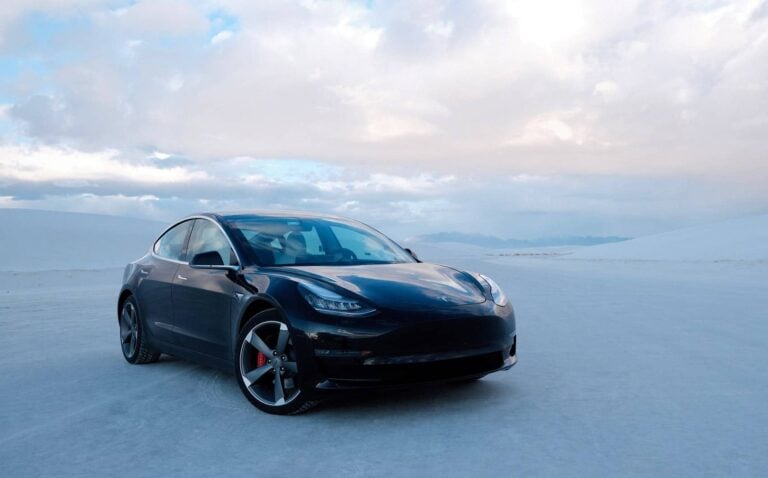
Photo credit: Tesla
Editorial Note: AI tools were used to assist with research and archive retrieval for this article. All reporting, analysis, and editorial perspectives are by Haye Kesteloo.
Discover more from EVXL.co
Subscribe to get the latest posts sent to your email.