India has protected its auto market with tariffs ranging from 70% to 110% for decades. Today, New Delhi agreed to slash those barriers for American gas-powered cars and motorcycles. Electric vehicles got nothing. For Tesla, which has spent nearly three years failing to gain traction in India’s market, the omission is a direct policy rebuff, Reuters reports.
- The Fact: India will cut tariffs on high-end American ICE cars (above 3,000 cc) from 110% to 30% over 10 years and eliminate duties entirely on Harley-Davidson motorcycles (800-1,600 cc) under the interim US-India trade pact.
- The EV Exclusion: Electric vehicles are explicitly excluded from the agreement, shutting down any hope of a lower-tariff entry route for Tesla into the world’s third-largest car market.
- The EU Contrast: India offered the European Union tariff reductions as low as 10% across a wider range of vehicles, including eventual concessions on some EVs. The US deal contains no such provision.
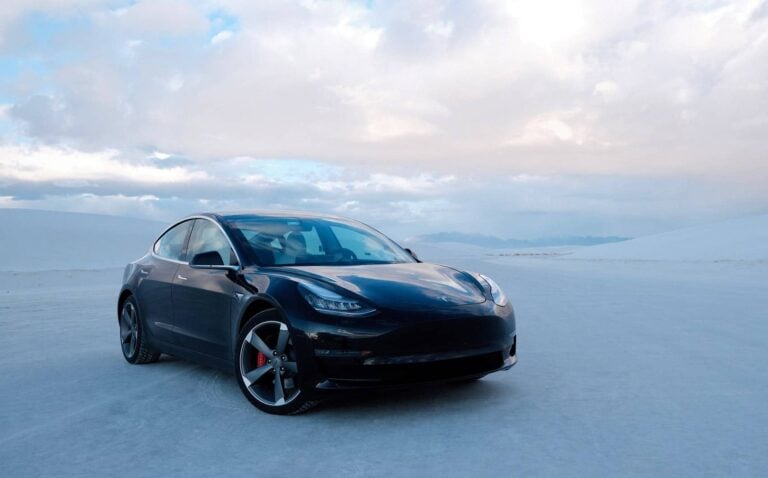
India’s EV exclusion leaves Tesla’s $70,000 Model Y stranded behind 110% tariffs
The India-US interim trade agreement, announced February 7, 2026, is part of a broader deal where President Donald Trump agreed to lower tariffs on Indian exports from 50% to 18% in exchange for New Delhi halting Russian oil purchases. Under the automotive component, tariffs on traditional internal-combustion cars with engine capacity above 3,000 cc will fall gradually to 30% over a decade. Harley-Davidson bikes between 800 cc and 1,600 cc will enter India duty-free from the day the bilateral trade agreement is signed.
But EVs were deliberately left out. An Indian government official told Reuters the exclusion shuts the door on a lower-tariff entry route for Tesla, ignoring a demand that CEO Elon Musk has made repeatedly over the past several years. Musk has publicly criticized India’s steep import duties multiple times since at least 2021.
The timing could not be worse for Tesla. The company entered India in July 2025 with its Shanghai-built Model Y, priced at nearly $70,000 after India’s 110% import duties. The results have been dismal. Tesla registered just 227 vehicles in all of 2025, while BYD moved 5,402 units and BMW delivered 3,753 EVs. By January, roughly one-third of Tesla’s imported inventory sat unsold, forcing quiet $2,200 discounts to move metal.
India gives the EU better EV terms than the US gets
The most telling detail in this deal is what India offered Europe compared to what Washington received. India agreed to EU tariff reductions as low as 10% across a wider range of vehicles, including eventual concessions on some electric vehicles. The US deal contains zero EV provisions. India appears willing to open its EV market selectively, just not to American manufacturers.
This also contrasts with India’s own 2024 EV policy, which offered automakers willing to invest $500 million in local manufacturing the ability to import a limited number of EVs at just 15% duty. Tesla declined that offer too, preferring to import rather than build locally. India’s Heavy Industries Minister at the time said bluntly: “Tesla, we are not actually expecting (interest) from them. They are not interested in manufacturing in India.”
EVXL’s Take
This is the third time in two years that India has structured a trade agreement to benefit legacy automakers while leaving Tesla out in the cold. The pattern is clear: New Delhi wants manufacturing investment, not imports. Tesla has repeatedly refused that trade-off, and Indian policymakers have responded by simply excluding EVs from every favorable deal they sign.
We’ve been documenting Tesla’s India struggles since the company sold just 100 cars in its first three months. The EV exclusion from this trade deal confirms what the sales numbers already told us: India isn’t going to make it easy for Tesla to import its way into this market. With 227 total registrations in 2025 and unsold inventory piling up, expect Tesla to either commit to local manufacturing within the next 12 months or quietly deprioritize India entirely. My bet is on the latter.
Editorial Note: AI tools were used to assist with research and archive retrieval for this article. All reporting, analysis, and editorial perspectives are by Haye Kesteloo.
Discover more from EVXL.co
Subscribe to get the latest posts sent to your email.