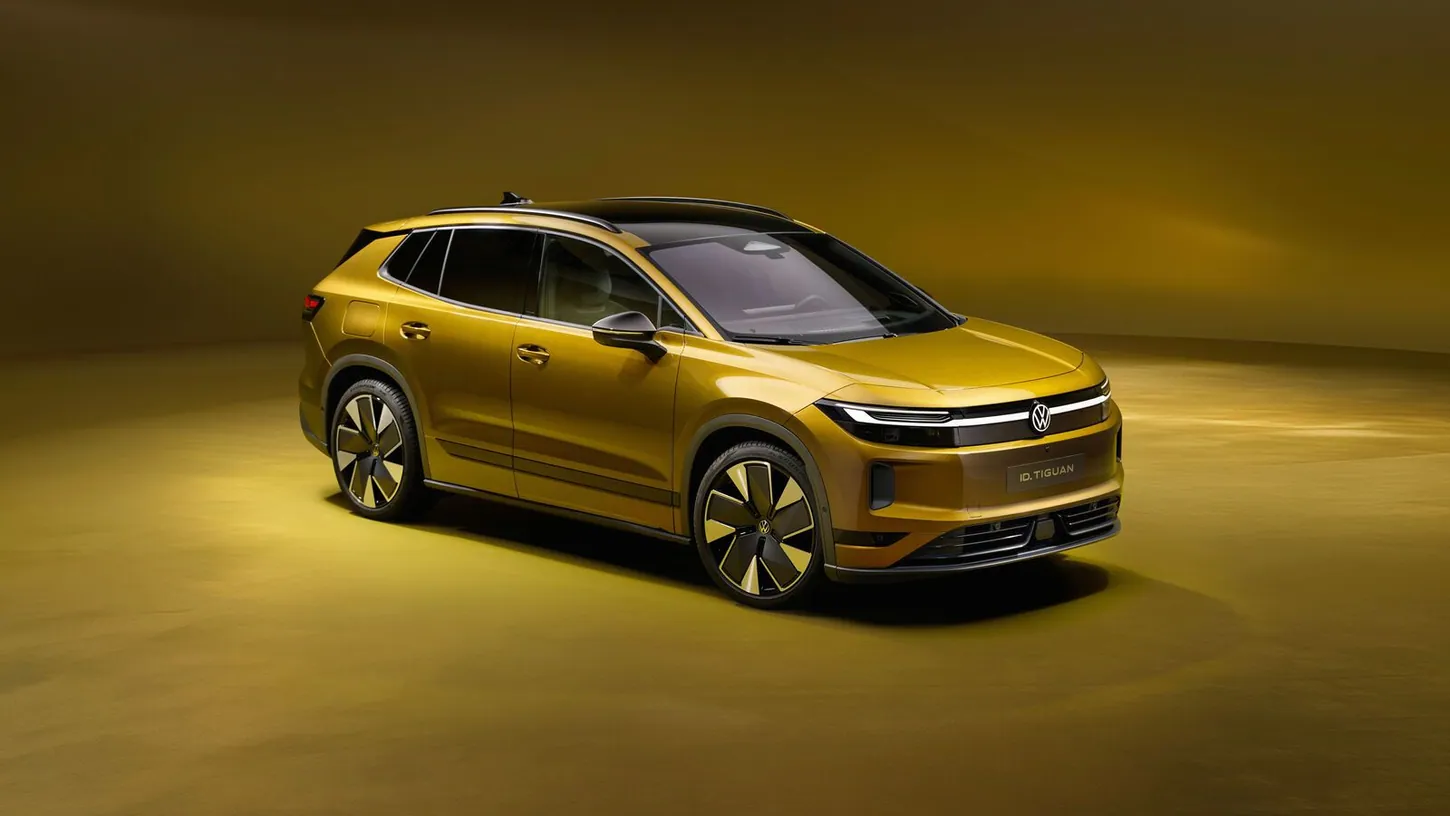
Volkswagen unveiled the ID. Tiguan on October 9, an electric SUV that replaces the ID.4 and ID.5 and brings back physical buttons for the climate controls and the steering wheel. European presales open October 13, German pricing starts at €42,695, and deliveries begin in early 2027.
Volkswagen of America says the ID. Tiguan is planned to succeed the ID.4 in North America, but U.S. pricing and timing are not announced. Volkswagen stopped building the ID.4 in Chattanooga, Tennessee in April, so the 2026 models still on dealer lots are the only electric SUV Volkswagen sells here until the new car lands. The ID. Tiguan will be sold alongside the gasoline and hybrid Tiguan.
The 77-kWh battery takes about 29 minutes to charge from 10 to 80 percent. On Volkswagen’s own figures, the outgoing ID.4 takes about 28.
Volkswagen Puts Real Climate and Steering-Wheel Buttons Back in the ID. Tiguan
Volkswagen says customer feedback shaped the new interior, so the basic climate functions sit on a physical button bar in the center console, the steering wheel uses conventional buttons instead of touch surfaces, the driver’s door gets a redesigned panel for all four windows, and pull-style door handles return.
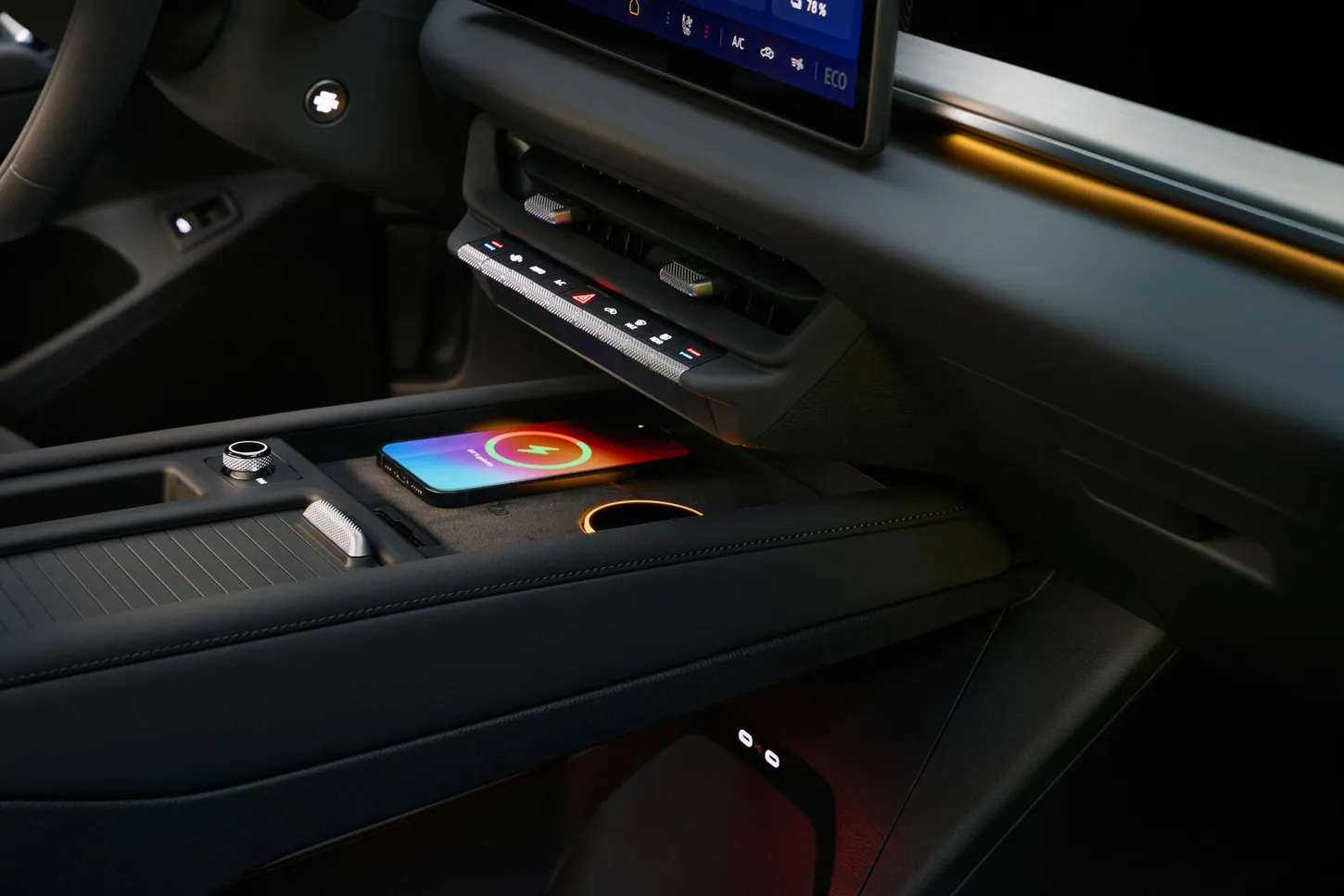
Audio volume and track changes move to a controller in the center console, according to Volkswagen’s press release. Two Qi2 wireless charging pads with magnetic rings sit at the front of the console.
The changes answer a complaint EVXL has been tracking since EV makers started ditching screens for buttons again, when Volkswagen’s own CEO admitted the ID.3 and ID.4 touch controls did a lot of damage. My BMW iX3 interior report last week found that even a well-placed display gets annoying when a climate change needs a menu.
A 12-Inch Passenger Screen and Golf IV Gauges Join the Dashboard
The cabin pairs a 10-inch driver display with a 15-inch central touchscreen. An optional 12-inch passenger display is a first for a European Volkswagen, and its privacy mode hides the content from the driver while the passenger listens through paired Bluetooth headphones. The three screens form one continuous strip.
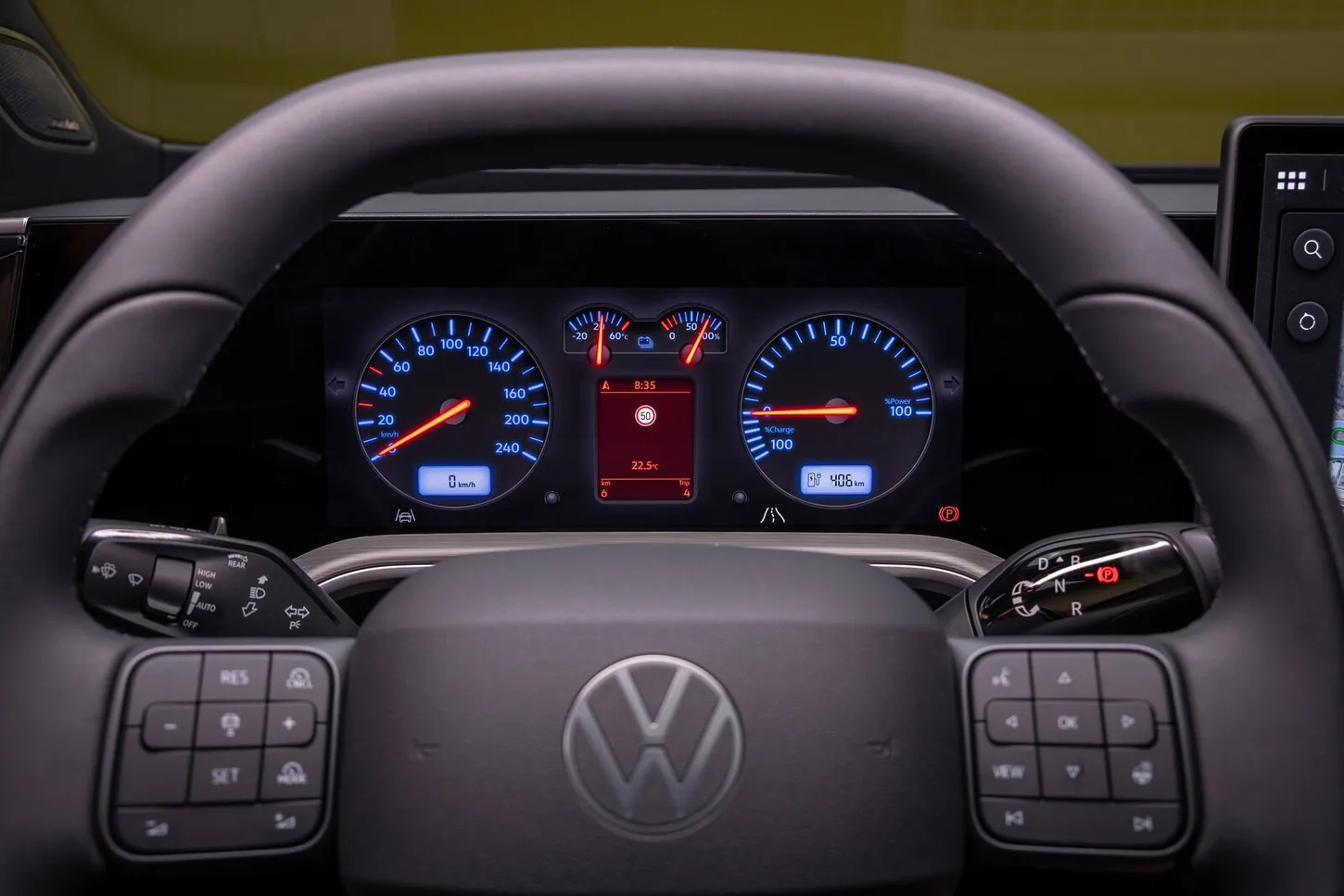
A View button on the steering wheel switches the driver display to a Retro layout with the blue-and-red instruments of the Golf IV. The right-hand dial looks like a tachometer but shows electric power flow instead of engine speed. The matching Retro view on the center screen shows a virtual garage, and the driver can pick one of six Volkswagen models to park in it: Golf I, Golf II Country, Golf IV, Tiguan I, Race Touareg and Beetle.
Ventilated and massaging front seats are optional, and so is a 480-watt Harman Kardon sound system. European trims are Trend, Life, Style and R-Line.
The ID. Tiguan Adds a Frunk and Tows Up to 4,409 Pounds in Europe
The five-seat SUV adds a 1.1-cubic-foot (32-liter) front trunk to a cargo area of up to 18.9 cubic feet (534 liters), and European towing capacity is 3,968 pounds (1,800 kg) with the 58-kWh battery and 4,409 pounds (2,000 kg) with the 77-kWh pack. Neither rating is confirmed for North America.
One-pedal driving is standard. The optional Connected Travel Assist handles assisted lane changes on the highway and stops the car at red traffic lights, within what Volkswagen calls system limits.
Three Powertrains Reach 373 Miles WLTP, but the 77-kWh Battery Charges at 165 kW
Volkswagen announced three European versions. The entry rear-wheel-drive model makes 188 horsepower (140 kW) with a 58-kWh battery, a second rear-wheel-drive version makes 282 horsepower (210 kW), and the 4MOTION all-wheel-drive model makes 295 horsepower (220 kW). Both of the stronger versions use a 77-kWh battery.
Volkswagen quotes its outputs in metric PS, and the horsepower figures above are converted. The German release puts the range at up to 373 miles (600 km) WLTP depending on power and battery. Volkswagen’s Dutch announcement breaks that down: 283 miles (455 km) WLTP for the 58-kWh car and 376 miles (605 km) WLTP for the 77-kWh rear-wheel-drive version, with the all-wheel-drive figure still to be determined. None of these are EPA numbers, and Volkswagen has published no U.S. range.
The same Dutch release lists the charging figures the German one leaves out. The 58-kWh battery peaks at 105 kW on a DC fast charger and needs about 26 minutes to go from 10 to 80 percent. The 77-kWh pack peaks at 165 kW and needs about 29 minutes. Both take 11 kW on AC.
Volkswagen’s U.S. page for the 2026 ID.4 quotes about 28 minutes from 10 to 80 percent, a best-case figure on a 200-kW charger. The ID. Tiguan’s 29 minutes comes at a 165-kW peak, so the two numbers are the same stop. Hyundai’s U.S. page for the 2027 Ioniq 5 quotes as little as 20 minutes for the same 10 to 80 percent on a 350-kW charger.
That ID.4 is the car Volkswagen of America, in a note attached to its copy of the reveal, says the ID. Tiguan is planned to succeed here, with pricing and timing to follow the European launch. Volkswagen ended ID.4 assembly in Chattanooga in mid-April to make room for the 2027 Atlas, and that April release promised a future version of the ID.4 for North America. The October note names the ID. Tiguan instead.
The ID. Tiguan rides on the updated MEB+ platform that Volkswagen also used for its Mission Efficiency concept, and a stronger version with more than 400 PS, a 4,850-pound (2,200-kg) towing rating and more than 435 miles (700 km) of WLTP range follows later in 2027.
EVXL’s Take
Volkswagen deserves credit for bringing the buttons back. A climate button is faster to find than any screen, and I said the same thing about the iX3 a week ago, so I am glad to see an automaker act on it.
Charging is the letdown. The new 77-kWh pack needs the same half-hour stop as the ID.4 it replaces, and a Hyundai you can buy today does the job in 20 minutes. A brand-new SUV arriving in 2027 should charge faster than the car it replaces, not match it. The other open question is price. Volkswagen plans the ID. Tiguan for North America without saying what Americans will pay or when they can buy one, and the ID.4 has already left the Chattanooga line. Until those numbers arrive, the ID. Tiguan looks easier to live with than the ID.4, but not more competitive.
Sources: Volkswagen Newsroom, Volkswagen Nederland, Volkswagen of America, Hyundai Motor America
EVXL uses automated tools to support research and source retrieval. All reporting is by Damien Kesteloo, edited by Haye Kesteloo.