Tesla Q2 Earnings Reveal What The Delivery Record Cost
Tesla reported $28.2 billion in second-quarter revenue on Wednesday, up 26% from a year ago, alongside its first negative free cash flow in more than two years: a $1.1 billion outflow driven by $5.8 billion in capital spending on AI infrastructure and robotics. Shares fell nearly 3% in after-market trading, according to The Wall Street Journal.
The record 480,126 deliveries that powered the revenue growth were already public. What Wednesday’s report added is the bill. Operating margin collapsed to 1.4%, down from 4.1% a year ago and 4.2% last quarter. GAAP net income slipped 5% to $1.11 billion, and non-GAAP earnings of $0.33 per share missed the $0.55 consensus Tesla itself had compiled from analysts.
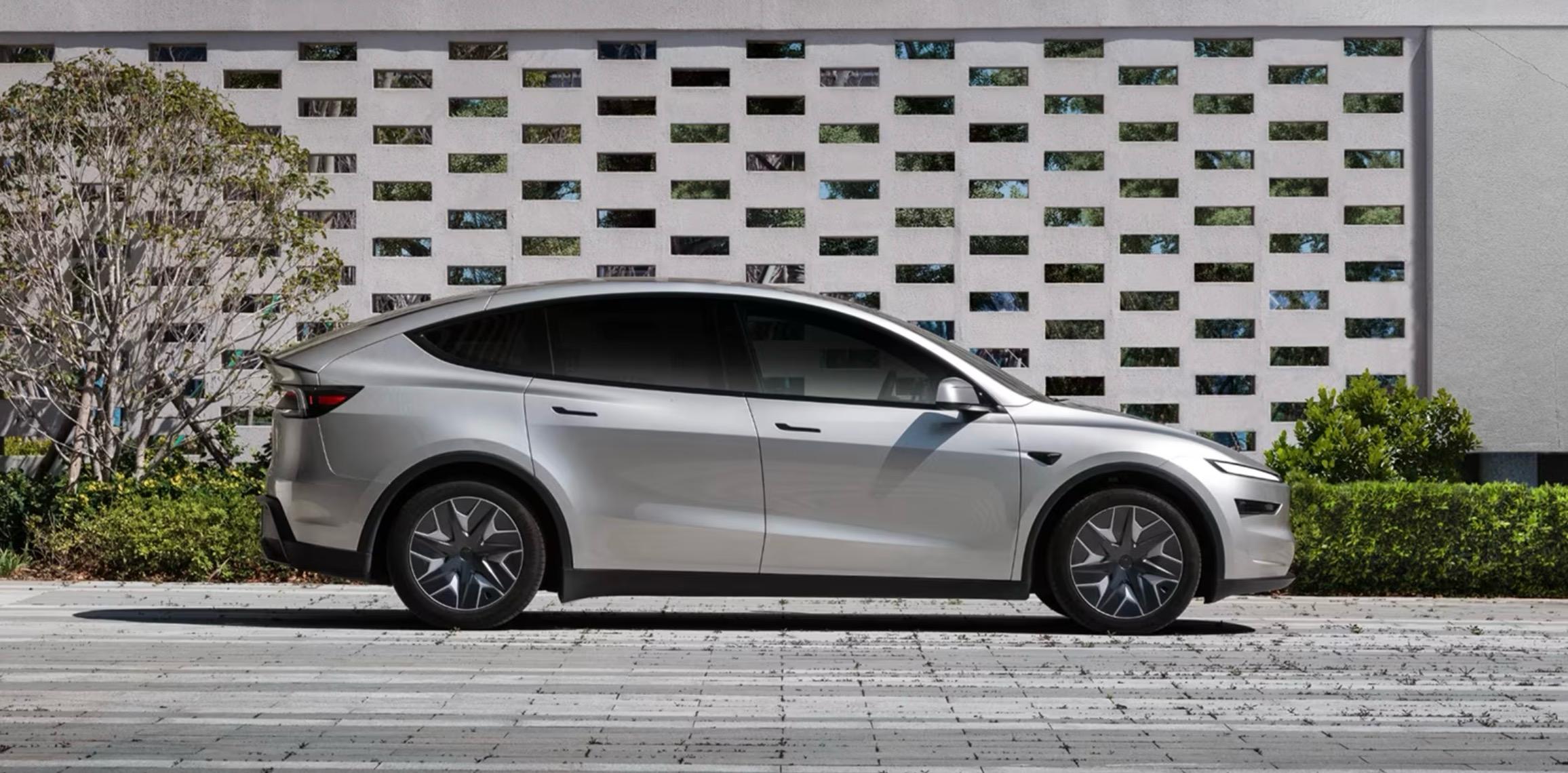
Yesterday, hours before this report, I wrote that automotive gross margin was the number to watch, not the delivery record everyone already knew, in EVXL’s look at Tesla extending 3.99% APR to the Model Y Performance. Total gross margin came in at 16.8%, the lowest in five quarters.
Revenue Grew 26% While Profit Went The Other Way
Every revenue line in Tesla’s Q2 update grew by double digits, yet income from operations fell 57% to $398 million because operating expenses jumped 47% to $4.35 billion and the gross margin that funds them compressed by more than four percentage points from the first quarter. That is the whole quarter in one sentence.
Automotive revenue rose 23% to $20.5 billion on the delivery record. Energy generation and storage added $3.1 billion, up 13%, on 13.5 GWh deployed. Services and other revenue grew fastest of all, up 50% to $4.6 billion.
The margin side tells the opposite story. Gross margin of 16.8% fell from 21.1% in Q1. A caveat on causes: Tesla’s summary table doesn’t break out automotive gross margin, so segment mix played some part, and the 10-Q will show how much. What is documented is the incentive stack EVXL has tracked all quarter, from 0% APR on the base Model Y to the 3.99% rate Tesla extended to the Performance trim the day before earnings. Cox Automotive estimates Tesla’s US deliveries fell 20.1% year over year even as global volume set a record, and the Journal cites Motor Intelligence data showing a similar 20% US decline. The growth came from Europe and China. The discounts hit margin everywhere.
One genuine bright spot: operating cash flow rose 85% to $4.7 billion. The core business generates cash. The investment program simply consumes more of it than the business produces.
Capital Spending Nearly Tripled To Fund The AI Pivot
Tesla spent $5.8 billion on capital expenditures in the quarter, a 142% increase over a year ago, and that single line converted $4.7 billion of operating cash flow into a $1.1 billion free cash flow deficit, the company’s first since early 2024. Management had warned on the Q1 call that free cash flow would stay negative for the rest of 2026.
Among the largest commitments is Terafab, the chip-manufacturing plant Tesla plans to build and run with SpaceX and Intel in Texas, per CNBC’s earnings coverage. The Journal reports the project has fueled investor speculation that Musk could try to merge SpaceX and Tesla into a single AI-focused company.
The spending also covers the Cybercab ramp. Tesla says volume production of the pedal-free two-seater is underway, which matches what drone flyovers have documented on the ground: EVXL counted 245 finished Cybercabs staged at Giga Texas on July 18, none of them yet carrying a paying passenger. On Optimus, Tesla told investors it is installing first-generation production lines and will start building robots soon, though the initial units are earmarked for training data collection rather than customers. The capacity table lists Cybercab at more than 125,000 units of installed annual capacity, with Optimus lines in California and Texas still under construction.
FSD Subscriptions Are The Growth Engine Tesla Actually Landed
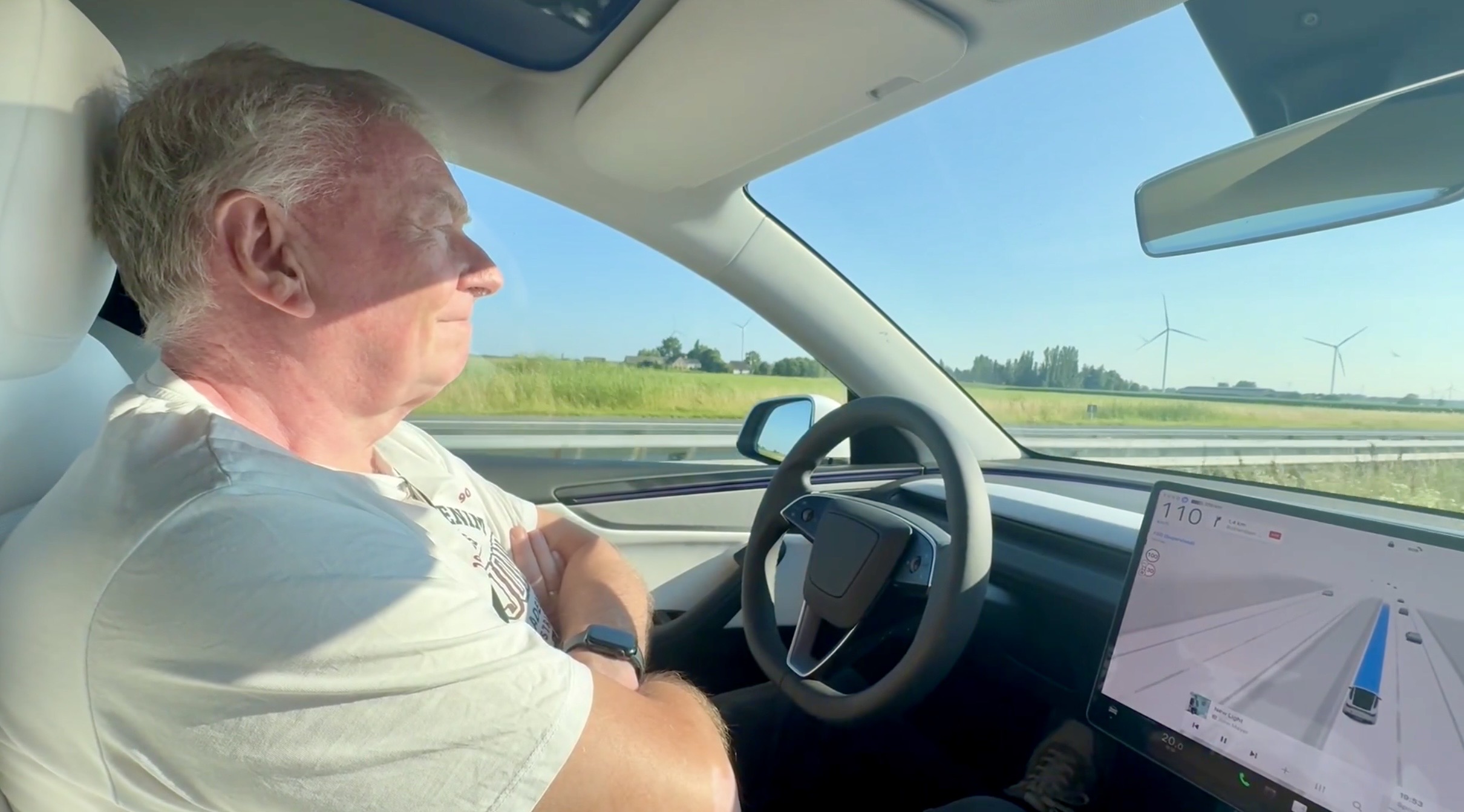
Active subscriptions to Full Self-Driving (Supervised) reached 1.48 million in the quarter, up 56% from a year ago and roughly 200,000 ahead of Q1, making the software Tesla sells to US drivers for $99 a month the clearest driver of the 50% jump in services revenue.
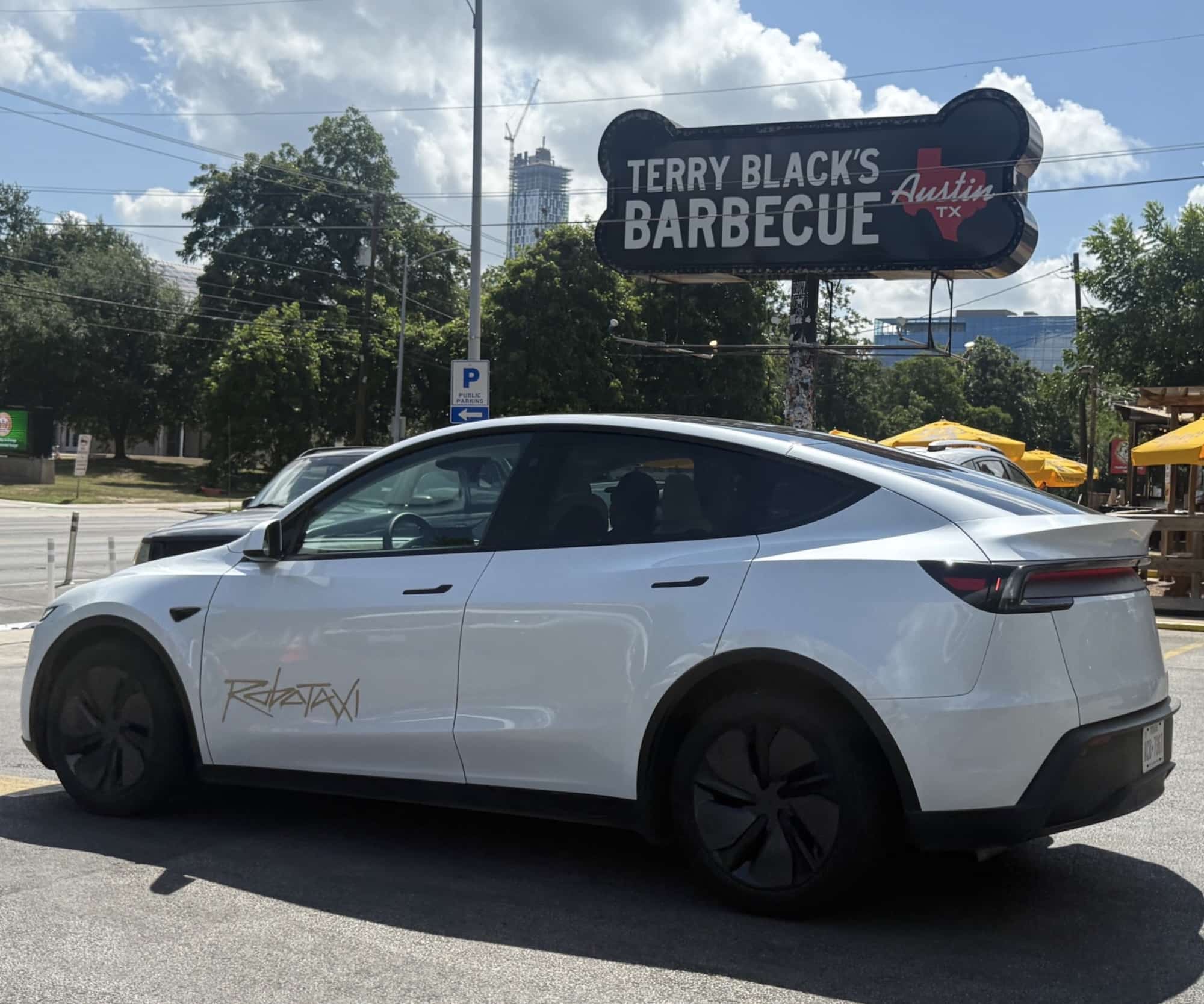
The Robotaxi side moved too. Per the Journal, Tesla expanded the service this month to limited areas of Miami, Orlando, and Tampa, on top of its Texas operations in Austin, Dallas, and Houston. In June, the National Highway Traffic Safety Administration proposed eliminating the requirement that autonomous vehicles carry manual brake pedals, a change that would directly benefit the controls-free Cybercab.
EVXL’s Take
The story most outlets will run tonight is the AI spending headline, and it is the wrong lens. Tesla told everyone in April that free cash flow would go negative. The $1.1 billion burn actually beat the $3.25 billion outflow Wall Street expected. The real news is quieter and worse: the car company inside the AI company earned 1.4 cents of operating profit per revenue dollar in its best delivery quarter ever.
That is what buying a record looks like on an income statement. I wrote on July 1 that a consensus beat built on incentives would be Tesla grading its own homework, and the grade is now in. Deliveries up 25%, operating income down 57%. The bull will point out that net income held within 5% of last year on 26% more revenue, and that’s a fair card to play. It just doesn’t answer the question this quarter raised. Volume was never the question. Pricing power was.
The FSD number is the honest counterweight, and I’ll give Tesla full credit for it. Adding 200,000 subscribers in one quarter is the recurring-revenue business Musk has promised for years finally showing up in a table instead of a keynote. If that curve holds, it changes the margin math more than any robot does.
Here is the test I’ll hold Tesla to. The incentive rates that bought this record, 0% to 3.99% APR across the Model Y range, run through the full third quarter. If automotive gross margin stabilizes in Q3 while those rates stay live, Tesla has the pricing power its valuation assumes. If margin keeps sliding, this quarter was not an investment phase. It was a margin war Tesla started against itself, funded by a cash pile that shrank $1.2 billion this quarter to $43.5 billion. Watch the Q3 report in October, not the robot demos between now and then.
Sources: Tesla Q2 2026 Update, CNBC, The Wall Street Journal.
EVXL uses automated tools to support research and source retrieval. All reporting and editorial perspectives are by Haye Kesteloo.