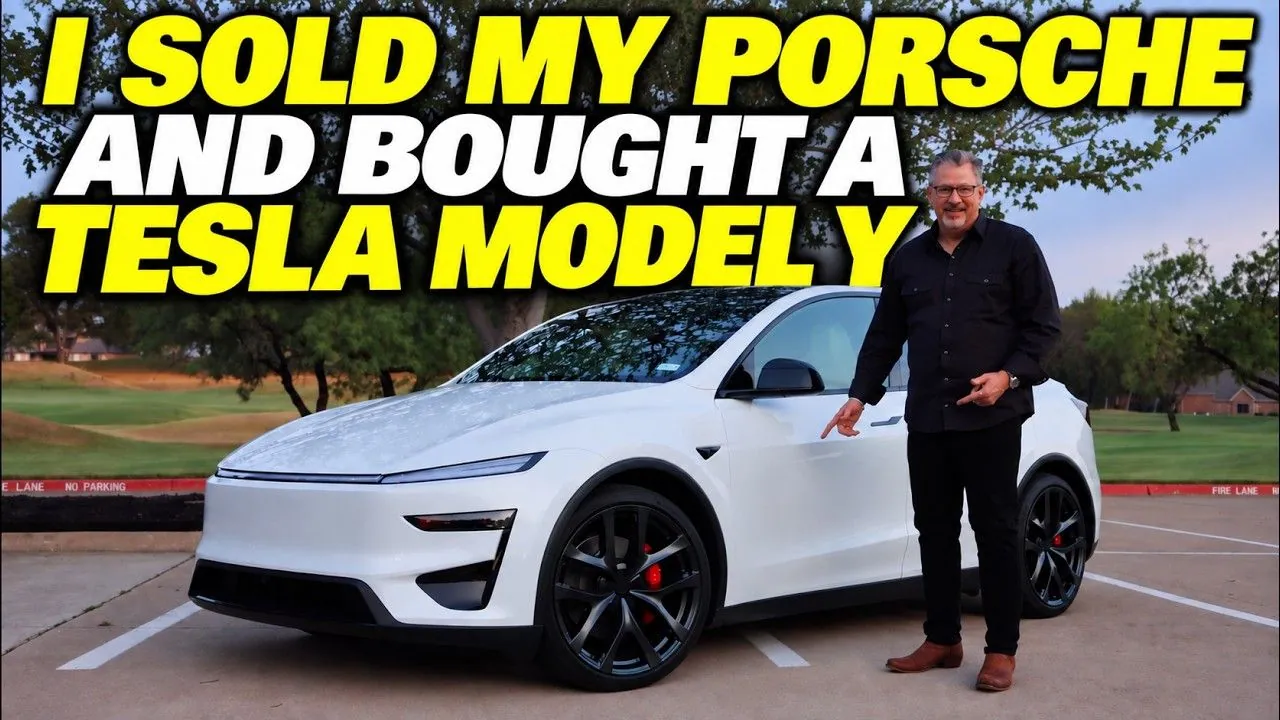
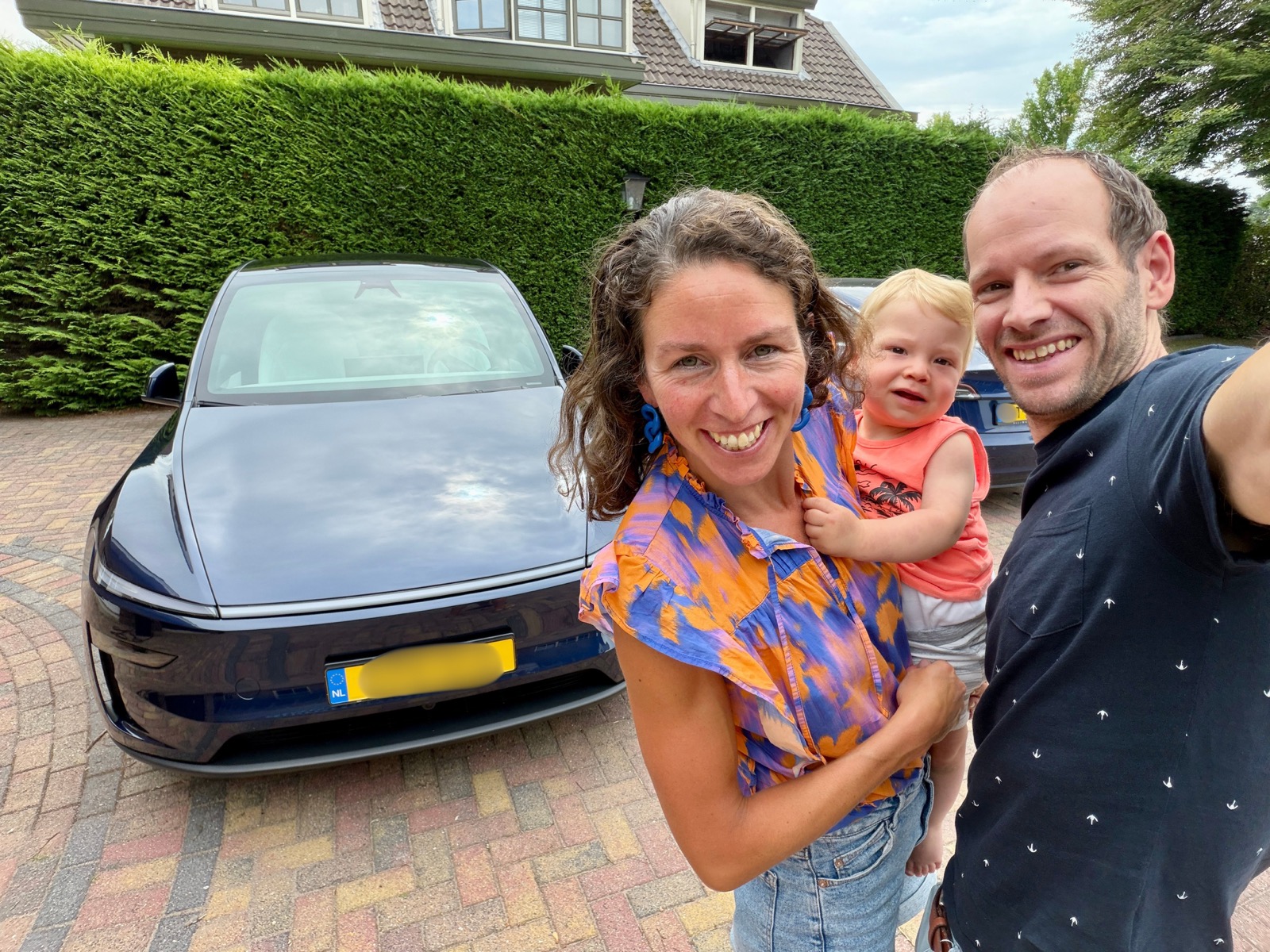
Wilco de Kreij spent the past year in the passenger seat. The Dutch entrepreneur blacked out behind the wheel a year ago, crashed straight into another car with his three children in the back, and lost his license to an epilepsy diagnosis. This week, days after getting that license back, he picked up a Tesla Model Y with FSD Supervised and explained why in a post on X that struck a nerve well beyond the Netherlands.
“Being allowed to drive and feeling safe are two different things,” de Kreij wrote. His youngest child was two months old at the time of the crash. Everyone walked away, but the fear of a second blackout did not. The Model Y is his answer: a licensed, medically cleared driver adding a system that keeps watching the road if he can’t.
A Blackout, a Crash, and a Year in the Passenger Seat
De Kreij’s crash happened in a Volkswagen Passat, the family car on a vacation trip, when he lost consciousness without warning and drove straight into another vehicle; the diagnosis that followed, a form of epilepsy, took his license for a full year, a detail he shared in replies to his own post.
His wife drove him everywhere for that year, three young kids in tow. When the license came back last week, the legal question was settled. The medical one wasn’t. Epilepsy can be managed, but de Kreij was blunt about the residual risk: he hopes another blackout never comes, and knows nobody can promise that.
One detail the feel-good framing skips: de Kreij already owned a Tesla. His previous Model 3 ran Hardware 3, which the European FSD build does not support. The safety net he wanted required a new Hardware 4 car plus Tesla’s €99 monthly subscription. The safety layer is real. So is the price of admission.
The Purchase Lands Three Months After the Approval EVXL Tracked From Denial to Sign-Off
FSD Supervised became legal for Dutch consumers on April 10, 2026, when the RDW (Rijksdienst voor het Wegverkeer, the Dutch vehicle authority) issued Europe’s first type approval for the software, a decision that came five months after the same regulator publicly corrected Tesla’s premature approval claims.
That November 2025 episode, in which the RDW denied a committed approval date and asked Tesla fans to stop calling its offices, is worth remembering when the purchase stories start rolling in. The regulator took more than 18 months of track and road testing before signing anything. Since April, Lithuania, Estonia, Denmark, and Belgium have recognized the Dutch approval, and the five-country fleet passed 50 million kilometers on FSD Supervised on July 14.
The Dutch numbers frame de Kreij’s decision. The RDW’s June statement counted nearly 40,000 FSD-equipped Teslas in the Netherlands covering roughly 24 million kilometers since approval, in the regulator’s words, “without any relevant incidents.” He is not an early adopter taking a flyer on unproven software. He is joining a monitored national fleet with a published track record.
FSD Supervised Watches the Driver and Stops the Car When the Driver Stops Responding
The approved system pairs its driving software with cabin-facing driver monitoring: eye-tracking cameras check whether the driver is watching the road, escalating visual, audio, and haptic alerts fire when attention drops, and if the driver never responds, the software is designed to bring the car to a controlled stop.
That controlled-stop behavior is the part of the type approval that maps directly onto de Kreij’s fear. A 2025 Passat with an unconscious driver keeps going until physics decides. A Model Y running FSD Supervised with an unresponsive driver is engineered to slow down and stop. For a father who has lived the first scenario, the difference is not a spec-sheet line.
The limits matter just as much. The RDW classifies FSD Supervised as a driver assistance system, not autonomy, and full legal responsibility stays with the human. De Kreij can use it because he holds a valid license and is medically cleared to drive. The system supplements a fit driver. It does not replace an unfit one, and the RDW’s approval documents say so in plain language.
EVXL’s Take
This is the story the April 10 approval was written for, and I say that as the person who spent nine months documenting every slipped date and premature Tesla claim along the way. A legally cleared, medically fit driver using a supervised system as redundancy against a risk he can name: that’s the strongest real-world argument for FSD Supervised I’ve seen since the RDW signed off.
It’s also where I want to pump the brakes, because the replies under his post show how fast this story inflates. One commenter wrote that FSD would preserve freedom of movement for people who may never drive again. Another declared it will give the elderly and disabled their lives back. That is not what the RDW approved. It approved an assistance system that legally requires a fit, attentive human at the wheel, and it went out of its way to say so. The gap between de Kreij’s careful reading and his comment section’s hopeful one is the gap between a safety layer and the next liability headline.
De Kreij bought redundancy. His replies are buying autonomy. Only one of those is for sale in the Netherlands, and Tesla’s product name keeps blurring the two.
Source: Wilco de Kreij, RDW.
EVXL uses automated tools to support research and source retrieval. All reporting and editorial perspectives are by Haye Kesteloo.