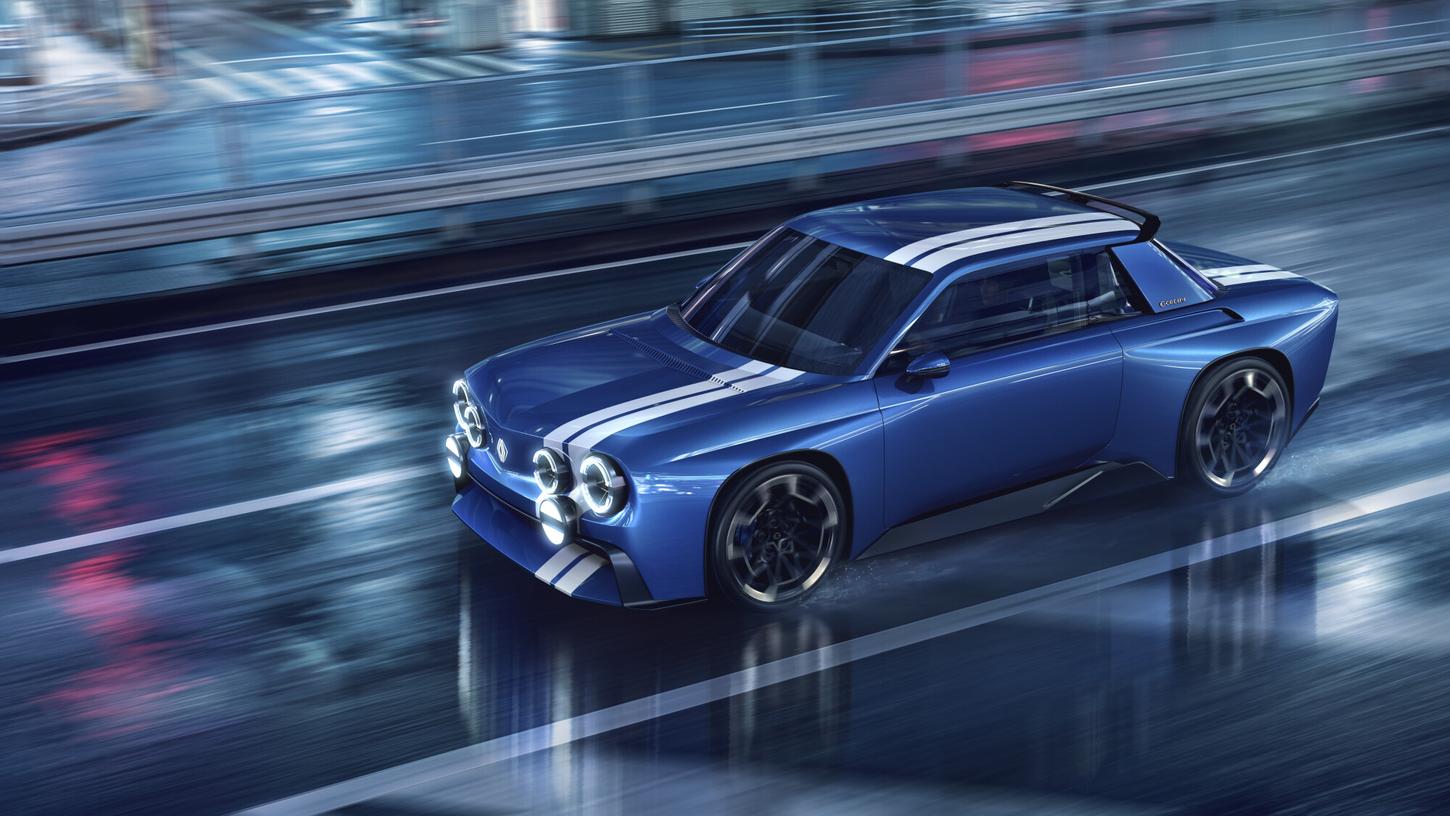

Renault swung to a €721 million net profit in the first half of 2026 on revenue of €30.25 billion, up 9.5%, while selling 0.4% fewer vehicles than a year ago. Fewer cars, more money per car. That inversion, not any volume record, is the story of the French group’s turnaround.
Electric is doing the pulling. EV sales across Renault Group’s European operations jumped 47.6% and now make up 18.8% of its sales there, with electrified models at 52%. The growth came while BYD and Chery expand in the same small-car segments Renault depends on, and one year after a €9.3 billion Nissan-related writedown dragged the group to an €11.1 billion first-half loss. Strip out that one-off and underlying group-share profit still climbed €244 million.
The comeback rests on one internal rule, and it runs opposite to how most legacy automakers approached electrification.
Renault’s One Rule Makes Every New EV Earn Like A Hybrid
Renault now approves a new model only if its electric version is projected to earn the same margin as the group’s full hybrids, a gate CEO Francois Provost confirmed on Wednesday’s earnings call and one that leaves no room for loss-making compliance cars built to satisfy CO2 targets. For every new model decision, Provost told analysts, “the profitability of electric should be the same as full hybrid.”
The gate sits inside futuREady, the strategy Provost launched in March 2026. The cars carrying the growth are the Renault 5 E-Tech electric, the Renault 4 E-Tech electric, and the new sub-€20,000 Twingo E-Tech electric. Renault-brand BEV sales in Europe grew 63.2% in a market up 34.2%, and the R5 is the continent’s best-selling B-segment EV. The Douai plant built its 100,000th example in December 2025, 15 months after launch, and Renault expects the model to pass 200,000 cumulative units before the year is out.

The clearest outside validation came from Detroit. Ford concluded last December that its own EV platforms were too expensive for Europe and hired Renault to build two small electric models on French underpinnings, with CEO Jim Farley calling it more competitive than the platform Ford had engineered in the U.S. When a rival pays you to use your platform, the spreadsheet argument is over.
Chinese Price Pressure Meets A 20.7% Electric Market
Battery-electric cars took 20.7% of EU registrations in the first half of 2026, up from 15.6% a year earlier according to ACEA, and Chinese brands such as BYD and Chery are scaling in the same small-car segments where Renault earns its living. Buyers registered 1,220,890 battery-electric cars in the EU over six months, up 40.5%, with France growing 62.9% and Germany 48%. The market Renault bet on has arrived. So has the competition chasing it.
Provost expects price pressure in Europe to run through the rest of the year, Reuters reports, and the strain is visible in Renault’s own accounts: price and mix effects cost the group €425 million in the half. The response was to protect value rather than volume. Retail channels made up 60% of passenger-car sales in Renault’s five biggest European markets, 17.7 points above the market average. Dacia volumes fell 8.7% in Europe after early-year logistics problems, a gap Renault chose not to buy back with discounts, in line with the pricing discipline Provost stressed on the call.
Compare that with Stellantis, which in February took a €22.2 billion charge to unwind its EV plans while leaning on budget models to hold the value end of the market. Two European groups faced the same Chinese pressure. One cut product. The other cut cost.
Cost Cuts Of €400 Per Car Fund The Pricing Defense
The rule only works because the cost base keeps shrinking: Renault hit its Renaulution target of cutting variable costs by €400 per vehicle in 2025 and now aims to remove roughly another €400 per car every year on average over the medium term under futuREady. The first half delivered on schedule: the cost program removed €184 million, with purchasing gains and lower warranty spending more than offsetting raw-material inflation. New projects now launch with supplier entry tickets as much as 40% below the previous generation.
None of this makes Renault bulletproof, and the honest reading of these numbers says so. Automotive operating margin came in at 3.0%, down from a year earlier, while Mobilize Financial Services, the group’s financing arm, contributed €753 million, roughly half of total operating profit. Net income attributable to the group, at €705 million, landed under the €770 million analysts expected. Renault itself warns the raw-material and inflation hit will roughly double to about €400 million in the second half. The machine works. It is not coasting.
EVXL’s Take
In January, when Provost folded the Ampere EV unit back into the mothership, I asked whether any European automaker had a viable path against BYD, and six months later Renault has delivered the closest thing to an answer I have seen. Detroit answered the same question with a checkbook: we have tracked roughly $53 billion in EV write-downs across the Big Three since October, capital spent un-committing from electrification. Renault spent the same stretch stripping €400 a car out of its build costs and shipping a small EV people actually line up for.
One approach treats Chinese competition as a reason to retreat behind tariffs and lobbying. The other treats it as a spec sheet to beat. EVXL has argued from the start that unfair Chinese subsidies deserve pushback, but a tariff wall that lets legacy automakers keep bloated cost structures protects executives, not buyers. A mid-size French automaker just grew EV sales 47.6% against BYD and Chery on the same tariff terms every rival already enjoys. Anyone still begging Brussels for more protection should have to explain that number first.
I am not declaring victory for Renault. A 3% automotive margin and a financing arm carrying half the profit add up to pricing power, not immunity. The real test of the hybrid-parity rule is the cheapest car in the range: the sub-€20,000 Twingo scales through a second half in which Renault has already flagged a doubled raw-material bill. Watch the full-year results next February. If automotive margin holds with Twingo volume in the mix, the rule survived its hardest case. If Mobilize is still doing half the lifting, the cheering gets premature.
The EV transition does not need rescuing from China. It needs more automakers willing to do what Renault just did: the slow, unglamorous work of building electric cars people want at a cost that earns money.
Sources: Renault Group, Reuters, ACEA, Motor1
EVXL uses automated tools to support research and source retrieval. All reporting and editorial perspectives are by Haye Kesteloo.