
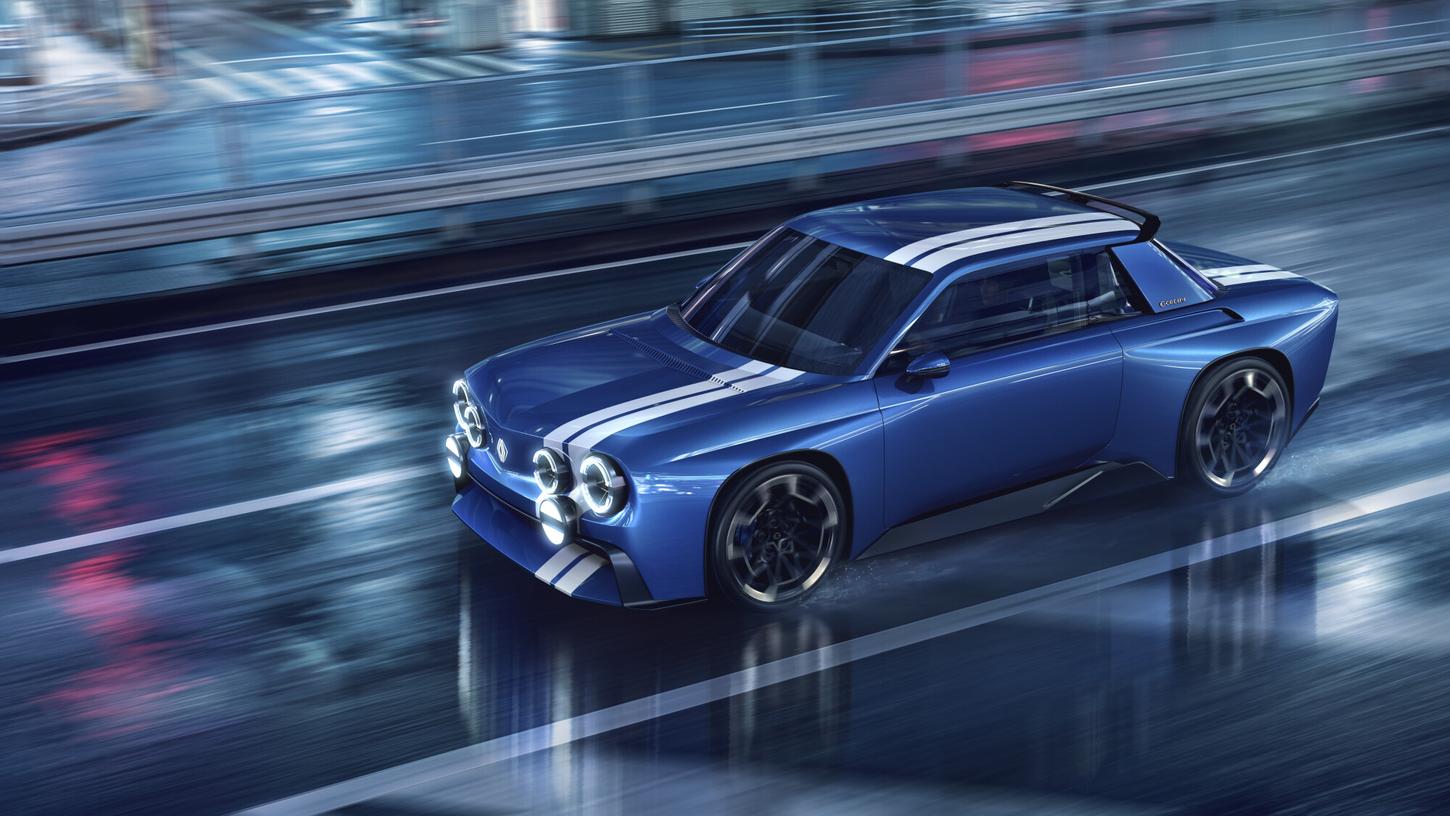
Renault has built an electric, two-seat coupe version of the 1964 Renault 8 Gordini, and it says the car will never be sold. The Renault 8 Gordini Concept, revealed at the Renault Carwalk on September 24, sends 270 hp (Renault’s metric figure, about 266 hp in U.S. terms) from one electric motor to the rear wheels.
The public gets its first look at the Paris Motor Show, October 12 to 18. Renault calls the car a pure design exercise, built to show how its Gordini performance name could work on a modern EV.
Renault has not published a battery size, a range or a 0-to-60 time.
The Original 8 Gordini Was a 95-HP Training Car for Future Rally Drivers
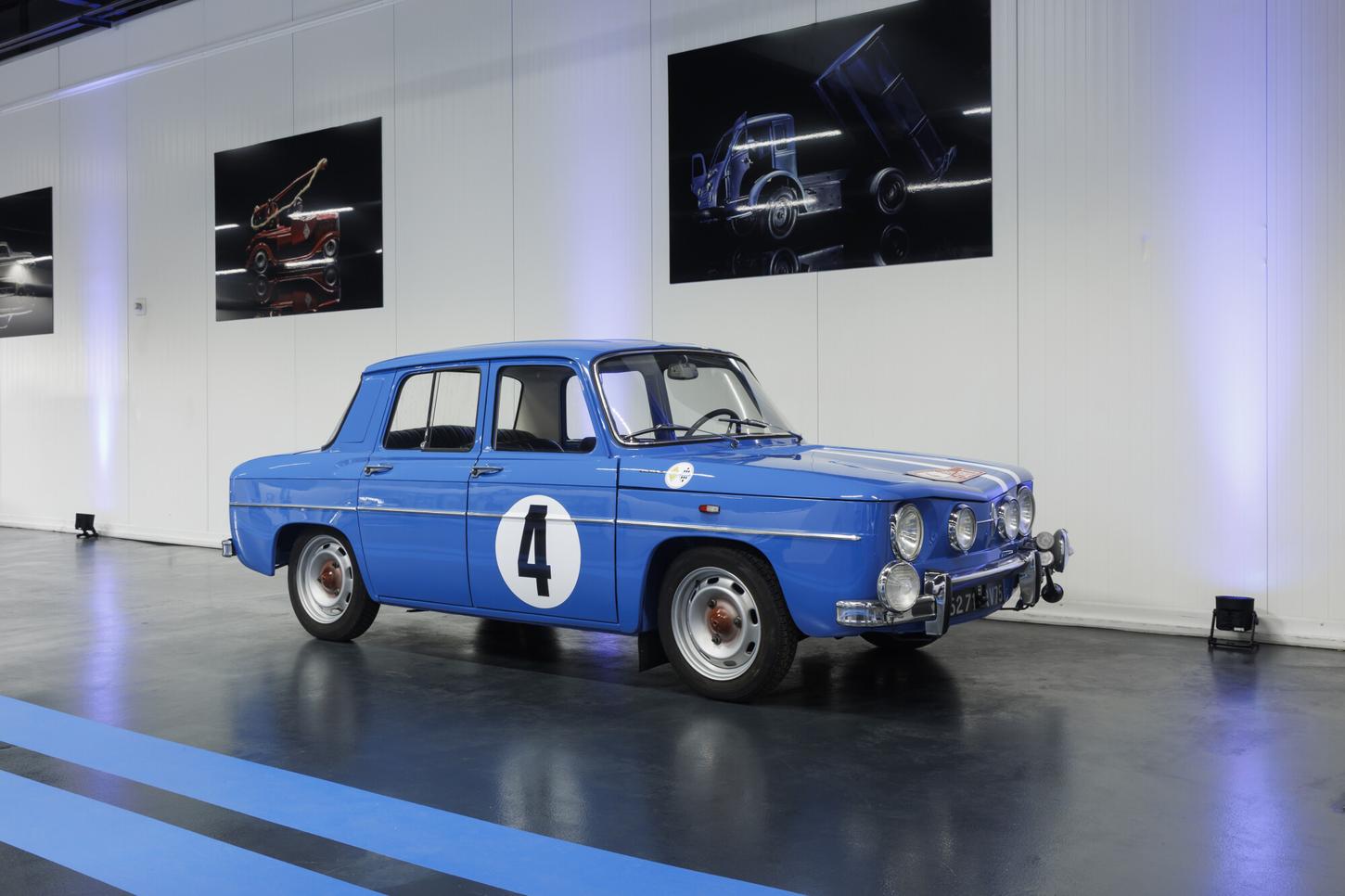
Renault launched the 8 Gordini in 1964 with a 95-hp rear-mounted engine driving the rear wheels. Fast and hard to drive well, it became a training car for a generation of racers, including rally driver Jean Ragnotti, and made real performance affordable a decade before the GTI era.
The original was a four-door sedan painted Bleu de France with a double white stripe, and that stripe became the Gordini trademark. Amédée Gordini, the tuner behind the name, had first worked with Renault in 1957 on the Dauphine Gordini.
The Concept Trades Four Doors for Two Seats and a Carbon Body
The concept keeps the rear-drive layout but little of the original’s shape: it is a two-door, two-seat coupe with a carbon body, 13.5 feet long, 6.2 feet wide and 4.2 feet tall (4.12, 1.88 and 1.27 meters), on 19-inch front and 20-inch rear wheels.
Renault design vice president Alexandre Malval says the bigger rear wheels are a nod to the original’s rear-engine layout. The hood has no shut line and lifts off in one piece, the way it does on some race cars.
The Double White Stripe Now Lines Up the Whole Car
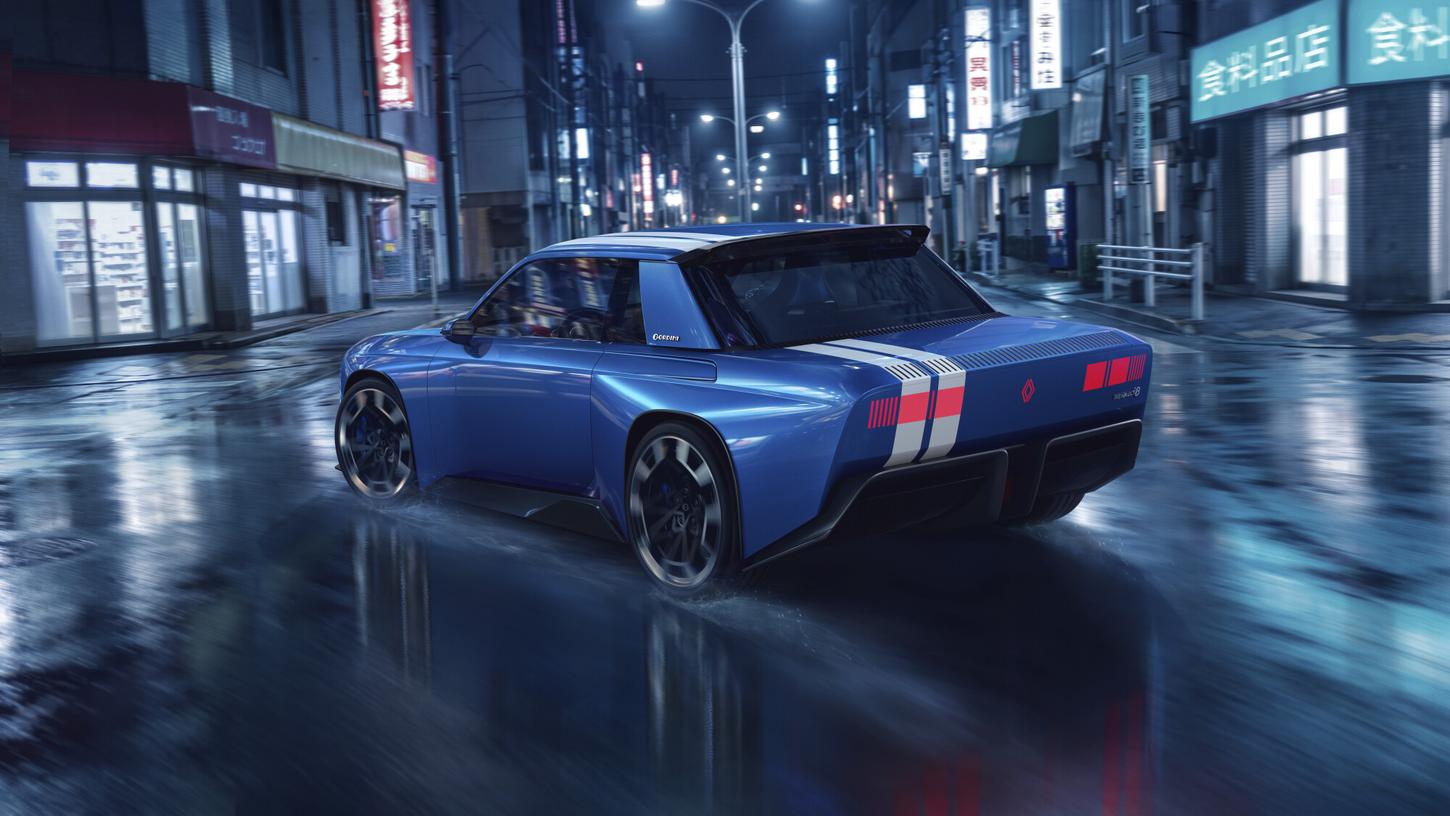
On the 1964 car, the double white stripe was just paint. On the concept, it organizes the design: the windshield-base grille and the taillight graphics line up with it, and it runs across the top of the dashboard, fading from white to blue.
Exterior designer Kévin Goncalves put it this way: “These are not simply decorative strips applied to a surface.”
The paint is a three-layer take on Bleu de France, mixing pearl with a blue-tinted binder so the old shade shows at the edges in strong light. Other carryovers include six round headlights, squared-off wheel arches, shell-shaped mirrors and a rear ventilation grille. The taillights sit flush and nearly disappear when switched off. The Gordini lettering now has the striations of the original badge, next to a new “8” emblem made of eight segments.
A Café Racer Cabin Swaps Plastic for Brushed Aluminum
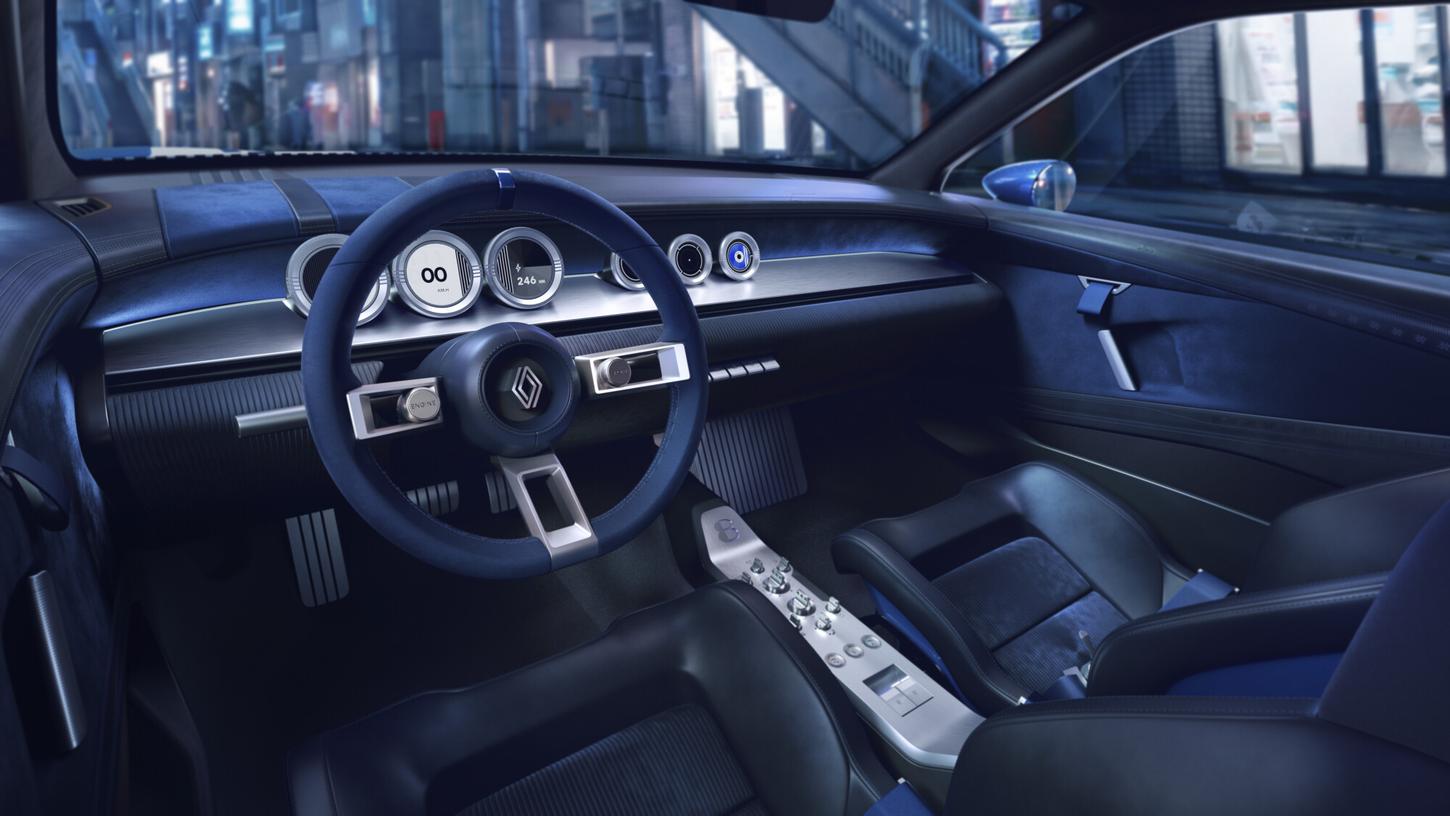
Renault borrowed the cabin idea from café racer motorcycles, which strip old bikes to their essential parts. Brushed aluminum replaces plastic on the controls and large surfaces, set against Alcantara. A horizontal aluminum strip carries round digital dials under a full-width visor like the original’s.
The bucket seats get blue corduroy centers as a nod to the old flat seats. The only splash of color on the dash is a red dot on the stopwatch button in the middle.
Renault Picked the Design From More Than 300 Sketches
The concept came out of an internal Renault Design competition that drew more than 300 sketches. Two became 2:5 scale models, and the final car combines the best of both, designed entirely in-house, unlike the R17 restomod Renault built with designer Ora Ïto.
It is the latest in a run of one-off heritage cars, after the R17 and the Renault 5 Diamant art car. Renault’s announcement says all of them will join the historic models at the Renault Collections museum in Flins, France, which is set to open to the public in about 15 months.
EVXL’s Take
Renault says this car will never be sold, and that is a shame. A small, rear-drive electric coupe with real heritage is exactly the kind of EV that gets people excited about the switch. Renault has turned a show car into a real one before. The 5 Turbo 3E debuted as a concept at the 2022 Paris show, and when orders opened, Renault took 850 reservations in the first week for a 1,980-car run at €155,000 each.
That price is also the problem. The original 8 Gordini mattered because ordinary people could afford it. An electric version would only make sense if it kept that idea, and a €155,000 collector car would miss the point of the name.
Sources: Renault
EVXL uses automated tools to support research and source retrieval. All reporting is by Damien Kesteloo, edited by Haye Kesteloo.