The Western auto industry has spent years blaming Chinese state subsidies for BYD’s price advantage over Tesla and other foreign rivals. A new Rhodium Group report published February 19 makes that argument a lot harder to sustain. According to the New York-based independent research firm, Chinese government support accounts for just $235 of BYD’s roughly $4,700 per-vehicle cost gap with Tesla. That’s 5%. The other 95% comes from structural advantages that tariffs and political rhetoric can’t touch.
- The Fact: BYD’s per-vehicle cost advantage over Tesla is approximately $4,700, with state subsidies accounting for only about $235 of that gap, per the Rhodium Group’s February 2026 analysis.
- The Delta: BYD’s absolute R&D spend is actually higher than Tesla’s — but spread across far more vehicles and cheaper engineering talent, the per-unit R&D cost is significantly lower.
- The Buyer Impact: Western-built EVs won’t get cheaper through tariff policy alone. The cost gap is structural, not political.
The BYD Seal vs. Tesla Model 3 Price Gap Tells the Story
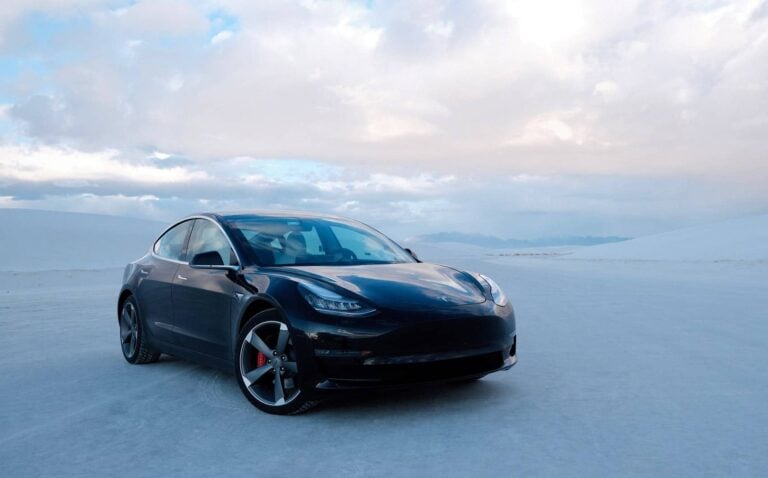
Between 2022 and 2025, the BYD Seal sedan dropped in price from $30,198 to $24,190 (a cut of roughly $6,000), while the Tesla Model 3 started at $32,909 and fell by just $221 over the same period. This happened even though Tesla has manufactured cars in Shanghai since 2019. Local production alone clearly doesn’t close the gap. Western brands are already building in China and still losing ground on price.
That collapse in Western competitiveness is reflected in market share data Rhodium cites: Western automakers held two-thirds of China’s EV market in 2020. By 2025, that had fallen to just over one-third. We’ve covered this deterioration in detail. The 2025 final numbers were worse than most analysts predicted, and BYD outsold Tesla by 620,000 battery-electric vehicles last year.

Vertical Integration and Scale Do the Heavy Lifting
Rhodium points to three structural advantages behind BYD’s cost lead. Its supply chain runs deeper vertically. Its manufacturing volume is larger. And its overhead costs per vehicle, including R&D, are lower. None of these close through a trade agreement or a subsidy calculation.
BYD makes its own batteries and major drivetrain components in-house, giving it control over cost and timing that Western OEMs, which rely on external suppliers with their own margin requirements, simply don’t have. BYD doubled its exports while Western automakers were retreating, which only compounds the scale advantage further.
There’s also the supplier payment dynamic. Rhodium estimates that BYD’s practice of extending supplier payment terms provides a cost advantage of $214 per vehicle. For Geely, the figure is $83 per vehicle. These aren’t rounding errors. They’re deliberate financial mechanisms that reduce effective working capital costs and shift cash flow burden onto the supply chain.
Subsidies Matter, But Less Than the West Assumes
The subsidy picture is real and lopsided, but worth being precise about what it actually explains. When Tesla received Chinese state aid before 2021, disclosed grants amounted to roughly 2% of net income. Since then, Tesla has reported zero subsidy income. BYD’s government support, by contrast, rose from 26% of net income in 2024 to 35% in 2025. That’s a meaningful advantage, and it’s one we’ve noted while covering China’s broader subsidy-driven market distortions.
But the Rhodium numbers put a hard figure on what that actually means per car: roughly $235 in disclosed direct subsidies. That leaves $4,465 of BYD’s cost advantage explained by things that have nothing to do with Beijing’s industrial policy. It’s worth noting that indirect state support, including preferential land deals, below-market state bank loans, and factory energy pricing, is harder to quantify and likely adds something to that total. Even accounting for that, the structural gap dwarfs any reasonable estimate of total subsidy benefit. Western automakers that have been treating subsidies as the core explanation for their losses have been looking at the wrong variable for years.

Western OEMs Face a Structural Dead End
Rhodium puts the dilemma plainly: closing the cost gap would require Western automakers to invest more deeply in China, building local R&D capacity and tighter supplier relationships, while simultaneously cutting costs and jobs at home. That’s a political impossibility in the current environment. The U.S., the EU, and Canada have all moved toward industrial policies designed to protect domestic manufacturing employment, which is the opposite direction from where cost competitiveness lies.
That contradiction played out in Canada recently. Ottawa’s deal with Beijing centered on canola tariff relief for prairie farmers, with reduced EV tariffs bundled into the broader package. Ontario auto workers and their political allies attacked it as a direct threat to domestic manufacturing jobs. The deal was politically divisive precisely because it touched the EV tariff question at all, and GM’s CEO publicly objected to Canada’s decision to lower tariffs on Chinese EVs, calling it a very slippery slope. Neither the deal’s defenders nor its critics addressed the underlying $4,700 structural gap.
Meanwhile, the Financial Times reported that Ford was in talks with Xiaomi about an EV partnership. Ford denied the story as completely false. Whether those specific talks happened or not, the fact that the report was credible enough to publish in the FT tells you something about where the competitive conversation inside the U.S. auto industry has moved.
EVXL’s Take
The Rhodium report is the most useful piece of analysis on Chinese EV competitiveness I’ve read in the past year, precisely because it puts numbers on something the debate has been running on vibes about for years. The “it’s all subsidies” argument has always felt too convenient. It lets Western governments and automakers off the hook for a decade of slower software investment, bloated overhead structures, and supply chains built for comfort rather than competition.
I’ve sat in BYD vehicles at auto shows and pushed through their infotainment menus back to back with Tesla’s. The gap in interface speed and feature density is real and it didn’t come from a government grant. It came from faster iteration cycles and cheaper engineering talent working longer hours on tighter timelines.
Here’s my specific prediction: by Q4 2026, BYD will have at least one model priced below $20,000 USD in Thailand or Indonesia, markets where Western automakers currently hold the $20,000 to $25,000 segment with no credible answer below it. When that happens, the subsidy argument becomes untenable even for politicians who’ve staked careers on it. Western automakers have maybe 18 to 24 months before BYD’s international price positioning, currently softened by tariff walls in the U.S. and EU, becomes the dominant frame in every market where those walls don’t exist. Tariffs buy time. They don’t build factories, train engineers, or shrink overhead.
Source: Rest of World — Why are Chinese EVs cheaper than Tesla?
Editorial Note: AI tools were used to assist with research and archive retrieval for this article. All reporting, analysis, and editorial perspectives are by Haye Kesteloo.
Discover more from EVXL.co
Subscribe to get the latest posts sent to your email.