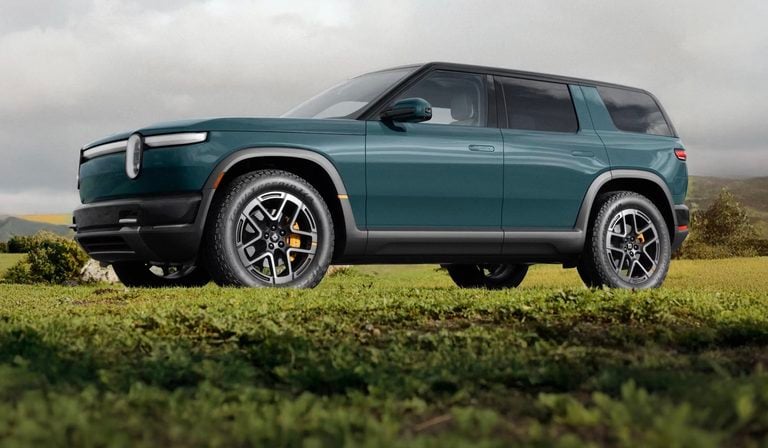
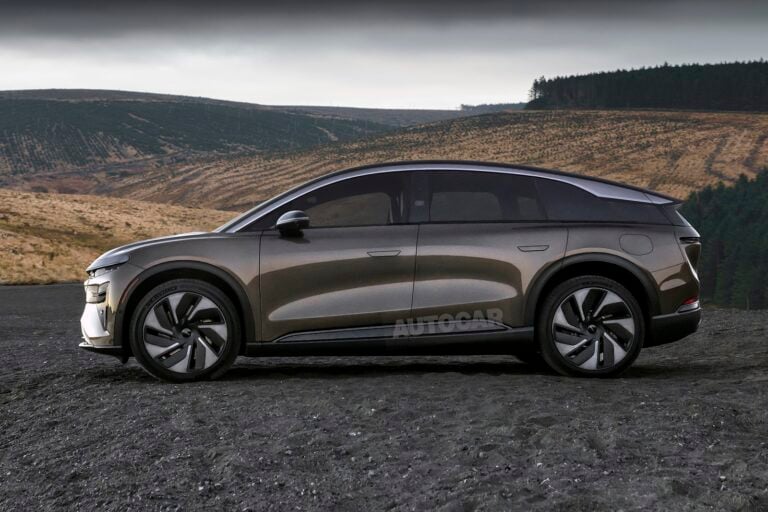
Six weeks behind schedule, the first Lucid Gravity SUVs are rolling onto European roads. The confirmation came not from a press release, but from a LinkedIn post reported by Electric Vehicles, written by Fati Biljali, a Lucid delivery advisor for the Swiss market, who confirmed that “the Lucid Gravity has officially landed” and that “this month marks the start of Lucid Gravity deliveries.”
- The Fact: Lucid has begun Gravity SUV deliveries in Europe, starting with Switzerland, after missing its stated January 2026 target by roughly six weeks.
- The Delta: The delay was never formally announced. As of February 27, Lucid had made no public statement about Gravity deliveries in any of its four European markets.
- The Buyer Impact: If you ordered a Gravity in Germany, the Netherlands, or Norway, deliveries appear to be starting now. Lucid has never disclosed order figures, so queue position is anyone’s guess.
Lucid Missed Its January Delivery Promise Without Saying So
At the IAA Munich show last September, Lucid’s interim CEO Marc Winterhoff told reporters that European Gravity deliveries would begin in January 2026, with one or two units possibly reaching customers before year-end 2025. Lawrence Hamilton, Lucid’s head for Europe, was equally direct: “First deliveries we’re expecting at the very beginning of January. European production has already started.” Neither of those timelines held.
No Gravity deliveries were announced across Germany, the Netherlands, Switzerland, or Norway through the end of February. The company didn’t acknowledge the slip publicly. The news only surfaced through a LinkedIn post from a delivery advisor, not a statement from the brand itself.
This isn’t the first time Lucid has let timelines slide quietly. We covered the company’s Q4 2025 earnings report, which beat analyst expectations on revenue and production guidance but still sent the stock down 6%. Two days later, the company filed a WARN notice disclosing 319 job cuts at its Newark facility. The European delivery slip fits the same pattern: forward-looking statements that prove optimistic, communicated without formal correction.
Gravity Pricing in Europe Starts Well Above $100,000
The Lucid Gravity Touring starts at €99,900 (roughly $118,100) in Germany for the five-seat version, rising to €102,900 ($121,600) in the Netherlands. The Grand Touring trim opens at €116,900 ($138,200) in Germany, with a fully loaded configuration reaching €151,550 ($179,200). For context, Lucid dropped the Gravity Touring to $79,900 in the U.S. last November — the base Touring is roughly 40-50% more expensive in Europe depending on market.
The Gravity is available across Lucid’s four current European markets: Germany, the Netherlands, Switzerland, and Norway. Orders opened at IAA Munich in September 2025. Lucid has never disclosed order numbers for any model in any market, so actual European demand figures remain unknown.
Lucid’s European Growth Expectations Are Deliberately Modest
During the Q4 2025 earnings call, Morgan Stanley analyst Andrew Percoco asked Winterhoff directly about European growth expectations. The answer was frank. “The vehicles that we have right now, with the Air and the Gravity, they’re still actually on the large side,” Winterhoff said. “Therefore, there’s not a tremendous growth that we’re attributing to that region, which will change with the midsize.”
That’s a notably honest framing. Winterhoff also pointed to broader market conditions: Chinese brands selling higher-priced vehicles in Europe are “not doing very well at all,” he said, adding that even BYD is showing signs of slowdown in its European expansion. Lucid registered just 18 vehicles across all four European markets in January 2026, with Germany accounting for 11 of those units. Those were all Lucid Air sedans — the Gravity hadn’t arrived yet, making January a pre-Gravity baseline rather than a steady-state number.
For a company operating on an 18-month cash runway backed by Saudi Arabia’s Public Investment Fund, 18 units per month in Europe is not a growth story. It’s a brand-building exercise ahead of a midsize platform that doesn’t yet have a release date.
Lucid Is Expanding Its European Footprint With Dealers and New Markets
The more structurally significant news out of Lucid’s Q4 earnings wasn’t the delivery figures — it was the announcement of Lucid’s first European dealer agent agreement. The company confirmed signing the deal without naming the partner. According to Electric Vehicles, citing two people familiar with the matter, the agreement is reportedly with German dealer group Wackenhut, which represents Mercedes-Benz, Mercedes-AMG, Aston Martin, Smart, and Škoda.
Shifting to a hybrid direct-plus-dealer model is a practical move for a small brand trying to scale in a fragmented market without building out a full retail network. Belgium is next, with a launch planned for summer 2026. Denmark, France, and five additional markets follow later in the year. The UK, Italy, and Spain are also in the pipeline.
Right-hand drive availability for the Gravity, which would unlock the UK, Australia, Singapore, Japan, and India, is still under internal discussion. Nothing confirmed yet.
Lucid was named the Best Luxury Electric Vehicle Brand for 2025 by U.S. News & World Report, beating Tesla and Porsche. That kind of recognition matters in Europe, where the Lucid Air has to compete against established German brands on their home turf. We covered the Air’s engineering in more detail following Engineering Explained’s documented account of 25+ failures in 3,000 miles — brand awards and product reliability don’t always track together.
EVXL’s Take
The Gravity finally arriving in Switzerland six weeks late is less interesting than how Lucid handled — or didn’t handle — the slip. No correction, no updated timeline, nothing until a delivery advisor posted on LinkedIn. That approach works fine when you’re a startup in stealth mode. It doesn’t work when you’re selling $120,000 SUVs to customers who planned around a January delivery.
Winterhoff’s honesty on the earnings call about European growth is actually more useful than the delivery news itself. He’s right that Lucid’s current vehicles are large by European standards, and that the ultra-luxury segment isn’t where Chinese brands are winning share over there. The real bet is on the midsize platform, which has to work financially in a way that the Air and Gravity haven’t yet at scale.
The Wackenhut dealer deal, if confirmed, is the most strategically sensible thing Lucid has done in Europe so far. You can’t build a brand in Germany by relying entirely on direct sales with a handful of experience centers. Getting into the same showrooms as Mercedes-AMG and Aston Martin gives Lucid credibility it hasn’t earned through volume yet.
My prediction: Lucid will register fewer than 300 Gravity units across all European markets by end of Q3 2026. That’s fewer than 45 per month across four countries, which would already be an overachievement given that Winterhoff explicitly deprioritized European volume and the dealer network is still being built. The midsize platform, not the Gravity, is what determines whether there’s a real European business here. And that platform is still at least 18 months away from any European customer’s driveway.
Editorial Note: AI tools were used to assist with research and archive retrieval for this article. All reporting, analysis, and editorial perspectives are by Haye Kesteloo.
Discover more from EVXL.co
Subscribe to get the latest posts sent to your email.