The 400-kilometer range threshold that European fleet drivers say they need before switching to electric? BMW’s newest models just happen to clear it. That timing is worth examining.
A new survey of 655 Dutch company car drivers, commissioned by BMW and conducted by research firm Kien Onderzoek, found that 60% would choose an EV to replace their current lease vehicle. The other 40% said no, citing charging frequency and charging time as their primary concerns. The range floor across both groups was nearly unanimous: 400 kilometers (249 miles) minimum, with a third of respondents pushing for 500 kilometers (311 miles) or more.
- The Fact: BMW commissioned Dutch research firm Kien Onderzoek to survey 655 company car drivers. 60% would go electric, but only if range hits 400 km (249 miles) or higher.
- The Delta: 70% of the “yes to EV” respondents already drive one. The study’s pro-EV majority is largely people who’ve already converted, not new converts. And fewer than 10% of all respondents cited environmental concerns as a factor.
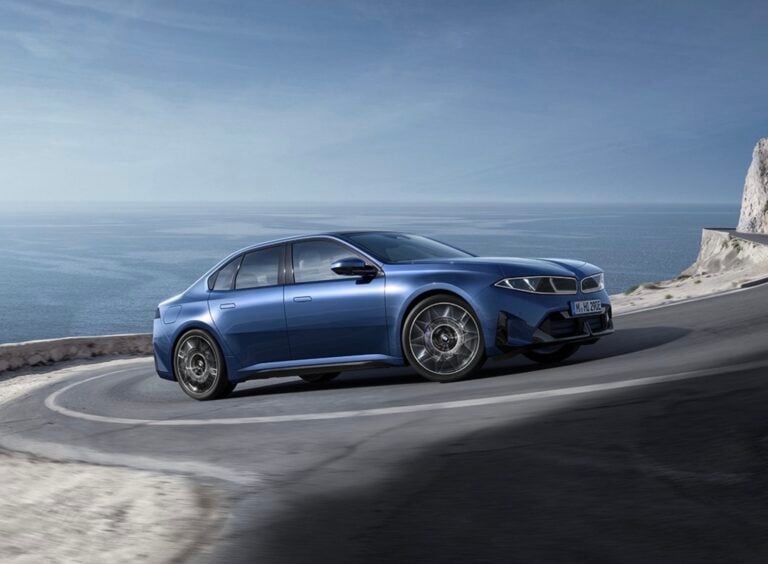
- The Buyer Impact: BMW’s Neue Klasse iX3, with an 805-kilometer WLTP rating, conveniently exceeds the exact range threshold this BMW-funded study identifies. The iX1 and iX2 now clear 500 km after a recent silicon-carbide upgrade. The product timing is not accidental.
The 400-Kilometer Line in the Sand
The 400-kilometer minimum range threshold is the single clearest finding from the Kien Onderzoek survey, and it applies to both willing and reluctant EV adopters. Nearly every respondent agreed that anything below 400 km per charge is a dealbreaker for a business vehicle. A full third want 500 km or more before they’ll consider plugging in instead of filling up. Business drivers need to cover long distances without stopping to recharge, and they view anything less than 400 km as a compromise rather than progress.
A few years ago, those numbers would have been unrealistic. They’re not anymore. The BMW iX3, built on the Neue Klasse platform, carries an official WLTP range of 805 kilometers (500 miles). We tested the iX3’s real-world range last November, and BMW’s own team drove 1,007 km on a single charge during a hypermiling run from their Debrecen factory. That required turning off climate control and avoiding highways, so it tells you more about the battery’s ceiling than about Tuesday morning commutes. But the underlying tech, a 108-kWh battery on an 800-volt architecture, should deliver 350 to 400 real-world miles in normal conditions.
Even BMW’s smaller EVs now clear the bar. The 2026 iX1 and iX2 received silicon-carbide semiconductor upgrades in January that pushed both past 500 km WLTP. The MINI Countryman SE also exceeds the threshold. BMW’s product roadmap and this study’s conclusions align so neatly that it raises an obvious question: did BMW commission research to understand the market, or to validate a strategy it had already committed billions to?
Nobody Cares About Saving the Planet
The study’s most revealing finding has nothing to do with range. Fewer than one in ten respondents said environmental impact influenced their choice. Lease costs, comfort, family space, and charging convenience all ranked higher. The green halo that automakers have spent a decade polishing around EVs barely registers with the people actually driving company cars every day.
This tracks with what we’ve observed across the broader market. The October 2025 U.S. EV sales collapse, where demand dropped 24% in a single month after the federal tax credit expired, proved that buyers respond to economics, not ideology. When the $7,500 incentive vanished, so did a quarter of the market. Dutch fleet drivers are saying the same thing with different data: make it practical and affordable, and we’ll switch. Tell us it’s good for the earth, and we don’t care.
That’s uncomfortable for automakers who’ve built entire marketing campaigns around sustainability messaging. But it also clarifies the actual path to adoption. Range, charging speed, and total cost of ownership are what move the needle. Everything else is noise.
The “Already Converted” Problem
Here’s the number that complicates BMW’s headline: 70% of the respondents who said they’d choose an EV for their next company car already drive one. The study’s 60% “willing to switch” figure is dominated by people who’ve already switched. That’s not new adoption. That’s retention.
In the Netherlands, four in ten business drivers already use an EV, driven partly by favorable tax treatment on company cars. So BMW’s survey is asking a population that’s already heavily electrified whether they’d continue going electric. The answer, predictably, is yes.
The harder question is what convinces the other 40%. Those holdouts cited charging frequency and charging time as their top objections, not price. About 15% said they’d prefer to choose their own powertrain entirely, viewing gasoline and plug-in hybrids as more flexible. That 40% is where the real adoption battle lives, and range alone won’t win them over. Charging infrastructure density and speed in the Netherlands will matter just as much as what the battery can hold.
EVXL’s Take
BMW paid for a study that tells BMW exactly what BMW wanted to hear. That’s not inherently dishonest, but it is marketing dressed as research. The findings are plausible and largely consistent with broader adoption trends. But when a company that just launched the iX3 with a 500-mile WLTP rating funds a study concluding that 400-500 km is the adoption threshold, you’re reading a product validation exercise, not independent market analysis.
The environmental irrelevance finding is the most useful data point here because it cuts against BMW’s own messaging. We’ve been covering BMW’s multi-drivetrain “technology openness” strategy since CEO Oliver Zipse told shareholders that going all-electric is a dead end. This study supports that approach: if drivers don’t care about being green, then offering diesel, hybrid, and EV options makes more commercial sense than forcing an all-electric transition. It’s a convenient finding for a company that explored bringing range extenders to the X5 and 7 Series for China just three months ago.
The real story isn’t that 60% of fleet drivers want EVs. It’s that experience is the only reliable conversion tool. Once people drive electric, they stay electric. That 70% retention rate is the strongest argument for fleet EV adoption programs, even if it makes the “60% want EVs” headline look more impressive than the underlying data supports. BMW’s challenge, and every other automaker’s, is cracking the other 40%. With the i3 sedan now rolling off the Munich assembly line and the iX3 launching across Europe, BMW has the products. Whether it has the pricing to match is another question entirely, especially in markets like the U.S. where BMW EV sales dropped 21.2% in Q2 2025 and there’s no federal tax credit to soften the sticker shock.
Six-month prediction: BMW will use this study heavily in European fleet sales pitches through H1 2026, and iX3 fleet orders will account for the majority of its early sales volume. But U.S. adoption will remain flat without pricing concessions or a restored federal incentive.
Frequently Asked Questions
What range do business drivers want from an EV?
According to the BMW-commissioned Kien Onderzoek study of 655 Dutch company car drivers, nearly all respondents require a minimum of 400 kilometers (249 miles) per charge. A third of respondents want 500 kilometers (311 miles) or more before they’d consider replacing their current vehicle with an EV.
Do EV drivers go back to gas cars?
Rarely, according to this data. The study found that 70% of respondents willing to choose an EV next already drive one. Experience with electric vehicles appears to be the strongest conversion tool, with range anxiety fading once drivers live with the technology daily.
Do car buyers care about the environment when choosing an EV?
Less than 10% of respondents in the BMW study cited environmental considerations as a factor in their vehicle choice. Lease costs, comfort, family space, and charging convenience all ranked higher. Practical concerns dominate the decision, not sustainability messaging.
Editorial Note: AI tools were used to assist with research and archive retrieval for this article. All reporting, analysis, and editorial perspectives are by Haye Kesteloo.
Discover more from EVXL.co
Subscribe to get the latest posts sent to your email.