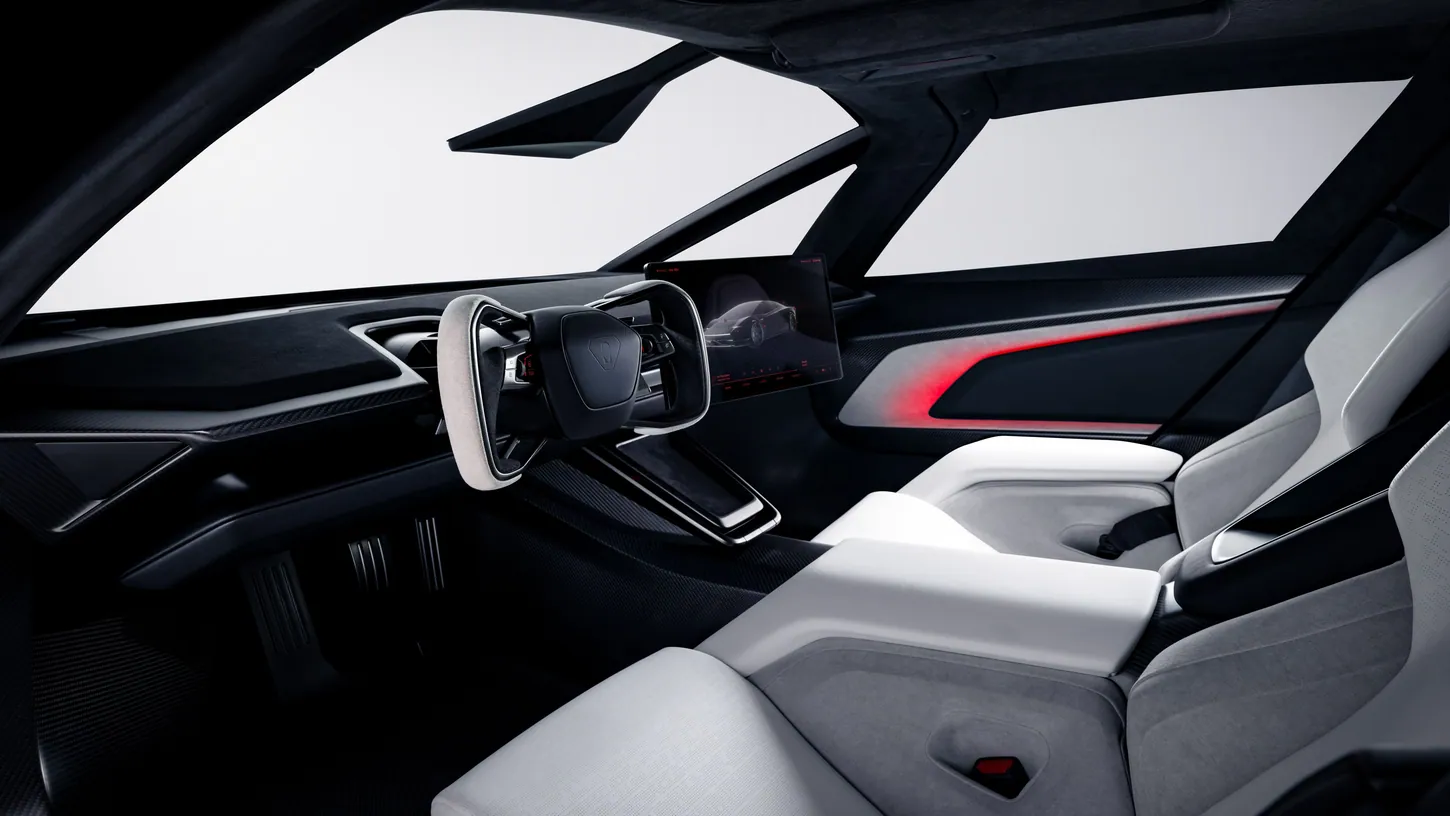
Tesla built the second-generation Roadster with a seat that does not move. In a post on X on Thursday night, after the car’s reveal in McGregor, Texas, Tesla said manual controls and a fixed seat position cut the car’s weight.
Later that night Sawyer Merritt, who covers Tesla on X, sat in a display car and posted two videos of the cabin. I went through his clip of the touchscreen frame by frame, and its track page reads out thruster pressure in psi.
Tesla’s post does not say what adjusts in place of the seat.
Tesla Fixed the Roadster’s Seat to Cut Weight
Tesla’s interior post lists an Ultrawhite cabin with gray microsuede trim and seat bolsters, manual controls, a fixed seat position, and magnesium, titanium and carbon fiber throughout. Tesla says the lower mass lets the Roadster respond to driver inputs almost instantly. It gives no weight figure.
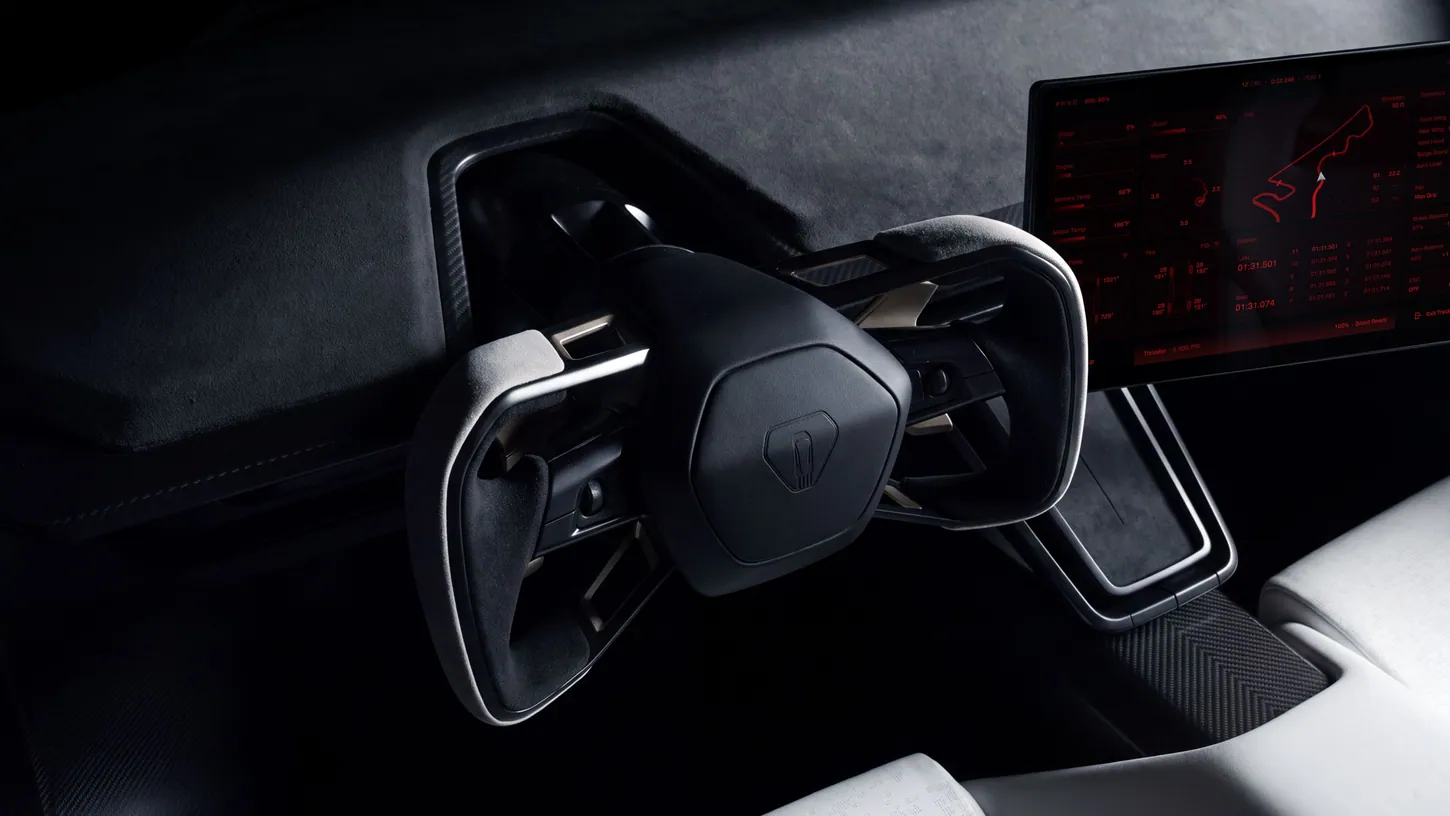
Electrek reports that the new yoke in front of the driver is designed for steer-by-wire, which Tesla already uses in the Cybertruck.
Merritt’s first video starts at the open door and then films from the driver’s seat, where he calls the on-screen controls “like nothing else Tesla has designed.”
Here’s what it’s like to sit in the new Tesla Roadster, and what the on-screen controls look like.
Sawyer Merritt (@SawyerMerritt) October 15, 2026
The on-screen controls are like nothing else Tesla has designed. Very unique to this vehicle.
The Roadster’s Track Mode Screen Reads Out Wings and Thruster Pressure
Merritt’s second video shows the Track Mode page, which tracks brake, motor and battery temperatures, tire pressures, lap times and thruster pressure, shown as “Thruster · 5,500 PSI.” A Dynamics panel sets both wings to High Downforce, deploys the barge boards and sets Aero Load to Max Grip.
Track Mode sits under Vehicle > Dynamics, next to Comfort, Balance, Sport and Custom drive profiles.
The lap times on that page are canned. The car never moved in either video, and the same 1:31.501 last lap and 1:31.074 best lap appear on the screen in Tesla’s own studio photo of the yoke.
Here's an in-depth look at the new @Tesla Roadster's UI. Love the retro-futuristic design aesthetic.
Sawyer Merritt (@SawyerMerritt) October 16, 2026
EVXL’s Take
The screen is the fun part of this cabin, but the fixed seat decides who can actually drive the car. A seat that never moves only works if something else does. Tesla’s post mentions manual controls without saying what they adjust, and it doesn’t say whether the pedals or the yoke move to fit the driver. Tesla is already taking a $50,000 deposit for the base Performance car and still hasn’t published a price. Until it says how a tall driver and a short one both fit, I’d count fit as one more unanswered question on that deposit.
Sources: Tesla on X, Sawyer Merritt on X, Sawyer Merritt on X, Electrek
EVXL uses automated tools to support research and source retrieval. All reporting and editorial perspectives are by Haye Kesteloo.