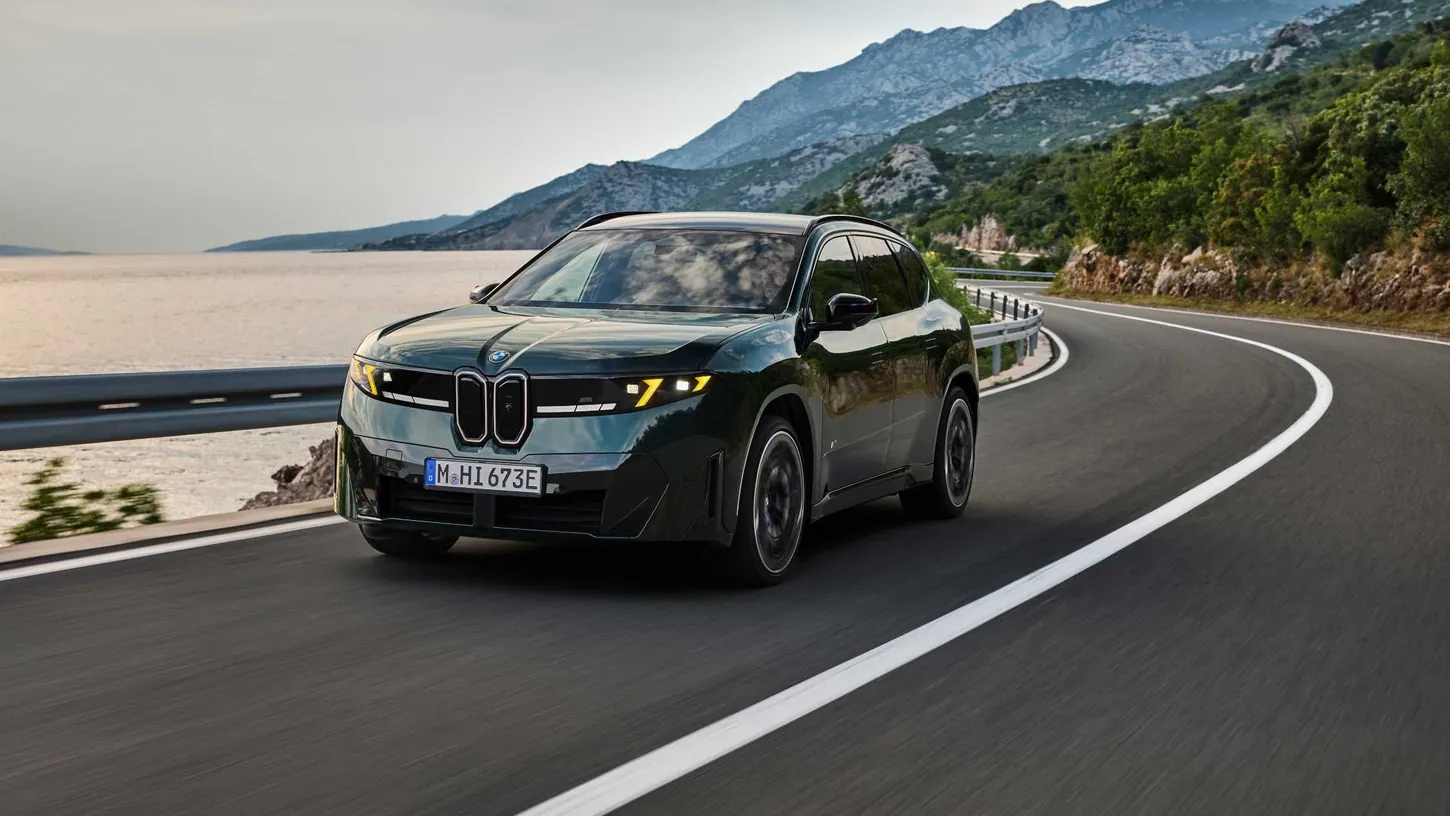

Geely will ship its first Lotus electric vehicles to Canada in July, with a delivery ceremony planned in Montreal, China’s ambassador to Canada Wang Di told Reuters on Friday, June 26. The Lotus Eletre SUVs are the first Chinese-owned and Chinese-built cars sold to Canadian buyers under the quota Prime Minister Mark Carney agreed with President Xi Jinping in January, which lets up to 49,000 Chinese EVs into the country each year at a 6.1% tariff instead of the 100%-plus wall that had kept them out.
A day earlier, on June 25, EVXL covered the other half of this story. The United States pushed Geely’s Polestar brand out of the American market starting with the 2027 model year. Same parent company. Opposite result. One Geely EV gets a welcome ceremony in Montreal. Another gets shown the door in Washington.

The Eletre is a low-volume luxury car, not the cheap city EV Canadians were told this deal would bring. Lotus lists it from C$119,900, down from C$313,500 under the old tariff. BYD and Chery are still working through Canadian certification, with BYD sales expected next year. For now the biggest winner of Canada’s open door is an American company. Tesla is shipping Shanghai-built Model 3 sedans into Canada at roughly C$39,490, about half what it charged for the US-made version.
Geely’s Lotus Eletre lands in Montreal under the Carney-Xi quota
The July shipment is the first Chinese-owned, Chinese-built model to reach retail under Canada’s January trade deal with China. Ambassador Wang Di told Reuters the cars arrive next month and that Lotus will hold a ceremony in Montreal when they land. Lotus did not respond to a request for comment.
The framework cut Canada’s tariff on Chinese-made EVs from more than 100% to 6.1% for the first 49,000 vehicles a year, a cap that rises to 70,000 over five years, Reuters reported. In return, China eased the retaliatory duties it had slapped on Canadian canola after Ottawa first walled out Chinese cars. Carney framed the move as a way to pull Canada’s trade away from a United States that had hit Canadian-built vehicles with its own auto tariffs.
Wang said he expects other Chinese brands to clear Canadian procedures by autumn. BYD has begun compliance work to import two passenger models, one from Shenzhen and one from Xi’an, and an advisory firm scouting sites says the company plans six Canadian dealerships this year. Chery has met with dealers, and state-owned Changan is working on a launch of its own. The promised wave of affordable Chinese EVs has not arrived. The first car off the boat lists at C$119,900.

The US bans the same company’s cars while Canada opens the door
Washington keeps Chinese EVs out with three stacked tools: a Section 301 tariff of 100%, a software ban, and a coming hardware ban. Together they push the effective rate on a Chinese-made EV past 125%. The Connected Vehicle Rule bars Chinese-developed vehicle software from the 2027 model year and Chinese hardware from 2030.
That rule is what removed Polestar. As EVXL reported on June 25, the Commerce Department’s Bureau of Industry and Security declined to authorize the brand, so Polestar will stop selling new cars in the US from the 2027 model year. The detail that should bother every automaker is the basis for the decision. The Polestar 3 is assembled in Ridgeville, South Carolina, at the same plant that builds the Volvo EX90. It is a US-made electric vehicle. It is banned anyway, because Polestar is majority-owned by China’s Geely. The rule judges a car by who owns the company, not where the car is built.
The inconsistency gets sharper. Volvo, owned by the same Geely parent, won authorization at the end of May to keep selling connected vehicles in the US. One Geely brand stays, the other goes. I walked through the factory-sized hole in this policy on June 9: Geely already operates an American car plant in South Carolina, and consultants say it could build other Geely platforms there with little trouble. Hardliners want that door shut too. Senators Bernie Moreno of Ohio and Elissa Slotkin of Michigan have introduced a bipartisan bill to permanently ban Chinese automakers from the country, with vehicle and software restrictions taking effect in 2027 and hardware in 2030.

Canada is a dress rehearsal for the US market Chinese brands actually want
Chinese automakers are pouring effort into a Canadian market that, on its own, barely justifies the trip. The quota tops out at 70,000 cars a year, a rounding error against China’s output, and analysts call Canada one of the least profitable places on earth to sell a car. The interest is not about Canada. It is about the country next door.
Daniel Ross of Canadian Black Book put it bluntly to Reuters: “It just doesn’t make financial sense to do Canada without the U.S.” Building dealer relationships and clearing North American certification now means Chinese brands are ready the day American policy cracks. The precedent for that readiness is Tesla, which imported more than 44,000 Chinese-made cars into Canada in 2023, the year before the surtax. Canada is the practice lap. The US market, where new cars keep getting pricier and genuinely affordable EVs stay scarce, is the prize.
EVXL’s Take
We have watched this exact movie before, and it did not start with cars. It started with drones.
In nearly a decade covering the drone industry at our sister site DroneXL, the lowest point I have reported was December 22, 2025, when the FCC dropped DJI and every other foreign-made drone onto its Covered List. It did not do that after proving a threat. It did it by running out the clock. Congress ordered a security audit under Section 1709 of the NDAA, gave the government a full year, and no agency ever started it. DJI asked for the audit in writing, three times, and got silence. The ban arrived by bureaucratic default. America banned the company that holds more than 96% of the US commercial drone market without finding a single fact against it.
Now run that logic next to Polestar. A car built in South Carolina by American workers, running Google’s Android software, gets walled out on its cap table while its corporate twin Volvo gets a waiver. That is not a security finding. That is industrial policy applied by mood, and I said as much when I traced the drone playbook onto the EV file on June 10. Drones first, cars next. The pattern is the same: a national-security label with no declassified evidence behind it, and a wall that happens to protect incumbents.
Be clear about where EVXL stands. State-subsidized Chinese EVs dumped at artificial prices are a real problem, and we have never pretended otherwise. We are against unfair competition from China. We are also against unfair competition from the US, and an ownership test that bans an American-built EV while waving through its sister brand is exactly that. Canada just showed there is another path. Cut the tariff, set a quota, certify the cars, and let people who actually drive these vehicles decide. Canada’s version has its own flaws, starting with a deal that promised cheap EVs and delivered a six-figure Lotus first. But it is a policy built on a number and a process, not on a guess about who a company answers to.
Here is what I am watching. The USMCA trade pact comes up for review on July 1, and the US Trade Representative has promised no rubber-stamp extension. North American content rules are about to become the battleground for whether Chinese-built cars ever cross the southern border. If the Moreno-Slotkin ban becomes law, every door in this story closes at once, and it will close the same way the drone door did: with a label instead of an audit. Geely’s Lotus rolling into Montreal next month is not really a Canada story. It is a preview of the cars Americans will be able to see and sit in just across a border they cannot buy them through.
Sources: Reuters (Promit Mukherjee and Maria Cheng); Reuters (Nick Carey and Divya Rajagopal).
EVXL uses automated tools to support research and source retrieval. All reporting and editorial perspectives are by Haye Kesteloo.