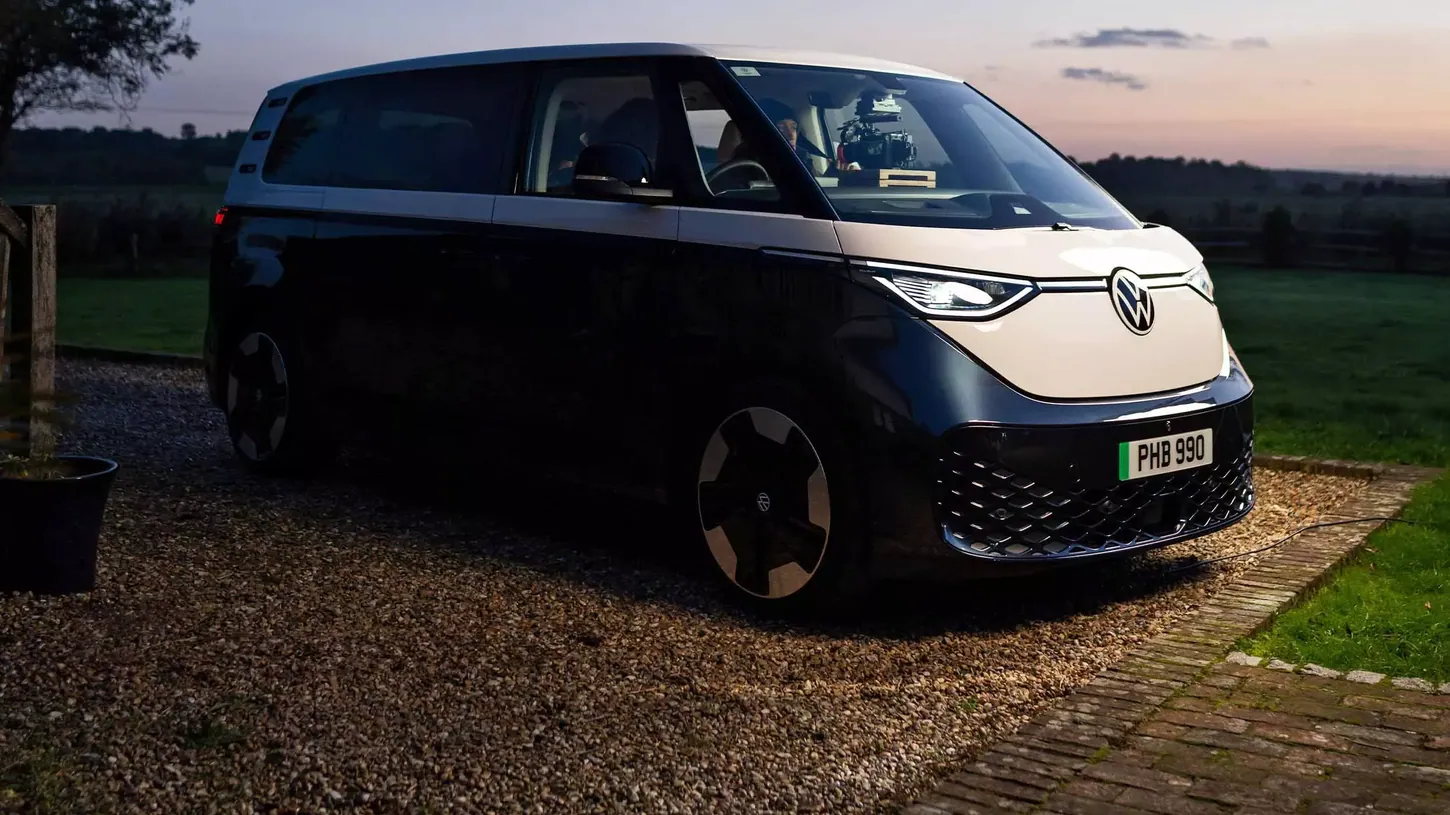

Chinese electric vehicles are closer to American driveways than the 125% cumulative tariff wall suggests, and the question driving industry analysis this week is no longer whether they arrive but through which door. One door already exists: Zhejiang Geely Holding Group owns the Volvo plant near Charleston, South Carolina, where Volvo and Polestar models roll off the line today.
The demand side of this story is settled. In my March 23 coverage of U.S. consumer appetite for Chinese EVs, the data showed roughly four in ten American shoppers would consider one. Washington’s answer since then has hardened into a Senate bill to ban Chinese automakers permanently. The gap between those two facts is where this story lives, and three developments now point toward Chinese vehicles reaching U.S. buyers before the decade ends.
China Exported 2.5 Million EVs In 2025 And Reached Every Market Except One
China produced 16 million electric cars in 2025, a fifth more than its home market could absorb, and pushed electric car exports to a record of more than 2.5 million units, according to the International Energy Agency’s Global EV Outlook 2026. Electric models made up more than 35% of all Chinese car exports last year, up from about 20% in 2024.
The overcapacity math forces the issue. China now accounts for nearly 75% of global EV manufacturing and 40% of EV trade, and Chinese automakers supplied 60% of the electric cars sold worldwide in 2025. In April, China shipped more EVs and plug-in hybrids abroad than combustion vehicles for the first time, per the China Passenger Car Association, while domestic EV and hybrid sales fell 6.8% year over year. Factories built for a market that stopped growing need somewhere to send the output.
Michael Dunne, CEO of consultancy Dunne Insights, told CNBC the United States is the one market Chinese automakers have yet to crack, and he expects that to change: “by 2030, we will see some form of Chinese cars on American roads.”
Detroit’s Three Largest Automakers Already Hold Chinese Partnerships
General Motors, Ford, and Stellantis each maintain commercial ties with Chinese companies today, ranging from imported CATL battery cells in the Chevy Bolt to Stellantis’ 21% stake in Leapmotor, even as their lobbying groups petition Washington to keep Chinese-built vehicles out of the country.
The contradictions stack up fast. GM builds the Bolt in Kansas City with Chinese cells and assembles the Equinox EV, Blazer EV, and Cadillac Optiq in Coahuila, Mexico, where they enter the U.S. duty-free under the USMCA trade pact. Stellantis holds a 51% majority in its Leapmotor joint venture, and CEO Antonio Filosa said in May the company sees room to expand Leapmotor production and sales into Mexico and possibly Canada. Ford CEO Jim Farley daily-drives a Xiaomi SU7, Reuters reported in May that Ford is in talks with Geely on a European partnership, and The Wall Street Journal reports Ford appears open to allowing Chinese cars into the U.S. at some point.
The public posture says otherwise. GM CEO Mary Barra called Canada’s Chinese EV deal a slippery slope in January, in the same month her company cut a shift at its Oshawa, Ontario plant. Detroit lobbies against Chinese vehicles in public while building supply chains with Chinese partners in private.
Geely’s Charleston Plant Gives China A Production Beachhead
Zhejiang Geely Holding Group has owned Volvo since buying it from Ford in 2010 and builds Volvo and Polestar models at a factory near Charleston, South Carolina, giving a Chinese automaker an operating American car plant that consultants say could adopt other Geely platforms with little difficulty. Adam Bernard, founder of AutoPerspectives and a former competitor-intelligence associate director at GM, told CNBC that adapting the plant to other Geely architectures would pose no major problem.
The most likely candidate is Zeekr, the Geely-controlled brand that Waymo already uses for its robotaxi fleet in San Francisco. Sit with that detail for a moment. Chinese-built, Chinese-engineered EVs carry paying passengers through American streets every day, yet a private buyer cannot register one. The hardware ban argument loses some of its force when the banned hardware is already in commercial service.

Regulators just cleared a path, too. On May 26, Volvo received U.S. government approval to keep selling vehicles that run Chinese-developed and maintained software, an exemption under the connected-vehicle rule that took effect in March and covers companies with substantial Chinese ownership. A precedent now exists for Chinese-owned automakers operating inside the rule rather than being excluded by it.
The hardliners have an answer ready. Senators Bernie Moreno (R-Ohio) and Elissa Slotkin (D-Mich.) have introduced a bill to permanently ban Chinese automakers from the U.S., and restrictions on Chinese-developed software in connected and autonomous systems would still apply to anything new that Geely builds here. If that bill becomes law, every door in this story closes at once. Its bipartisan sponsorship makes it the biggest threat to the timeline Dunne describes.
The July 1 USMCA Deadline Decides The Entry Route
The USMCA trade agreement comes up for renewal on July 1, and U.S. Trade Representative Jamieson Greer has guaranteed there will be no rubber-stamp extension, putting North American content rules at the center of how Chinese EVs might eventually cross the border. Under the current pact, a vehicle assembled in Mexico or Canada needs 75% North American content to qualify for preferential tariff treatment.
Both neighbors have already opened their doors. Canada’s January deal admits up to 49,000 Chinese EVs annually at a 6.1% tariff, while Chinese brands hold about a quarter of Mexico’s vehicle market despite a 50% tariff imposed on January 1. The export pipeline feeding that market is one I documented in my December 29 analysis of China’s 2,367% export surge to Mexico: BYD, Geely, Great Wall, and Xpeng models now sit on dealer lots within commuting distance of El Paso and San Diego, some priced under $20,000.
Guangzhou Automobile Group plans to begin assembling vehicles in Mexico in the second half of this year, and BYD and Geely are reportedly finalists to buy a Nissan-Mercedes plant there. Whether any of that output ever heads north depends on the content thresholds Washington extracts in the renewal talks, and Greer has signaled the administration may walk away from the pact entirely if it doesn’t get them.

EVXL’s Take
I’ve watched this narrative shift in real time across EVXL’s coverage. When I wrote about Carney’s tariff deal on January 16, the framing was Canada breaking ranks. When I covered the consumer data on March 23, the framing was demand colliding with policy. The CNBC reporting confirms what those threads were already telling us: the conversation inside the industry has moved from blocking Chinese EVs to negotiating the terms of their arrival.
Here’s what surprised me most while pulling this together. The loudest opposition comes from the same companies with the deepest Chinese entanglements. Stellantis owns a fifth of Leapmotor. GM ships CATL cells into Kansas. Ford’s CEO commutes in a Xiaomi. The wall isn’t protecting Detroit from China; it’s protecting Detroit’s pricing power while Detroit quietly buys Chinese technology anyway. American buyers pay for both sides of that arrangement.
Geely will announce production of a Geely-group model beyond Volvo and Polestar at its South Carolina plant before December 31, 2027. The company owns the factory, the brands, the software exemption precedent, and the Waymo relationship. No other Chinese automaker holds a hand that strong on American soil, and Geely didn’t spend 16 years building it to leave it unplayed.
Source: CNBC, International Energy Agency Global EV Outlook 2026, Kelley Blue Book.
EVXL uses automated tools to support research and source retrieval. All reporting and editorial perspectives are by Haye Kesteloo.