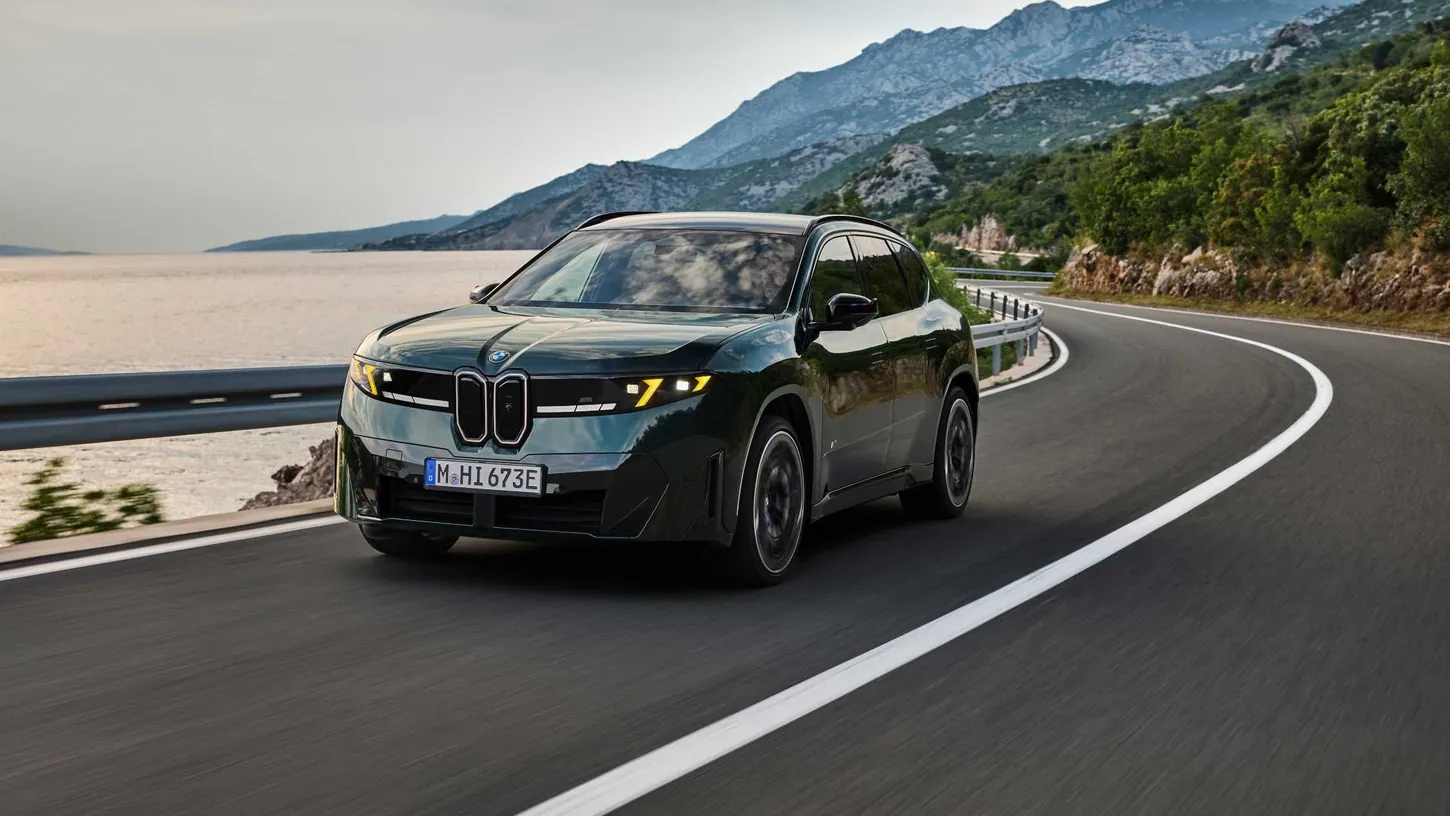

Tesla has filed for a permit to run a paid robotaxi service across Clark County, Nevada, and the number it put on paper is the part worth stopping on. The application, logged as Docket 26-05015 with the Nevada Transportation Authority, asks for authorization to operate up to 5,000 autonomous vehicles in the first 12 months after the permit is granted. The notice went public on June 5, 2026.
The filing was made by Tesla Robotaxi, LLC, and it covers Clark County including Harry Reid International Airport and Henderson Executive Airport. That airport language matters, because a pickup queue at one of the busiest single-terminal airports in the country is among the most valuable real estate in ride-hailing.
Here is the friction. When I pulled the active fleet numbers at the end of May for EVXL’s coverage of Tesla’s Texas robotaxi filings, independent trackers counted roughly 20 Tesla vehicles actually carrying passengers without a human safety driver, spread across Austin, Dallas, and Houston combined. Tesla is asking Nevada to bless a fleet 250 times larger than the one it currently operates on public roads anywhere in the United States.
The Application Targets Clark County Under Nevada’s AVNC Framework
The permit Tesla wants is an Autonomous Vehicle Network Company (AVNC) authorization, the specific category Nevada created for companies that operate driverless ride-hailing fleets. The application was filed under Chapter 706B of the Nevada Revised Statutes, and the Authority claims jurisdiction over the matter under NRS 706B.110(2).
The notice itself is brief. Tesla requested that certain information in the filing be kept confidential, so the public version is redacted, with the full document available for viewing at the Authority’s office on West Sahara Avenue in Las Vegas. Sheraz Tarar, a financial analyst at the Authority, signed the notice. Anyone with a direct and substantial interest can file a protest, and the deadline for those is July 5, 2026. That date is the next real checkpoint. A protest from an incumbent operator or a labor group could slow the review, and Las Vegas already has companies with reasons to object.

Nevada Already Granted an AVNC Permit, and the Vehicle Cap Was 65
Nevada has issued exactly one of these permits before, and the terms set a useful baseline for reading Tesla’s request. Amazon’s Zoox holds AVNC 001 under Docket 24-12019. The Authority’s order on that permit restricted Zoox to no more than 65 vehicles while operating under temporary interim authority, and limited the service to free rides only within a defined operational design domain in Clark County.
Set the two side by side. Zoox, which launched its driverless service on the Strip in September 2025 and has been refining it for the better part of a year, operates under a 65-vehicle ceiling and still cannot charge fares pending further approval. Tesla, which has never carried a paying passenger in Nevada, opened with a request for 5,000. The gap between those two numbers is the whole story of how Tesla approaches regulators: ask for the ceiling, then sort out the reality later.
The Filing Caps a Methodical Nevada Approach That Began in 2025
This application did not appear out of nowhere, and Tesla has actually moved through Nevada’s process in the correct order. The company submitted its Testing Registry certification to the Nevada Department of Motor Vehicles on September 3, 2025, and received approval seven days later. That step allowed supervised autonomous testing on public roads but explicitly barred carrying paying passengers.
By late November 2025, Tesla had completed Nevada’s self-certification process for autonomous vehicle operations, clearing the deployment hurdle. The AVNC application is the commercial step that sits on top of all of that. Tesla also filed a separate permit with Clark County on May 12, 2026, for a 36,000-square-foot Cybercab maintenance and car wash facility, which tells you the company was building physical infrastructure in the market weeks before this filing surfaced.
Credit where it applies: this is a cleaner regulatory record than the one Tesla built in California, where the state’s utilities regulator confirmed the company holds only a limousine permit rather than an autonomous vehicle authorization. I broke that down in EVXL’s analysis of the CPUC limo-permit confirmation. Nevada is the version where Tesla followed the steps.
Las Vegas Is a Crowded Market Before Tesla Adds a Single Car
Tesla is not opening a frontier here. It is walking into a market where two well-funded rivals already run vehicles on the same streets. Zoox launched its purpose-built, steering-wheel-free robotaxis on the Strip in September 2025, serving destinations like Resorts World and AREA15. Waymo has been testing on the Las Vegas Strip as well, though it has not opened a public service in the city.
The competitive math is unforgiving for the new entrant. Waymo runs thousands of driverless vehicles nationally with high utilization, and Zoox has a year of local operating data and dedicated pickup zones at major properties. Tesla arrives with a camera-only system, a fleet measured in the dozens nationally, and software its own executives have said needs a major rewrite before it scales. The 5,000-vehicle request reads less like a deployment plan and more like a placeholder for ambition.
Tesla’s Own Executives Have Named the Constraint on Scaling
The reason 5,000 is a fantasy number for year one comes from Tesla, not its critics. On the company’s Q1 2026 earnings call, Elon Musk told investors that safety validation is the limiting factor on fleet growth and that robotaxi revenue would not be material to 2026 results. Tesla has tied real scaling to Full Self-Driving v15, a software rewrite Musk has targeted for late 2026 or early 2027.
That timeline collides directly with the permit. Even if Nevada grants the AVNC authorization this summer, the 12-month clock would run against a period in which Tesla’s own roadmap says the enabling software will not arrive until the back half. The most recent expansion pattern reinforces the point. When Tesla widened its Austin service to the entire metro in early June, the geofence grew while the active fleet stayed near 20 cars, a contrast I detailed in EVXL’s coverage of the Austin metro expansion. Drawing a bigger boundary is free. Putting certified driverless cars inside it is not.
EVXL’s Take
I have been tracking the distance between Tesla’s robotaxi promises and its deployed reality since the Austin launch in June 2025, and this filing is that gap rendered as a single regulatory number. Five thousand vehicles. The company has maybe 20 cars carrying passengers without a driver across three cities right now. The request is not a forecast. It is a ceiling Tesla wants the option to grow into, filed the way it files everything, big.
Here is what makes this one interesting rather than just another Musk moonshot. Nevada is the state where Tesla did the regulatory homework properly, in order, unlike the California limo-permit mess. The DMV certification, the self-certification, the Clark County maintenance facility filed a month ahead, now the AVNC application with the protest window open until July 5. That sequence is real. The 5,000 number sitting on top of it is the tell. A company that genuinely expected to field 5,000 cars in a year would have a growing fleet to point to. Tesla’s is shrinking, the active count has gone down, not up, over the past two months.
The useful comparison is Zoox at 65 vehicles, free rides only, after a year of local operation. That is what Nevada’s regulator considers a real first-year footprint for a careful operator. Tesla asked for roughly 77 times that.
My prediction: if Nevada grants this permit in 2026, Tesla will have fewer than 250 vehicles actually carrying paying passengers in Clark County 12 months after approval, not 5,000. The permit ceiling and the deployed fleet are two different things, and on Tesla’s robotaxi program, the deployed number has never once caught up to the promise. Watch the cars on the road, not the figure in the docket.
Frequently Asked Questions
What did Tesla actually apply for in Nevada?
Tesla Robotaxi, LLC filed for an Autonomous Vehicle Network Company permit with the Nevada Transportation Authority, designated Docket 26-05015. The application covers Clark County, including Harry Reid International Airport and Henderson Executive Airport, and requests authorization for up to 5,000 vehicles in the first 12 months after a permit is granted.
When is the deadline to protest the application?
Protests must be filed with the Authority on or before July 5, 2026. The notice was published on June 5, 2026, and signed by Sheraz Tarar, a financial analyst at the Authority. The redacted application is available for viewing at the Authority’s office at 3300 W. Sahara Avenue, Suite 200, in Las Vegas.
How does the 5,000-vehicle request compare to other Nevada permits?
Amazon’s Zoox holds the only other AVNC permit in Nevada, AVNC 001 under Docket 24-12019, with a cap of 65 vehicles and a free-rides-only restriction under temporary interim authority. Tesla’s request is roughly 77 times that vehicle count, despite never having carried a paying passenger in the state.
Sources: Nevada Transportation Authority 2026 Public Notices, NTA Notice of Application, Docket 26-05015.
EVXL uses automated tools to support research and source retrieval. All reporting and editorial perspectives are by Haye Kesteloo.