The National Highway Traffic Safety Administration (NHTSA) has proposed to push back its automatic emergency braking requirement for new cars and light trucks by two years, from September 1, 2029 to September 1, 2031. The proposal was published in the Federal Register on Friday, November 27, and comments are due by January 26, 2027.
NHTSA says it has “determined tentatively” that the delay would cause no loss of safety benefits. In the same document, it says it is unable to put numbers on the delay’s effects. Its reasoning is that carmakers will fit systems that pass as soon as they are able to either way, and that models that can’t pass by 2029 could be barred from sale.
The 2024 Rule Was Estimated to Save 362 Lives a Year
The standard, FMVSS No. 127, requires passenger cars and light trucks rated under 10,000 pounds (4,536 kg) to warn of and brake for a vehicle ahead between 6.2 and 90 mph (10 and 145 km/h), and for pedestrians up to 45.3 mph (73 km/h), in daylight and darkness. NHTSA’s 2024 analysis estimated it would prevent 362 deaths and 24,321 injuries a year.
No Car in NHTSA’s Testing Avoided a Crash Every Time
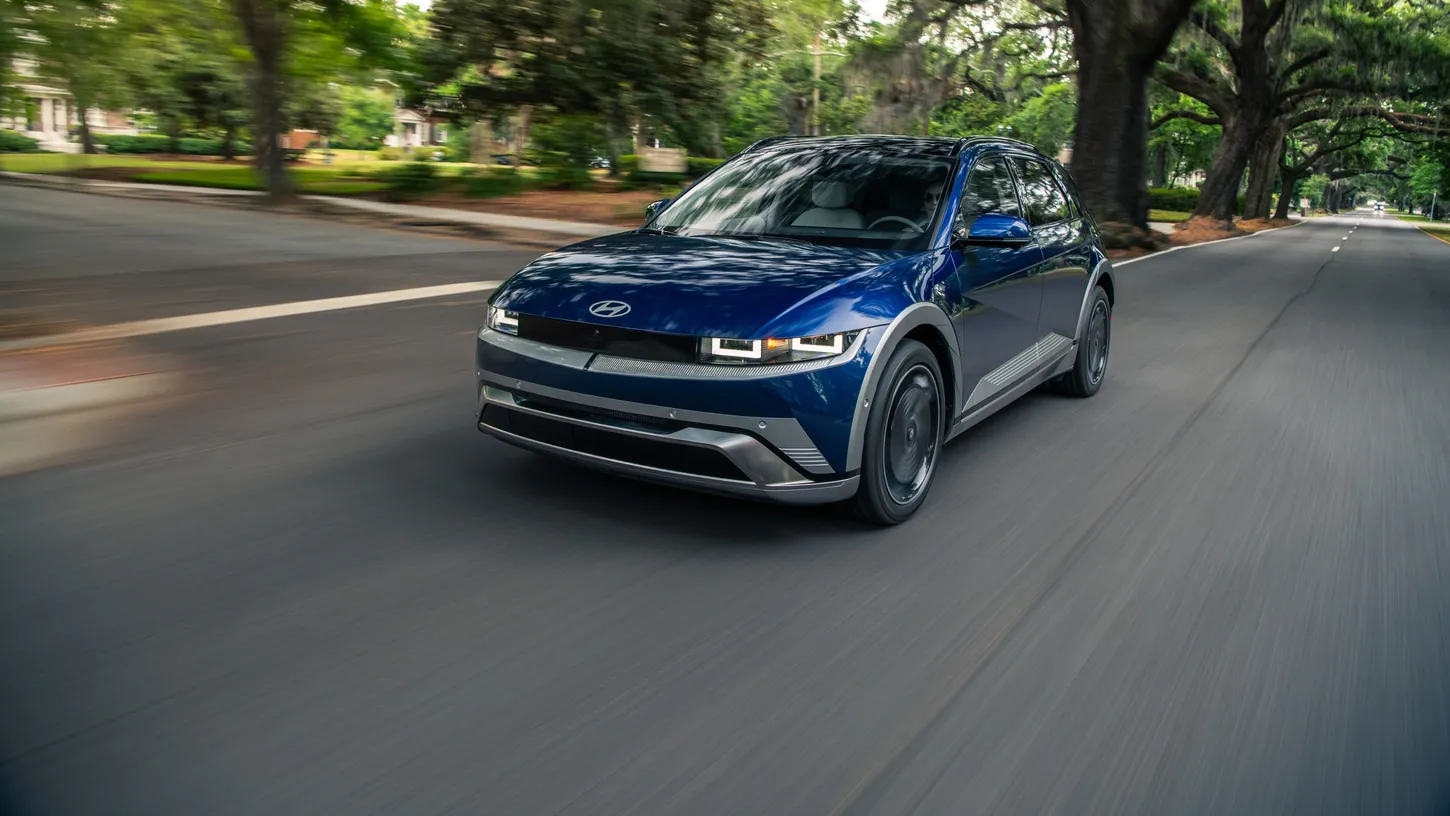
NHTSA tested six vehicles in 2023, and three of them were EVs: the BMW iX, Ford F-150 Lightning and Hyundai Ioniq 5, plus the Mazda CX-90, Nissan Pathfinder and Toyota Corolla Hybrid. “No vehicle avoided contact in all trials conducted,” NHTSA wrote, and the rule requires a car to avoid hitting the test target every time. The Corolla Hybrid avoided contact in each scenario on most tries.
NHTSA then tested ten 2025 models in its New Car Assessment Program, the Chevrolet Equinox, Ford Expedition, Hyundai Santa Fe, Jeep Grand Cherokee, Kia K4, Nissan Rogue, Subaru Forester Hybrid, Toyota 4Runner, Volkswagen Tiguan and Volvo XC40, and calls those results preliminary. Performance did improve, but nine of the ten hit the target at least once in tests where the car ahead was slowing down, and no vehicle avoided a pedestrian target at every speed NHTSA tested. In the hardest pedestrian test, five of the ten avoided contact up to 31.1 mph (50 km/h), the top speed the rule uses for that test.
The Alliance for Automotive Innovation, an automakers’ trade group, challenged the rule in a federal appeals court on January 17, 2025. The Alliance told NHTSA that the best car in NHTSA’s 2023 testing passed only 60% of its trials in one test scenario, and that the rule gets harder to meet as vehicles get heavier. It also said its problems with the rule “would not be resolved through additional lead time alone.”
NHTSA Points to 36 Recalls and Worries About Sudden Braking
NHTSA says AEB problems have been “fairly common” since the technology launched, with 36 recalls covering more than 600,000 vehicles in the past decade. It says it is concerned about systems braking unexpectedly at high speed, and it is asking for data on how often hard automatic braking between 70 and 90 mph (113 and 145 km/h) gets a car hit from behind.
NHTSA also says the U.S. rule is stricter than the AEB rules other countries have written, and it is asking for comments on three ways to ease it. It could allow a car to touch the test target at low speeds instead of never, limit how many speeds a car is tested at, or let a car pass by succeeding in most of several tries instead of every single one.
The agency wants comments on how the rule should apply to driverless vehicles too. That follows its cyan light proposal for driverless cars in October and its chief’s comment in July that NHTSA would consider dropping the steering wheel rule for them.
This is a proposal, not a final rule. Until NHTSA finalizes a change, the September 1, 2029 deadline still stands. The same document also proposes a test for the warning light that tells a driver the braking system has a fault. Anyone can comment until January 26, 2027, on regulations.gov under docket NHTSA-2026-2476.
EVXL’s Take
I think the delay is the wrong call. NHTSA’s own 2024 estimate says the rule would save 362 lives and prevent 24,321 injuries a year, yet the agency now says it has “determined tentatively” that a two-year delay “would result in no loss of safety benefits” without putting a number on it. If none of ten 2025 models could avoid a pedestrian at every test speed, that sounds like a reason to keep the pressure on, not to take it off.
Source: NHTSA proposed rule, Federal Register 2026-24140.
EVXL uses automated tools to support research and source retrieval. All reporting is by Damien Kesteloo, edited by Haye Kesteloo.