
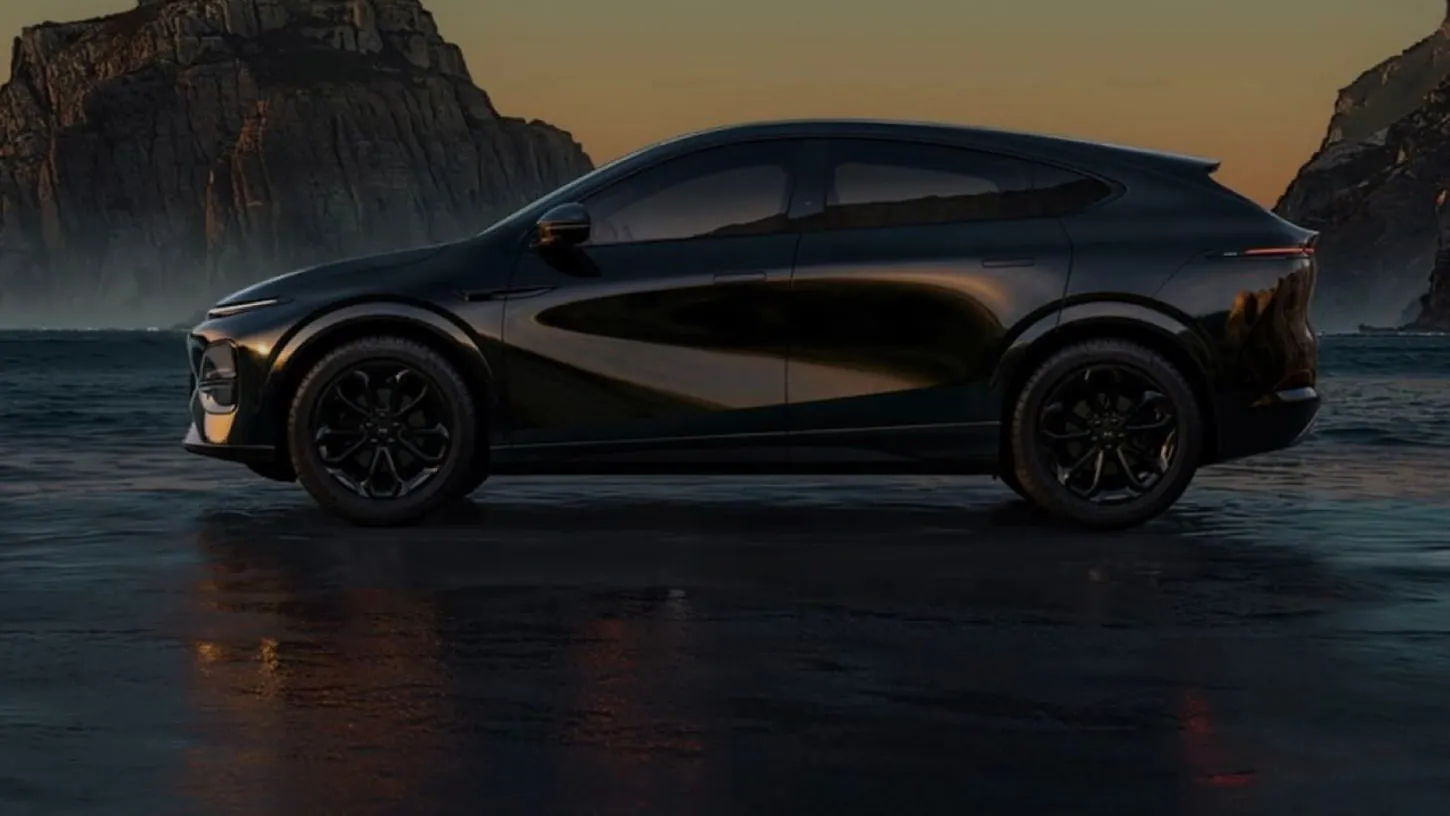
Xpeng plans to add a second European production line through a local manufacturing partner, because Magna’s contract plant in Graz, Austria, can’t build enough cars for its European growth. Vice president Yeqing Zheng told Reuters at the Paris Motor Show on Monday that the line should be running by the time the EU’s “Made in Europe” rules for electric cars take effect, with a decision due within months.
It is the second step in a build-out He Xiaopeng first described in August 2024, when Xpeng was still looking for an EU factory site. Xpeng rented capacity instead. Magna has assembled the Xpeng G6 and G9 in Graz since September 2025, inside the EU and clear of the bloc’s countervailing duties on China-built EVs.
Xpeng’s Second European Line Would Build Cheaper Mid-Level Cars
Zheng told Reuters the new line would build mid-level vehicles at a lower cost base than Graz, with a local manufacturer either building a new plant or running an existing one. Graz volume “is not even sufficient,” Zheng said, with European growth seen in the high double digits.
Graz keeps adding models anyway. The P7+ sedan completed trial production there in January, and the G9L SUV followed on October 7. The G9L was then set to drive 823 miles (1,324 kilometers) from Graz to Paris for its premiere at the show, and He Xiaopeng called it Xpeng’s fourth model built in Europe.
Brussels Counts Parts And Battery Cells, Not Only The Assembly Plant
Graz-built cars already pass the first test in the European Commission’s Industrial Accelerator Act proposal of March 4, 2026. Subsidized EVs must be assembled in the EU, source at least 70% of non-battery component value from the EU, and carry a battery whose cells come from the EU.
The cell rule in Annex III requires at least three main battery components, the cells among them, to originate in the EU. Three years after the law takes effect, the bar rises to five battery components, adding the cathode active material and the battery management system, plus at least 50% EU content in the electric powertrain and in the main electronics.
The tests cover purchase and lease subsidy schemes set up or updated from six months after the law takes effect. Public procurement and state money for corporate fleets use them too. A car that misses them stays on sale but can’t get those subsidies. Authorities may skip the tests where they would delay a scheme by more than seven months or raise its costs by more than 30%.
Zheng told Reuters that Xpeng is building a local supply chain and that finding a battery supplier that meets its charging needs with the right energy density will be hard. For a Graz-assembled Xpeng, imported cells alone would fail the subsidy test.
None of this is law yet. Parliament’s rapporteurs are still working on their draft report, according to a September 17 European Parliament research briefing, which also records that China’s government has threatened countermeasures if the act passes unchanged.
A Chinese-Owned EV Factory Would Need EU Approval First
The same proposal requires approval before any foreign investment above €100 million in EV or battery manufacturing goes ahead, when the investor’s home country holds more than 40% of global capacity. Approval needs four of six conditions, and one is mandatory: at least half the workforce must be EU workers.
China built more than 70% of the world’s electric cars in 2024, according to the IEA’s Global EV Outlook, which puts Chinese investors squarely in that scope. The remaining conditions include a stake of no more than 49% in the European company, a joint venture with an EU partner, licensing technology to the European side, EU research spending equal to 1% of the European operation’s revenue, and a target of sourcing 30% of inputs in the EU.
The chapter covers foreign direct investment, and Xpeng owns no part of the Graz plant it uses today. It has not named a partner for the second line.
EVXL’s Take
Chinese brands building cars in Europe, hiring European workers and chasing subsidies under the same origin rules as Volkswagen is fair competition. European drivers get more from it than from a tariff fight. The battery clause will test Xpeng’s plan, because the proposal makes EU-made cells a subsidy condition from the first schemes it covers. CATL already builds cells at its plant in Arnstadt, Germany, so Zheng’s doubt is about matching Xpeng’s charging speed and energy density with European supply. I suspect that if no European supplier can, the subsidy-eligible Xpeng built in Europe will charge slower than the Xpengs it sells there today.
Sources: Reuters, CnEVPost, European Commission (COM(2026)100 and Annexes), European Parliamentary Research Service, IEA Global EV Outlook 2025.
EVXL uses automated tools to support research and source retrieval. All reporting and editorial perspectives are by Haye Kesteloo.


