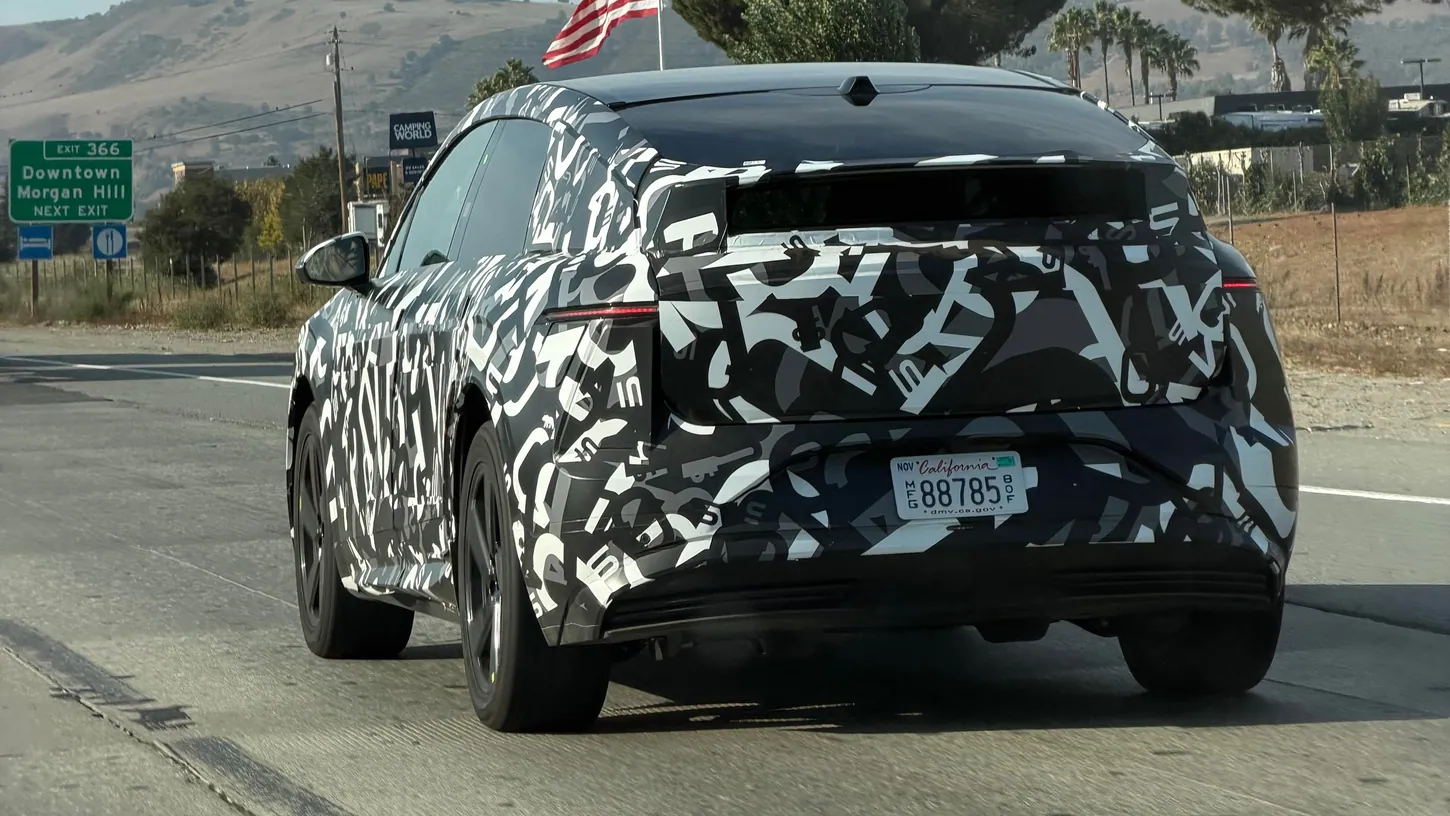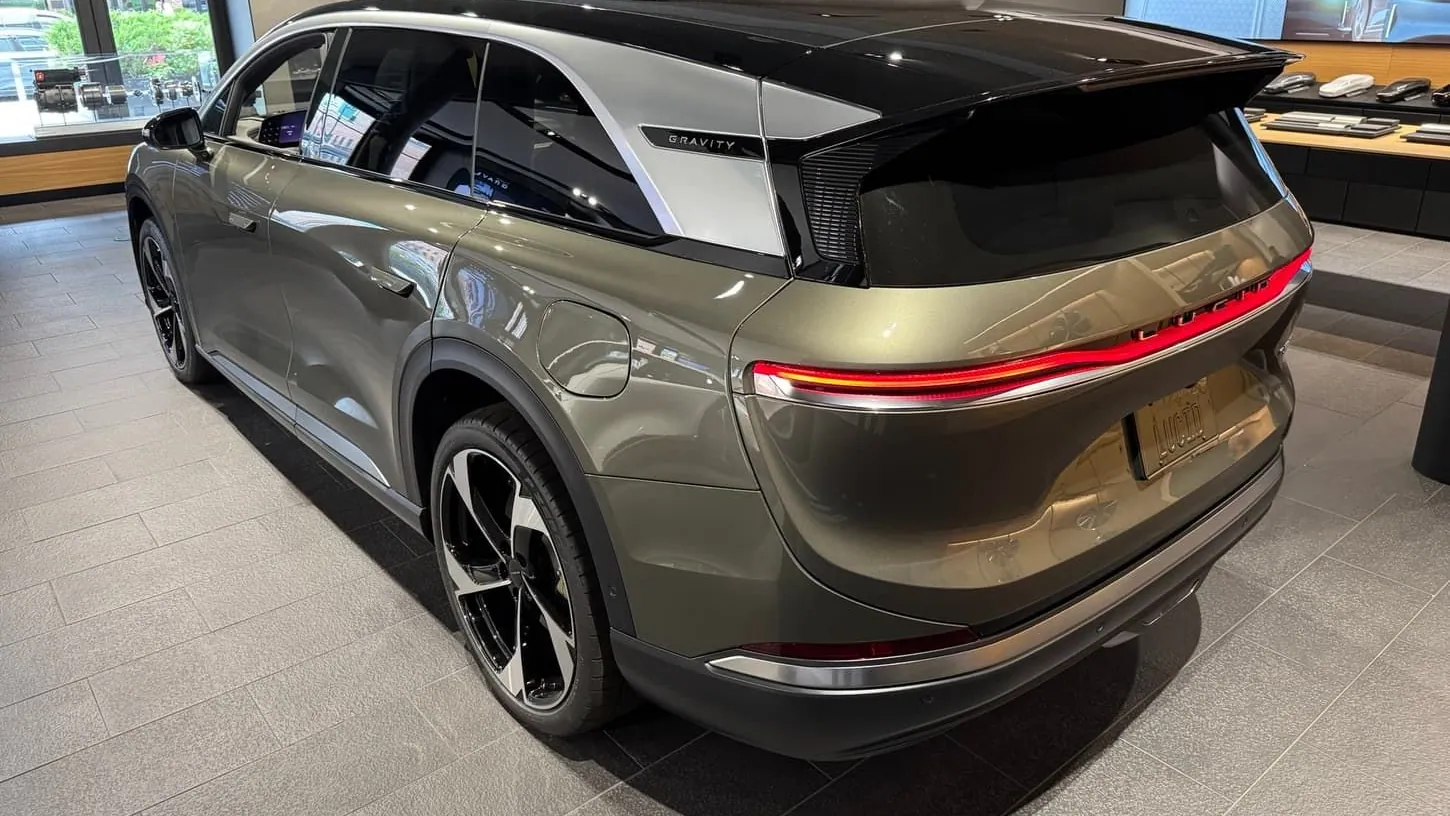
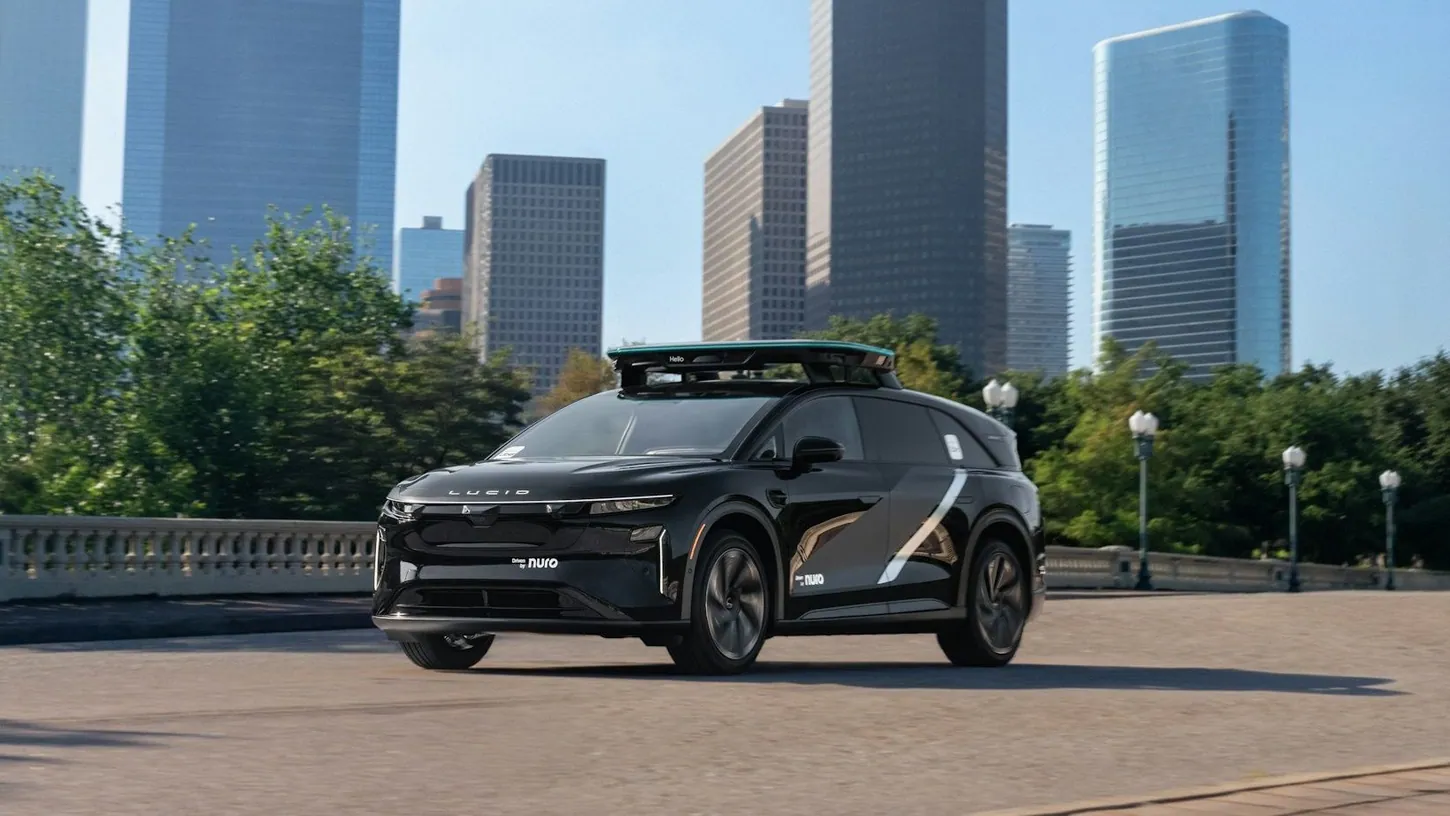
Nuro, Lucid and Uber have started testing Lucid Gravity robotaxis on public roads in the San Francisco Bay Area with nobody in the driver’s seat, the three companies said on Tuesday, November 24. The driverless testing covers Palo Alto, Mountain View, Los Altos and Sunnyvale. Employee rides come next, and the companies now expect to open the service to the public in the first quarter of 2027.
When EVXL first covered the partnership in July 2025, the launch was planned for late 2026. As recently as June 17, the partners still said the Bay Area service would start this year. Tuesday’s announcement gives the new date and does not mention the old one.
Nuro Took The Driver Out After Nearly A Year Of Supervised Testing
Nuro has tested the Gravity robotaxi around the clock in the Bay Area and Houston since December 2025, always with a safety driver. The companies’ announcement says Lucid has now delivered more than 100 vehicles with updated hardware and software, and testing will reach more Bay Area cities next year.
Before it removed the driver on public streets, Nuro ran the cars with no operator on its closed course in Las Vegas, where it staged pedestrian encounters, right-of-way violations and road hazards. Nuro has run driverless delivery vehicles before, and Tilo Schwarz, who heads the Nuro Driver program, said so: “Driverless isn’t new to us.” The Gravity is the first passenger vehicle the company has operated that way.
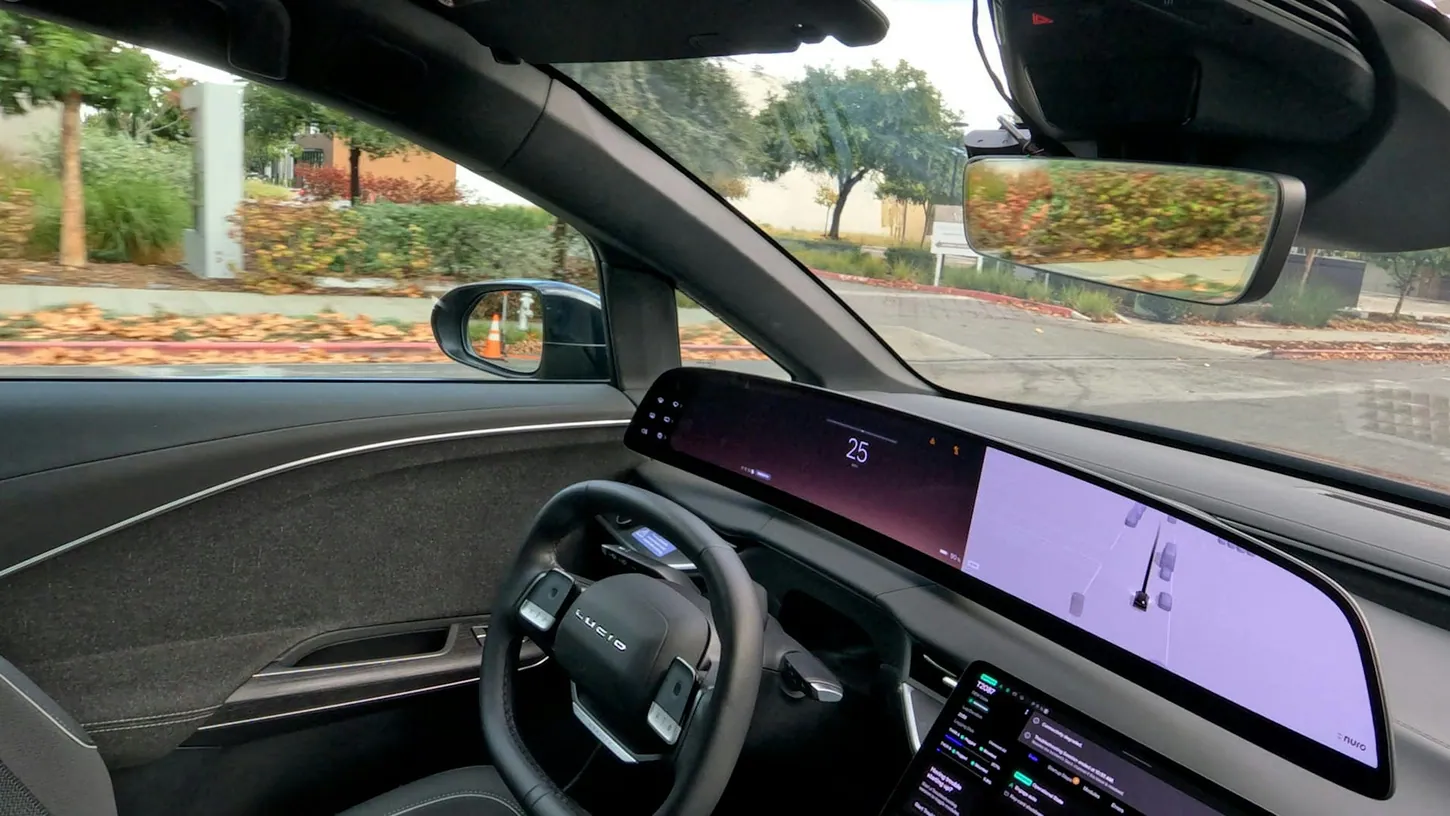
Lucid began building pre-production robotaxis in October and plans to start on the commercial fleet in the coming weeks, The Verge reports. Each SUV carries cameras, lidar, radar and a roof-mounted “halo” that shows a rider’s initials at pickup.
California Lists Six Driverless Testers And Tesla Is Not One
The California Department of Motor Vehicles (DMV) list of companies allowed to test without a safety driver, last updated November 5, has six names: AutoMo, Nuro, Tensor, Waymo, WeRide and Zoox. Nuro’s entry covers the Lucid Gravity in Santa Clara and San Mateo counties at 45 mph (72 km/h).
The DMV’s permit page shows Tesla Robotaxi LLC only on the list of companies that may test with a driver. Tesla’s Bay Area rides still have a person behind the wheel, and California’s ride-hailing regulator classifies that service as a limousine operation, as EVXL reported in March. Waymo already sells driverless rides in the Bay Area.
Nuro’s announcement names two California permits for the Gravity. One is the DMV driverless testing permit. The other is a California Public Utilities Commission (CPUC) Drivered Pilot Permit, which allows passenger rides with a safety operator in the car. As the announcement describes them, neither covers carrying the public with the driver’s seat empty. The DMV’s separate deployment list has a Nuro entry for the same two counties at 25 to 35 mph (40 to 56 km/h), with no vehicle named. The announcement does not say which approvals the partners still need before the first-quarter launch.
Uber’s 35,000-Car Order Equals Nine Quarters Of Lucid Deliveries
Uber has committed to buy at least 35,000 Lucid vehicles equipped with the Nuro Driver. It planned 20,000 in July 2025. Lucid delivered 3,806 vehicles in the third quarter and built 2,954, so the order is worth more than nine quarters of deliveries at that pace.
Uber and its fleet partners will own and operate the robotaxis, and riders will be able to book them only through the Uber app. The order includes Lucid’s upcoming Midsize vehicles as well as the Gravity. Lucid’s midsize SUV, the Cosmos, is itself late. CEO Silvio Napoli moved its production to the second half of 2027 in August.
Houston is the second market. In June the partners set its launch for mid-2027, in the same release that still had the Bay Area starting this year. Tuesday’s announcement mentions Houston only as a test site, and The Verge reports the city is still due later in 2027.
EVXL’s Take
A one-quarter slip doesn’t bother me. Nuro ran the Gravity for nearly a year with a person in the seat, got California’s driverless testing permit and tested on a closed course before it took the driver out on public streets in four cities. That is how it should be done, and Tesla has not done it in California, where it sells rides with a human driver and is missing from the DMV’s driverless list.
The delay costs Lucid more than it costs Nuro or Uber. Lucid built 2,954 cars last quarter, and it needs the 35,000-vehicle order. Every quarter the public launch moves is another quarter before the commercial fleet earns its keep. I’d watch for public rides in the Uber app by March 31, 2027. If that date moves again, Lucid will feel it before anyone else does.
Sources: Nuro, Nuro (June 17), California DMV, The Verge, Electrek
EVXL uses automated tools to support research and source retrieval. All reporting and editorial perspectives are by Haye Kesteloo.